
Latest News
US to keep about 650 troops in Afghanistan after withdrawal

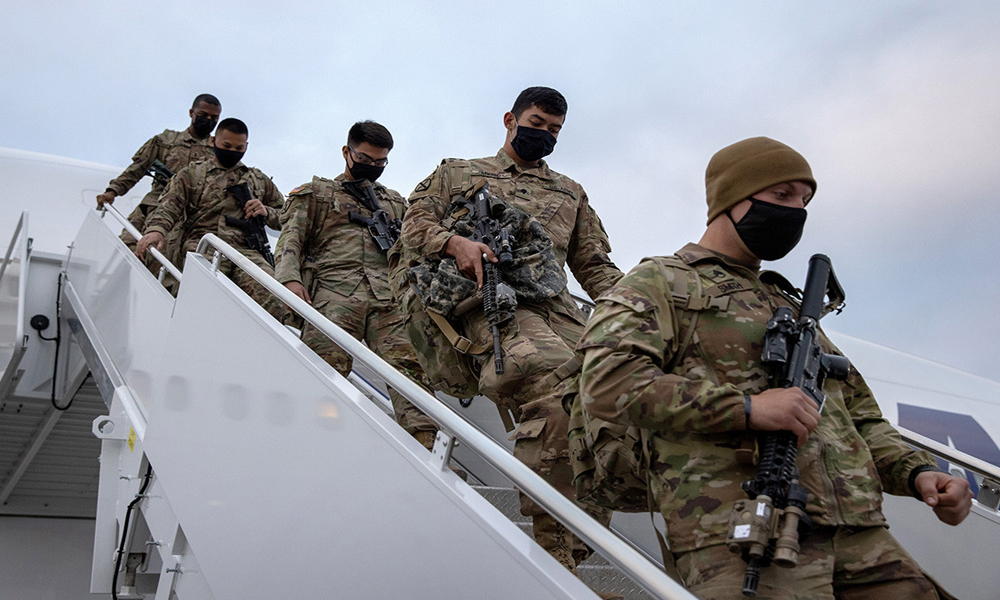
The United States is expected to keep roughly 650 American troops in Afghanistan to provide security for diplomats after the main US military force completes its withdrawal, which is set to be largely done in the next two weeks, US officials told The Associated Press on Thursday.
In addition, several hundred additional American forces will remain at the Kabul airport, potentially until September, to assist Turkish troops providing security, as a temporary move until a more formal Turkey-led security operation is in place, the officials said.
Overall, officials said the US expects to have American and coalition military command, its leadership and most troops out by July Fourth, or shortly after that, meeting an aspirational deadline that commanders developed months ago.
The officials were not authorized to discuss details of the withdrawal and spoke to AP on condition of anonymity.
AP reported the departure of the bulk of the more than 4,000 troops that have been in the country in recent months is unfolding well before President Joe Biden’s September 11 deadline for withdrawal. And it comes amid accelerating Taliban battlefield gains, fueling fears that the Afghan government and its military could collapse in a matter of months.
In a statement Thursday night, Pentagon press secretary John Kirby said that as Biden has ordered, the US will complete the withdrawal by early September. “Nothing has changed about that goal.” Kirby said.
“The situation is dynamic, and we review our progress daily. Speculation by unnamed sources about potential changes to that timeline should not be construed as predictive.”
On Friday, Afghan President Ashraf Ghani and Abdullah Abdullah, chair of the High Council for National Reconciliation, are meeting with Biden at the White House. The two Afghan leaders also are to meet at the Pentagon with Defense Secretary Lloyd Austin and possibly other administration officials, the Pentagon announced.
AP reported that getting most troops out by early July had been in doubt because of complications including an outbreak of COVID-19 at the US Embassy and the push to get Afghan interpreters and others who helped the US out of the country.
Officials said US commanders and NATO allies in Afghanistan have been able to overcome logistical hurdles that might have prolonged the withdrawal process. But they also warned that plans in place for the final stages of the US military withdrawal could change if airport security agreements fall through or there are other major, unforeseen developments.
AP reported that as recently as last week, there was discussion of possibly extending the US troop presence at Bagram Airfield, north of Kabul, but officials said the US presence at the base is expected to end in the next several days.
The roughly 650 US troops that are planned to be a more permanent force presence in Afghanistan will provide security for the US Embassy and some ongoing support at the airport, AP reported.
Officials also said the US has agreed to leave a C-RAM — or Counter-Rocket, Artillery, Mortar system — at the airport, as well as troops to operate it, as part of an agreement with Turkey. The US also plans to leave aircrew for helicopter support at the airport.
According to the officials, Turkey has largely agreed to provide security at the airport as long as it receives support from American forces. U.S. and Turkish military officials are meeting in Ankara this week to finalize arrangements.







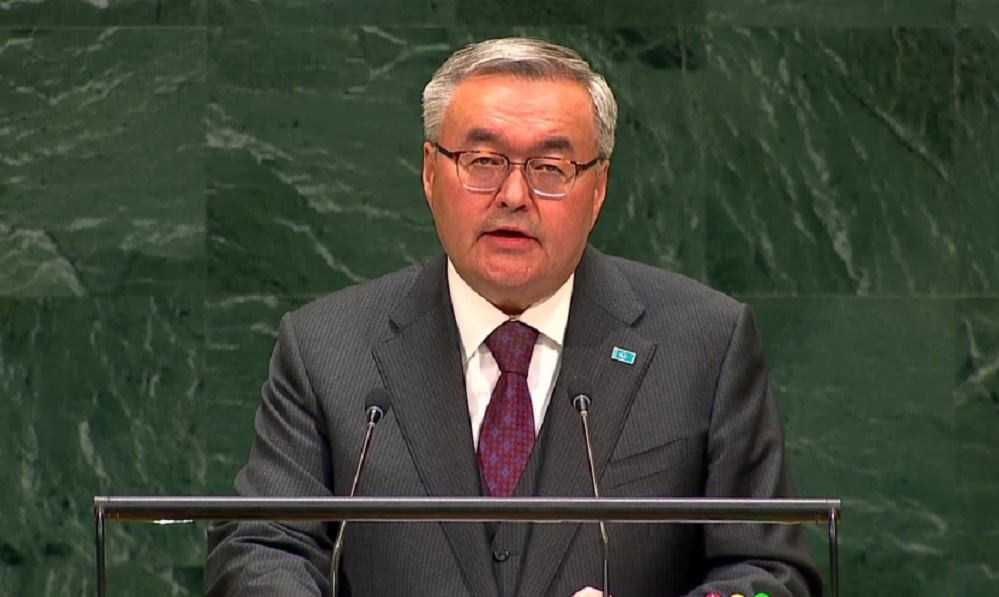
Kazakhstan’s Foreign Minister Mukhtar Tileuberdi has called for pragmatic and coordinated international engagement with Afghanistan, saying the country’s long-term stability is closely linked to the security and sustainable development of Central Asia.
Speaking during the general debate of the 81st session of the United Nations General Assembly in New York on Friday, Tileuberdi said humanitarian assistance to Afghanistan remains essential but alone cannot break the cycle of poverty, displacement and dependency.
He said Kazakhstan supports a “pragmatic, coordinated and step-by-step” approach to international engagement with Afghanistan, with the United Nations playing a central role.
Tileuberdi also said Kazakhstan is working with the UN to operationalize the United Nations Regional Centre for the Sustainable Development Goals for Central Asia and Afghanistan in Almaty.
He said the success of the centre should be measured by the results and assistance it delivers to the region.


Trump rejects Iranian proposal to open Hormuz and end fighting

Abu Muslim Farah defeat Khurasan Faryab 2-0 in ACL season six

Saar: Concerns over Pakistan’s political crisis discussed

Afghanistan Champions League: Omar Zawak Herat beat Toofan Herat 1-0

Blast in Pakistan’s Dera Ismail Khan kills 11, injures 30

Saudi energy group signs major Afghanistan deals covering gas exploration and pipeline plans

Trump floats idea of renaming Atlantic or Pacific Ocean

US hits Egyptian bank branches with Iran sanctions as war marks six months

Nepal flood rescue mission enters critical phase as thousands remain missing

Iranian clubs to face Gulf opponents at neutral venues in Asian Champions League Elite
Saar: Concerns over Pakistan’s political crisis discussed

Exclusive interview with Abdul Latif Mansoor, Minister of MRRD

Tawsia: Overview of Afghanistan’s iron mines

Tahawol: Discussion on fresh Pakistani airstrikes on Afghanistan

Saar: Calls for international support for Afghanistan discussed
-

 Latest News4 days ago
Ariana Afghan Airlines ranks seventh among 45 Central Asian airlines
-

 Latest News5 days ago
UN reiterates call for respect for international law after Kunar airstrikes
-

 Regional4 days ago
US and Iran hold first talks since June after Trump’s ‘annihilation’ threat
-

 Latest News4 days ago
Silk Road highway in Wakhan corridor now reaches the China border
-

 Regional3 days ago
Iran airlines cancel flights as US sanctions hit
-

 Latest News5 days ago
Afghan Official: Pakistan’s airstrikes will not go unanswered
-

 Sport5 days ago
Afghan boxing referee heads to China for international festival
-
 Regional5 days ago
G7 foreign ministers call on Iran to stop arming Houthis