
Business
USAID Pledges $791 Million in Development Aid to Afghanistan

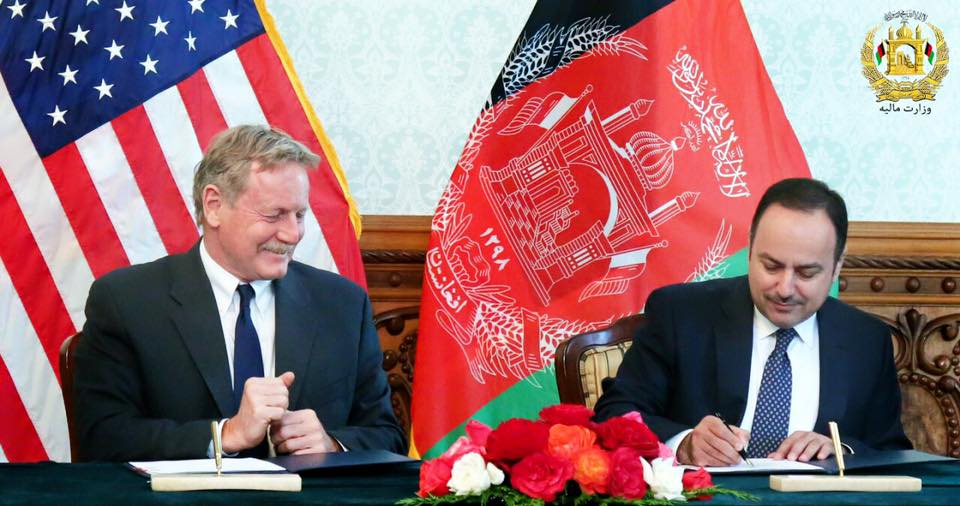
 The United States Agency for International Development (USAID) announced the obligation of $791 million to support programs that achieve Afghan-led, sustainable development.
The agreement was signed between USAID Director, Herbert Smith and Minister of Finance Eklil Hakimi during a ceremony on Monday.
According to a statement by the Ministry of Finance, the funds obligated under the agreements will support programs that achieve strategic development objectives, including a thriving economy led by the private sector, a democratic government with broad citizen participation, and a better educated and healthier Afghan population.
“These agreements are a testament to the enduring partnership between the American and the Afghan people. Over the next 12-months, this funding will enable us to implement projects and deliver valued services to our citizens across Afghanistan,” said Afghanistan’s Minister of Finance Eklil Hakimi.
Mr. Hakimi went on to say, “These are some of the first practical steps we are taking to deliver on our commitments and the pledges that were made at the Brussels Conference to help Afghanistan achieve self-reliance.”
In the meantime, USAID Director Herbert Smith said the documents just signed begin to implement the multi-year pledge that the United States made at the recent Afghanistan donor’s conference in Brussels, where the U.S. underscored its enduring commitment to the people of Afghanistan and its National Unity Government.
“This document reaffirms U.S. determination to support the government of Afghanistan in efforts to strengthen Afghanistan’s institutions, maintain gains in education and health services achieved in recent years, and improve the welfare of the Afghan people,” Herbert said.
USAID partners with Afghanistan to strengthen the country’s institutions, maintain gains in education and health services.

Business
Afghanistan faces economic strains following a ‘series of shocks’ last year
These pressures have driven an estimated 11 percent population increase in the fiscal year 2025, largely due to returning migrants, the World Bank stated.
Afghanistan’s fragile economy is grappling with a series of shocks that intensified in 2025, according to a World Bank economic update report released on Wednesday.
The report noted that Afghanistan has been hit by reduced foreign aid, prolonged crossing closures along the disputed Durand Line with Pakistan, natural disasters, and a significant return of refugees from Iran and Pakistan.
These pressures have driven an estimated 11 percent population increase in the fiscal year 2025, largely due to returning migrants, the World Bank stated.
While Afghanistan’s aggregate GDP grew by around 4.8 percent last year, reflecting a rebound in nonagricultural activity and private consumption, the growth has not kept pace with population expansion. As such, per capita GDP contracted by 5.6 percent, as rising inflation and higher trade and transport costs eroded living standards.
“The influx of returnees has temporarily boosted domestic demand, but also places additional strain on labor markets, housing, and social services,” the report noted.
Looking ahead, Afghanistan’s economy is projected to grow by 4.0 percent in 2026, driven by strengthening domestic demand, higher private investment, and improved absorption of returnees into the workforce. However, the report warns that ongoing conflict in the Middle East and disruptions to trade routes, particularly the 60 percent of Afghan trade that passes through Iran, pose significant risks.
“Border closures or sudden surges in returnees could further depress per capita incomes and fuel inflation,” the World Bank said. Trade rerouting may mitigate some effects, but the country remains vulnerable to regional instability.
Despite these challenges, analysts highlight that modest growth and ongoing private-sector activity offer some hope for recovery. The World Bank emphasizes that sustained economic resilience will depend on peace, stable trade corridors, and the ability to productively integrate returning populations into the labor market.
Afghanistan’s experience underscores the broader regional pressures in the Middle East, North Africa, Afghanistan, and Pakistan (MENAAP), where conflict and humanitarian crises continue to ripple through economies, affecting inflation, trade, and social stability.
Business
Afghanistan, Uzbekistan sign $400 million trade deals in push to deepen ties
The agreements span multiple sectors, including textiles, raw materials, pharmaceuticals and other key industries.
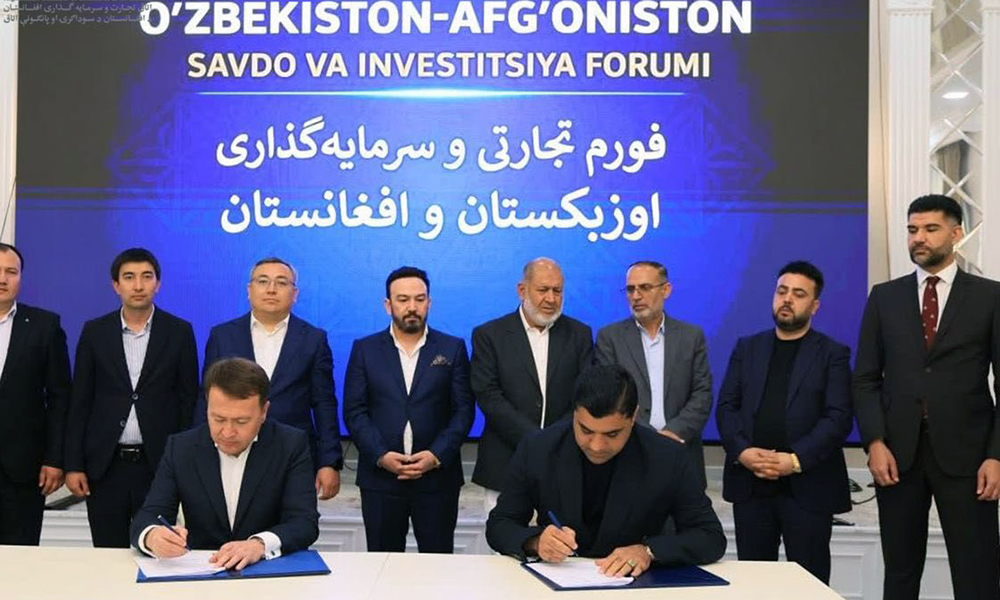
Afghanistan and Uzbekistan have signed 20 commercial agreements worth more than $400 million, marking a significant step toward expanding economic cooperation between the two neighboring countries.
The deals were finalized during a high-level business meeting in Uzbekistan’s Fergana Province, where Afghan and Uzbek private sector representatives gathered as part of an official Afghan trade delegation visit.
The agreements span multiple sectors, including textiles, raw materials, pharmaceuticals and other key industries.
The Afghan delegation was led by Zalgai Azimi, deputy for investment at the Afghan Chamber of Commerce, and included senior business figures such as Abdullah Rahimi, Syed Ahmad Noorzad, Ubaidullah Hotak, and Deputy Chief Executive Mirzaman Popal. Participants from both sides highlighted the importance of strengthening cross-border trade and building long-term commercial partnerships.
As part of the visit, Afghan delegates toured major industrial facilities in Fergana Valley to assess Uzbekistan’s manufacturing capacity and explore opportunities for future collaboration.
The agreements come as Afghanistan seeks to boost regional connectivity and revive its economy following years of conflict, isolation and economic disruption.
Trade with Central Asian neighbors—particularly Uzbekistan—has become increasingly important, with both sides investing in transport links, energy cooperation and cross-border markets.
Uzbekistan has positioned itself as a key economic partner for Afghanistan in recent years, supporting infrastructure projects and promoting trade corridors that connect South and Central Asia.
Analysts say deals of this scale could help generate jobs, increase exports and gradually integrate Afghanistan more deeply into regional supply chains.
The latest agreements signal growing momentum in bilateral relations, as both countries look to translate geographic proximity into stronger economic interdependence.
Business
Afghanistan, Kyrgyzstan aim to boost trade to $1 billion
Both sides welcomed the steady growth in trade between the two countries in recent years and agreed on the strategic goal of increasing bilateral trade to reach $1 billion.
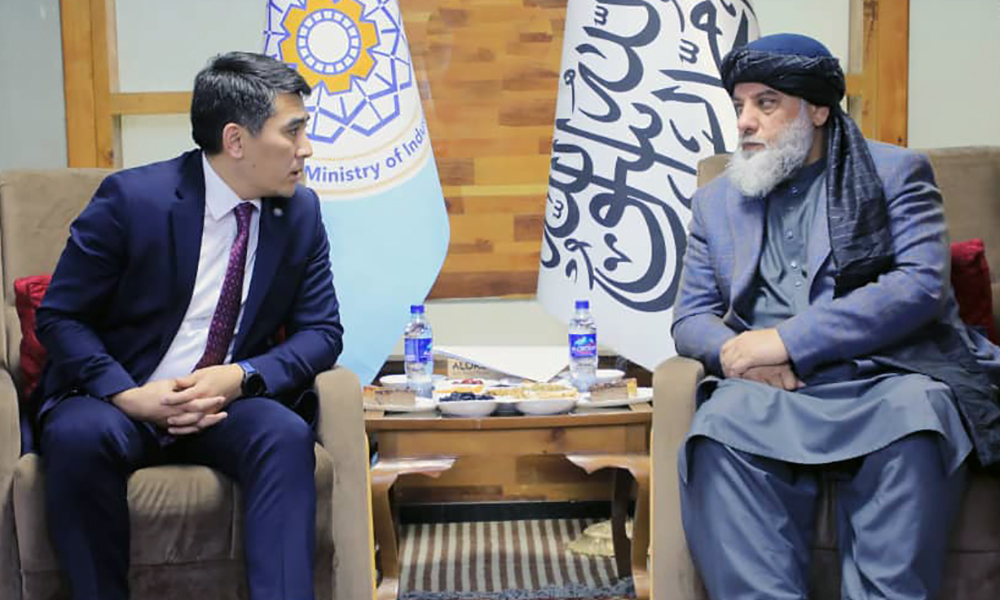
Afghanistan’s Minister of Industry and Commerce, Nooruddin Azizi, met with Kairat Tursunkulov, Deputy Foreign Minister of Kyrgyzstan, in Kabul this week to discuss ways to strengthen economic and trade ties between the two countries.
The meeting was also attended by Turdakun Sadykov, Kyrgyzstan’s ambassador to Afghanistan.
Azizi expressed appreciation for Kyrgyzstan’s participation in the recent Afghanistan–Central Asia consultative meeting and underlined the importance of expanding bilateral trade and economic cooperation.
Tursunkulov described Afghanistan and Kyrgyzstan as “brotherly nations” with strong cultural connections. He extended an invitation for Azizi to visit Kyrgyzstan to further enhance collaboration.
Both sides welcomed the steady growth in trade between the two countries in recent years and agreed on the strategic goal of increasing bilateral trade to reach $1 billion.
In addition, Azizi highlighted ongoing construction projects in Kyrgyzstan and suggested that Afghan construction companies and skilled workers could contribute their expertise to support development efforts in the country.


ATN seals Ariana Snooker Championship deal for five seasons

Tahawol: China to host 2nd round of Kabul–Islamabad talks discussed

Saar: Fragile ceasefire in the Middle East reviewed

FIFA appoints record number of match officials for 2026 World Cup

Afghanistan U-17s fall to Uzbekistan as CAFA campaign nears conclusion

IEA Supreme Leader issues Eid-ul-Fitr message urging unity and support for Islamic system

14 Pakistani soldiers killed after military post falls along Durand line: MoD

IEA supreme leader orders replacement of foreign terminology in official documents

Afghan airstrikes target Pakistani military sites in retaliation for air attacks

Turkmenistan, Afghanistan discuss steps to speed up land acquisition for TAPI pipeline
Tahawol: China to host 2nd round of Kabul–Islamabad talks discussed
Saar: Fragile ceasefire in the Middle East reviewed

Tahawol: Two‑week truce agreement between Iran-US reviewed

Saar: US–Iran two-week ceasefire agreement discussed

Tahawol: Ongoing negotiations between Kabul-Islamabad discussed
-
 Latest News4 days ago
IEA supreme leader orders replacement of foreign terminology in official documents
-
 Latest News5 days ago
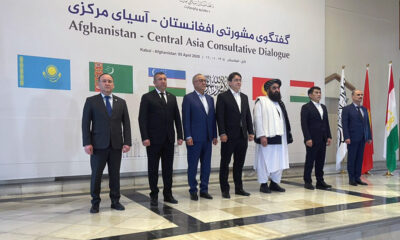
Afghanistan hosts inaugural Afghanistan–Central Asia Consultative Dialogue to strengthen regional cooperation
-
 Latest News5 days ago
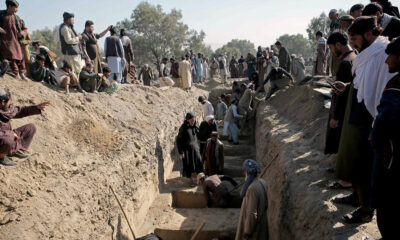
IEA accuses Pakistan of war crimes amid heavy civilian losses
-

 World5 days ago
US rescues 2nd F-15 pilot hit above Iran: Trump
-
 Latest News2 days ago
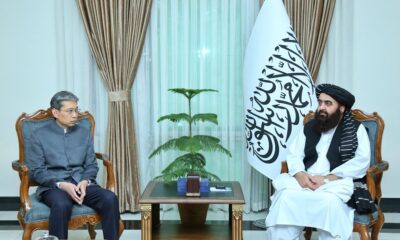
China seeking to build trust between Afghanistan and Pakistan
-
 Regional5 days ago
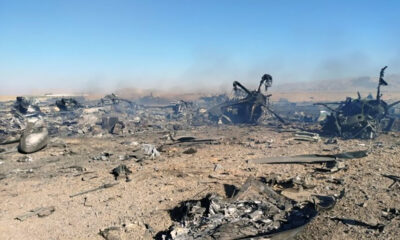
Iran claims it shot down US C-130 support aircraft in Isfahan
-

 International Sports4 days ago
IPL 2026: Lucknow hold nerve in final over to defeat Sunrisers
-
 Latest News4 days ago
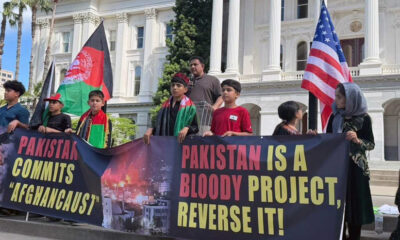
Afghan community in California condemns Pakistani strikes amid growing global protests