
Latest News
Wave of threats and killings has sent ‘chilling message’ to Afghan media

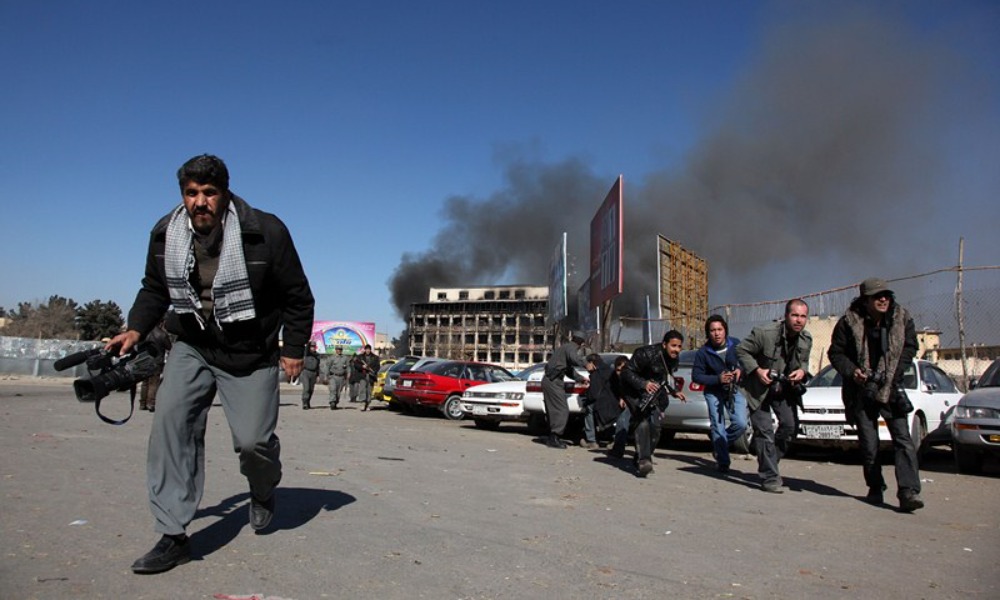
Taliban forces are deliberately targeting journalists and other media workers, including women, in Afghanistan, Human Rights Watch said this week.
“A wave of threats and killings has sent a chilling message to the Afghan media at a precarious moment as Afghans on all sides get set to negotiate free speech protections in a future Afghanistan,” said Patricia Gossman, associate Asia director.
“By silencing critics through threats and violence, the Taliban have undermined hopes for preserving an open society in Afghanistan,” she said.
In a statement issued by the rights watchdog, HRW said threats and attacks against journalists across the country have increased sharply since talks began between the Afghan government and the Taliban, heightening concerns about preserving freedom of expression and the media in any peace settlement.
Human Rights Watch has found that Taliban commanders and fighters have engaged in a pattern of threats, intimidation, and violence against members of the media in areas where the Taliban have significant influence, as well as in Kabul.
Those making the threats often have an intimate knowledge of a journalist’s work, family, and movements and use this information to either compel them to self-censor, leave their work altogether, or face violent consequences, the statement read.
HRW said provincial and district-level Taliban commanders and fighters also make oral and written threats against journalists beyond the areas they control. Journalists say that the widespread nature of the threats has meant that no media workers feel safe.
Human Rights Watch interviewed 46 members of the Afghan media between November 2020 and March 2021, seeking information on the conditions under which they work, including threats of physical harm.
Those interviewed included 42 journalists in Badghis, Ghazni, Ghor, Helmand, Kabul, Kandahar, Khost, Wardak, and Zabul provinces and four who had left Afghanistan due to threats.
In a number of cases that Human Rights Watch documented, Taliban forces detained journalists for a few hours or overnight.
In several cases they or their colleagues were able to contact senior Taliban officials to intercede with provincial and district-level commanders to secure their release, indicating that local commanders are able to take decisions to target journalists on their own without approval from senior Taliban military or political officials, HRW stated.
Taliban officials at their political office in Doha, Qatar, have denied that their forces threaten the media and say that they require only that journalists respect Islamic values.
But Taliban commanders throughout Afghanistan have threatened journalists specifically for their reporting. The commanders have considerable autonomy to carry out punishments, including targeted killings, read the statement.
Women journalists, especially those appearing on television and radio, face particular threats.
The recent wave of violent attacks has driven several prominent women journalists to give up their profession or leave Afghanistan altogether.
Human Rights Watch found that female reporters may be targeted not only for issues they cover but also for challenging perceived social norms prohibiting women from being in a public role and working outside the home.
Journalists outside the country’s main cities are especially vulnerable to attacks because they are more exposed and lack even the minimal protection that a larger Afghan media, government, and international presence provides.
However, as the fighting has increasingly encroached on major cities, these have offered decreasing protection to journalists seeking safety from the violence in their home districts, the statement read.
A journalist covering the fighting in Helmand province told Human Rights Watch that one of his sources told him the Taliban were looking for him and he should lie low.
“The majority of Afghan journalists feel intimidated and threatened,” he said. “All the journalists are scared because everyone feels like they could be next.”
Human Rights Watch called on the Taliban leadership to immediately cease intimidation, threats, and attacks against journalists and other media workers.
They should urgently provide clear, public directives to all Taliban members to end all forms of violence against journalists and other media workers, and intimidation, harassment, and punishment of Afghans who have criticized Taliban policies, the statement read.
The Taliban leadership should also explicitly reject violence against women in the media, the rights watchdog stated.
In addition, HRW called on the United Nations and governments supporting the Intra-Afghan Negotiations to publicly press the Taliban leadership to adopt these recommendations, and provide increased support, including protection, to independent media organizations and journalists in Afghanistan, especially those facing threats.
“It’s not enough for Taliban officials in Doha to issue blanket denials that they’re targeting journalists when Taliban forces on the ground continue to intimidate, harass, and attack reporters for doing their jobs,” Gossman said.
“Countries supporting the peace process should press for firm commitments from all parties to protect journalists, including women, and uphold the right to free expression in Afghanistan.”

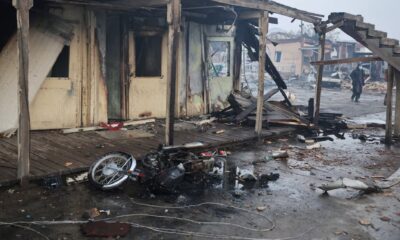


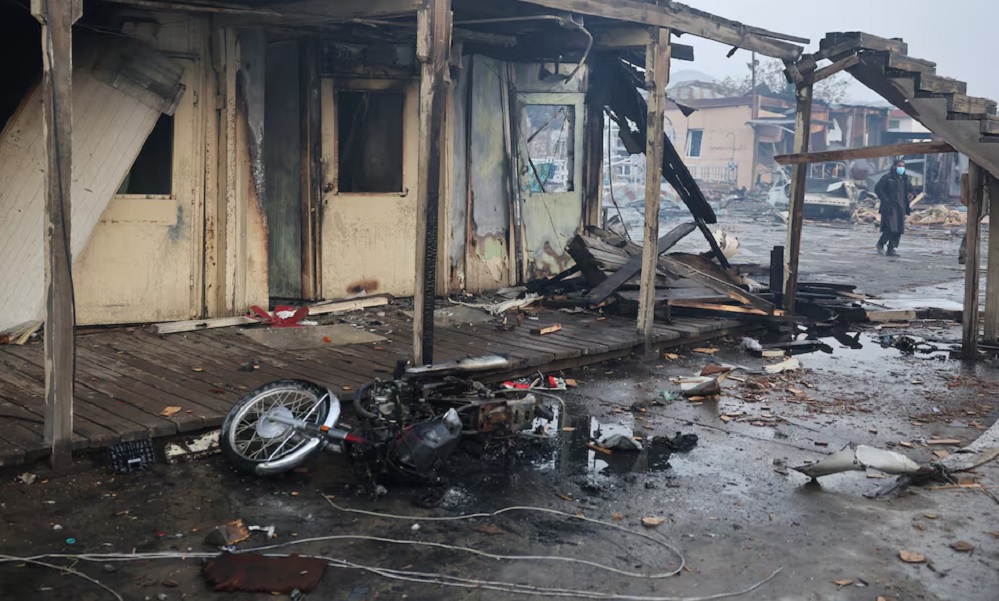
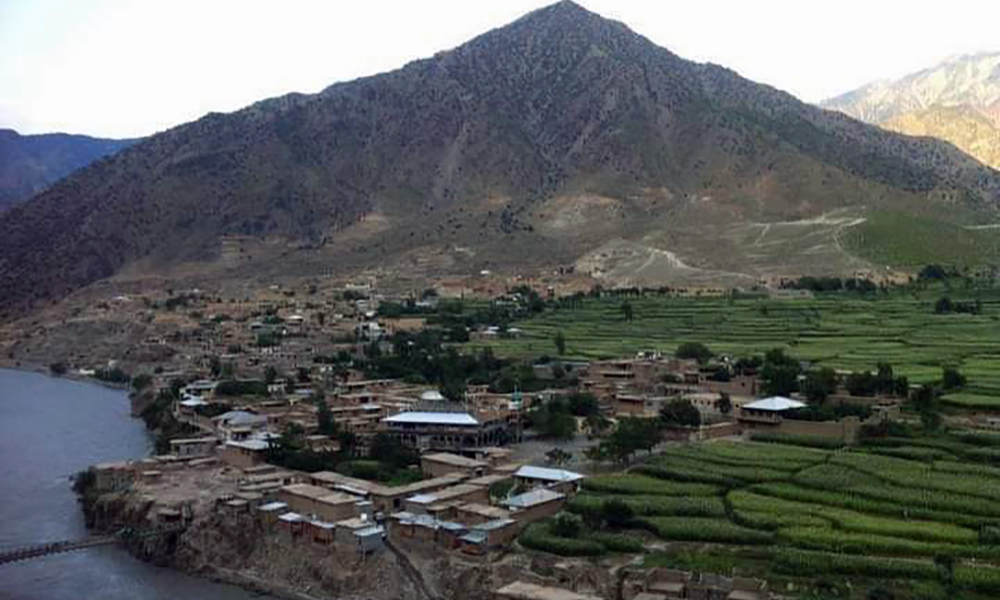
Hamdullah Fitrat, deputy spokesman of the Islamic Emirate, said that a mortar shell of the Pakistani military regime hit Shanpat area of Nari district of Kunar province at 9:30 am on Sunday, killing one civilian and wounding another.
The injured person is a woman, he said.
Pakistani forces also opened fire on a civilian vehicle in Shakin district of Paktika province, but no casualties were reported, Fitrat said.
The Pakistani government had earlier announced that it would halt its attacks on Afghanistan until Monday night on the occasion of Eid-ul-Fitr.
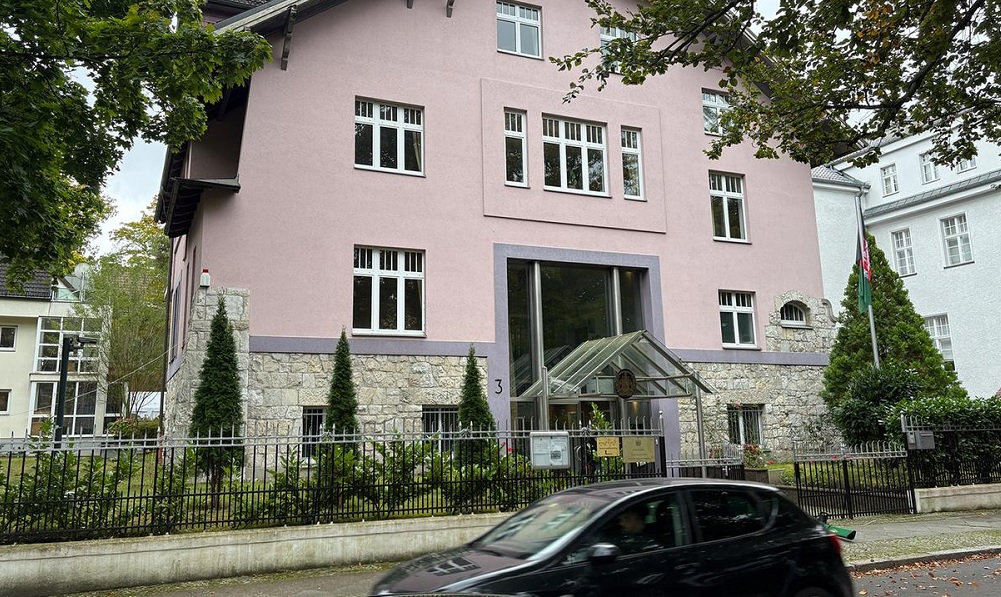
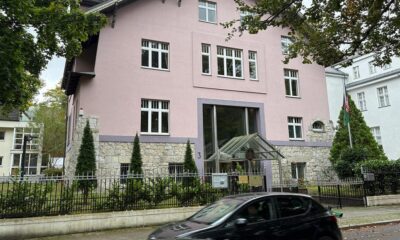
Germany was not informed of the appointment of a new Afghan diplomat in Berlin, according to a report by public broadcaster ARD, raising fresh questions about the Islamic Emirate’s expanding control over overseas missions.
The report states that an IEA-linked official has assumed the role of chargé d’affaires at Afghanistan’s embassy in Berlin without prior approval from the German government. Under the 1961 Vienna Convention on Diplomatic Relations, host countries must consent to such diplomatic appointments.
Germany does not formally recognize the IEA government, which returned to power in August 2021 following the withdrawal of US and NATO forces.
Undisclosed leadership role
According to ARD, the official—identified as Nebrasul H.—arrived in Berlin in July last year as a junior consular staff member, a position approved by German authorities. However, documents obtained by the broadcaster suggest he was also quietly appointed to lead the embassy.
He is reportedly acting as chargé d’affaires, effectively heading the mission and liaising directly with Afghanistan’s Foreign Ministry in Kabul.
The move highlights the IEA’s efforts to consolidate authority over Afghan diplomatic missions abroad, despite lacking broad international recognition.
Berlin ‘not notified’
Germany’s Foreign Ministry said it had received “no notification of any personnel changes” at Afghan diplomatic missions in the country.
Berlin has consistently maintained that Afghan embassies should remain under representatives appointed by the former government of Ashraf Ghani, which was ousted in 2021.
Previous envoy sidelined
The report also claims that the previous head of mission, Abdul P., has been stripped of his authority and reduced to a largely symbolic role. He was originally appointed under the Ghani administration.
Despite being sidelined, he remains in Berlin, reportedly continuing to live in the ambassador’s residence and retaining diplomatic privileges.
Wider diplomatic shift
In a related development, ARD reported that another Afghan official who arrived alongside Nebrasul H. has assumed a leadership role at the Afghan consulate in Bonn, also without formal recognition from German authorities.
The developments suggest a broader strategy by the IEA to assert control over Afghanistan’s diplomatic presence in Europe, even in countries that do not officially recognize its rule.


Saar: Using US prisoners as political pressure

Afghani strengthens nearly 10% against US dollar amid banking sector reforms

Iran says Hormuz open to all but ‘enemy-linked’ ships

Deadly violence likely without dialogue between Afghanistan and Pakistan: ICG

Pakistani military violates Afghanistan ceasefire again

Pakistani military jet downed in Afghanistan’s Jalalabad, pilot captured alive

Afghan Air Force conducts airstrikes in Islamabad, other cities

Prominent Muslim scholar issues fatwa calling for Afghanistan-Pakistan ceasefire

Afghan air force strikes key Pakistani military installations in retaliatory operation

IEA: Special circle in Pakistan has launched mission to destabilize region
Saar: Using US prisoners as political pressure

Tahawol: Pakistan’s efforts to destabilise Afghanistan

Saar: Decline in international assistance to Afghanistan

Tawsia: Assessment of Afghanistan’s economic activities in 1404

Tahawol: Temporary ceasefire draws broad support
-
 Latest News4 days ago
Pakistan opposes normal Afghanistan–India relations: Shaheen
-
 Latest News4 days ago
IEA announces temporary pause in defensive operations against Pakistan for Eid
-
 Latest News4 days ago
Karzai accuses Pakistan of seeking to destabilise Afghanistan after Kabul strike
-
 Latest News3 days ago
Pakistani shelling hits Kunar districts despite ‘pause in hostility’ over Eid
-
 Regional4 days ago
Iran strikes Tel Aviv with cluster warheads in retaliation for killing of security chief
-

 Sport2 days ago
Afghanistan national buzkashi falls short in Kokpar World Championship semifinals
-
 Latest News5 days ago
Afghanistan condemns deadly Kabul airstrike, warns of continued self-defence
-
 Regional3 days ago
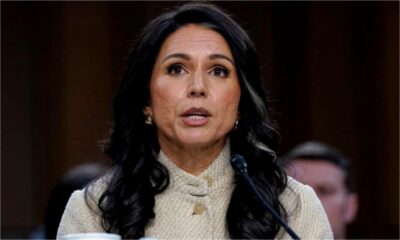
Pakistan among top nuclear threats to America, US intelligence chief tells senate