
Latest News
Hamid Karzai Attacks US Combat Rules

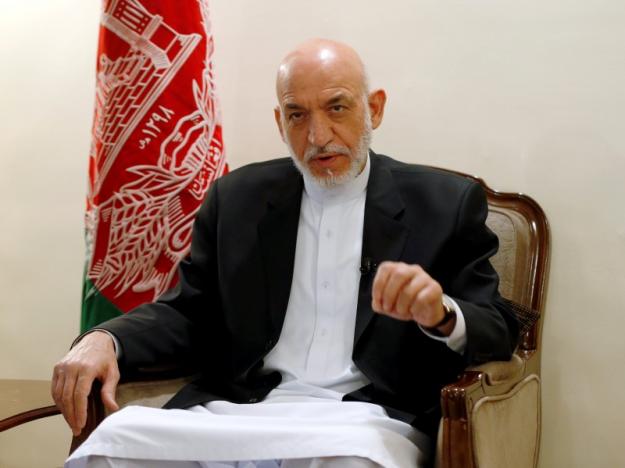
 Former Afghan President Hamid Karzai has sharply criticized new authorities giving the U.S. military greater freedom to fight Taliban insurgents, saying they were a further erosion of the country’s sovereignty.
In an interview, Karzai, who continues to exert considerable behind-the-scenes influence on Afghan politics, also called on the Islamist militant movement to be more realistic in demands that have hampered progress in peace talks.
His comments on American involvement in the war were at odds with the government of his successor, President Ashraf Ghani, which has welcomed U.S. political and military support.
“How could the U.S. president authorize U.S. troops to launch attacks on their own in Afghanistan?” Karzai said, referring to Barack Obama’s June decision to alter the rules of engagement for the American military.
“Don’t we have a government here? Aren’t we a sovereign country?”
The new authorities, which U.S. officials say were agreed with the Afghan government, affect ground operations where U.S. troops provide support to Afghan forces as well as air combat, and Karzai has long been critical of U.S. air strikes in Afghanistan, be they by fighter jets, helicopters or drones.
He would ban them altogether, even though the Afghan armed forces, struggling to contain the insurgency, say they could not cope without support from the skies and want more.
The former leader’s opposition reflects broader unease among Afghans who believe innocent people have been killed in air attacks targeting militants, unease that may grow with new powers granted to the U.S. military.
The U.S. says its air strikes support Afghan operations and it takes extreme care to avoid civilian casualties, despite incidents such as the bombing of a Medecins Sans Frontieres hospital in Kunduz last year in which 42 people died.
Calling Afghanistan the victim of a 21st century version of the “Great Game” between competing powers on the 19th century borders of British India, Karzai blamed the United States and Pakistan for “a war that is not ours”.
TALIBAN MUST BE REALISTIC
However, he added that he wanted to reshape the partnership between Kabul and Washington, not end an alliance which brought him to power over a decade ago and still ensures billions of dollars in aid and military support each year.
Karzai was succeeded by Ghani two years ago.
“I want to be allies with the United States, I want to be partners with the United States,” he said. “But it must be a partnership, not a master-and-slave relationship.
“We must remain the owners of this house, the United States of America, a guest.”
As for the Taliban, Karzai said he saw little change in tactics since the death of former leader Mullah Akhtar Mansour in a U.S. drone strike on Pakistani soil in May.
He appealed to the Taliban “as fellow Afghans to recognize that this is their country” and to break free of the influence of Pakistan, which despite frequent denials, is blamed by Afghanistan for supporting the insurgency.
“I would call on the Taliban to be free from foreign influence – in this case Pakistan, the Pakistan intelligence and military,” Karzai said.
He added that they had to be more realistic in their demands to make peace talks possible.
“When they say that foreign forces must leave first and then we will talk, then I tell them that if they keep waiting for that, a lot of Afghan blood will be shed,” he said.
COUNTRY “NEEDS TO REGAIN CONFIDENCE”
Despite suspicions among some close to the government that he wants to destabilize Ghani, Karzai said he expected the U.S.-backed government to serve its full five-year term.
This is even though parliamentary elections and a special “loya jirga”, or gathering of Afghan leaders and elders, have not materialized as scheduled within the first two years.
“The government should know that no one is going to ask them to go away. We want them to complete their term, we want them to complete the five years,” he said. “But the country needs a voice, the country needs to regain its confidence.”
To do that, he called for a loya jirga.
“The loya jirga is an expression of authority of the Afghan people. Things must return to the ownership of the Afghan people,” said Karzai, who has a deep network of political connections throughout the country.
“It’s an institution for a time of crisis and we are in crisis.”
The 58-year-old dismissed suggestions that such a gathering, including opponents and allies of the government, could undermine stability and weaken an administration that has struggled to overcome internal rivalries.
Adding to the challenges, the Taliban have stepped up their insurgency, while thousands of young people, unable to find work, prefer to risk a perilous journey to seek a better life in Europe.
“The loya jirga is an expression of authority of the Afghan people. Things must return to the ownership of the Afghan people,” Karzai said.
Reuters

Latest News
UK backs Afghanistan–Pakistan talks, calls dialogue key to lasting peace
Richard Lindsay, the UK’s Special Representative for Afghanistan, described the latest round of talks as a positive step forward.
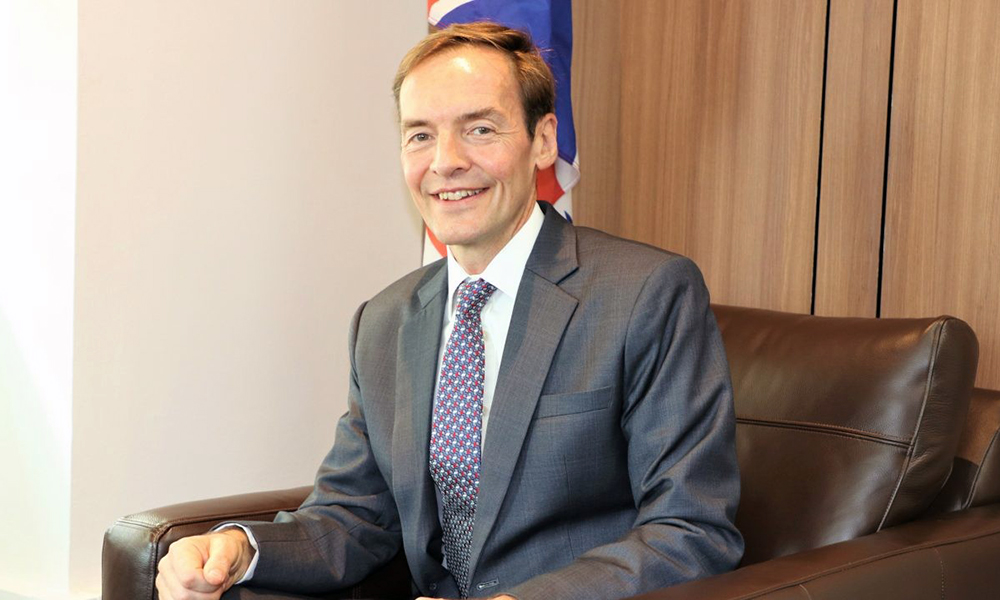
The United Kingdom has welcomed recent diplomatic engagements between Afghanistan and Pakistan, emphasizing that sustained dialogue remains the most effective path toward reducing tensions and achieving long-term stability.
Richard Lindsay, the UK’s Special Representative for Afghanistan, described the latest round of talks as a positive step forward. He praised the engagement between both sides and urged continued efforts to reach a comprehensive resolution.
“I welcome the recent interactions between the negotiating teams of Afghanistan and Pakistan and encourage continued dialogue to reach a comprehensive solution. Dialogue remains the only way to reduce tensions and achieve sustainable peace,” Lindsay said.
The week-long discussions, held in Urumqi, involved diplomatic, defense, and security officials from both countries. The talks concluded with a preliminary agreement aimed at immediate de-escalation, with participants committing to practical measures to manage tensions and prevent further escalation.
Chinese officials noted that both sides agreed on steps to stabilize the situation, signaling cautious optimism after a period of strained relations.
Regional analysts have underscored the importance of maintaining diplomatic momentum, warning that prolonged instability could worsen broader security challenges. They stress that constructive engagement between Kabul and Islamabad is essential to prevent further deterioration.
Following the initial round, expectations are rising for a second phase of talks at a higher diplomatic level—potentially paving the way for concrete measures to ease tensions and reinforce regional stability.
Latest News
IEA defense minister meets Chinese envoy, emphasizes security and regional stability
Both sides concluded by emphasizing the need to build mutual trust, deepen bilateral cooperation, and expand regional partnerships.
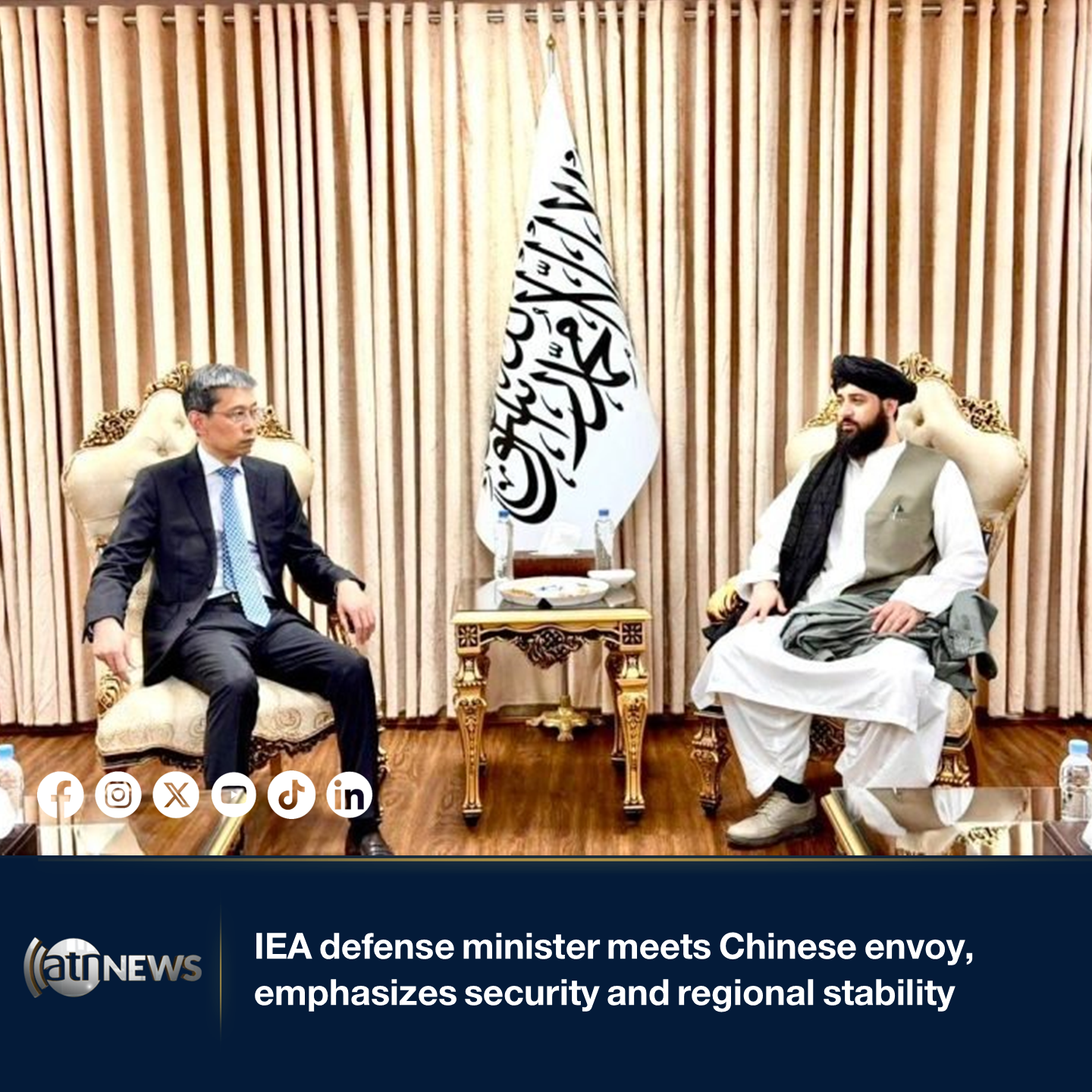
Afghanistan’s Defense Minister, Mohammad Yaqoob Mujahid, held talks with China’s Ambassador to Kabul, Zhao Xing, focusing on security cooperation and regional stability, officials said.
According to Defense Ministry spokesperson Enayatullah Khwarazmi, the meeting covered bilateral relations, political engagement, and evolving regional developments. Both sides discussed ways to enhance coordination on shared concerns, particularly maintaining stability and preventing cross-border security threats.
The Chinese envoy outlined Beijing’s position on the Urumqi discussions and reiterated China’s readiness to expand cooperation with Afghanistan. He emphasized dialogue-driven approaches and expressed support for initiatives aimed at promoting long-term regional peace and economic collaboration.
Mujahid said that with internal security largely consolidated, Afghanistan is now prioritizing regional stability. He stressed that dialogue remains the most effective path to addressing challenges and reaffirmed the country’s commitment to safeguarding national sovereignty.
He added that the current approach is based on patience, mutual respect, and understanding, while underscoring that defending the country against any form of aggression remains a legitimate right and national responsibility.
Both sides concluded by emphasizing the need to build mutual trust, deepen bilateral cooperation, and expand regional partnerships.
International Sports
FIFA appoints record number of match officials for 2026 World Cup
A total of 52 referees, 88 assistant referees and 30 video match officials have been selected from across all six confederations and 50 member associations.
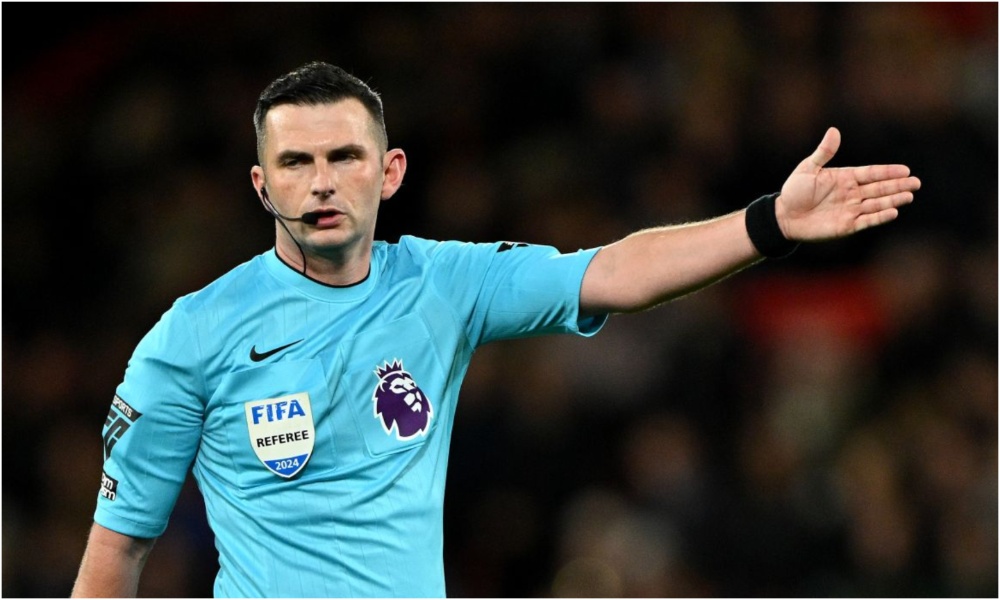
FIFA has announced the full list of match officials for the upcoming FIFA World Cup 2026, confirming what will be the largest refereeing team in the tournament’s history.
A total of 52 referees, 88 assistant referees and 30 video match officials have been selected from across all six confederations and 50 member associations, following a rigorous evaluation process that spanned more than three years.
The selection was based on FIFA’s “quality first” principle, with officials assessed on their consistency and performances in domestic leagues, international competitions and previous FIFA tournaments.
Pierluigi Collina said the chosen officials represent the highest standard in global football officiating. He noted that candidates were closely monitored over several years, taking part in seminars and major tournaments while undergoing regular performance reviews.
“This will be the biggest World Cup in history,” Collina said, referring to the expanded 48-team format and 104 matches set to be played across three host countries. He added that the officiating team has grown significantly compared to the 2022 tournament in Qatar, reflecting the increased scale of the competition.
Collina also highlighted the continued inclusion of women referees, with six female match officials selected, building on progress made during the previous World Cup.
Officials will undergo final preparations at a training camp in Miami starting on May 31, where they will receive support from fitness coaches, medical staff and match analysts to ensure they are in peak physical and mental condition ahead of the tournament.
Massimo Busacca said preparations began immediately after the conclusion of the 2022 World Cup, with a structured programme of workshops, monitoring and technical development designed to maintain the highest standards.
During the tournament, referees will continue daily training sessions, supported by detailed match analysis and on-field simulations involving local players.
Technology is also set to play a central role, with FIFA confirming the use of goal-line technology, an enhanced version of semi-automated offside systems and connected ball technology.
In a first for the World Cup, fans will also be able to view matches from the referee’s perspective using newly introduced body cameras, enhanced by artificial intelligence to improve video quality.
Following the Miami training camp, video match officials will relocate to Dallas, home of the International Broadcast Centre, while referees and assistant referees will remain in Miami for the duration of the tournament.
FIFA said additional measures aimed at increasing match tempo and reducing time-wasting—approved earlier this year by the International Football Association Board—will also be implemented.
With preparations now entering the final phase, FIFA says it is confident that “Team One” will be ready to meet the demands of what is expected to be a historic and groundbreaking World Cup.
Click here for full list of appointed match officials for the FIFA World Cup 2026.


Etihad Airways to expand Kabul–Abu Dhabi flights to daily service amid surging demand

UK backs Afghanistan–Pakistan talks, calls dialogue key to lasting peace

Iran war doubles Russia’s main oil revenue to $9 bln in April, Reuters calculations show

IEA defense minister meets Chinese envoy, emphasizes security and regional stability

Russian special envoy Dmitriev in US, meeting Trump administration members, sources say

IEA Supreme Leader issues Eid-ul-Fitr message urging unity and support for Islamic system

IEA supreme leader orders replacement of foreign terminology in official documents

14 Pakistani soldiers killed after military post falls along Durand line: MoD

Afghan airstrikes target Pakistani military sites in retaliation for air attacks

Turkmenistan, Afghanistan discuss steps to speed up land acquisition for TAPI pipeline

Tahawol: China to host 2nd round of Kabul–Islamabad talks discussed

Saar: Fragile ceasefire in the Middle East reviewed

Tahawol: Two‑week truce agreement between Iran-US reviewed

Saar: US–Iran two-week ceasefire agreement discussed

Tahawol: Ongoing negotiations between Kabul-Islamabad discussed
-
 Latest News5 days ago
IEA supreme leader orders replacement of foreign terminology in official documents
-
 Latest News3 days ago
China seeking to build trust between Afghanistan and Pakistan
-
 International Sports4 days ago
IPL 2026: Lucknow hold nerve in final over to defeat Sunrisers
-
 Latest News4 days ago
Afghan community in California condemns Pakistani strikes amid growing global protests
-
 Business3 days ago
Afghanistan, Uzbekistan sign $400 million trade deals in push to deepen ties
-
 Regional4 days ago
IRGC intelligence chief killed as wave of strikes continues against Iran’s leadership
-
 International Sports3 days ago
IPL 2026: Rain scuppers KKR vs PBKS match
-
 World4 days ago
US, Iran and mediators make push for 45-day ceasefire, Axios reports