
Business
Contract Signed to Develope 2nd Phase of Kajaki Dam

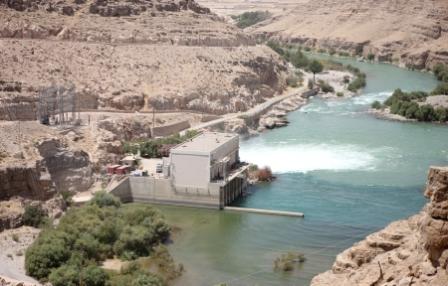
 Officials in Ministry of energy and Water has stated that Kajaki second turbine producing electricity contract was signed between the Ministry and Turkish company on behalf of the President at Presidential palace, saying the second part of the dam will produce 100 mega watt power, amid currently the Kajaki dam produces 51 mega watt electricity.
Minister of Energy and Water Ali Ahmad Usmani said,” the following project for encouraging private investors in production of electricity, Afghanistan doesn’t compare itself with any other countries in the region, this project will also give positive message on development sector, ensuring security and stability drawing the satisfactory of the Afghans.”
The following power project will cost $170 million and will be accomplished incoming 3 years.
Head of the Turkish company known as 77 Suliaman Salui said,” I have undertaken a serious mission and I will try to raise the level of the Afghan people life, today our company will install the second turbine in Kajaki power dam, which will increase the 100 mega watt electricity and in general the following dam will produce 151 mega watt electricity.”
Based on information from the Ministry of Energy and Water the current Kajaki dam has the production capacity of 51 mega watt electricity by inaugurating the second Turbine it will produce 151 mega watt electricity and will store 1 billion cubic meter water.
Kajaki power dam is located in Helmand province south part of Afghanistan.
Reported by Ali Jawad Asghari

Business
Uzbekistan reports strong surge in trade with global partners led by China
China accounts for 23.6% of total foreign trade turnover, followed by Russia with 17.2%, Kazakhstan with 6.9%, Turkey with 3.5%, and Afghanistan with 2.8%.
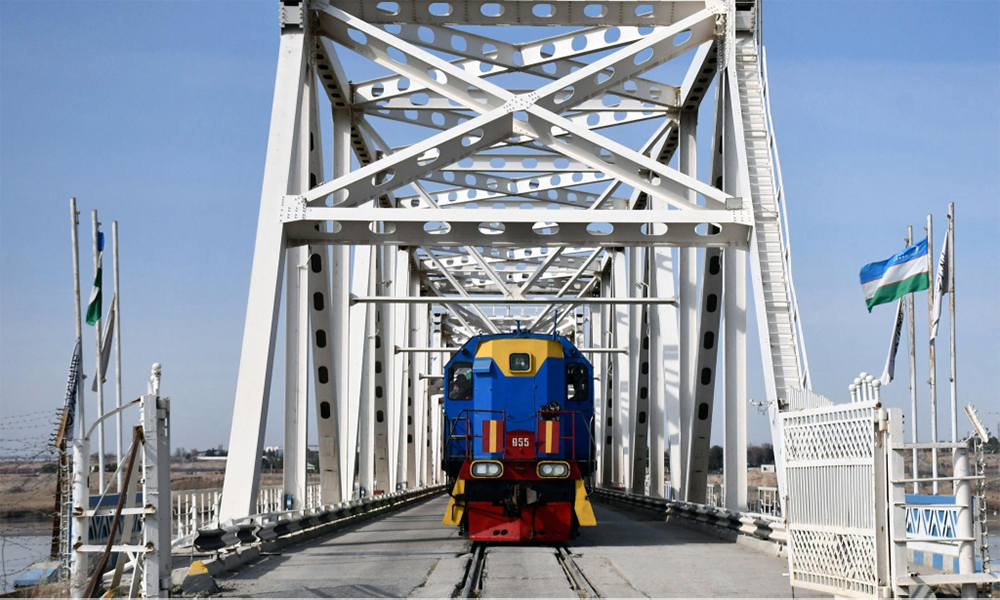
Uzbekistan has recorded a significant increase in foreign trade during January–April 2026, driven by expanding economic ties with China and steady growth across Central Asia, the Middle East, and Europe, according to official statistics.
Data from the National Statistics Committee show that China remained Uzbekistan’s largest trading partner, with bilateral trade reaching $6.23 billion, up sharply from $4.17 billion in the same period last year. Russia followed with $4.52 billion, while Kazakhstan ranked third at $1.81 billion.
Other key partners included Turkey, Afghanistan, South Korea, the United Arab Emirates, and France, with additional growth recorded in trade with Germany, India, Belarus, Kyrgyzstan, and several other countries.
The fastest-growing trade relationships were seen with the United Arab Emirates, Ireland, Afghanistan, and Vietnam, highlighting Uzbekistan’s continued efforts to diversify its external economic partnerships.
Overall, Uzbekistan now maintains trade relations with more than 175 countries. China accounts for 23.6% of total foreign trade turnover, followed by Russia with 17.2%, Kazakhstan with 6.9%, Turkey with 3.5%, and Afghanistan with 2.8%.
Exports remain largely dominated by goods, making up 65.3% of outbound trade, including industrial products, chemicals, manufactured goods, and food products, according to official data.
Business
Tashkent Deputy Governor set to visit Kabul with Uzbek trade delegation
The Deputy Governor accepted the invitation and said he plans to travel to Kabul in the coming months at the head of a trade delegation.
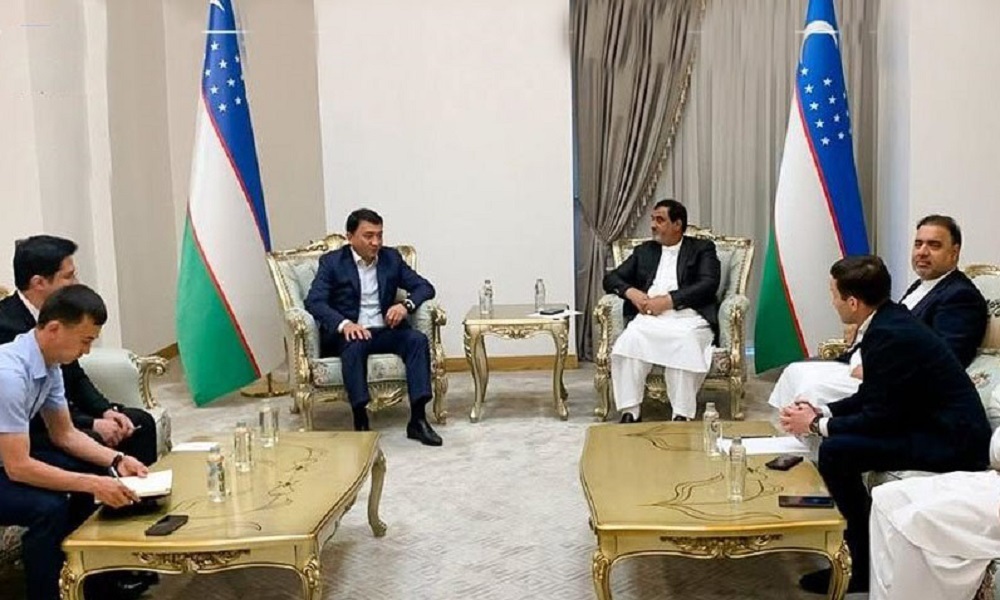
Sayed Karim Hashemi, Director General of the Afghanistan Chamber of Commerce and Investment (ACCI), has met with the Deputy Governor of Tashkent to discuss expanding trade and economic cooperation between Afghanistan and Uzbekistan.
During the meeting, Hashemi highlighted the growing economic ties between Kabul and Tashkent, noting that the ACCI has hosted several Uzbek governors and trade delegations in recent years. He also expressed satisfaction with the increase in bilateral trade between the two countries and invited the Tashkent Deputy Governor to visit Kabul.
The Deputy Governor accepted the invitation and said he plans to travel to Kabul in the coming months at the head of a trade delegation.
He welcomed the expansion of cooperation between the chambers of commerce of Afghanistan and Uzbekistan and described the establishment of Uzbek trade houses in Kabul, Balkh, Herat, and Nangarhar provinces as a significant step toward strengthening trade relations.
The Tashkent official also emphasized the importance of sustaining economic and commercial cooperation and pledged continued support for Afghanistan’s private sector through all available means.
Business
Afghanistan highlights strategic connectivity role at Termez Dialogue
Azizi stressed that shared economic interests can play a crucial role in fostering lasting peace, mutual trust, and regional stability.
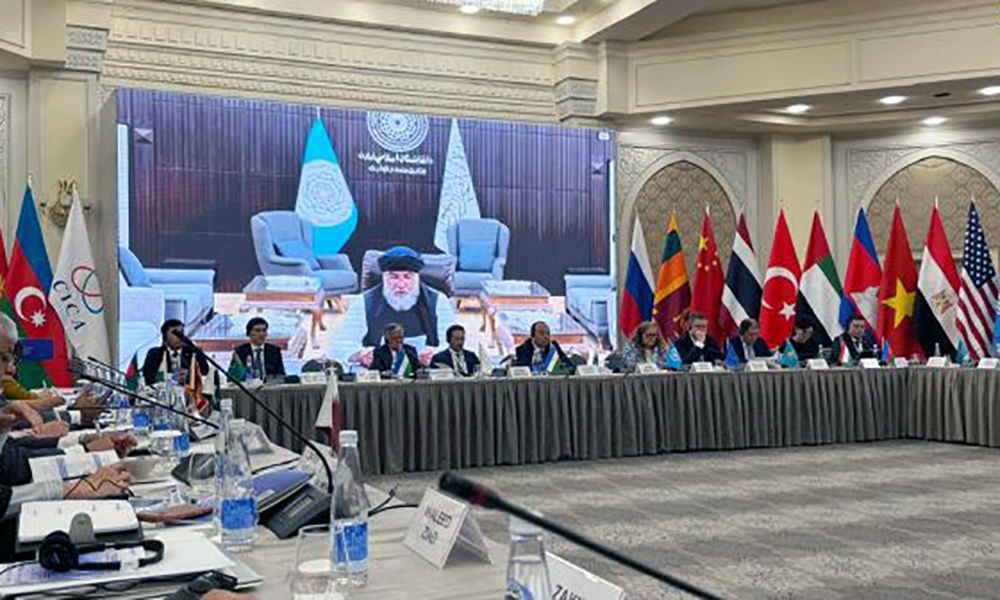
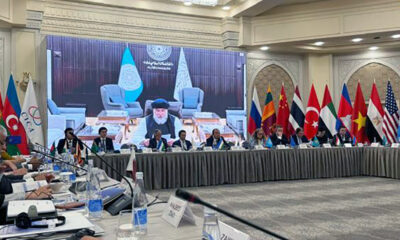
Afghanistan has reaffirmed its commitment to regional economic integration, highlighting its strategic position as a vital link between Central and South Asia during the second Termez Dialogue on Connectivity.
Afghanistan’s Minister of Industry and Commerce, Nooruddin Azizi, participated in the forum, which brought together senior government officials, representatives of the United Nations, the European Union, and regional organizations under the theme, “Peace, Connectivity and Prosperity: Building the Foundations of Shared Development.”
Addressing the high-level session virtually, Azizi emphasized Afghanistan’s vision of expanding regional trade, strengthening economic cooperation, and maximizing the country’s transit potential.
According to the Ministry of Industry and Commerce, Azizi noted that Afghanistan’s geographic location uniquely positions it to serve as a bridge between Central and South Asia, facilitating the movement of goods, investment, and people across the region.
He also highlighted the Trans-Afghan Railway Project as a key regional connectivity initiative, saying it would help link rail networks, boost trade and transit, and deepen economic cooperation among participating countries.
Azizi stressed that shared economic interests can play a crucial role in fostering lasting peace, mutual trust, and regional stability.
Representatives from Uzbekistan, Kazakhstan, Kyrgyzstan, Tajikistan, Turkmenistan, Azerbaijan, India, and Bangladesh also attended the dialogue, underscoring the importance of expanding economic partnerships and developing new trade corridors.
Afghanistan’s participation reflects its growing role in regional transit and infrastructure initiatives aimed at strengthening connectivity and economic growth across Central and South Asia.


Iran receives 417 million cubic meters of water from Afghanistan this year

CASA-1000 ongoing: DABS highlights progress of strategic energy project

Midfield Maestros: 10 players set to control the 2026 FIFA World Cup

Governors of Afghanistan’s seven administrative zones hold coordination meeting in Kandahar

EU appoints Nicola Bellomo as new chargé d’affaires for Afghanistan

Afghanistan signs $46 million deal to develop standard laboratory complexes

Large blast near Beit Shemesh part of pre-planned test: Israeli defense firm

Trump returns from China with stability but little progress

Afghanistan announce squad for India series

Afghanistan, Russia sign military cooperation agreement

Tahawol: Impact of Middle East crisis on aid transfers to Afghanistan

Saar: Calls to strengthen economic and trade cooperation discussed

Tawsia: Signing of $20 million Herat salt mining deal discussed

Tahawol: Discussion on fear of internal disputes in Iran

Tahawol: Welcoming Qatar’s cooperation with Afghanistan discussed
-
 Business4 days ago
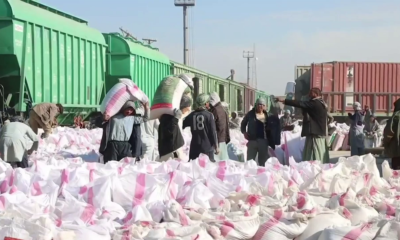
Afghanistan’s trade with Central Asia records sharp growth
-

 Sport2 days ago
Gaikwad set to replace injured Kohli for Afghanistan ODI Series
-

 Latest News4 days ago
Three Afghans among four farmworkers burned alive in Italy; two Pakistanis arrested
-

 Sport3 days ago
Afghanistan name squad for A-team tri-series in Sri Lanka
-
 Latest News5 days ago
Karzai blames Pakistan’s policies for its security challenges, urges EU to consider regional realities
-
 Business3 days ago
Afghanistan highlights strategic connectivity role at Termez Dialogue
-

 Latest News4 days ago
Rubio says at least five countries willing to accept stranded Afghans in Qatar
-

 Latest News3 days ago
Kohli ruled out of Afghanistan ODI series with hamstring injury