
Latest News
Takhar’s District Police Chief Killed in Baghlan

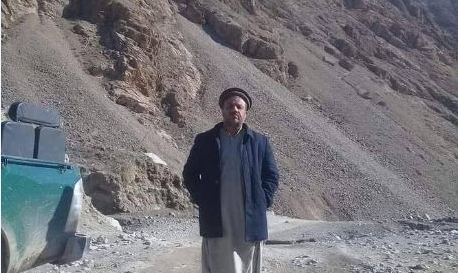
Local security officials confirmed that Mohammad Afzal Hakimi, the Police Chief for the Warsaj District of Takhar Province, was killed along with his three bodyguards, in a Taliban ambush in Baghlan Province.
According to Ahmad Jawid Basharat, a spokesman for the Baghlan Police, the incident happened on Friday morning on the Takhar-Baghlan Highway.
Basharat further added that although police forces from Jalga District headed to the incident area to provide support, the assailants escaped the scene.
Moreover, local officials in Baghlan blame the Taliban for the assassination of Hakimi, but the militant group has not commented in the regard yet.
Afzal Hakimi served as Police Chief for Jalga district of Baghlan Province before his appointment in Takhar’s Warsaj District.
Takhar and Baghlan are volatile provinces in northern Afghanistan where insurgents have a significant presence in a number of districts. Insurgents have been active in carrying out attacks against Afghan forces in the region.




Latest News
Fitrat says foreign aggression and internal conflicts have inflicted heavy losses on Afghanistan
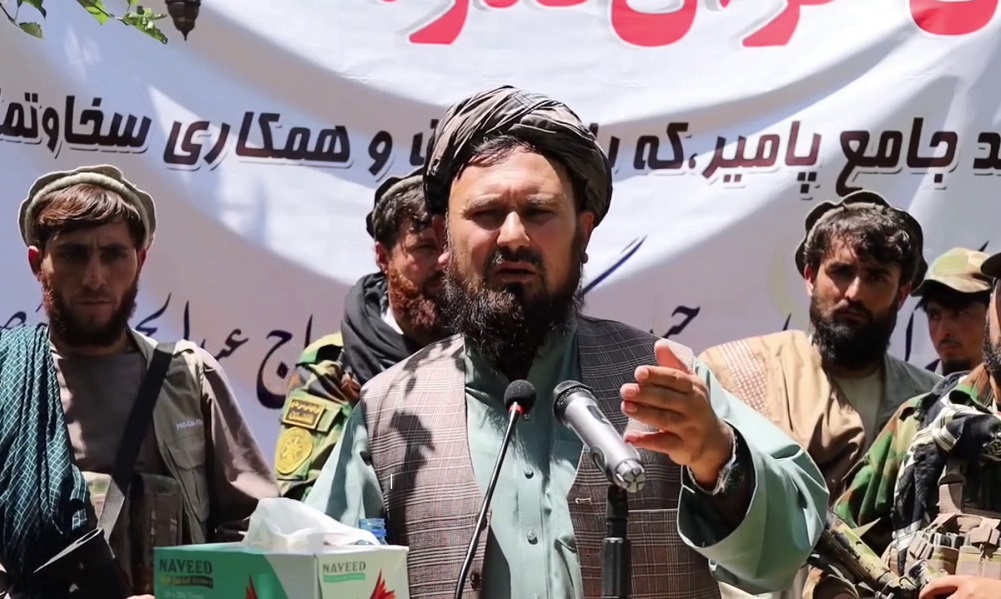
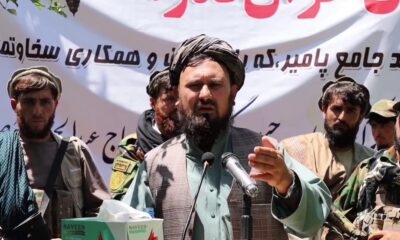
Fasihuddin Fitrat, Chief of Army Staff of the Islamic Emirate, has said that Afghanistan has endured decades of devastation due to foreign intervention and internal conflicts.
Speaking at a ceremony marking the laying of the foundation stone for a mosque in Baharak district of Badakhshan province, Fitrat said the country had suffered the consequences of war for more than four decades, with both external aggression and domestic strife contributing to widespread destruction.
“Our homeland has been engulfed in war for four and a half decades. At times, these wars were imposed on us by the enemies of the country, and at other times, internal conflicts claimed the lives of our people,” he said. “Our enemies divided and fragmented our nation.”
Fitrat argued that foreign actors had, at various stages of Afghanistan’s history, fueled divisions among Afghans and weakened national solidarity, resulting in prolonged conflict and significant human losses.
The senior military official also criticized the policies of some neighboring countries, saying pressure on Afghanistan had increased since the Islamic Emirate returned to power in 2021. He pointed in particular to the ongoing deportation of Afghan migrants from neighboring states.
According to Fitrat, economic sanctions imposed on Afghanistan have compounded the country’s challenges, while large numbers of Afghan migrants continue to be returned from neighboring countries on a daily basis.
“With the return of the Islamic Emirate, even some of our neighbors adopted hostile policies and decided to send Afghan migrants back to their homeland,” he said. “Every day, waves of migrants are moving toward Afghanistan.”
His remarks come as Iran and Pakistan continue large-scale deportations of Afghan migrants, a process that has drawn concern from international humanitarian organizations. Aid agencies have repeatedly warned that the mass return of migrants is placing additional strain on Afghanistan’s fragile economy and limited humanitarian resources.
Latest News
Dialogue, not airstrikes, best way forward in Afghanistan-Pakistan tensions: EU’s Kallas
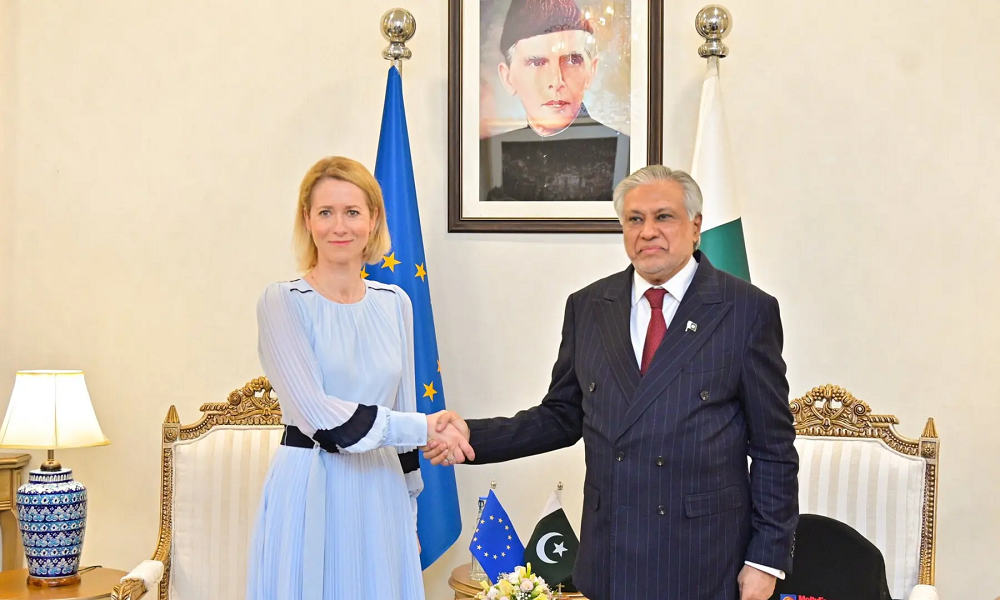
The European Union has called on Pakistan and Afghanistan to exercise restraint and seek dialogue to resolve their ongoing tensions, warning that continued hostilities could worsen humanitarian conditions and fuel instability in the region.
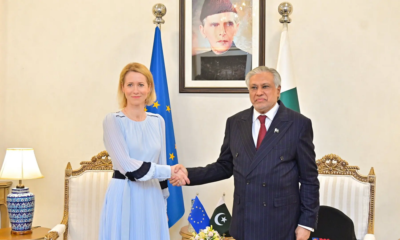
Speaking at a joint press conference with Pakistani Foreign Minister Ishaq Dar in Islamabad on Monday, the EU’s foreign policy chief Kaja Kallas said recent fighting between Pakistan and Afghanistan had serious humanitarian consequences and posed risks to regional security.
“Pakistan has been locked in a conflict with Afghanistan. The fighting in recent weeks has had grave humanitarian consequences and also risks fuelling further instability and radicalization,” Kallas said.
She noted that the European Union had consistently urged both sides to de-escalate tensions and avoid further confrontation.
“Pakistan has the right to defend itself and its people in line with international law, but dialogue, not air strikes, is the best off-ramp in this situation,” she added.
Meanwhile, the Pakistani foreign minister also highlighted security concerns related to Afghanistan, saying the issue was discussed in detail during the meeting. He reiterated Pakistan’s position that militant attacks originating from Afghan territory remain a “top concern” for Pakistan.
The Islamic Emirate has previously rejected claims that attacks in Pakistan originate from Afghan territory.
Latest News
Achakzai calls for Pakistan-Afghanistan dialogue and mutual respect
He warned that repeating past mistakes could further destabilize Pashtun and Baloch regions, pushing them into deeper political and security crises.
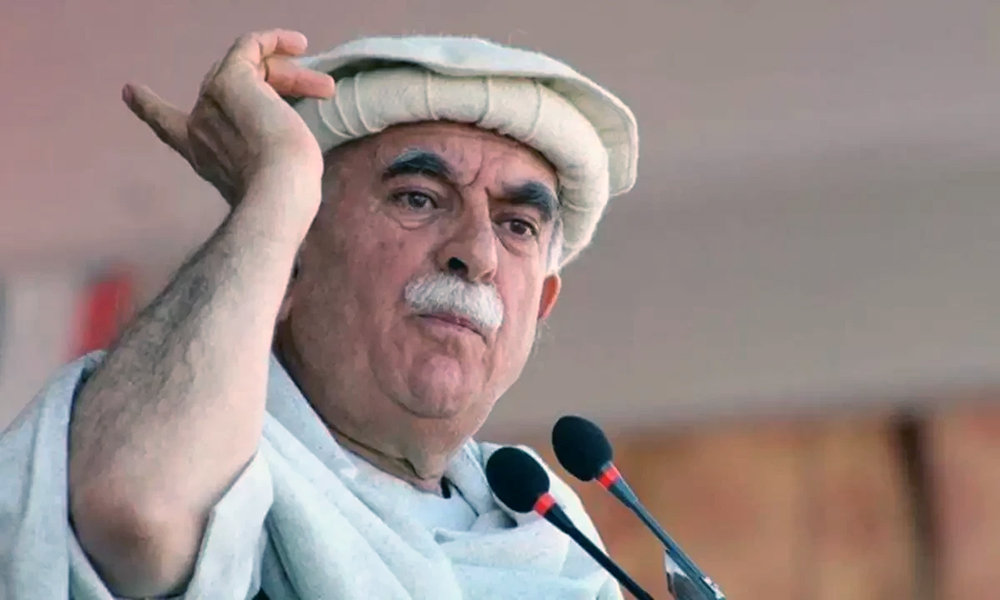
Mahmood Khan Achakzai, chairman of the Pashtoonkhwa Milli Awami Party and opposition leader in Pakistan’s National Assembly, has called for stronger constitutional governance, improved relations between Pakistan and Afghanistan, and the rejection of violence as a means of resolving regional disputes.
In a statement posted on social media platform X, Achakzai said that anyone seeking to govern and strengthen Pakistan must ensure that the country operates strictly within the framework of its constitution.
He argued that all state institutions should function within their constitutional boundaries and that the elected parliament must remain the supreme authority responsible for shaping both domestic and foreign policy.
According to Achakzai, adherence to constitutional principles would enable Pakistan to achieve meaningful progress and stability.
Addressing relations between Pakistan and Afghanistan, the veteran politician described the two countries as bound by deep fraternal ties and stressed the importance of mutual respect for sovereignty.
He said Afghanistan has historically been highly sensitive about its independence and that its sovereignty must be respected, while Afghans should likewise respect Pakistan’s independence.
Achakzai also emphasized that regional conflicts cannot be resolved through force. Referring to Afghanistan’s history, he noted that major powers including the United Kingdom, the United States and Russia had intervened in the country but ultimately failed to achieve their objectives, contributing to Afghanistan’s reputation as the “graveyard of empires.”
He warned that repeating past mistakes could further destabilize Pashtun and Baloch regions, pushing them into deeper political and security crises.
The opposition leader cautioned that the consequences would be severe if major global powers, including the United States, Russia, China, Britain and France, turned the region into an arena for geopolitical competition.
He reiterated his longstanding position that the region should be kept free from war and escalating tensions.
Achakzai further called for non-interference in Afghanistan’s internal affairs, describing the country as historically independent. He warned that any attempt to fragment Afghanistan could have serious repercussions not only for Afghanistan itself but also for neighboring Pakistan and Iran.
Highlighting the close links between the two countries, he described Pakistan and Afghanistan as interdependent and urged neighboring states to address disputes through dialogue, consultation and cooperation rather than confrontation.
During his remarks, Achakzai also referred to the large number of Pakistani citizens who hold dual nationality in countries such as Canada and Italy. He suggested that Pashtuns should obtain Afghan identity documents to affirm their identity and alleged that fencing along the Pakistan-Afghanistan frontier had been installed under U.S. direction.
In the final part of his statement, Achakzai criticized criminal activities carried out in tribal and Baloch regions under the banner of freedom movements.
Questioning attacks on civilians and the theft of property, he argued that looting, extortion and violence against ordinary people cannot be justified as part of any legitimate political or liberation struggle.


Fitrat says foreign aggression and internal conflicts have inflicted heavy losses on Afghanistan

Dialogue, not airstrikes, best way forward in Afghanistan-Pakistan tensions: EU’s Kallas

Achakzai calls for Pakistan-Afghanistan dialogue and mutual respect

Afghan repatriation resumes as Torkham closure crisis deepens

EMF EURO 2026 heads toward decisive group-stage finale in Bratislava

New Afghanistan-China transport corridor launched via Turkmenistan

Afghanistan signs $46 million deal to develop standard laboratory complexes

Large blast near Beit Shemesh part of pre-planned test: Israeli defense firm

Trump returns from China with stability but little progress

Afghanistan announce squad for India series

Tahawol: Review of Afghanistan-Russia military agreement

Saar: Afghanistan’s relations with regional countries discussed

Tahawol: US, Iran considering deal to end war

Saar: IEA seeking to ensure regional stability

Tawsia: Afghanistan’s weekly economic roundup reviewed
-
 Latest News4 days ago
Afghanistan, Russia sign military cooperation agreement
-
 Business4 days ago
Afghanistan expands oil production as investment in Amu Darya fields grows
-
 Latest News3 days ago
Work on TAPI project in Afghanistan ongoing and accelerating: Mujahid
-
 Latest News4 days ago
Mujahid calls for stronger Afghanistan-Russia relations during Moscow meeting
-
 Latest News4 days ago
Afghanistan calls for global cooperation on climate change as country faces rising environmental risks
-
 Latest News4 days ago
Islamic Emirate pursuing constructive regional diplomacy
-
 Latest News3 days ago
Afghanistan drawn in challenging group for AFC U-20 Asian Cup 2027 qualifiers
-

 Sport1 day ago
Afghanistan to play in Diamond Jubilee Tournament opener against Maldives