
Latest News
Baradar inaugurates 4th National and International Industry Week Exhibition

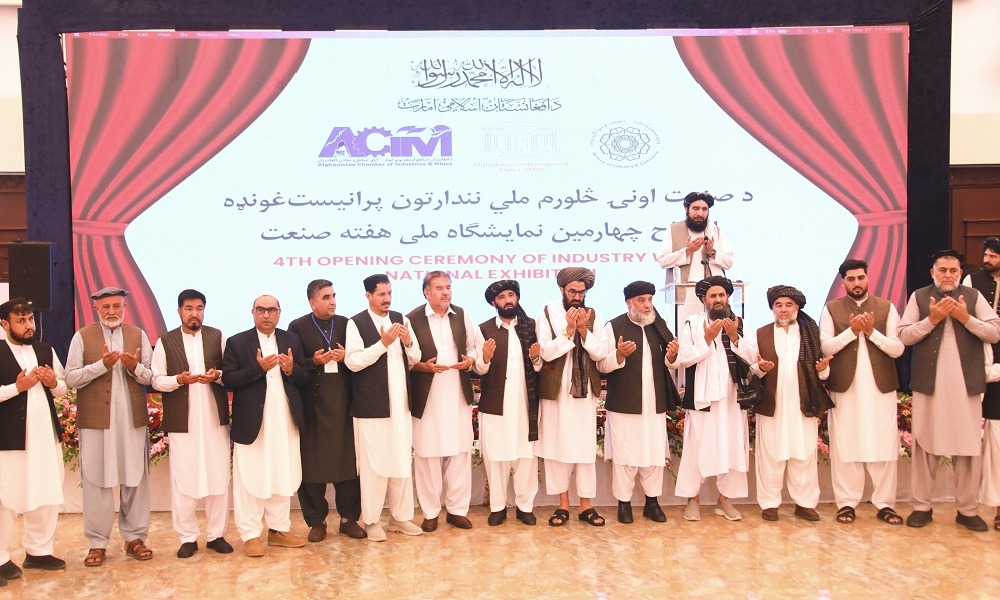
The Deputy Prime Minister for Economic Affairs, Mullah Abdul Ghani Baradar, officially inaugurated the 4th National and International Industry Week Exhibition in Kabul, the deputy PM’s office said in a statement.
The exhibition was launched on Tuesday at the Afghanistan International Exhibition Center in Kabul.
Baradar described industry as the foundation of every nation’s development.
“Today, we witness countries which, through industrial revolutions, have strengthened their infrastructure, eliminated unemployment, and created strong markets for their products,” he stated.
Baradar said: “Industry Week is not merely a symbolic title; rather, it represents a movement, a transformation, and a strong will, through which we must shift from an import-based economy to a productive, export-oriented, and self-sustaining economy.”
He added that since the return of the Islamic Emirate, the industrial sector has witnessed notable growth.
According to him, so far, around 1,500 new factories have been established, providing permanent employment for nearly 70,000 citizens. Afghanistan has now achieved self-sufficiency in 138 industrial and production sectors.
He stated that this development is considered not only a key step in reducing unemployment but also a fundamental factor in ensuring economic stability and resilience.
He further noted that the IEA has prioritized the establishment of industrial parks in various provinces across the country. In the near future, he said, we will witness the
distribution of land ownership documents to industrialists within these industrial zones.
These parks will not only create a conducive environment for production but will also provide employment opportunities for tens of thousands of citizens,” he said.
He also stated that to support the private sector, the Islamic Emirate has increased customs tariffs on imported items that have domestic alternatives and meet the needs of the people. In addition, all government entities have been instructed to prioritize local products in their procurement processes, even if their quality is slightly lower than that of imported goods.
The Deputy PM noted that since the IEA came to power, favorable conditions for investment have been established across the country.
Currently, both domestic and foreign investors are actively investing in sectors such as electricity, mining, agriculture, industry, transport, infrastructure, telecommunications, health, and many others. A wide range of facilitations have been provided in these areas to encourage investment.
He also recognized industrialists as a core force behind the country’s economic development and praised their initiatives and efforts in the industrial sector.
He stated: “If you guarantee quality, price, and quantity in your products, I promise you from this platform that we will increase import tariffs on similar foreign goods to the level of national self-sufficiency, in support of domestic production.”
The 4th National and International Industry Week Exhibition has been organized to showcase the capacities, capabilities, and achievements of Afghanistan’s national industry.
Hundreds of local companies have displayed their industrial products and agricultural outputs in areas including food products, pharmaceuticals, dairy, construction materials, handicrafts, rugs, plastics, battery production, metal melting, and many other sectors. This exhibition will continue for one week.



Latest News
Pakistan rejects allegations of links to ISKP amid rising tensions with Afghanistan
Pakistan’s Foreign Ministry spokesperson said Islamabad had participated constructively and clearly presented its concerns during the discussions.
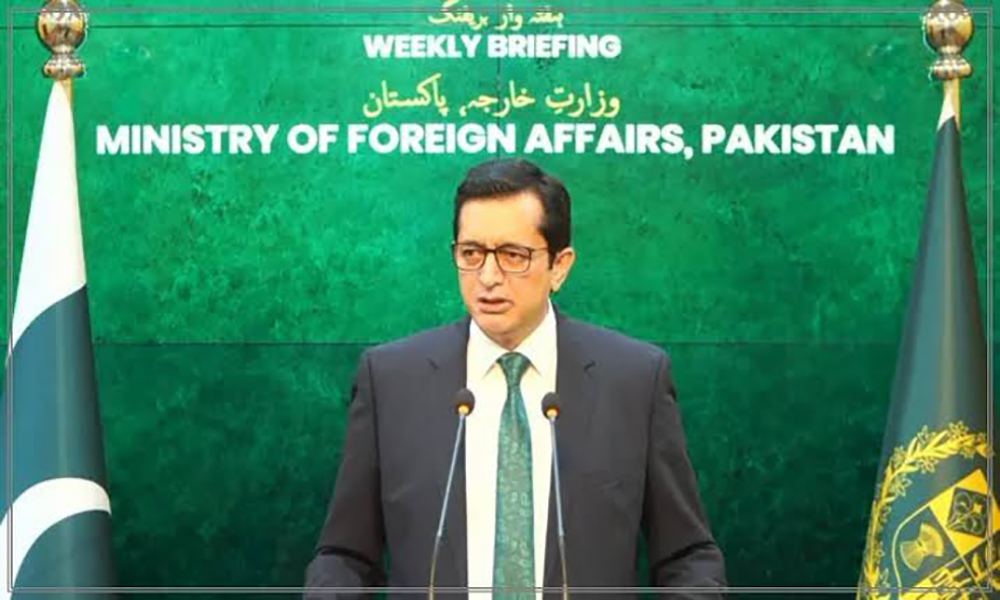
Pakistan’s Foreign Ministry has rejected allegations by Afghanistan’s Foreign Minister Amir Khan Muttaqi that Islamabad is linked to the Islamic State Khorasan Province (ISKP), further highlighting tensions between the two countries over regional security.
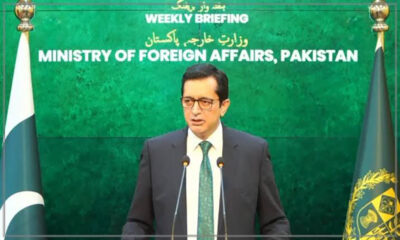
Speaking at the ministry’s weekly briefing on Friday, Pakistan’s Foreign Ministry spokesperson dismissed the allegations and said the Islamic Emirate administration was responsible for the security situation in Afghanistan’s Badakhshan and Nuristan provinces.
The spokesperson also alleged that Tehreek-e-Taliban Pakistan (TTP), the Balochistan Liberation Army (BLA) and other militant groups were operating from safe havens in Afghanistan. He claimed that Pakistani authorities had shared specific information about the locations of these groups through political and other channels.
The Pakistani official further defended his country’s military strikes, describing them as targeted and precise. On the other hand, however, the Islamic Emirate has stated that civilians were targeted in airstrikes by the Pakistani military regime.
However, Afghanistan’s Islamic Emirate has repeatedly rejected Pakistani allegations that Afghan territory is being used to launch attacks against Pakistan. Afghan officials have maintained that Pakistan’s security challenges stem from its own internal issues and developments over several years.
The two countries also remain divided over the outcome of the eighth Moscow Format meeting. Pakistan’s Foreign Ministry spokesperson said Islamabad had participated constructively and clearly presented its concerns during the discussions.
Asked why the meeting concluded without a joint statement, the spokesperson said the Afghan delegation had not agreed to the wording used in previous years, describing the disagreement as a substantive issue rather than a matter of language alone.
At the meeting, Muttaqi accused Pakistan of using ISKP and former Afghan government forces in what he described as a new campaign to destabilize Afghanistan and the wider region. He referred to security incidents in Badakhshan and Nuristan in support of his claims.
The latest exchange of accusations underscores continuing disagreements between Kabul and Islamabad over militancy, crossing security and regional stability.
Latest News
Kyrgyz President calls for continued regional support for Afghanistan
Japarov also underscored the importance of continued humanitarian assistance, urging regional countries to uphold their commitments to supporting Afghanistan.
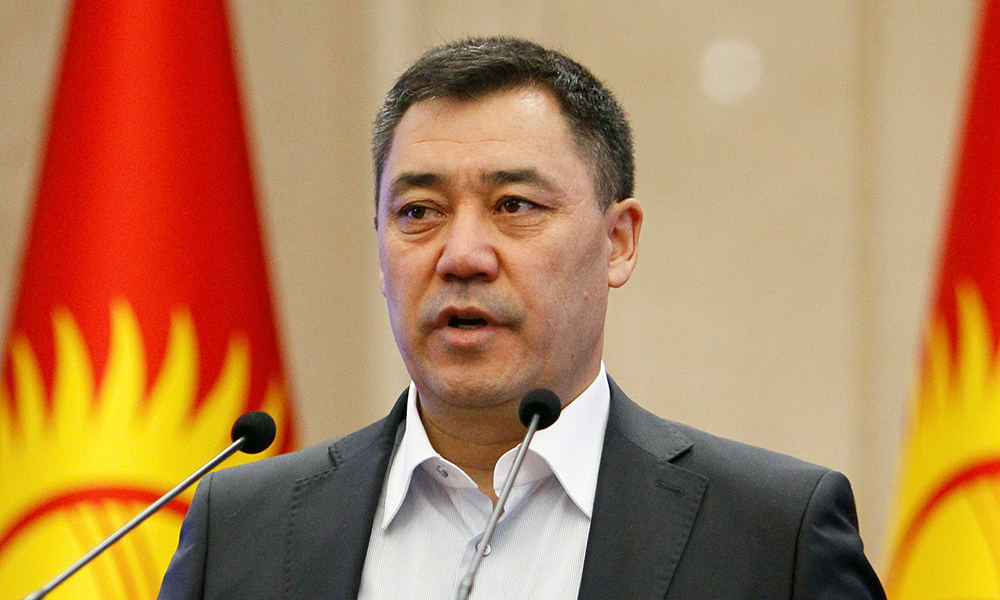
Kyrgyz President Sadyr Japarov has called on regional countries to maintain their support for Afghanistan, stressing that a stable and peaceful Afghanistan would benefit the entire region.
Speaking at a consultative meeting of the leaders of Central Asian countries and Azerbaijan, Japarov highlighted the importance of continued assistance to the Afghan people and stronger regional cooperation to address shared security challenges.
He emphasized the need to enhance cooperation among regional countries to combat terrorism, drug trafficking and organized crime.
Japarov also underscored the importance of continued humanitarian assistance, urging regional countries to uphold their commitments to supporting Afghanistan.
Latest News
Afghanistan, Iran seek to expand trade and transit through western border crossings
The Herat governor called for greater attention to expanding trade and transit through Herat, Farah and Nimroz provinces.
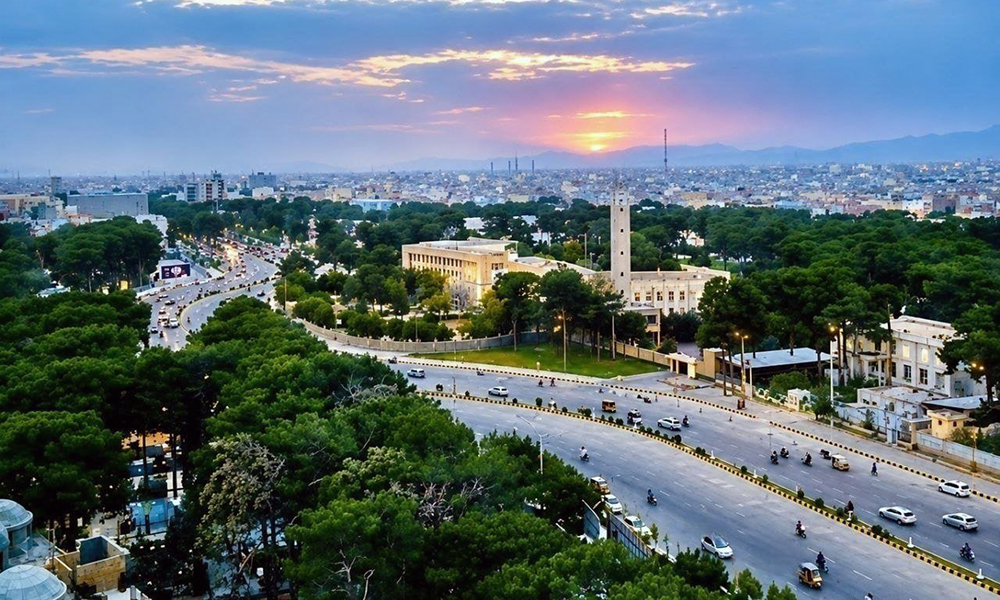
Herat Governor Maulana Islam Jar has met with an Iranian delegation led by Mohammad Mohsen Zanganeh, a member of Iran’s Islamic Consultative Assembly, to discuss expanding bilateral trade, strengthening economic ties and facilitating cross-border transit.
According to a statement from the Herat Governor’s Press Office, the meeting was also attended by Farah Governor Mohammad Hafiz Mujahid and Nimroz Governor Abdul Manan Mahmoud.
Officials from both countries discussed ways to increase commercial exchanges and improve the use of western border crossings to facilitate the movement of goods between Afghanistan and Iran.
Welcoming the Iranian delegation, Islam Jar said Afghanistan had made progress in the economic, industrial and commercial sectors, while major infrastructure projects were also underway.
He also highlighted the Islamic Emirate’s efforts to combat drug cultivation and trafficking, saying progress had been made in this area.
The Herat governor called for greater attention to expanding trade and transit through Herat, Farah and Nimroz provinces, stressing that increased commercial activity could benefit both countries.
According to the statement, Islam Jar said the Islam Qala, Abu Nasr Farahi and Nimroz border crossings were ready to operate around the clock to facilitate trade and transit.
Meanwhile, Zanganeh thanked the Afghan people for their hospitality and said Afghanistan had made considerable progress over the past five years.
He expressed support for expanding trade and transit cooperation and increasing the movement of goods through the three western border crossings, pledging to work towards advancing these objectives.
The meeting reflects ongoing efforts by Afghanistan and Iran to strengthen economic cooperation, improve cross-border transportation and expand regional trade connectivity.


Pakistan rejects allegations of links to ISKP amid rising tensions with Afghanistan

US imposes sanctions on ICC amid dispute over international prosecutions

Former ICC judge Navi Pillay wins 2026 Nobel Peace Prize

Bangladesh reach 317/8 on Day One against Afghanistan in Test match

Kyrgyz President calls for continued regional support for Afghanistan

EU and FAO launch €5m programme to strengthen Afghanistan’s agrifood sector

Omar Zawak, Toofan Herat secure victories in Afghanistan Champions League

Houthi advance in Yemen puts U.S. in a new bind

Cricket Bonanza: Afghanistan set for packed international schedule

Afghanistan Champions League Season 6 kicks off today: Abu Muslim Farah face Sarsabz Yashlar

Tahawol: CSTO meeting on Afghanistan reviewed

Saar: Guterres’s talks with Pakistani officials on Afghanistan discussed

Tahawol: Consequences of US war in Afghanistan reviewed

Saar: Expulsion of Afghan refugees from Pakistan discussed

Tahawol: Discussion on outcome of Moscow Format meeting
-
 Sport5 days ago
Cricket Bonanza: Afghanistan set for packed international schedule
-

 Latest News4 days ago
Ariana Afghan Airlines ends 15-year control of ticketing and operational systems by Pakistani firm
-
 World4 days ago
▶️Saudi Arabia, Turkey, Pakistan activate Mecca defense pact
-

 Sport5 days ago
ACL: Abu Muslim Farah maintain momentum with 2-0 win over Arman FC
-
 World5 days ago
Trump picks John Coale as special presidential envoy for hostage affairs
-
 Regional4 days ago
Yemeni government forces seize strategic strait from Houthis
-
 Latest News4 days ago
IEA rejects ICC arrest warrants, says Afghanistan does not recognize court
-
 Sport4 days ago
Aino Mina Kandahar defeat Istiqlal Kabul 3–2