
Business
Kazakhstan pledges $500 million investment in Torghundi–Herat railway project

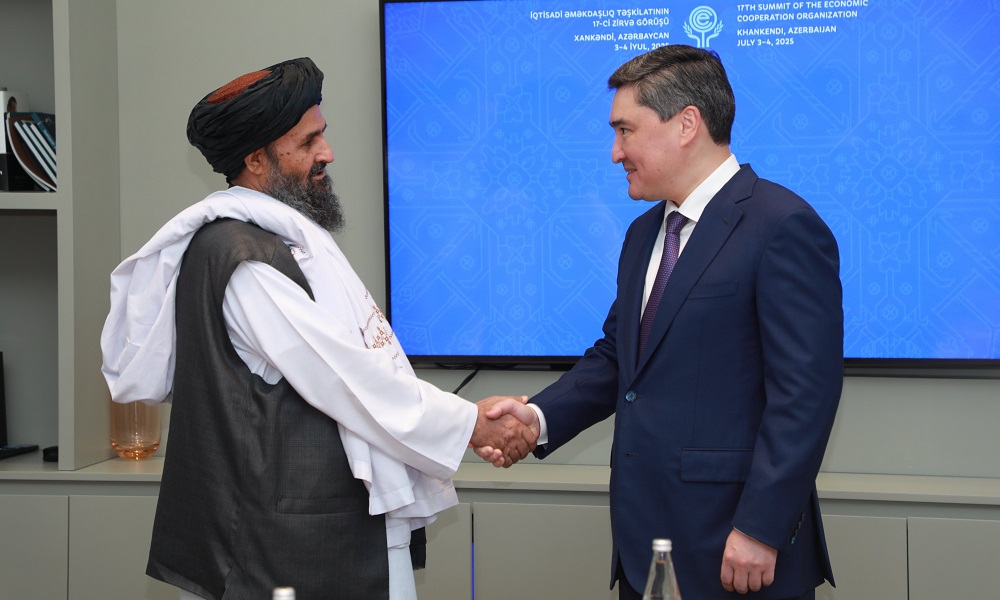
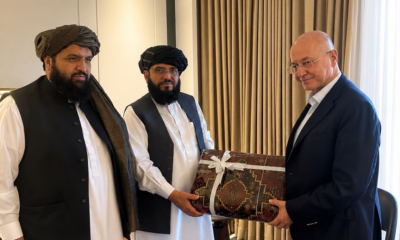
Mullah Abdul Ghani Baradar, Deputy Prime Minister for Economic Affairs, met on Friday with the Prime Minister of Kazakhstan Olzhas Bektenov in Khankendi, Azerbaijan, where both sides discussed political, economic, and trade issues between Afghanistan and Kazakhstan, the Afghan deputy PM’s office said in a statement.
At the meeting, the Prime Minister of Kazakhstan announced that his country will soon begin the Torghandi-Herat railway line project in Afghanistan, with an investment valued at $500 million.
Bektenov also expressed Kazakhstan’s interest in investing in Afghanistan’s mining sector and said that Kazakhstan is ready to increase imports of Afghan fruit and facilitate Afghanistan’s exports through Kazakh territory.
He emphasized that Kazakhstan is one of the top ten countries with the highest trade relations with Afghanistan and they are committed to expanding these relations.
Bektenov also stated that his country maintains good relations with Afghanistan, and to strengthen these ties, the Kazakh Foreign Minister will soon visit Kabul.
During the meeting, Abdul Ghani Baradar described Kazakhstan as an important and reliable regional partner for Afghanistan and called the appointment of Kazakhstan’s special representative for Afghanistan a valuable step.
Baradar expressed gratitude to Kazakhstan for supporting Afghanistan in international forums and said Afghanistan serves as an important transit route for Kazakhstan to the Middle East and South Asia.
According to him, Kazakhstan can connect Afghanistan to Europe, and therefore, Kazakhstan should take advantage of existing opportunities in investment, trade, railway projects, and transit affairs.
He also considered the signing of the agricultural products preservation and quarantine agreement between the two countries important for increasing bilateral trade volume to $3 billion.
Baradar stressed facilitating visa issuance for Afghans and the opening of Afghan bank accounts in Kazakhstan’s Zaman and Freedom Banks.
He assured that Afghan banks are fully prepared for these collaborations.
Baradar noted that Afghanistan has initiated the establishment of an operational company for imports and exports via railways to expand bilateral trade and will soon introduce it to Kazakhstan.
He added that a draft agreement on international transport and transit between the two countries has been prepared, serious discussions are underway regarding tariff reductions on transit goods, and cooperation agreements in industrial, trade, and transport sectors with Iran, Kazakhstan, and Turkmenistan have been formulated, with Kazakhstan’s cooperation being significant in these areas.






Business
Kazakhstan to import metallurgical raw materials from Afghanistan
In addition, Kazakhstan has finalized agreements to import raw materials from Afghanistan and neighbouring Kyrgyzstan to support the country’s metallurgical industry.
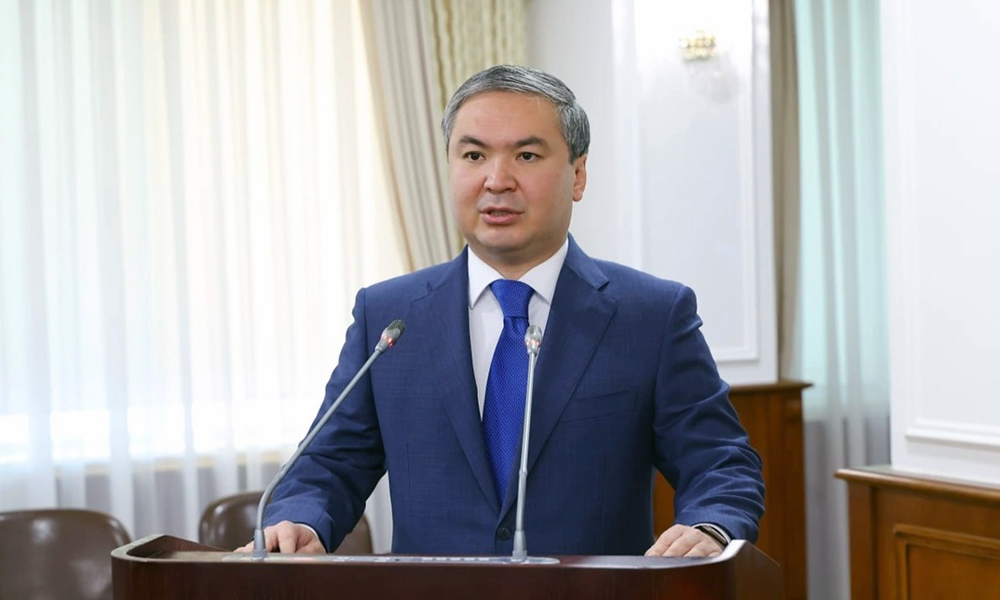
Kazakhstan has reached agreements to import metallurgical raw materials from Afghanistan and Kyrgyzstan as part of efforts to ensure a stable supply for the country’s metals industry, Kazakh Minister of Industry and Construction Yersaiyn Nagaspayev announced on Tuesday.
Speaking at a government meeting, Nagaspayev said the new import agreements are intended to strengthen raw material supplies to Kazakhstan’s metallurgical plants after production in the sector slowed during the first half of 2026.
According to the minister, metallurgical output reached 97.3 percent of planned levels in the first six months of the year. He attributed the slowdown to scheduled maintenance at industrial facilities and the gradual depletion of Kazakhstan’s domestic mineral resource base.
Despite those challenges, Nagaspayev said the sector’s performance improved by 1.8 percent compared with the first five months of the year, largely due to measures aimed at securing reliable supplies of raw materials.
He said domestic producers have increased deliveries of copper, zinc and gold-bearing ores to processing plants, while shipments of zinc concentrate have resumed. In addition, Kazakhstan has finalized agreements to import raw materials from Afghanistan and neighbouring Kyrgyzstan to support the country’s metallurgical industry.
The move highlights Afghanistan’s growing role as a regional supplier of mineral resources. The country is believed to possess significant untapped deposits of copper, iron ore, lithium and a range of other strategic minerals, attracting increasing interest from neighbouring countries seeking to diversify supply chains and strengthen regional trade.
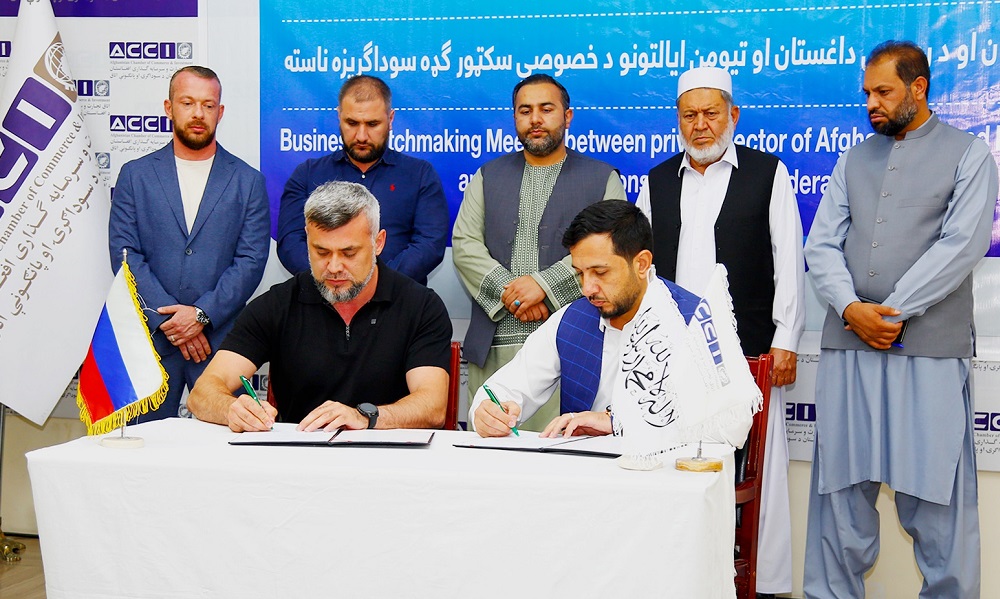
The Afghanistan Chamber of Commerce and Investment (ACCI) has announced that trade agreements worth AFN 446 million were signed between Afghan traders and investors and business delegations from Russia’s Republic of Dagestan, Tyumen Region, and Kazakhstan during a joint business-to-business (B2B) meeting.
According to a statement issued by the ACCI, the agreements cover the sectors of construction materials, pharmaceuticals, food and essential commodities (including cooking oil, tea, and grains), and agricultural services.
The meeting began with discussions between Afghan, Russian, and Kazakh traders and investors, during which the participants exchanged views on trade opportunities, market needs, and areas of potential cooperation.
Meanwhile, Deputy Chairman of the Tyumen Chamber of Commerce thanked the leadership and staff of ACCI for their warm hospitality and described the visit as highly successful. He invited Afghan businesspeople to visit Russia and pledged to facilitate meetings between them and Russian traders.
He said the meetings would help expand not only Russian exports to Afghanistan but also Afghan exports to Russia. He added that the gathering could be remembered in the future as the beginning of a major historic trade partnership.
A joint trade delegation from Russia’s Republic of Dagestan, the Tyumen Region, and Kazakhstan arrived in Kabul on Saturday for talks aimed at expanding economic and commercial cooperation.
Business
Mango growers suffer heavy losses as exports fall and climate takes its toll
Last year, Pakistan exported about 109,600 tonnes of mangoes, with Afghanistan accounting for 22,500 tonnes, or more than 20% of total exports.
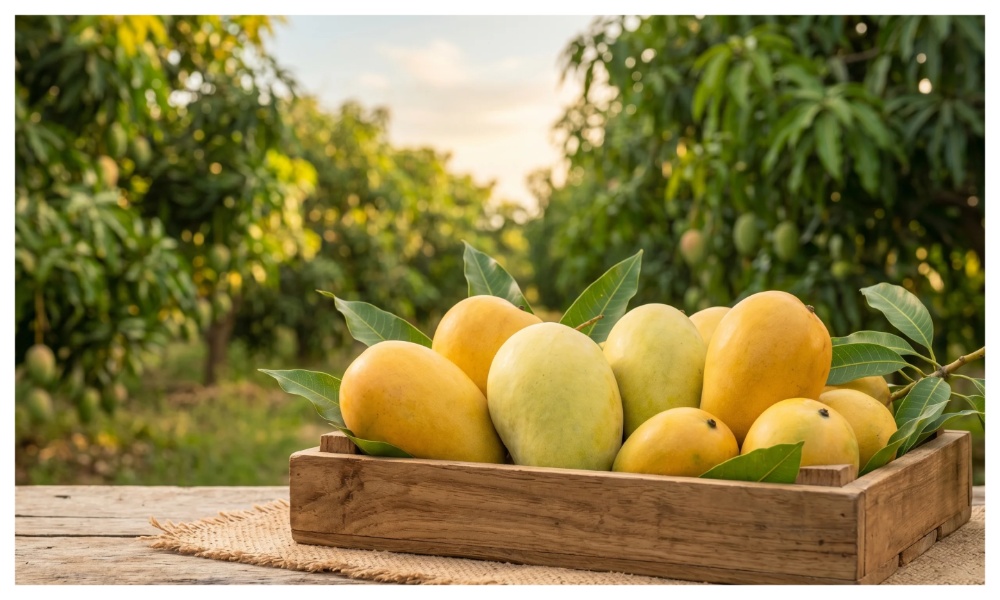
Pakistan’s mango industry is facing one of its toughest seasons, with farmers suffering heavy financial losses due to declining exports and worsening climate conditions.
A major factor has been the sharp fall in exports caused by geopolitical tensions, particularly the prolonged closure of the Pakistan-Afghanistan frontier. Afghanistan has traditionally been one of Pakistan’s largest markets for fresh produce because of its proximity, minimal sanitary requirements and role as a gateway to Central Asia.
Last year, Pakistan exported about 109,600 tonnes of mangoes, with Afghanistan accounting for 22,500 tonnes, or more than 20% of total exports. The previous season, exports to Afghanistan reached 28,700 tonnes. This year, however, Pakistan has exported no mangoes to Afghanistan despite shipping fruit to markets around the world.
The conflict in Iran has also disrupted exports to Gulf countries by affecting shipping routes, reducing vessel availability and increasing freight costs. As a result, exports to the United Arab Emirates—Pakistan’s largest mango market—have fallen sharply. Although shipments to Iran and Oman have risen, they have not offset losses elsewhere. By July 6, Pakistan had exported just 42,343 tonnes of mangoes, compared with 55,684 tonnes during the same period last year.
Climate change has further compounded growers’ problems. Erratic rainfall, prolonged heatwaves, rising temperatures and damaging windstorms during flowering and fruit development have reduced yields and fruit quality.
The changing climate has also increased pest and disease outbreaks. Mango malformation disease caused widespread damage in Sindh, while growers spent heavily on pesticides and fungicides with limited success. As a result, lower-quality B- and C-grade fruit make up a much larger share of this year’s crop than premium A-grade mangoes.
Some experts estimate climate-related stresses have cut production by 20 to 30 percent this season. Farmers now face lower yields, poorer quality fruit, rising production costs and weak market demand.
Growers in Sindh say low export volumes and falling prices have left many unable to recover even their production costs, raising concerns about the long-term viability of mango farming.
Domestic demand has also weakened as rising inflation and falling purchasing power make premium fruits increasingly unaffordable for many households.
The decline is reflected in the shrinking area under fruit cultivation, which fell from 0.80 million hectares in FY2013 to 0.69 million hectares in FY2024. Many farmers are replacing long-term orchards with annual crops that provide quicker and more reliable returns.
Experts say Pakistan must invest in climate-resilient fruit varieties, modern orchard management, value-added processing and diversified export markets if its horticulture sector is to remain competitive in the face of climate change and shifting global trade conditions.


UN chief appoints Bangladesh’s Rabab Fatima as new UNAMA head in Afghanistan

Fifth Afghanistan-Iran Joint Consular Committee meeting held in Kabul

Saar: Growing trade ties between Kabul-New Delhi discussed

UN’s Lemarquis highlights drought and climate challenges facing Bamyan

Education for girls and boys key to preventing child malnutrition: Karzai

Afghanistan signs $67 million contract for cement production in Samangan

Afghanistan eyes direct Basmati rice imports from India amid tensions with Pakistan

TAPI project sees rapid progress in Afghanistan

Polio cases in Afghanistan rise to six in 2026 as two new cases confirmed

Cricket world pays tribute to Afghanistan fast bowler Shapoor Zadran
Saar: Growing trade ties between Kabul-New Delhi discussed

Saar: Impact of Iran-US conflict on the region discussed

Tahawol: Iranian attacks on US bases in Gulf

Saar: Impact of US-Iran war on region

Tahawol: Renewed tension between Iran and US discussed
-
 Latest News4 days ago
India offers 1,000 online scholarships for Afghan students for 2026-27 academic year
-

 International Sports4 days ago
FIFA’s inaugural YouTube Creator Cup to stream live on Ariana Television and Ariana Sport YouTube channels
-

 International Sports4 days ago
FIFA World Cup semi-final line-up confirmed
-

 Regional5 days ago
Turkey spent over $120 million to prepare airport for Qatar-donated U.S. presidential aircraft
-
 Latest News5 days ago
Afghanistan’s population rises to 37.2 million
-
 Latest News5 days ago
Afghan envoy, UNHCR chief discuss support for returnees from Pakistan and Iran
-

 International Sports2 days ago
Spain and France set for blockbuster World Cup semi-final showdown
-

 International Sports4 days ago
Mbappe and Messi remain level as Golden Boot race heads into World Cup semi-finals