
Latest News
Khalilzad warns of China’s growing grip on Central Asian minerals, urges swift US action

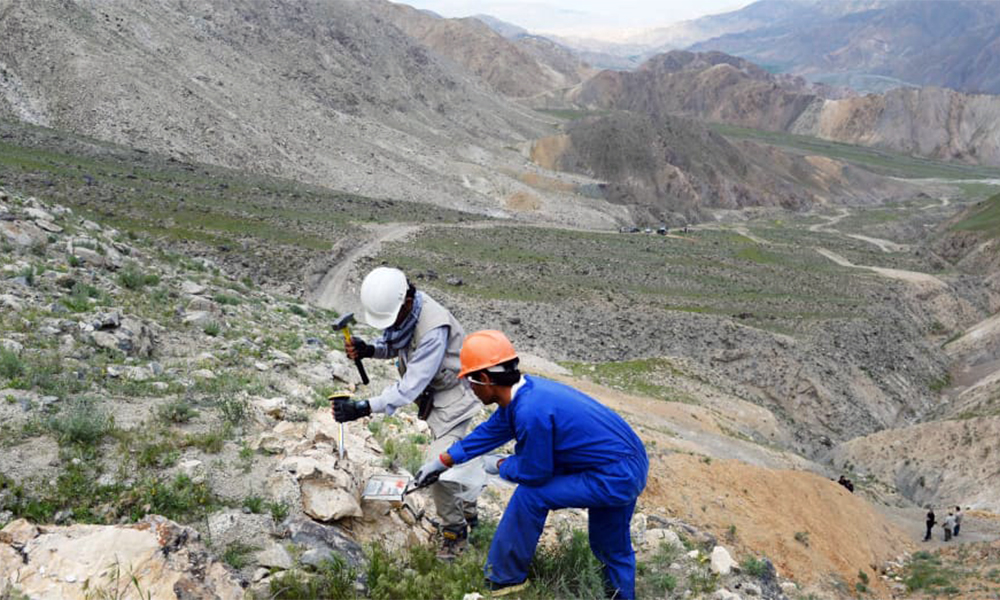
Former U.S. special envoy for Afghan peace talks, Zalmay Khalilzad, has issued a stark warning about China’s accelerating efforts to dominate Central Asia’s vast mineral wealth. He urged Washington—specifically the Trump administration—to act swiftly before Beijing consolidates its hold over the region’s critical resources.
“China’s push for hegemony in Central Asia is marching forward with its aggressive drive to control the region’s rich mineral resources,” Khalilzad posted on X. “We must contain China’s mineral expansionism.”
Khalilzad emphasized that countries including Kazakhstan, Uzbekistan, Afghanistan, and Pakistan remain open to deeper mineral cooperation with the United States, but cautioned that time is running out.
“It is imperative that we decide—and soon—on plans for exploring opportunities with each of these countries, and perhaps regionwide. Our neglect will only help China,” he said.
China’s advance in the region
Under its Belt and Road Initiative (BRI), Beijing has emerged as the dominant economic actor in Central Asia, investing billions in infrastructure, energy, and mining projects. Chinese firms have secured major stakes in lithium, copper, uranium, gold, and rare earth deposits across Kazakhstan, Uzbekistan, Kyrgyzstan, and Tajikistan.
These deals, often linked to infrastructure financing and soft loans, have effectively aligned regional economies with Chinese supply chains—particularly in sectors vital to the global clean energy transition.
Afghanistan: A high-stakes frontier
Afghanistan remains central to China’s long-term mineral strategy. The country’s estimated $1 trillion in untapped mineral wealth includes lithium, copper, rare earth minerals, and iron ore—resources critical for everything from electric vehicle batteries to defense technologies.
Since the Islamic Emirate of Afghanistan (IEA) returned to power in 2021, China has maintained diplomatic engagement, kept its embassy in Kabul open, and signed agreements focused on mining and infrastructure cooperation.
However, the Stimson Center, a U.S.-based nonpartisan think tank, recently noted that despite China’s interest in Afghanistan, Beijing has maintained roughly the same level of investment stock since the IEA takeover. The organization suggests that China is pursuing a measured investment strategy, playing a long game amid ongoing uncertainty.
U.S. absence and strategic risk
While the U.S. once led resource mapping and infrastructure development in Afghanistan through USAID and the Pentagon, it now lacks direct engagement in the country’s mineral sector. Efforts such as the Minerals Security Partnership (MSP) and C5+1 diplomacy have yet to yield significant investments or a strategic presence.
Khalilzad’s warnings echo concerns from other U.S. officials. In January, Congressman Rob Wittman told the House Select Committee on China that Beijing was using below-cost price dumping on rare earths to undercut competitors and monopolize supply chains—a tactic designed to “drive out competition” and assert long-term control.
China’s dominance over Central Asian and Afghan mineral assets grants it growing leverage over global clean energy and technology supply chains, just as Western economies seek to reduce dependence on Chinese exports.
Despite heightened awareness in Washington, observers warn that a lack of cohesive and timely U.S. strategy may allow Beijing to further solidify its foothold.
Dr. Michael Kugelman, senior associate for South Asia at the Wilson Center, said in March: “The U.S. failure to establish a robust, long-term strategy in Afghanistan’s mining sector has left a vacuum that China is eager to fill. Beijing’s patient, strategic approach to securing mineral resources in Afghanistan illustrates Washington’s retreat from a critical arena of geopolitical competition.”
Highlighting Afghanistan’s mineral reserves as a centerpiece in global power dynamics, Marcena Hunter, director at Geneva-based Global Initiative Against Transnational Organized Crime, said: “In a world where access to these minerals is a matter of national security, there is a geopolitical race to secure control of critical mineral supply chains.”


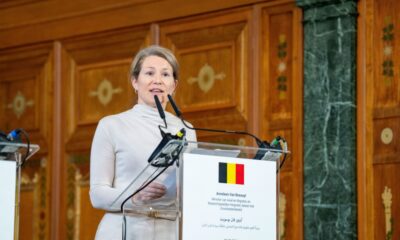


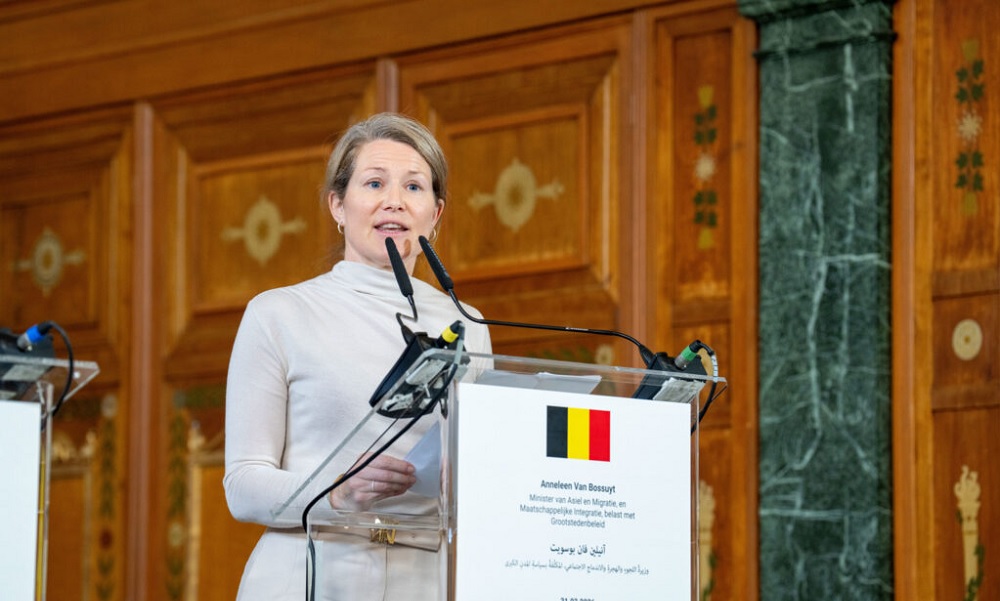
Belgium’s Minister for Asylum and Migration Anneleen Van Bossuyt has said Afghan nationals convicted of crimes and staying in Belgium illegally should be returned to Afghanistan after completing their prison sentences.
“I do not want them walking freely around our territory,” Van Bossuyt said.
She added that discussions with the Islamic Emirate of Afghanistan (IEA) over the return of such individuals do not amount to supporting the IEA.
“Afghan criminals who are staying illegally and are in our prisons, for example for the rape of minors, must return after serving their sentences,” she said.
Van Bossuyt said such contacts were aimed at addressing security concerns, including the safety of women and girls in Belgium.
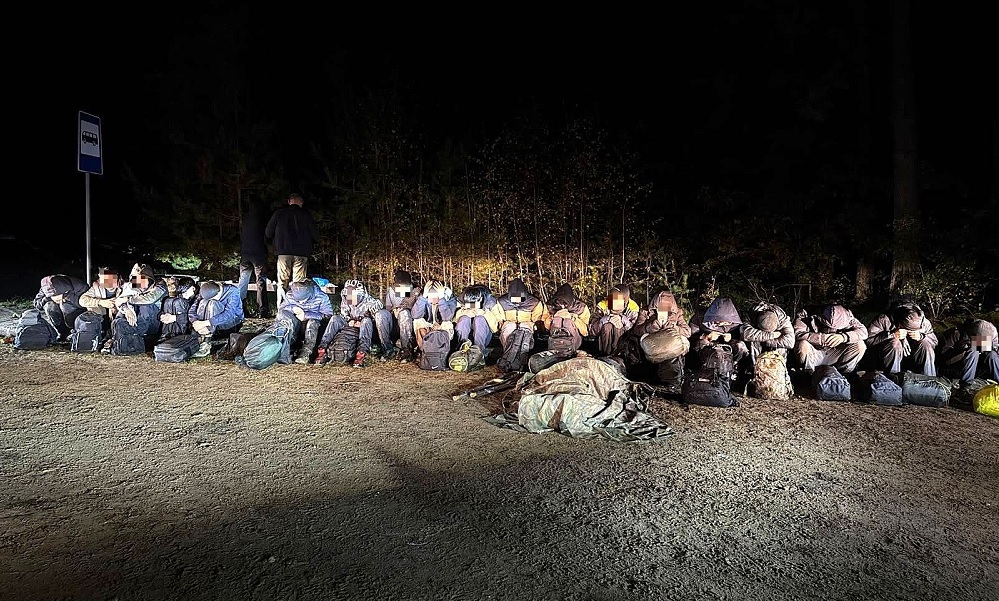
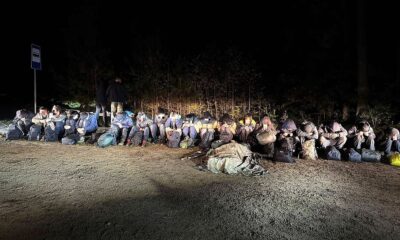
Lithuanian border guards have detained 35 Afghan and Iraqi migrants who crossed into Lithuania from Belarus, the Lithuania’s State Border Guard Service (VSAT) said.
The group was detected on Thursday evening after crossing the border near Katras village in the Varėna district, part of the Čepkeliai nature reserve.
Lithuanian authorities launched a large-scale operation to locate the migrants, deploying a VSAT helicopter, border guards, special forces and sniffer dogs. Police also assisted in the operation.
The migrants split into several groups but were detained before they could travel deeper into Lithuanian territory.
All 35 detainees were men aged approximately 20 to 30. Eleven had identification documents, while the others had none.
The VSAT said individual assessments found no security threats among the group. By Friday morning, 29 of the migrants had been denied entry and returned to Belarus in accordance with Lithuanian law.
Interviews with five others were still underway, while another migrant was taken to a medical facility for examination after reporting health problems.
Lithuanian border authorities said they have prevented 1,661 migrants from illegally entering the country from Belarus so far this year.
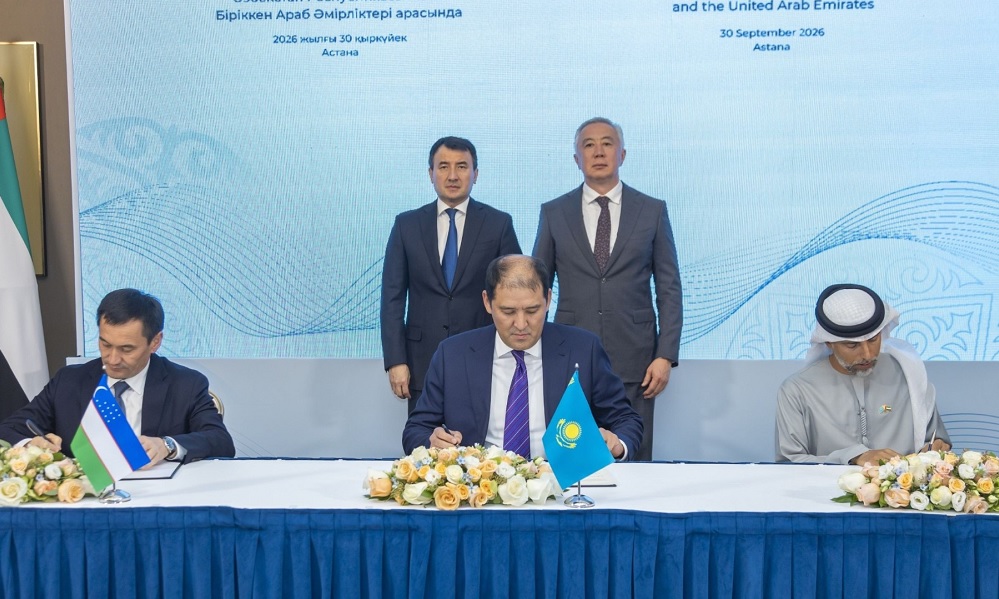
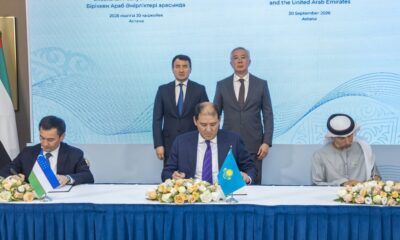
The transport ministries of Kazakhstan and Uzbekistan and the United Arab Emirates’ Ministry of Energy and Infrastructure have signed a memorandum of understanding (MoU) to cooperate on the Kazakhstan-Uzbekistan-Afghanistan-Pakistan (CASA) railway project, according to Kazakhstan’s government.
The project aims to develop a new railway route connecting Central and South Asia and providing access to Pakistan’s seaports, while creating new opportunities for international transport, trade, logistics and investment.
Under the agreement, the three countries will conduct technical and economic studies, analytical assessments and feasibility work on the development of the required railway infrastructure and related facilities.
The parties are also considering establishing a joint working group to address the project’s technical, economic and financial aspects.
Kazakhstan and Uzbekistan have developed railway networks and significant transit potential, while the UAE has international experience in transport infrastructure, logistics and major investment projects, the statement said.
The Kazakh government said combining these capabilities would support further practical work on the CASA project and help determine mechanisms for its implementation.
The Trans-Afghan transport corridor linking Central and South Asia has the potential to carry up to 10 million tonnes of cargo to Pakistan’s ports of Karachi and Gwadar.


Rashid Khan plans to build cricket academy and stadium in Nangarhar

Belgian minister says convicted Afghan criminals should return after serving sentences

Lithuania detains 35 Afghan and Iraqi migrants crossing from Belarus

Kazakhstan, Uzbekistan and UAE sign MoU on CASA railway project via Afghanistan

Pakistan says Mecca pact members to hold emergency talks on engaging Houthis

Saudi energy group signs major Afghanistan deals covering gas exploration and pipeline plans

Khalilzad: Afghanistan ready to attract major investment

El Niño likely to intensify, may become strongest ever recorded, WMO says

Khyber Chamber demands reopening of Torkham crossing

Messi returns to Inter Miami after Argentina retirement

Tawsia: Review of three key economic developments in Afghanistan

Tahawol: Pakistan’s airstrikes on civilians in Afghanistan discussed

Tahawol: Improvement in Afghanistan-China relations discussed

Saar: Expanding ties with regional and global countries discussed

Tahawol: Absence of Afghanistan’s envoy at UNGA discussed
-
 Sport5 days ago
Afghanistan vs India Asian Games quarter-final abandoned without a toss
-
 Regional4 days ago
US, Iran separately talk with mediators in latest bid to end war
-
 Business5 days ago
Afghanistan raises import tariffs on several goods to support domestic industry
-
 Latest News5 days ago
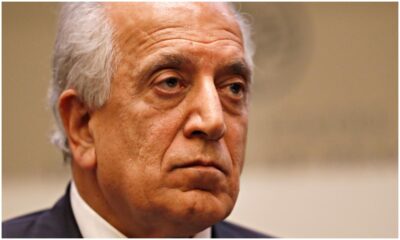
Khalilzad calls for end to Pakistan’s ‘double game’, urges new chapter with Afghanistan
-
 Business5 days ago
Afghanistan-Kazakhstan trade reaches $581 million in six months
-
 Regional3 days ago
US imposes sanctions on 13 tied to Iran weapons procurement
-

 Health5 days ago
Health minister visits Belarus to expand medical cooperation
-

 Sport5 days ago
ACL: Sorkh Poshan Khafi maintain perfect record with 1-0 win over Ariana Khost