
Latest News
Afghanistan among worst-affected nations by food insecurity
The WFP has urged the international community to act swiftly, warning that without sustained donor support, the situation could deteriorate even further.


Afghanistan has been named one of the nine worst-affected countries grappling with severe food insecurity, with over one million people facing emergency levels of hunger, according to the Global Report on Food Crises 2025 (GRFC) issued by the Food and Agriculture Organization of the United Nations (FAO).
The report, compiled by the Food Security Information Network (FSIN) and partner organizations, paints a grim picture of worsening conditions across the country.
The report estimates that 3.6 million Afghans will face Integrated Food Security Phase Classification (IPC) Phase 4 conditions this year — just one step below famine.
This places Afghanistan alongside countries like Sudan, the Democratic Republic of the Congo, Myanmar, and Pakistan, where war, economic instability, and climate-related disasters are driving millions into hunger.
Sudan currently leads the list, with a staggering 8.5 million people in IPC Phase 4 and an additional 800,000 experiencing famine-level hunger (IPC Phase 5).
In Afghanistan, the World Food Program (WFP) described the report’s findings as “not the records we want to break.”
While there have been minor improvements in food access over the past year, the sharp drop in humanitarian funding remains a critical concern.
The report warns that financial shortfalls, coupled with ongoing insecurity, are placing vital nutrition and health services—particularly for children—at serious risk.
Humanitarian funding globally is projected to fall by up to 45% in 2025, a trend that could have devastating consequences for low-income and crisis-affected countries like Afghanistan.
The WFP has urged the international community to act swiftly, warning that without sustained donor support, the situation could deteriorate even further.
The report attributes Afghanistan’s deepening food crisis to a combination of economic collapse, widespread poverty, and the fragile governance landscape following the Islamic Emirate’s return to power.
The withdrawal of development aid and ongoing banking restrictions have only intensified the crisis.
Despite efforts by humanitarian agencies to scale back and prioritize the most vulnerable populations, current resources are far from adequate to meet the growing needs.
The report calls on international stakeholders to keep food security at the forefront of their global agenda and to take decisive action to prevent a worsening catastrophe—not just in Afghanistan, but in all high-risk countries.


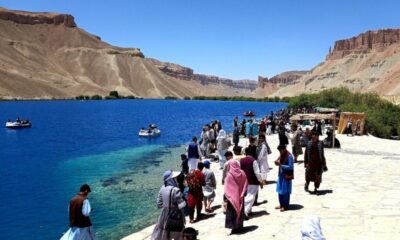




The United Kingdom has announced an additional £3 million (AFN 257 million) in humanitarian assistance to Afghanistan, aimed at supporting people affected by natural disasters and other shocks.
Richard Lindsay, in a post on X, said the funding will be used to provide essential nutrition supplies and related support to vulnerable populations.
The new allocation brings the UK’s total bilateral assistance to Afghanistan for the current financial year to £154 million (AFN 13.18 billion).
Latest News
Around 2.3 million tourists visited Afghanistan’s recreational areas during Eid: Ghufran
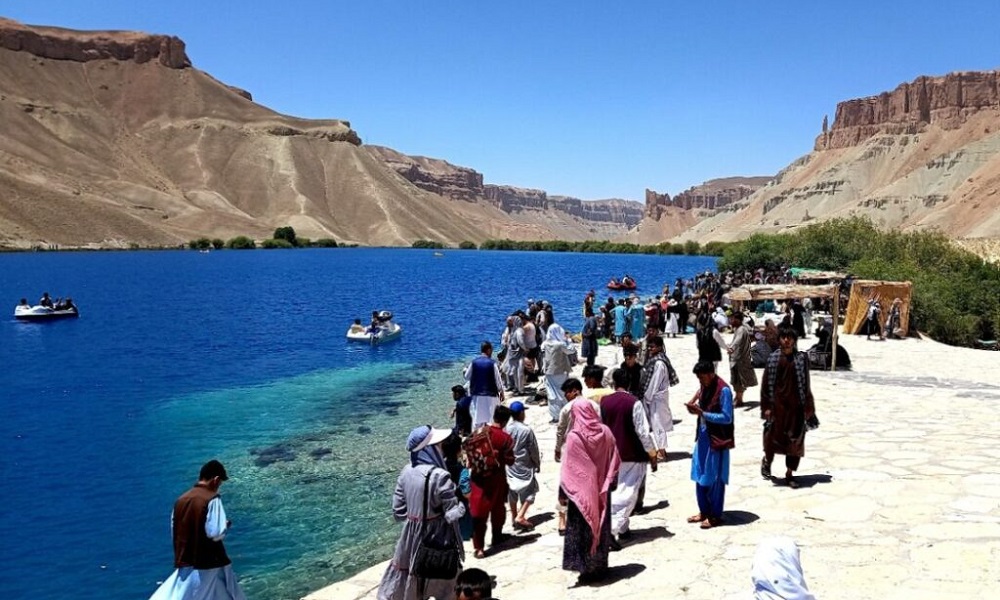
Khubaib Ghufran, spokesperson for the Ministry of Information and Culture, announced on Tuesday that over Eid al-Fitr holidays approximately 2.3 million domestic and foreign tourists visited the country’s recreational areas and natural attractions.
Ghufran said this level of tourist presence shows a significant increase compared to previous years and indicates growth and strengthening of the tourism sector.
Meanwhile, officials from the ministry’s departments, while emphasizing public cooperation in preserving the environment, maintaining cleanliness in public places, and protecting tourist attractions, stated that through extensive cooperation and efforts by security institutions, tourists were able to travel to different parts of the country with full confidence during the Eid holidays.
According to Ghufran, the Ministry of Information and Culture is working to develop and strengthen the tourism sector across the country and to provide more facilities and conveniences for tourists.
However, some tourists who traveled to various provinces praised the order, security, and hospitality of the people. They said that all provinces of Afghanistan have always been beautiful, but this year, with the current level of security and tourism facilities, their trips have become even more memorable.

The German government has stated that it does not recognize a representative of the Islamic Emirate as ambassador or chargé d’affaires of the Afghan embassy in Berlin.
The response follows a report by German public broadcaster ARD, which claimed that Nebras-ul-Haq Aziz, an individual linked to the Islamic Emirate, had assumed leadership of the Afghan diplomatic mission in the German capital.
According to Deutsche Welle, a spokesperson for Germany’s Foreign Ministry said on Monday that no personnel changes at the Afghan embassy had been officially communicated. “The legal status of the embassy will remain unchanged,” the spokesperson added.
He further clarified that a diplomat can only be formally recognized as ambassador after being nominated by their home country and granted accreditation by the host government—procedures that have not taken place in this case.
The German Foreign Ministry also expressed its interest in maintaining regular Afghan consular services in Germany, adding that such services are important for facilitating “the return of individuals required to leave the country.”


UK announces additional £3 million in aid for vulnerable people in Afghanistan

Around 2.3 million tourists visited Afghanistan’s recreational areas during Eid: Ghufran

Berlin does not recognize IEA envoy as charge d’affaires of Afghan embassy

US allies in Middle East ‘edging closer’ to joining conflict

Tehran rejects Trump’s claims of talks, accuses US of spreading ‘fake news’

Pakistani military jet downed in Afghanistan’s Jalalabad, pilot captured alive

Afghan Air Force conducts airstrikes in Islamabad, other cities

Prominent Muslim scholar issues fatwa calling for Afghanistan-Pakistan ceasefire

Afghan air force strikes key Pakistani military installations in retaliatory operation

IEA: Special circle in Pakistan has launched mission to destabilize region

Tahawol: Possibility of US ground forces entering Iran war discussed

Saar: Using US prisoners as political pressure

Tahawol: Pakistan’s efforts to destabilise Afghanistan

Saar: Decline in international assistance to Afghanistan

Tawsia: Assessment of Afghanistan’s economic activities in 1404
-

 Sport4 days ago
Afghanistan national buzkashi falls short in Kokpar World Championship semifinals
-

 Regional5 days ago
Pakistan among top nuclear threats to America, US intelligence chief tells senate
-

 Sport3 days ago
Ireland to host Afghanistan for ODI series in August
-
 Latest News5 days ago
Security Sources: Pakistani military shelling in Kunar and Nuristan leaves female doctor dead
-

 Latest News3 days ago
Mojtaba Khamenei calls for improved Afghanistan–Pakistan relations, offers help
-

 Latest News2 days ago
Deadly violence likely without dialogue between Afghanistan and Pakistan: ICG
-

 Sport4 days ago
FIFA sanctions Israeli Football Association over discrimination violations
-

 Latest News3 days ago
Malaysian PM welcomes temporary Afghanistan–Pakistan truce, urges lasting peace