
World
Alexei Navalny, Russian opposition leader, dies in Arctic jail

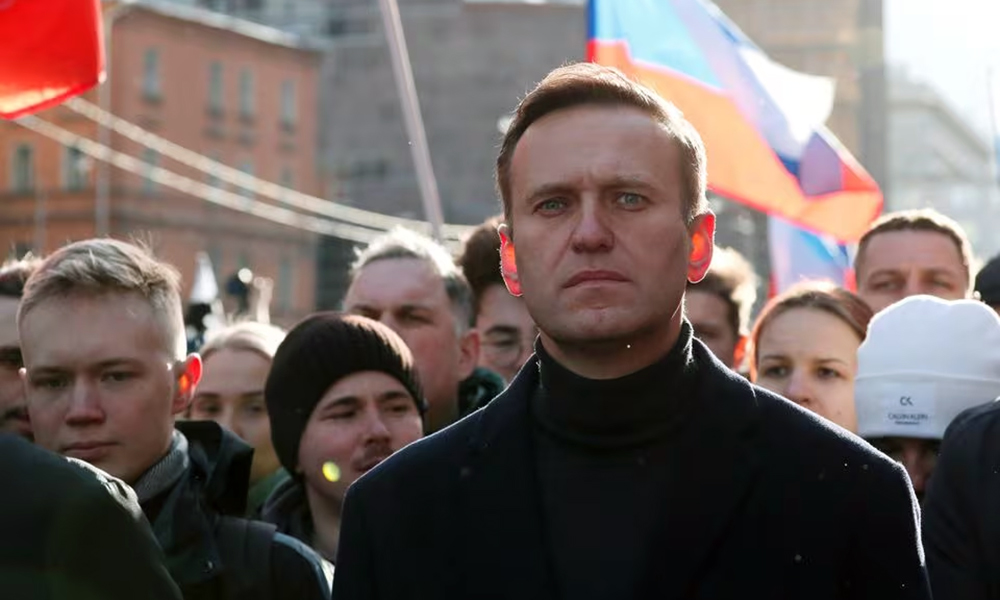
Russia’s most prominent opposition leader Alexei Navalny collapsed and died on Friday after a walk at the “Polar Wolf” Arctic penal colony where he was serving a long jail term, the Russian prison service said.
Navalny, a 47-year-old former lawyer, rose to prominence more than a decade ago with blogs on what he said was vast corruption and opulence among the “crooks and thieves” of Russia’s elite, Reuters reported.
The Federal Penitentiary Service of the Yamalo-Nenets Autonomous District said in a statement that Navalny felt unwell after a walk at the IK-3 penal colony in Kharp, about 1,900 km (1,200 miles) north east of Moscow into the Arctic Circle.
He lost consciousness almost immediately, it said.
“All necessary resuscitation measures were carried out, which did not yield positive results,” the prison service said, adding that causes of death were being established.
The Kremlin said President Vladimir Putin was told about the death, which brought a torrent of outrage from the West, some saying the Russian leader bore responsibility.
Supporters of Navalny said they could not confirm he was dead, but that if he was then they believed he had been killed.
“Russian authorities publish a confession that they killed Alexei Navalny in prison,” Navalny aide Leonid Volkov wrote on social media.
Western officials paid tribute to his courage as a fighter for freedom. Some, without citing evidence, bluntly accused the Kremlin.
“Alexei Navalny paid with his life for his resistance to a system of oppression,” France’s Foreign Minister Stephane Sejourne said. “His death in a penal colony reminds us of the reality of Vladimir Putin’s regime.”
Navalny’s lawyer was on his way to the prison in Kharp where his client was serving sentences totalling more than 30 years, read the report.
Russian state television showed a press conference by the central bank chief as the news broke.
Navalny’s spokesperson Kira Yarmysh said she had no confirmation that he was dead.
“My sincere belief is that it was the conditions of detention that led to Navalny’s death,” Russian newspaper editor and Nobel Peace Prize laureate Dmitry Muratov told Reuters. “His sentence was supplemented by murder.”
Supporters had cast Navalny as a future leader of Russia who would one day walk free from jail to take the presidency, though many opposition activists had expressed fears that he was in grave danger in the Russian prison system.
Navalny earned admiration from Russia’s disparate opposition for voluntarily returning to Russia in 2021 from Germany, where he had been treated for what Western laboratory tests showed was an attempt to poison him with a nerve agent.
Navalny said at the time that he was poisoned in Siberia in August 2020. The Kremlin denied trying to kill him and said there was no evidence he was poisoned with a nerve agent.
Navalny long forecast Russia could face seismic political turmoil, including revolution, because he said Putin built a brittle system of personal rule reliant on sycophancy and corruption.
The Kremlin had dismissed Navalny’s claims of corruption and Putin’s personal wealth. Navalny’s movement is outlawed and most of his senior allies fled Russia and now live in Europe.
Russian officials cast Navalny as an extremist who was a puppet of the U.S. CIA intelligence agency which they say is intent on trying to sow the seeds of revolution to weaken Russian and make it a client state of the West.
Navalny participated in Russian nationalist marches in the 2000s. Calls for restrictions on immigration and criticism over what some viewed as his overly nationalist views prompted his expulsion from the liberal Yabloko opposition party in 2007.
When demonstrations against Putin flared in December 2011, after an election tainted by fraud accusations, he was one of the first protest leaders arrested.
In an interview in Moscow in 2011, Navalny was asked by Reuters if he was afraid of challenging Putin’s system.
“That’s the difference between me and you: you are afraid and I am not afraid,” he said. “I realize there is danger, but why should I be afraid?”
Navalny’s last post on Telegram was a Valentine’s Day message to his wife Yulia below a picture of them together.
“Baby, you and I have everything like in the song: cities between us, airfield take-off lights, blue blizzards and thousands of kilometres. But I feel that you are there every second, and I love you more and more,” Navalny said.




World
Trump says he is talking to Russia and China about denuclearization
Trump’s comments come months after the Strategic Arms Reduction Treaty expired earlier this year.
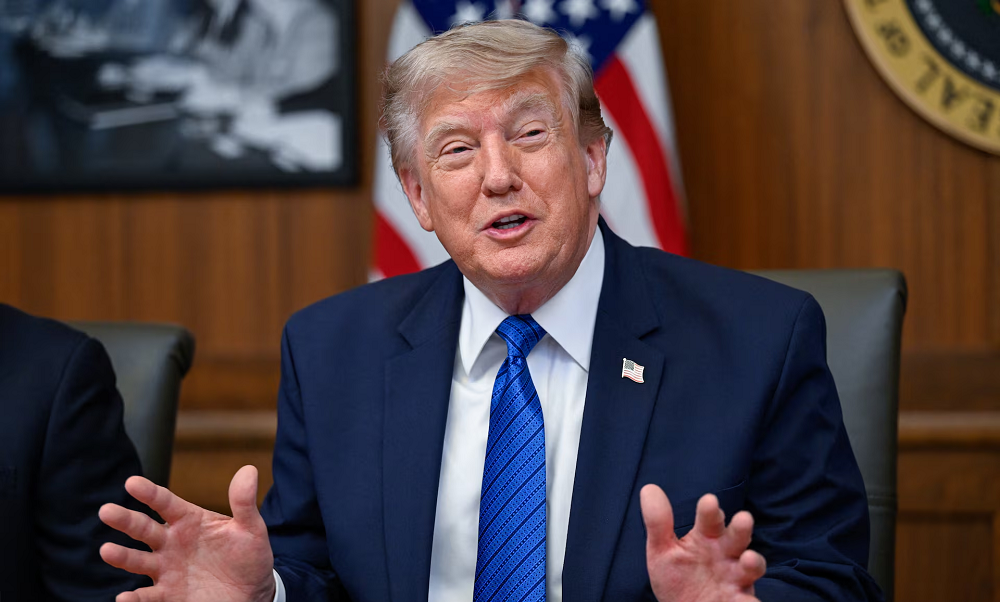
US President Donald Trump said on Thursday Washington is holding talks with Moscow and Beijing aimed at denuclearizing the countries with the biggest stockpiles of nuclear weapons.
Russia has the most stored nuclear warheads followed by the United States and China, according to the Stockholm International Peace Research Institute. The US outpaces Russia on its number of deployed warheads.
During an interview with Newsmax, Trump said he expects China to “catch up” with the US within the next five years.
“The whole thing is a shame, because I’d love to denuclearize if possible, but we’re actually talking to Russia about that, and we’re talking to China about that denuclearization,” Trump told the outlet.
Newsmax reported that Trump had spoken with Chinese President Xi Jinping about denuclearization.
Trump’s comments come months after the Strategic Arms Reduction Treaty expired earlier this year.
The New START treaty signed in 2010 allowed one single extension, which was agreed by former President Joe Biden and Russian President Vladimir Putin for five years. Any new extension would require an executive decision to voluntarily extend the limits of the treaty.
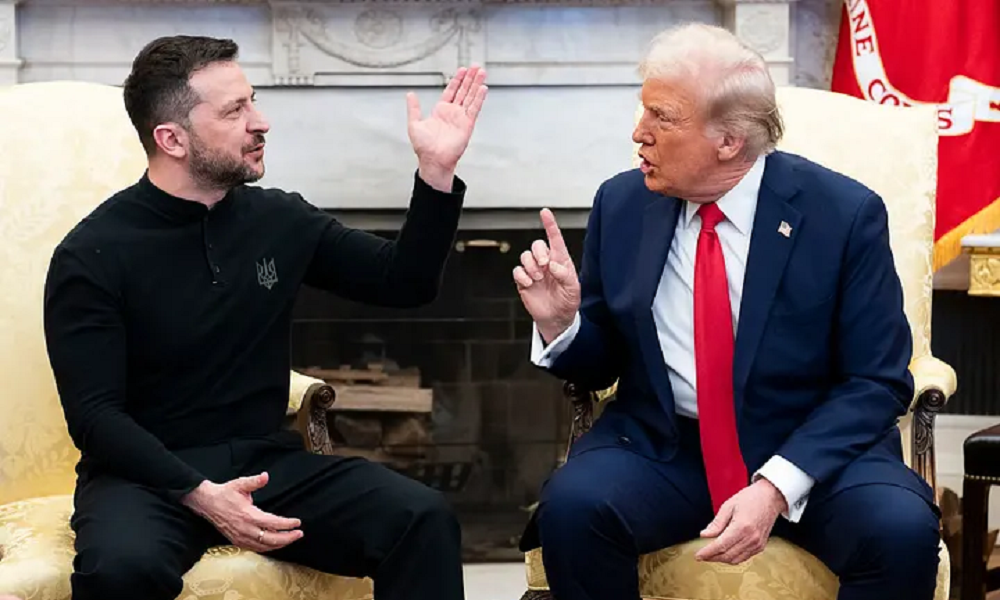
Ukrainian President Volodymyr Zelenskiy said in an interview on Wednesday that it was “painful” when Donald Trump took another side in Ukraine’s ongoing war with Russia, after the US President said Zelenskiy should be replaced.
Zelenskiy told Piers Morgan Uncensored: “It’s painful when President Trump chooses one side, not our side.”
He also said that he was OK with Trump being in the middle of Ukraine and Russia, but added: “If you are in the middle, you have to stay in the middle.”
Asked if he felt betrayed by Trump, who at the weekend called for Ukraine to get a new president having agreed to lift sanctions on Russian diesel exports, Zelenskiy replied: “Really, yes … but it’s a little bit more complicated than just my emotions or my feelings.”
“It’s a pity we are losing (a) strong partner,” he added.
Zelenskiy also said: “We are not selling our country … it’s not about business for us, it’s just our life and this is our country.”
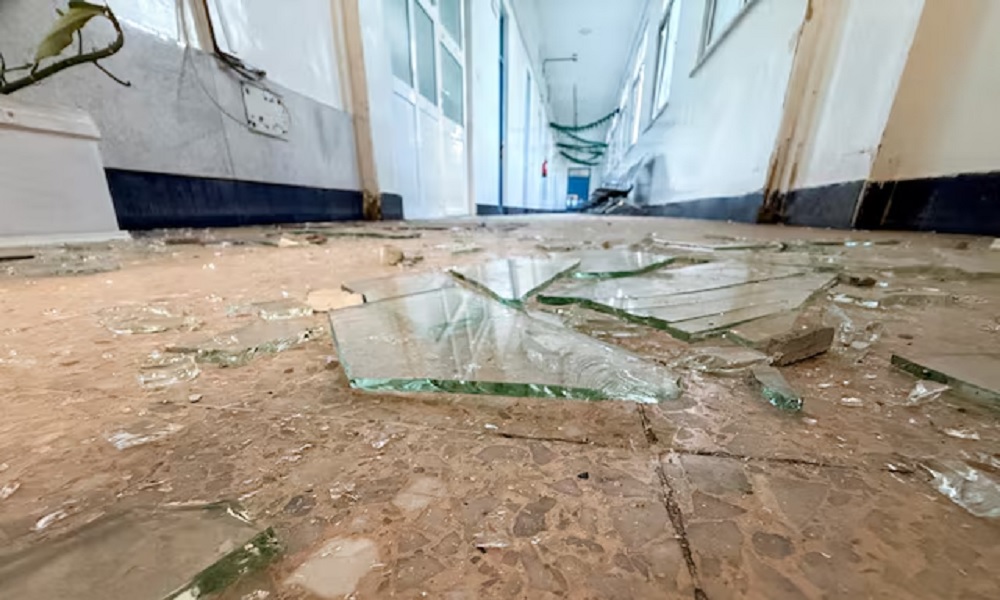
Hospitals across Yemen are struggling to cope with a sharp rise in war casualties as intensified fighting along multiple front lines strains its already fragile health system, the Red Cross said on Wednesday.
Front-line hospitals in areas including Marib, Taiz and Yemen’s Red Sea coast were seeing unprecedented numbers of weapon-wounded patients, with some facilities admitting more than 700 casualties in a single week, according to the humanitarian agency, Reuters reported.
More than 200,000 people have been displaced from their homes since fighting in the country began in recent weeks, sparked by renewed fighting between the Iran-backed Houthi group and Saudi-backed government forces in Yemen, according to the United Nations’ International Organization for Migration.
“Trauma care staff are under enormous pressure,” ICRC health coordinator Feras Abusamra said in a statement. Only a small proportion of Yemen’s functioning health facilities are capable of providing comprehensive trauma care, he said, while hospitals face large numbers of wounded people amid shortages of surgical supplies, anesthesia, oxygen and medicines.
Yemen’s health services, battered by more than a decade of conflict, economic crisis, displacement and disease outbreaks, may have limited capacity to absorb a new surge in mass casualties if fighting intensifies further, the ICRC warned.


Tawsia: Efforts to increase energy production capacity in Afghanistan

Afghanistan Champions League: Abu Muslim Farah beat Sarsabz Yashlar 3-1

IEA ambassador: Daesh leadership and centers ‘completely’ eliminated in Afghanistan

Regional partners seek progress on Trans-Afghan corridor and CASA railway

CSTO chief says IEA has become long-term political actor in Afghanistan

Cricket Bonanza: Afghanistan set for packed international schedule

Afghanistan says 28 killed, 32 captured in Nuristan operation

Silk Road highway in Wakhan corridor now reaches the China border

CNN, MS NOW and Politico sue Trump, challenging White House ban

Dogharoun handles 60% of Iran’s exports to Afghanistan
Tawsia: Efforts to increase energy production capacity in Afghanistan

Saar: Review of state officials’ visits to Kabul over past month discussed

Tahawol: Kyrgyzstan’s rejection of Afghan refugees discussed

Saar: Central Asia’s trade alternative to Pakistan discussed

Tahawol: Warnings over worsening insecurity in Pakistan discussed
-
 World5 days ago
One dead in new attack on Saudi airport, a day after Houthi strike kills 13
-
 Sport3 days ago
Afghan futsal coach: Brazil tournament is first step towards new goals and World Cup
-
 Latest News3 days ago
Afghan official says Durand Line crossings to remain closed until Islamabad accepts demands
-
 Regional5 days ago
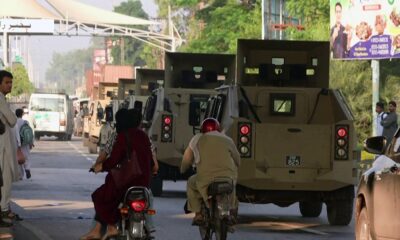
Pakistan deploys military to Peshawar after emergency rule declared
-
 Business5 days ago
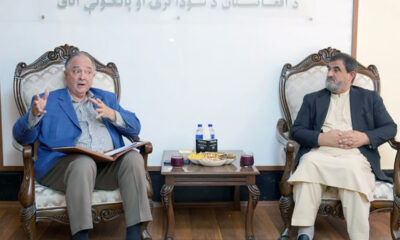
Afghanistan, US business leaders discuss trade and investment opportunities
-
 Sport5 days ago
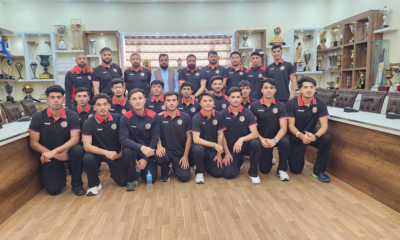
Afghanistan U19 begin Asia Cup Preparations with Oman tour
-
 Latest News5 days ago
Mujahid accuses Pakistani military circles of sabotaging talks with Afghanistan
-
 Latest News5 days ago
Afghanistan calls for faster completion of CASA-1000 power project