
World
China to buy at least $17 billion in US agricultural products annually, White House says
The $17 billion figure does not include the soybean purchase commitments China made in October 2025, the White House said.


China has committed to purchasing at least $17 billion of U.S. agricultural products in 2026, 2027 and 2028, the White House said in a fact sheet released on Sunday.
The commitment was made during meetings between U.S. President Donald Trump and Chinese President Xi Jinping last week, the White House said.
The $17 billion figure does not include the soybean purchase commitments China made in October 2025, the White House said.
There has been a marked reduction in U.S. agricultural exports to China after last year’s rounds of tit-for-tat tariffs sharply curtailed trade, which fell 65.7% year-on-year to $8.4 billion in 2025, according to U.S. Department of Agriculture data.
China has dramatically scaled back its reliance on U.S. farm goods since Trump’s first term, sourcing roughly 20% of its soybeans from the U.S. in 2024, the year before he returned to office, down from 41% in 2016.
China will work with U.S. regulators to lift suspensions of U.S. beef facilities and resume imports of poultry from U.S. states determined to be free of avian influenza, the White House said.
Confirming earlier statements from the Chinese government, the White House also said on Sunday the world’s two largest economies would establish a U.S.-China Board of Trade and the U.S.-China Board of Investment.
The boards will resolve concerns over market access for agricultural products and expand trade “under a reciprocal tariff-reduction framework,” Chinese Foreign Minister Wang Yi said in a statement last week.







World
Passengers foil bid to crash Dubai-Tel Aviv flight, Israel says, after co-pilot stabs pilot
The incident sharpened concerns about global aviation security in a region scarred by years of conflict, prompting Israel to tighten checks on pilots flying into the country.
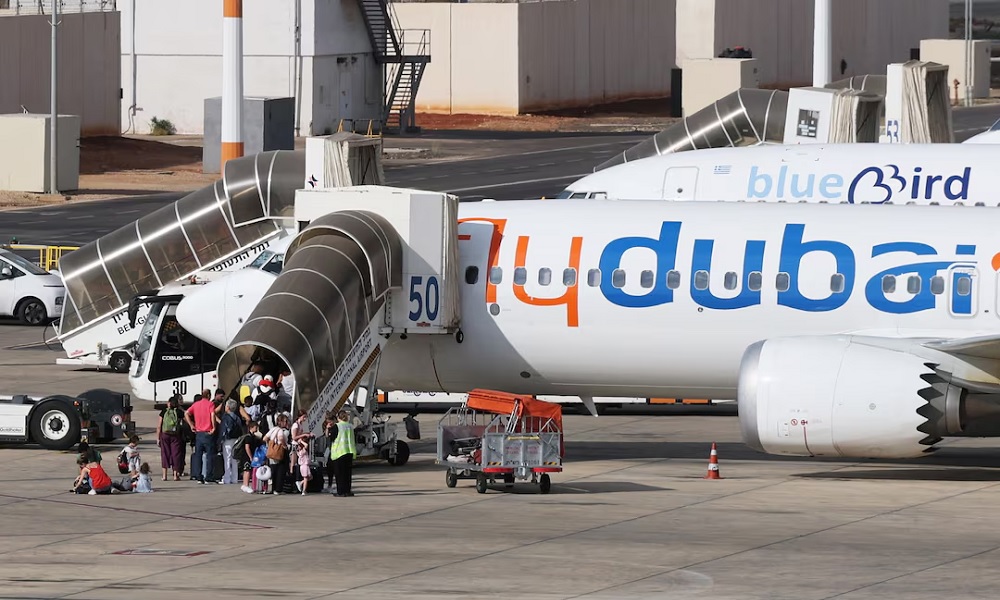
Passengers on a flydubai flight reached Israel safely on Wednesday after customers and crew foiled a co-pilot’s attempt to crash the aircraft, Israeli officials said, in a struggle that began when he stabbed the pilot and sent the jet plunging nearly 14,000 feet in less than 30 seconds.
Passengers and crew entered the cockpit, overpowered the co-pilot and enabled a second pair of flydubai pilots who were aboard the flight to land the jet safely in Tabuk, Saudi Arabia, Israeli officials said, Reuters reported.
More than 10 hours later, the passengers arrived at Tel Aviv’s Ben Gurion Airport aboard a flydubai replacement aircraft, with several describing the episode as a miracle and recounting a frantic struggle to prevent a catastrophe.
Israeli officials said the attacker’s motive aboard flight FZ1073 from Dubai to Tel Aviv remained under investigation. Israel and the United Arab Emirates, which includes Dubai, signed the Abraham Accords normalizing relations in 2020.
The incident sharpened concerns about global aviation security in a region scarred by years of conflict, prompting Israel to tighten checks on pilots flying into the country.
“I just can say that it was a miracle. It was awful, crazy, and we thank God that we survived it, we didn’t think we will make it but thank God we are in Israel. We are back home. And we are happy to see everyone here,” passenger Lital Shachaf said.
Israel’s ambulance service said a 51-year-old man was taken to an Israeli hospital to be treated for injuries to his upper body. The man was in a “mild condition,” it said.
Describing the event as “a serious security incident,” Prime Minister Benjamin Netanyahu said Saudi authorities would interrogate the co-pilot.
Flydubai said in a statement that the underlying reasons for the event remained unknown and warned against “premature speculation.” An Israeli official identified the co-pilot as an Omani national. There was no immediate comment from Oman.
Israeli officials applauded the passengers, who they credited with avoiding a much more serious disaster. Netanyahu said there were 174 people on board the flight from Dubai, most of them Israeli nationals.
US President Donald Trump said he spoke “at length” with Netanyahu on Wednesday about the incident. He proceeded to give reporters in the Oval Office a detailed account of what happened, adding: “This is the story that I heard — I don’t know if it’s true, but that’s the story that I got from Bibi (Netanyahu).”
‘SOMETHING YOU DO WITHOUT THINKING’
A Netanyahu spokesperson told Reuters that the wounded captain, identified by the Israeli leader’s office as Smit Machchhar, an Indian national, was covered with blood on the floor when he managed to click the release to open the cockpit door. Passengers who entered found the co-pilot bashing at the plane’s control panel, the spokesperson said.“This is something you do without thinking, just running to save your daughter’s life, your family’s life,” said Asaf Rajuan, one of the passengers who helped restrain the attacker. He spoke with a forehead still bloodied from the struggle.
Netanyahu’s office released a video showing the prime minister at Ben Gurion Airport giving a hug to another passenger, Yaniv Hayun, who his office said “broke into” the cockpit. “I see you and I see a lion – a big hero,” Netanyahu told the man, who was still wearing the blood-stained shirt he had on during the flight.
Flydubai operates daily return flights between Dubai and Tel Aviv, a route that is popular among Israeli nationals. The flight path normally uses airspace over Saudi Arabia and Jordan.
It is not the first time a flight between Israel and the UAE has landed in Saudi Arabia. A flydubai flight from Dubai to Tel Aviv made an emergency landing in Riyadh in September 2025 due to a medical incident, Israeli media reported at the time.
Saudi Arabia’s Tabuk airport, where the plane landed, said both pilots had been hospitalised after sustaining injuries.
The incident heightened security fears in Israel weeks before Israelis vote in the first election since the Hamas-led October 7, 2023, attacks, with Israel’s security figuring prominently in the campaigning.
Responding to the incident on X, far-right security minister Itamar Ben-Gvir wrote, “Terrorism is a devil with whom no agreement must be reached”.
ISRAEL TO TIGHTEN CHECKS ON PILOTS FLYING TO ISRAEL
Israeli media published conflicting reports on the incident, with some outlets reporting that a pilot had tried to crash the passenger plane in an alleged suicide attempt. Some Israeli media outlets initially identified the pilots as Omani and Emirati nationals, while others said they were Russian and Ukrainian.
“Every pilot that is going to be flying into Israel, we are going to know the pilots’ identities, know who they are, and do some type of security check,” Doron Spielman, a Netanyahu spokesperson, told Reuters.
Netanyahu met on Sunday with UAE President Sheikh Mohamed bin Zayed Al Nahyan during a rare visit to the Gulf country. Israel and the UAE have forged close security, military and economic ties since establishing diplomatic ties.
Israel provided the UAE earlier this year with Iron Dome air-defence systems and Israeli personnel to operate them, helping defend against Iranian attacks launched after Israel and the US began strikes on Iran.
The UAE government had yet to comment on the flydubai incident, while the Dubai state-owned airline said an “altercation” occurred in the cockpit and the flight subsequently diverted to Tabuk, where it landed safely. The UAE’s aviation regulator, the GCAA, said the flight “experienced a security incident that was brought under control”.
World
Supreme Court lets Trump resume deporting migrants to countries not their own
More than 25,000 migrants have been deported to 29 countries under the policy implemented last year, according to a tally by human rights groups, with the vast majority going to Mexico.

The US Supreme Court on Tuesday let President Donald Trump’s administration resume deporting migrants to countries other than their own without offering them the chance to show the harms they may face, bolstering a tool his administration has used for rapid expulsions as part of his immigration crackdown, Reuters reported.
The court granted the Justice Department’s emergency request to put on hold Boston-based US District Judge Brian Murphy’s ruling that the Department of Homeland Security’s policy to remove migrants to so-called third countries is unlawful. The court also agreed to hear arguments in the dispute in December, with a formal ruling on the policy to follow.
The court has a 6-3 conservative majority. Its three liberal justices dissented from the decision to let the deportations immediately resume pending the final outcome of the litigation.
Murphy’s ruling came in a class-action lawsuit filed by immigrant rights groups on behalf of migrants seeking to prevent the US government from sending them to third countries without notice and a chance to assert the harms they could face.
More than 25,000 migrants have been deported to 29 countries under the policy implemented last year, according to a tally by human rights groups, with the vast majority going to Mexico.
The policy is one of a number of measures the administration has taken in its pursuit of Trump’s goal of mass deportation. The Republican president has enforced a sweeping crackdown on immigration — among his top priorities — since returning to office last year.
The administration has carried out third-country deportations to politically unstable South Sudan, which the US State Department urges Americans to avoid due to the risks of crime, kidnapping and armed conflict, as well as Uganda, Equatorial Guinea, Liberia, the Central African Republic, and other nations.
Department of Homeland Security General Counsel James Percival welcomed the court’s decision.
“A bad day for criminal illegals and open-borders activists alike,” Percival wrote on social media.
Trina Realmuto, a lawyer for the plaintiffs at the National Immigration Litigation Alliance, said the court has “allowed the administration to resume sending people to third countries where they face persecution or torture. That is a devastating result for people who may be put on a plane before they ever have notice or an opportunity to raise a fear claim.”
In February, Murphy ruled that the policy violates immigration law procedures and due process protections under the US Constitution’s Fifth Amendment. Due process generally requires the government to provide notice and an opportunity for a hearing before taking certain adverse actions.
The Supreme Court, which has allowed a number of Trump’s hardline immigration policies, previously sided with the administration in the legal challenge, suspending a preliminary order that Murphy issued earlier in the case halting the removals. In another win for the administration, the Supreme Court subsequently lifted limits the judge had imposed to protect a group of men from being sent to South Sudan, read the report.
The case began in 2025 after the Department of Homeland Security moved to step up deportations of migrants who cannot be returned to any country listed on their deportation orders.
The policy provided that migrants could be swiftly removed without notice to third countries that have provided credible diplomatic assurance that they will not persecute or torture the individuals. For countries that have not provided such assurance, deportees would be notified of their destination and US authorities would assess the likelihood of persecution or torture only if the individual raises such fear on their own.
In its emergency filing to the Supreme Court, the Justice Department said third-country deportations are “an essential tool to remove certain aliens, including some of the worst criminal aliens.”
But both Murphy and critics of the administration said the policy is also targeting migrants who had been granted legal protection from being sent back to their home countries.
The policy has resulted in deportees being unlawfully transferred by third countries back to their home countries from which the US had already granted them protection, while others have been beaten, sexually assaulted, detained or have disappeared, the plaintiffs said in a court filing.
The administration is ignoring “the significant harm resulting from deporting thousands of longtime US residents, many with no criminal history, to third countries without regard to the persecution or torture they face there,” the plaintiffs said.
The Boston-based 1st US Circuit Court of Appeals upheld most of the judge’s ruling on September 18.
The case has been hotly contested since it began, and included findings by Murphy that the administration “repeatedly violated, or attempted to violate” his orders. Murphy in 2025 found that the administration had violated another order he issued requiring additional steps before attempting to send a group of migrants to South Sudan.
World
Trump says men arrested at UK air base used by US planned ‘big damage’
WATCH: Trump praises UK authorities for arrests Sunday near RAF airbase used by US forces in England.
British police have arrested five men on suspicion of explosives offences and preparing a terrorist act near RAF Fairford, a UK air base used by the United States military, authorities said.
The arrests were made early Sunday after police received a report of three suspicious vans travelling towards the airfield in Gloucestershire, western England.
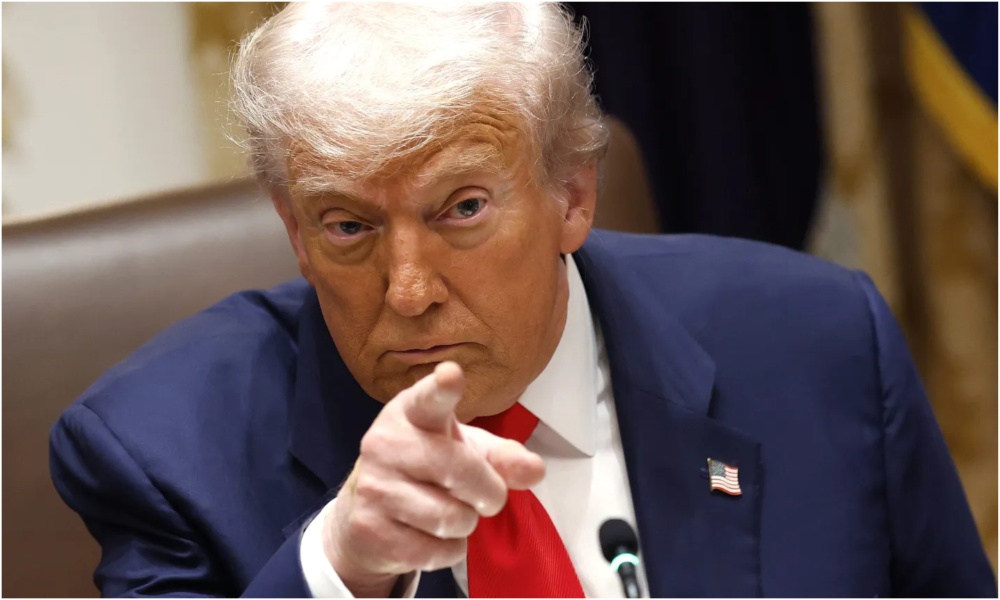
US President Donald Trump said the suspects had been under investigation by British and US authorities and were looking to cause “big damage” to the base.
“The arrest in the UK was fantastic,” Trump told reporters, praising cooperation between US and British authorities.
Counter Terrorism Policing said five men remained in custody and that officers were working with partner agencies to establish the circumstances surrounding the incident.
Police placed a 400-metre cordon around the area while bomb disposal experts examined the vehicles. About 85 homes in a nearby village were evacuated, while armed officers patrolled the area.
RAF Fairford has been used by US forces for military operations against Iran. Security was also increased at other UK bases used by the US, including RAF Lakenheath and RAF Mildenhall.
A source familiar with the investigation told Reuters an Iranian-linked motive was considered the most likely, while possible Russian involvement or an Islamist plot were also being examined.
No motive has been publicly confirmed by police.
The arrests come amid heightened security concerns in Britain following Iranian warnings over the use of UK bases by US forces. Russia has also been accused by Western governments of supporting sabotage operations in Europe, allegations Moscow has denied.


Arman FC crush Toofan Herat 4-0 in ACL clash

Khurasan Faryab and Ariana Khost settle for 1-1 draw

Four members of one family killed in Helmand in Pakistan airstrike

UNAMA acting chief visits Islam Qala border to assess support for returnees

Rashid Khan, Azmatullah Omarzai maintain top spots in ICC ODI rankings

Saudi energy group signs major Afghanistan deals covering gas exploration and pipeline plans

Iranian clubs to face Gulf opponents at neutral venues in Asian Champions League Elite

Khalilzad: Afghanistan ready to attract major investment

Ariana Television Network secures exclusive rights to Afghanistan’s 2026/27 cricket series

El Niño likely to intensify, may become strongest ever recorded, WMO says

Tahawol: Improvement in Afghanistan-China relations discussed

Saar: Expanding ties with regional and global countries discussed

Tahawol: Absence of Afghanistan’s envoy at UNGA discussed

Saar: Assessment of war between Afghanistan and US discussed

Saar: Afghanistan’s image at UNGA
-

 Sport4 days ago
Afghan bodybuilder Ali Bilal finishes runner-up at Mr Olympia for third straight year
-

 Latest News4 days ago
Afghanistan says 28 killed, 32 captured in Nuristan operation
-

 World5 days ago
Trump rejects Iranian proposal to open Hormuz and end fighting
-

 Sport3 days ago
Afghanistan vs India Asian Games quarter-final abandoned without a toss
-

 Latest News4 days ago
UNDP, UN Women launch financing initiative for Afghan women entrepreneurs
-

 Latest News4 days ago
Germany reports 488 Afghans for possible deportation, 267 have no criminal convictions
-

 Regional5 days ago
Aimal Wali Khan calls Dera Ismail Khan attack a ‘state failure’
-

 Regional4 days ago
Floods, landslides kill 56 in India and 14 in Nepal