
Regional
Death toll from earthquakes in Turkey and Syria passes 20,000

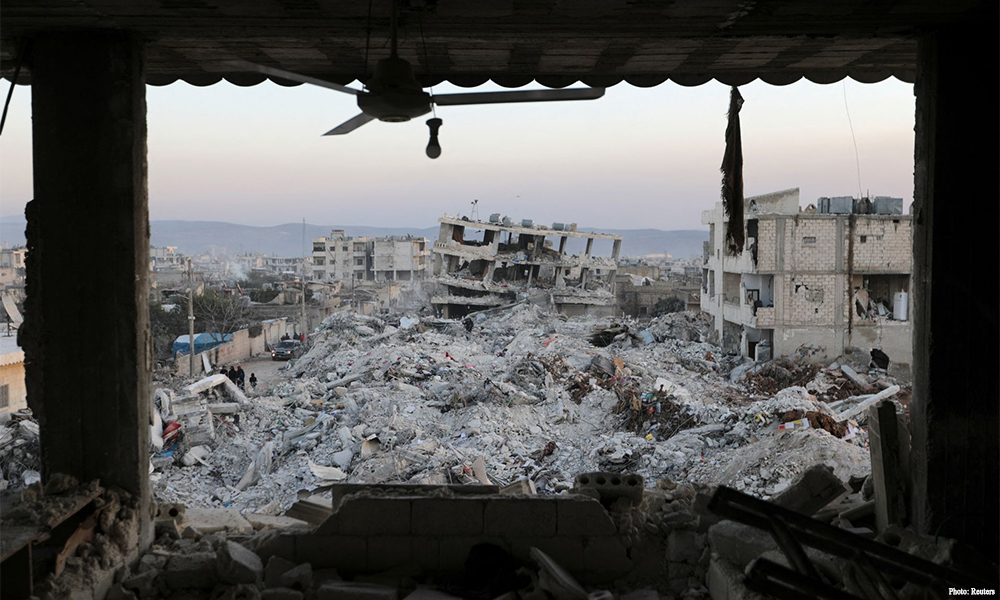
Cold, hunger and despair gripped hundreds of thousands of people left homeless after the earthquakes that struck Turkey and Syria three days ago as the death toll passed 20,000 on Thursday, Reuters reported.
The rescue of a 2-year-old boy after 79 hours trapped in the rubble of a collapsed building in Hatay, Turkey, and several other people raised spirits among weary search crews. But hopes were fading that many more would be found alive in the ruins of towns and cities.
According to Reuters the death toll across both countries has now surpassed the more than 17,000 killed in 1999 when a similarly powerful earthquake hit northwest Turkey.
A Turkish official said the disaster posed “very serious difficulties” for the holding of an election scheduled for May 14 in which President Tayyip Erdogan has been expected to face his toughest challenge in two decades in power.
With anger simmering over delays in the delivery of aid and getting the rescue effort underway, the disaster is likely to play into the vote if it goes ahead.
The first U.N. convoy carrying aid to stricken Syrians crossed over the border from Turkey.
In Syria’s Idlib province, Munira Mohammad, a mother of four who fled Aleppo after the quake, said: “It is all children here, and we need heating and supplies. Last night we couldn’t sleep because it was so cold. It is very bad.”
Hundreds of thousands of people in both countries have been left homeless in the middle of winter. Many have camped out in makeshift shelters in supermarket car parks, mosques, roadsides or amid the ruins, often desperate for food, water and heat, read the report.
Some 40% of buildings in the Turkish city of Kahramanmaras, epicentre of the tremor, are damaged, according to a preliminary report by Turkey’s Bogazici University.
ROADSIDE CAMPFIRES
At a gas station near the Turkish town of Kemalpasa, people picked through cardboard boxes of donated clothes. In the port city of Iskenderun, Reuters journalists saw people huddled round campfires on roadsides and in wrecked garages and warehouses.
Authorities say some 6,500 buildings in Turkey collapsed and countless more were damaged, Reuters reported.
The death toll in Turkey rose to 17,406, Health Minister Fahrettin Koca said. In Syria, already devastated by nearly 12 years of civil war, more than 3,300 people have died, according to the government and a rescue service in the rebel-held northwest.
In the devastated Syrian town of Jandaris, Ibrahim Khalil Menkaween walked in the rubble-strewn streets clutching a white body bag. He said he had lost seven members of his family, including his wife and two of his brothers.
“I’m holding this bag for when they bring out my brother, and my brother’s young son, and both of their wives, so we can pack them in bags,” he said. “The situation is very bad. And there is no aid.”
Turkish officials say some 13.5 million people were affected in an area spanning roughly 450 km (280 miles) from Adana in the west to Diyarbakir in the east. In Syria, people were killed as far south as Hama, 250 km from the epicenter, Reuters reported.
Rescue crews looked for survivors at the site of a collapsed building in the dark in the city of Adiyaman with temperatures below freezing, Turkish broadcasters showed.
Teams frequently called for silence, asking all vehicles and generators to be turned off and reporters to keep quiet as they listened for sounds of anyone alive under the concrete blocks.
There were still some signs of hope.
A 2-year-old boy was picked out of the rubble by a Romanian and Polish rescue team in Hatay 79 hours after the earthquake, video released by Turkey’s Humanitarian Relief Foundation (IHH) on Thursday showed.
The boy, wearing a blue, white and black striped sweater, cried as he was gently lifted from the hole where he had been trapped. He was carried away on a blanket. No other details were immediately available.
Another video from IHH showed a helmeted and dust-streaked rescuer weeping with emotion after successfully freeing a little girl from the rubble of a collapsed building in Kahramanmaras, read the report.
Many in Turkey have complained of a lack of equipment, expertise and support to rescue those trapped – sometimes even as they could hear cries for help.
After facing criticism over the initial response, Erdogan said on a visit to the area on Wednesday that operations were now working normally and promised no one would be left homeless.
Nevertheless, the disaster will pose an additional challenge to the long-ruling president in the election.
Greece sent thousands of tents, beds and blankets on Thursday to help those left homeless by the quake, in an act of solidarity with a neighbour that is a NATO ally but also a historic foe.
Israeli satellite intelligence was helping map the disaster zones in Turkey with mapping capabilities predominantly used for special operations, the Israeli military said.
SYRIA OVERWHELMED
In Syria, relief efforts are complicated by a conflict that has partitioned the country and wrecked its infrastructure.
The U.N. aid convoy entered Syria at the Bab Al Hawa crossing – a lifeline for accessing opposition-controlled areas where some 4 million people, many displaced by the war, were already relying on humanitarian aid.
U.N. Secretary-General Antonio Guterres pushed for more humanitarian access to northwestern Syria, saying he would be “very happy” if the United Nations could use more than one border crossing to deliver help, Reuters reported.
The Syrian government views the delivery of aid to the rebel-held northwest from Turkey as a violation of its sovereignty and territorial integrity.
Syrian civil defence said at least 2,030 people were killed in opposition-held northwest Syria, and the government has reported 1,347 deaths, read the report.
Syria’s ambassador to the United Nations on Wednesday admitted the government lacked capability and equipment but blamed the war and Western sanctions.
Syrian President Bashar al-Assad has chaired emergency meetings on the earthquake but has not addressed the nation in a speech or news conference.








Regional
Iran, US continue escalating attacks, recriminations over peace deal
US Central Command said earlier that its forces had carried out fresh strikes after a Panama-flagged tanker was attacked by an Iranian drone on Saturday.
Iran and the US continued their attacks in the Gulf as each accused the other of violating an increasingly precarious interim deal signed less than two weeks ago to end their four-month-old war, Reuters reported.
Shortly after President Donald Trump warned the US might “militarily complete the job”, Iran early on Sunday launched missiles and drones on US military sites in Kuwait and Bahrain, continuing a series of escalating attacks.
Beyond the Gulf, Israel said it had struck Iran-backed Hezbollah militants in southern Lebanon as fighting continued in an area Tehran says is key to its peace deal with Washington.
The U.S. military said earlier it had struck Iran again, hours after a tanker was hit in the Strait of Hormuz, the world’s most important energy shipping route, which Iran had largely cut off for most of the conflict.
The 14-point U.S.-Iran interim agreement was meant to halt the fighting, which the US and Israel started on February 28, and reopen the strait to shipping while talks proceeded on more deep-seated issues, such as Iran’s nuclear programme.
One round of mediated talks, led by Vice President JD Vance and Iran’s parliamentary speaker, Mohammad Baqer Qalibaf, was held in Switzerland a week ago and Washington then waived sanctions on Tehran, but the fighting and recriminations have since resumed and intensified.
“There may come a point when we are no longer able to be reasonable, and will be forced to militarily complete the job that we very successfully started,” Trump posted on social media. “If that happens, the Islamic Republic of Iran will no longer exist!”
About an hour after Trump’s post, the Kuwaiti army said its air defences were responding to “hostile” missile and drone attacks, while sirens sounded in Bahrain, according to that country’s interior ministry.
Iran’s Islamic Revolutionary Guard Corps said its navy and air forces had launched missile and drone operations targeting US military sites in Kuwait and Bahrain in response to recent US strikes against Iran, read the report.
The Guards said in a statement the US strikes had violated the ceasefire and “will result in the complete halt of all diplomatic processes”, according to state-run Press TV. The IRGC navy command said American bases in the region “will experience hell in the coming days”.
A US official, confirming the attacks on US facilities, told Reuters there were no reported US casualties or major damage to US sites in the Middle East but that the situation was still unfolding.
Hours later, alarms sounded for a second time in Bahrain, and the foreign ministry there condemned the attacks as a deliberate and repeated violation of the kingdom’s sovereignty and security. It urged the U.N. Security Council to hold an urgent session to hold Iran accountable.
US Central Command said earlier that its forces had carried out fresh strikes after a Panama-flagged tanker was attacked by an Iranian drone on Saturday.
“Iran was given a chance to honor the ceasefire agreement but elected not to,” Central Command said in a statement, adding that its strikes were “in direct response to continued Iranian aggression against commercial shipping” and targeted Iranian military surveillance, communications, air defence, drone storage and mine-laying facilities.
Iranian state broadcaster IRIB said explosions were heard in Sirik in southern Iran, without providing details. The Guards said “America’s blind shots at Sirik will not resolve our dominance over the Strait of Hormuz. But our shots at violators will remind the rest of the vessels of the clear passage route.”
Saturday’s tanker attack in the strait followed one on a cargo ship on Thursday that triggered the latest escalation. Iran is seeking to assert control over the strait, which carried one-fifth of global oil and LNG supplies before the war and which had just begun to reopen after months of disruption, Reuters reported.
Hundreds of ships, including tankers laden with oil, have been blockaded inside the Gulf since war broke out. As they began leaving through the strait over the past two weeks, oil prices have tumbled close to pre-war levels on the surge in supply.
Washington has been promoting a southern lane along the coast of Oman, while Tehran, which ultimately aims to charge fees for use of the strait, wants ships to use a northern route through its waters and under its control.
In Lebanon, Israel said on Sunday it had killed Hezbollah militants armed with rocket-propelled grenades and struck a rocket launcher in the Nabatieh area.
Iran accuses the US of violating its commitment under the peace deal to sustaining a ceasefire in Lebanon, which US ally Israel invaded in March in pursuit of Hezbollah.
Israel, which is not a party to the US-Iran deal, and Lebanon have repeatedly agreed to US-brokered ceasefires, the latest on Friday. But these have had only limited effect, with Israel insisting it will not withdraw from Lebanese territory it has seized and Hezbollah repeatedly rejecting calls to give up its arms as long as Israeli troops remain in place.
Regional
US strikes Iran in response to attack on cargo ship in Strait of Hormuz
The U.S. did not immediately respond to Iran’s report of striking American targets, a tactic that has sought to undermine U.S. allies in the region during the conflict.
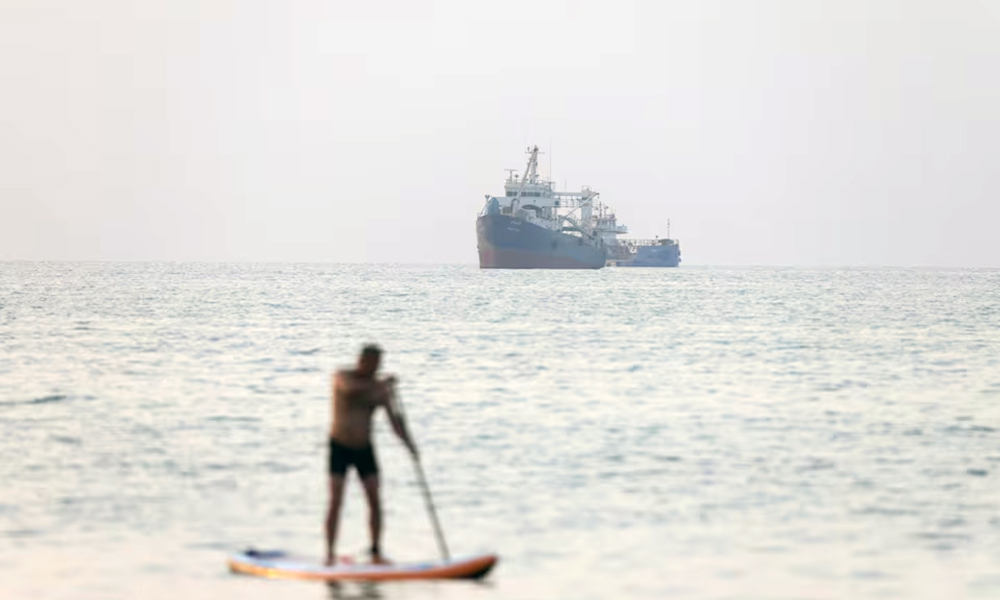
The U.S. military attacked Iran on Friday in response to an Iranian drone strike on a cargo ship in the Strait of Hormuz, with each country accusing the other of violating terms of a ceasefire agreed on last week, Reuters reported.
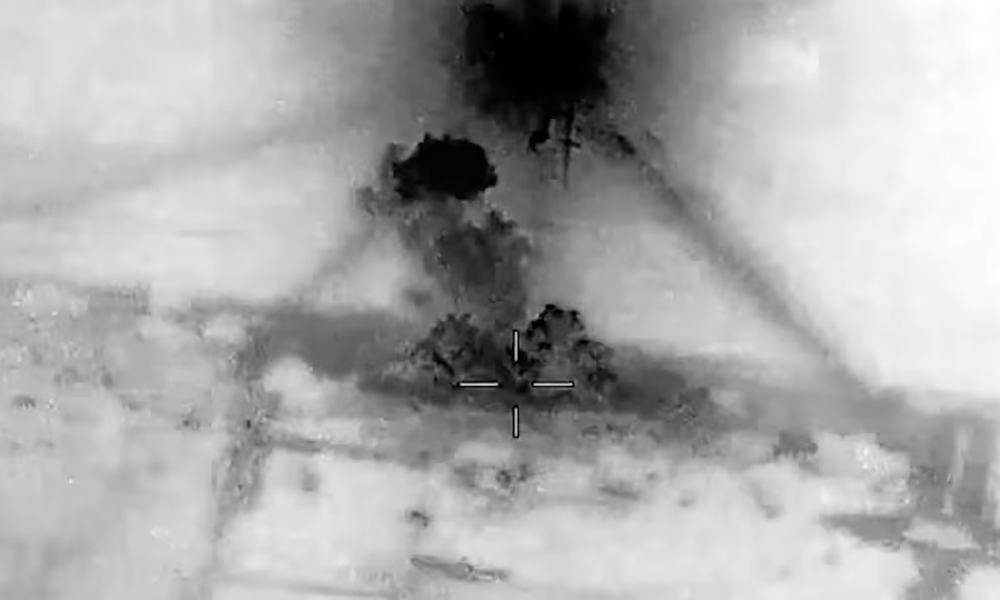
U.S. Central Command said aircraft struck missile and drone storage locations and coastal radar sites, later publishing a grainy black-and-white video of an explosion labeled “unclassified.” A U.S. official reported the operation had concluded.
Iran said a projectile struck the area around a pier in Sirik in southern Iran, and that Iranian naval forces responded by striking U.S. military targets in the region. Tehran did not provide details about what may have been hit.
Elsewhere, however, there were signs of progress in ending the four-month-old conflict, as Israel and Lebanon signed an agreement to end the fighting between Israel and Iran-backed Hezbollah. Both sides framed the deal as an initial step that calls for Hezbollah to disarm and Israel to withdraw troops from Lebanon, but it was not clear how it would be enforced. Hezbollah said it would not cooperate.
Tehran has said it would control the Strait of Hormuz and warned Gulf states not to side with Washington after Thursday’s attack on a cargo ship traveling near Oman’s coast. President Donald Trump blamed the attack on Iran and said it violated last week’s interim agreement.
“The unwarranted aggression against commercial shipping by Iranian forces clearly violated the ceasefire,” U.S. Central Command said in its statement announcing strikes, which it called “a powerful response to yesterday’s attack on a commercial ship that was transiting the Strait of Hormuz.”
The U.S. military said it would continue to provide “safe passage coordination and support” to commercial vessels transiting the strait.
Vice President JD Vance, once seen as a skeptic on U.S. intervention in Iran but now a Trump administration point person on the conflict, said the Americans have honored the ceasefire deal, also known as a memorandum of understanding.
“Iran signed a ceasefire agreement. We have honored it. If they have disagreements about how the MOU is being applied, they can pick up the phone. But violence will be met with violence,” Vance said on X.
Iranian state media, citing an unnamed military source, reported the strike at the port of Sirik after an explosion was heard there. The source said several warning shots had been fired from Sirik toward vessels that violated Strait of Hormuz regulations about five hours earlier, adding two warning missiles had also been launched from the nearby Karpan area toward the strategic waterway, read the report.
On Saturday, Iran’s Mehr news agency cited the head of ports at eastern Hormozgan as saying that there was no damage to the port of Sirik after the attack by the U.S. The official said the port was operating normally with no damage reported to facilities and equipment.
Iran’s Revolutionary Guards said that in response its navy “struck the locations where the terrorist U.S. military is stationed in the region” and warned that any further U.S. attacks would be met with a broader response, according to the statement carried on state media.
The ceasefire agreement gives Iran control over ship traffic in the strait, the Guards said.
“However, the United States, by provoking various fronts, sought to violate this commitment, and the necessary response was given and will continue to be given. If the aggression is repeated, our response will be broader than this,” the Revolutionary Guards said.
The U.S. did not immediately respond to Iran’s report of striking American targets, a tactic that has sought to undermine U.S. allies in the region during the conflict.
Ebrahim Azizi, the head of the Iranian parliament’s national security committee, said in response to the latest strikes that Trump has failed to show a commitment to the principles of negotiation or ceasefire.
“This reckless violation of the ceasefire will, as always, lead to retreat and regret on their part,” Azizi posted on X.
Before the renewed outbreak of violence, oil prices fell about 3% on Friday, on course for steep weekly losses, in response to oil tankers exiting the Strait of Hormuz, the conduit for one-fifth of global oil and LNG supplies before the U.S. and Israel launched the war on February 28, Reuters reported.
Saudi Aramco resumed crude loadings at its Ras Tanura terminal in the Gulf, the world’s biggest oil port, after a nearly four-month halt, shipping data showed.
Fertilizer shipments through the strait have also picked up, helping to assuage concerns about a spike in global food prices.
U.S. Secretary of State Marco Rubio — wrapping up a tour of the Gulf to reassure regional allies about the interim pact — issued a joint statement with the Gulf Cooperation Council calling for “free, unconditional, and unrestricted navigation” in the strait without tolls or “attempts to assert control.”
Iran’s foreign ministry said the strait should be governed by Iran and Oman, while Ali Akbar Velayati, top adviser to Iran’s supreme leader, warned Washington’s Gulf allies their survival depended on Tehran’s tolerance.
Regional
Iran’s Pezeshkian says without missiles his country would be ‘just like Gaza’
The Iranian president stressed that Tehran’s defensive capabilities are not open to negotiation.
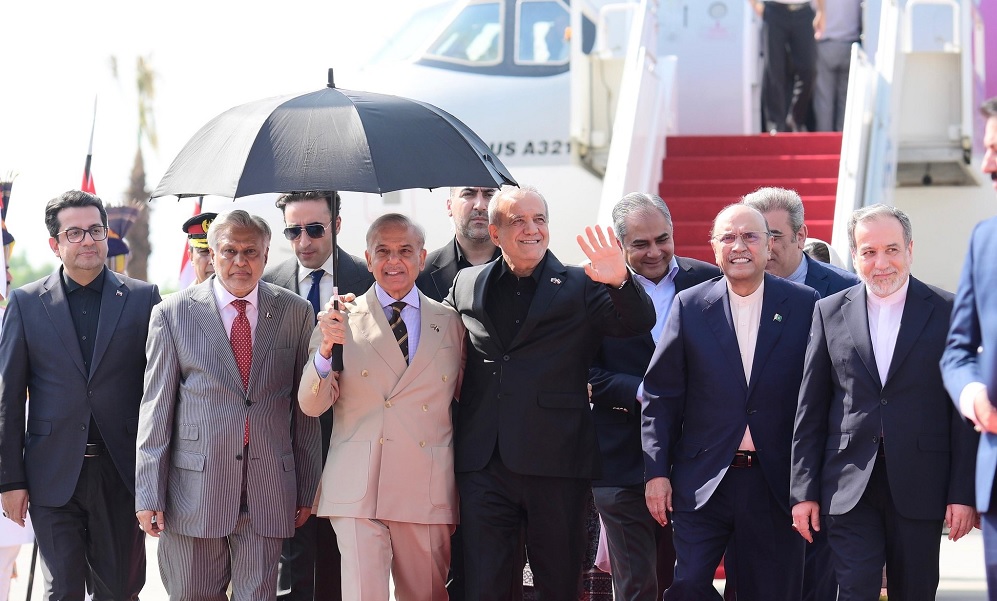


Tahawol: Reactions to Pakistan’s attacks on Afghanistan discussed

Mujahid calls on spokespersons to expand cooperation with media

Saar: Reaction to Pakistan’s airstrikes on Afghan soil discussed

Borders minister says no one will be allowed to reignite conflict in Afghanistan

Afghanistan U-15 team qualifies for FIFA U-15 World Cup

Norway’s Viking-inspired World Cup team photo goes viral

TAPI project advances in Afghanistan as 84kms of pipeline laid

Afghanistan’s trade with Central Asia records sharp growth

Gaikwad set to replace injured Kohli for Afghanistan ODI Series

Iran banks hit by major cyber attack
Tahawol: Reactions to Pakistan’s attacks on Afghanistan discussed
Saar: Reaction to Pakistan’s airstrikes on Afghan soil discussed

Tahawol: Pakistan’s attacks on civilians in Afghanistan

Saar: Pakistani airstrikes on Afghanistan

Tahawol: Calls for diplomacy between Kabul, Islamabad
-
 Latest News4 days ago
TAPI project sees rapid progress in Afghanistan
-
 Business2 days ago
Afghanistan eyes direct Basmati rice imports from India amid tensions with Pakistan
-

 International Sports4 days ago
FIFA World Cup: Iran held by Egypt after controversial late goal Is disallowed
-
 Latest News3 days ago
Delawar says Afghanistan has achieved security and unity after 47 years
-

 Latest News3 days ago
EU announces major funding to support Afghan small businesses
-
 Latest News4 days ago
Ashura observed across Afghanistan with calls for unity and justice
-
 Latest News2 days ago
Afghan minister says ‘outsiders’ should not claim to support Afghanistan’s independence
-

 Sport3 days ago
Afghanistan, Uzbekistan set for friendly cricket clash in Khost