
Health
Excluding Afghan women from medical institutes threatens the future of health care in the country: MSF

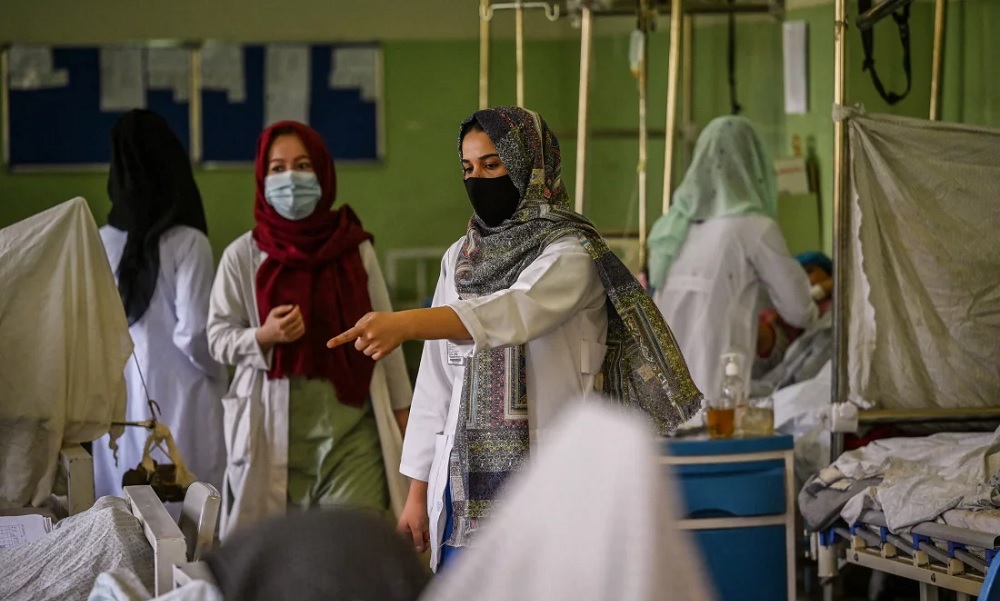
The Islamic Emirate of Afghanistan’s (IEA) decision to bar women from studying in medical institutes will have far-reaching consequences for women’s health in the country, Médecins Sans Frontières (Doctors Without Borders) said on Friday.
This is another stage in the removal of women from public and professional life in Afghanistan. Already, there is an insufficient number of female health care workers in the country, impacting the availability of health care, especially given the separation of hospital wards by gender. New constraints will further restrict access to quality health care and pose serious dangers to its availability in the future, MSF said in a statement.
“There is no health care system without educated female health practitioners,” said Mickael Le Paih, MSF’s country representative in Afghanistan. “At MSF, more than 50 percent of our medical staff are women. The decision to bar women from studying at medical institutes will further exclude them from both education and the impartial provision of health care.”
The medical needs in Afghanistan are huge, and more female Afghan medical staff need to be trained to address them. For this to happen, women need to have access to education. Education restrictions for women and girls put in place in 2024, 2022, and 2021 considerably reduce the number of female medical staff in the future, MSF said.
“If no girls can attend secondary school, and no women can attend university or medical institutes, where will the female health professionals of the future come from and who will attend to Afghan women when they are at their most vulnerable?” said Le Paih. “For essential services to be available to all genders, they must be delivered by all genders.”
Recently, there have been reports that the leader of the Islamic Emirate has ordered the closure of medical institutes to women. The Islamic Emirate has not yet officially commented on this matter.




Health
Kandahar Red Crescent: More than 3,000 mental health patients treated in five years
Doctors said patients considered a serious danger to society are kept at the center on a permanent basis and receive regular treatment.
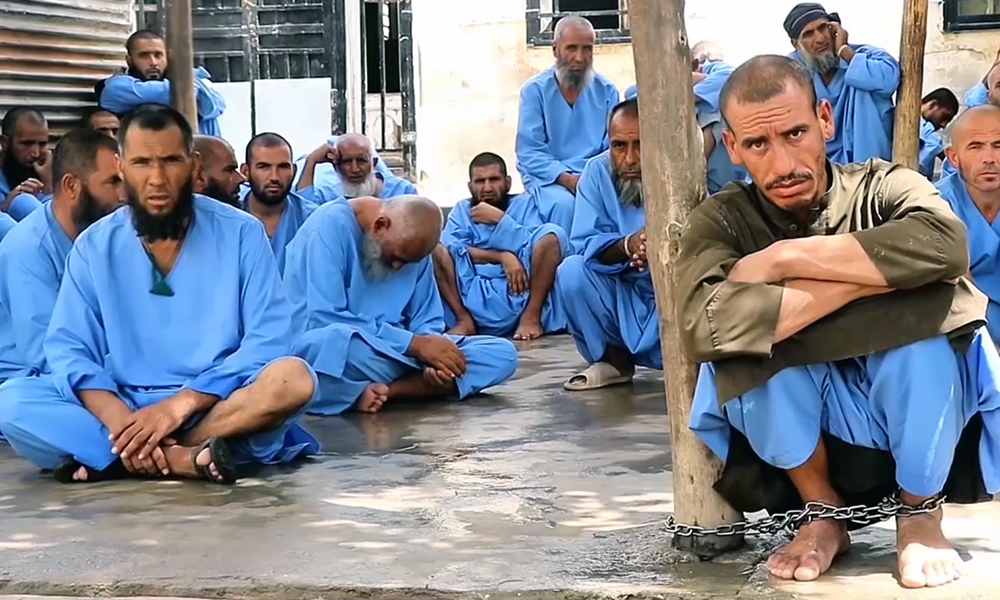
The Kandahar branch of the Afghan Red Crescent Society says more than 3,000 mental health patients, including men and women, have received treatment at home across southern Afghanistan over the past five years.
Officials said 405 patients were also treated at the Afghan Red Crescent’s mental health treatment center in Kandahar and returned to their homes. The center is the only facility in southern Afghanistan providing treatment to mental health patients from the region.
According to officials, during the past five years, 1,936 male and 1,331 female mental health patients received treatment at their homes.
Currently, 158 patients, including men and women who pose a risk to themselves or others, are being kept and treated at the center, while treatment for another 804 patients is continuing at their homes.
Doctors said patients considered a serious danger to society are kept at the center on a permanent basis and receive regular treatment.
Meanwhile, some patients who were previously brought to the center in poor condition are now recovering and have expressed satisfaction with the services they have received.
The development comes as officials from the Red Crescent’s southern regional branch say mental health problems linked to poverty and family difficulties are increasing.
Despite the challenges, they said efforts are underway to expand mental health services so that more patients can receive treatment.
Health
Health minister visits Belarus to expand medical cooperation
Belarusian Deputy Health Minister welcomed Jalali and his delegation, describing the visit as an important step toward strengthening health cooperation between Afghanistan and Belarus.
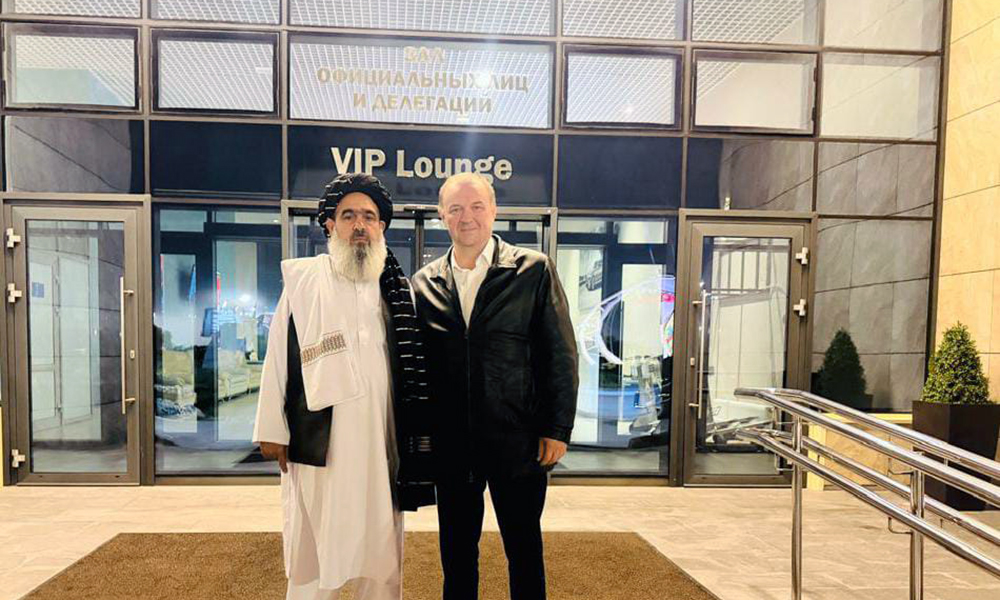
Afghanistan’s Minister of Public Health, Noor Jalal Jalali, has travelled to Belarus at the head of a delegation to strengthen health cooperation and exchange medical expertise between the two countries.
According to Afghanistan’s Ministry of Public Health, the visit will focus on expanding bilateral cooperation, reviewing Belarus’s healthcare institutions and sharing experience in medical services and specialized healthcare.
Belarusian Deputy Health Minister Barys Andrasyuk welcomed Jalali and his delegation, describing the visit as an important step toward strengthening health cooperation between Afghanistan and Belarus.
During the visit, Jalali is expected to meet with senior officials at Belarus’s Ministry of Health and visit several medical and research institutions, including the Belarusian State Medical University, a state pharmaceutical production company, specialized cardiac and oncology centers, the Republican Centre for Hygiene and Epidemiology, and an emergency clinical hospital.
The two sides are also expected to discuss cooperation in medical education, healthcare services, pharmaceutical production and specialized treatment, as well as opportunities to expand technical exchanges.
The visit comes as Afghanistan seeks to expand international cooperation in the health sector and improve access to medical expertise, training and pharmaceutical resources.
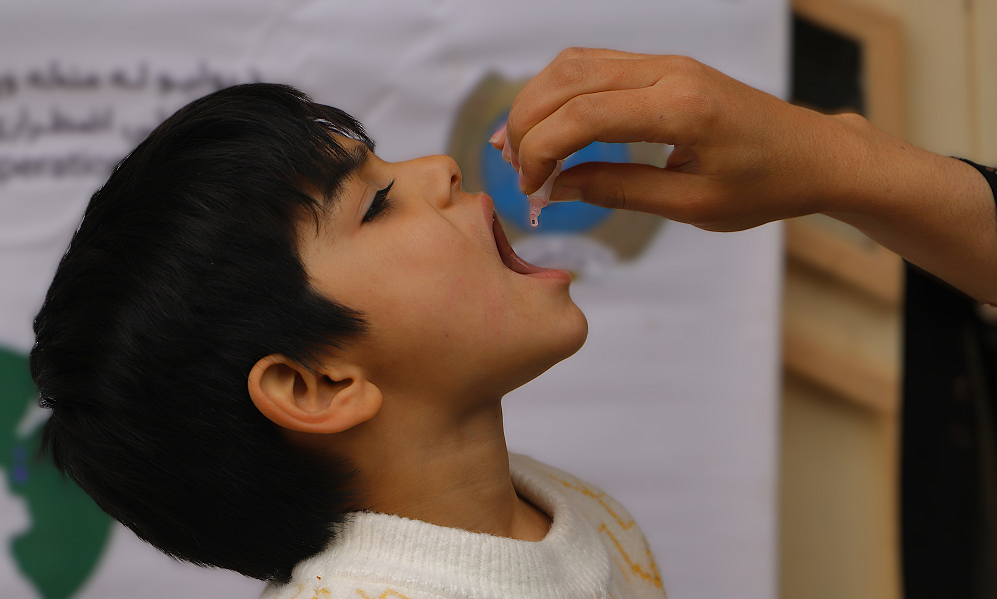
A nationwide polio vaccination campaign got underway across Afghanistan on Monday.
The four-day campaign aims to vaccinate around 12.77 million children under the age of five against polio.
Officials said the campaign is aimed at strengthening protection for children against polio and preventing the spread of the virus.
However, in the southern zone of the country, the polio vaccination campaign will begin one day later, on Tuesday, to ensure better implementation.
According to the information provided, Afghanistan has conducted one nationwide and two sub-national polio vaccination campaigns so far this year. The current campaign is the fourth of the year. In addition, localized campaigns and public awareness programs have also been carried out.
Officials said some environmental samples linked to the polio virus have tested positive. However, the Ministry of Public Health has not so far confirmed any human cases of polio.
According to officials, investigations into suspected cases are ongoing, and information on confirmed human cases will be shared once the assessments are completed and sufficient evidence is available.


Tawsia: Review of three key economic developments in Afghanistan

Abu Muslim cruise to 4-0 win over Aino Mina as Panahi hits hat-trick

ACB announces Afghanistan squads for Bangladesh, Zimbabwe series

US rejects American University of Afghanistan’s funding request

Cargo stacks up as Pakistan seizes containers to block capital routes

Saudi energy group signs major Afghanistan deals covering gas exploration and pipeline plans

Khalilzad: Afghanistan ready to attract major investment

El Niño likely to intensify, may become strongest ever recorded, WMO says

Khyber Chamber demands reopening of Torkham crossing

Messi returns to Inter Miami after Argentina retirement
Tawsia: Review of three key economic developments in Afghanistan

Tahawol: Pakistan’s airstrikes on civilians in Afghanistan discussed

Tahawol: Improvement in Afghanistan-China relations discussed

Saar: Expanding ties with regional and global countries discussed

Tahawol: Absence of Afghanistan’s envoy at UNGA discussed
-

 Sport5 days ago
Afghanistan vs India Asian Games quarter-final abandoned without a toss
-
 Regional5 days ago
Floods, landslides kill 56 in India and 14 in Nepal
-

 World5 days ago
Trump says men arrested at UK air base used by US planned ‘big damage’
-
 Regional4 days ago
US, Iran separately talk with mediators in latest bid to end war
-

 World5 days ago
Serbia’s President Vucic resigns ahead of October parliamentary elections
-
 Business5 days ago
Afghanistan raises import tariffs on several goods to support domestic industry
-
 Latest News5 days ago
Khalilzad calls for end to Pakistan’s ‘double game’, urges new chapter with Afghanistan
-
 Business5 days ago
Afghanistan-Kazakhstan trade reaches $581 million in six months