
Latest News
Fitrat says foreign aggression and internal conflicts have inflicted heavy losses on Afghanistan

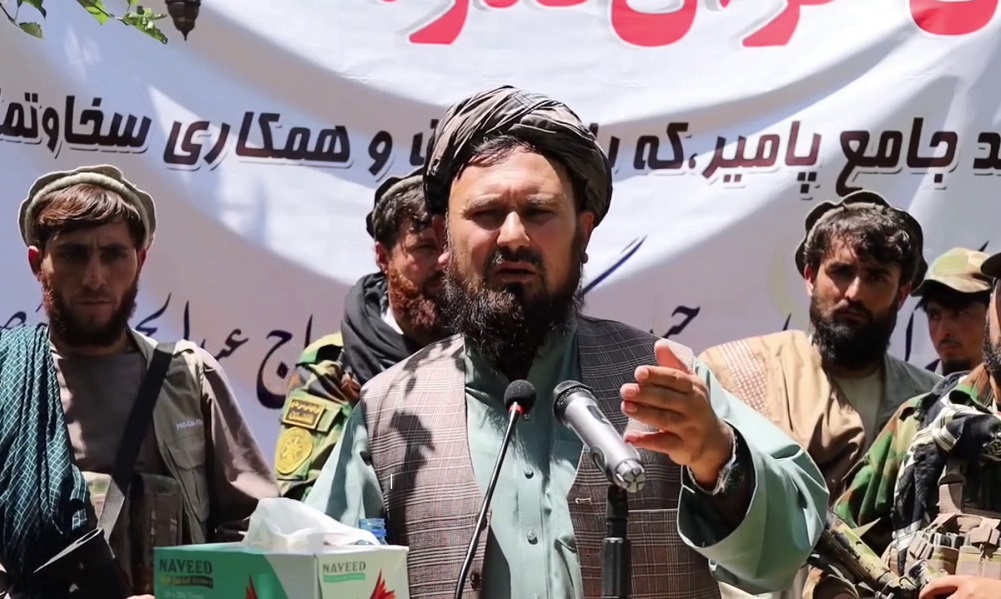
Fasihuddin Fitrat, Chief of Army Staff of the Islamic Emirate, has said that Afghanistan has endured decades of devastation due to foreign intervention and internal conflicts.
Speaking at a ceremony marking the laying of the foundation stone for a mosque in Baharak district of Badakhshan province, Fitrat said the country had suffered the consequences of war for more than four decades, with both external aggression and domestic strife contributing to widespread destruction.
“Our homeland has been engulfed in war for four and a half decades. At times, these wars were imposed on us by the enemies of the country, and at other times, internal conflicts claimed the lives of our people,” he said. “Our enemies divided and fragmented our nation.”
Fitrat argued that foreign actors had, at various stages of Afghanistan’s history, fueled divisions among Afghans and weakened national solidarity, resulting in prolonged conflict and significant human losses.
The senior military official also criticized the policies of some neighboring countries, saying pressure on Afghanistan had increased since the Islamic Emirate returned to power in 2021. He pointed in particular to the ongoing deportation of Afghan migrants from neighboring states.
According to Fitrat, economic sanctions imposed on Afghanistan have compounded the country’s challenges, while large numbers of Afghan migrants continue to be returned from neighboring countries on a daily basis.
“With the return of the Islamic Emirate, even some of our neighbors adopted hostile policies and decided to send Afghan migrants back to their homeland,” he said. “Every day, waves of migrants are moving toward Afghanistan.”
His remarks come as Iran and Pakistan continue large-scale deportations of Afghan migrants, a process that has drawn concern from international humanitarian organizations. Aid agencies have repeatedly warned that the mass return of migrants is placing additional strain on Afghanistan’s fragile economy and limited humanitarian resources.





Latest News
Russian troops arrive in Uzbekistan for joint military exercises
The Hamkorlik-2026 exercises will run from October 20 to 27 at the Termez training ground in Surkhandarya province, near Uzbekistan’s border with Afghanistan.
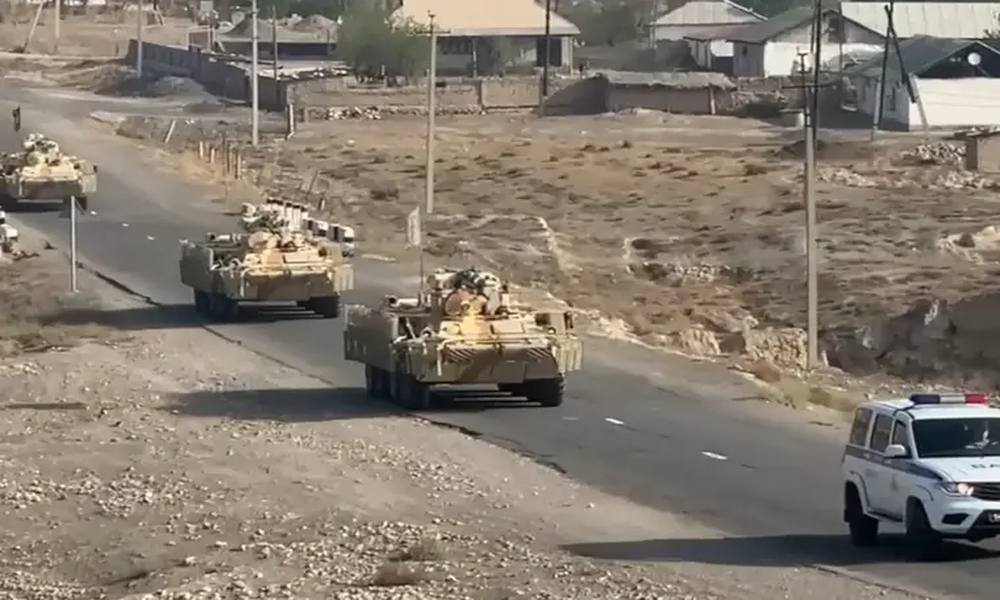
Russian troops have arrived in southern Uzbekistan to take part in joint military exercises with Uzbek forces, with the drills focusing on operations against armed groups in border areas.
The Hamkorlik-2026 exercises will run from October 20 to 27 at the Termez training ground in Surkhandarya province, near Uzbekistan’s border with Afghanistan, according to reports citing Russia’s Central Military District.
The Russian contingent comes from the 201st Guards Military Base, which is stationed in neighbouring Tajikistan, Tajikistan Times reported. The troops travelled more than 300 kilometres through mountainous areas of Tajikistan and Uzbekistan in military and specialised vehicles before reaching the training ground.
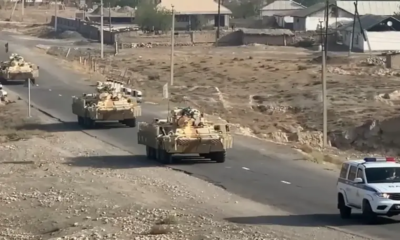
The convoy included BTR-82A armoured personnel carriers, Ural trucks and specialised vehicles based on KamAZ chassis, according to local media reports. Upon arrival, the Russian servicemen began preparing their equipment for the exercises.
During the drills, Russian and Uzbek forces will practise coordinating operations to detect and neutralise small groups belonging to a simulated illegal armed formation operating in border areas, Uz Daily reported.
The exercises will involve mountain and assault units, reconnaissance and strike drones, ground-based robotic systems and Mi-24 attack helicopters.
The manoeuvres come amid continued military cooperation between Russia and Central Asian countries, where concerns include security and stability in neighbouring Afghanistan.
Russia and Uzbekistan held Hamkorlik joint exercises in 2025. Their defence ministries also agreed on a military cooperation plan for 2026–2030, according to the Tashkent Times.
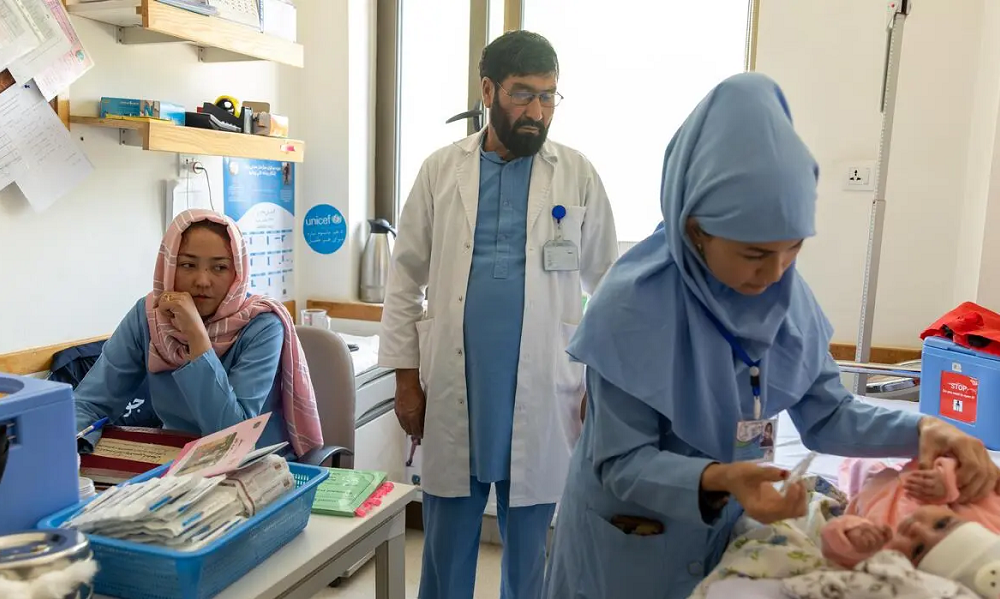
The Ministry of Public Health of the Islamic Emirate of Afghanistan (IEA) has announced the results of its assessment of 115 private hospitals in Kabul, with two placed in Category A, nine in Category B and 39 in Category C.
Ministry officials announced the results at a meeting in Kabul on Tuesday, saying the accreditation and classification process aims to improve healthcare standards, promote fair competition among private hospitals, increase transparency and address concerns over the cost of medical services.
Public Health Minister Noor Jalal Jalali said the initiative was designed to bring changes to the private healthcare sector and encourage hospitals to compete by improving the quality of their services.
He added that healthcare service rates would also be determined following the assessment, which he said could improve transparency and help ease public concerns over access to medical care.
Abdul Salam Hanafi, the IEA’s Deputy Prime Minister for Administrative Affairs, said the classification process was introduced in response to public complaints about high costs at private hospitals. He said hospitals were assessed and classified according to their facilities and the services they provide.
Abdul Wali Haqqani, Deputy Minister for Health Services, said each hospital’s category reflects its current condition. Hospitals receiving higher classifications should maintain their standards, while those in lower categories should work to meet the required criteria, he added.
Ministry officials said the accreditation process would continue as part of efforts to standardise healthcare services, regulate treatment costs and strengthen accountability among private healthcare facilities. They urged hospitals to meet the established standards and improve the quality and accessibility of care for patients.
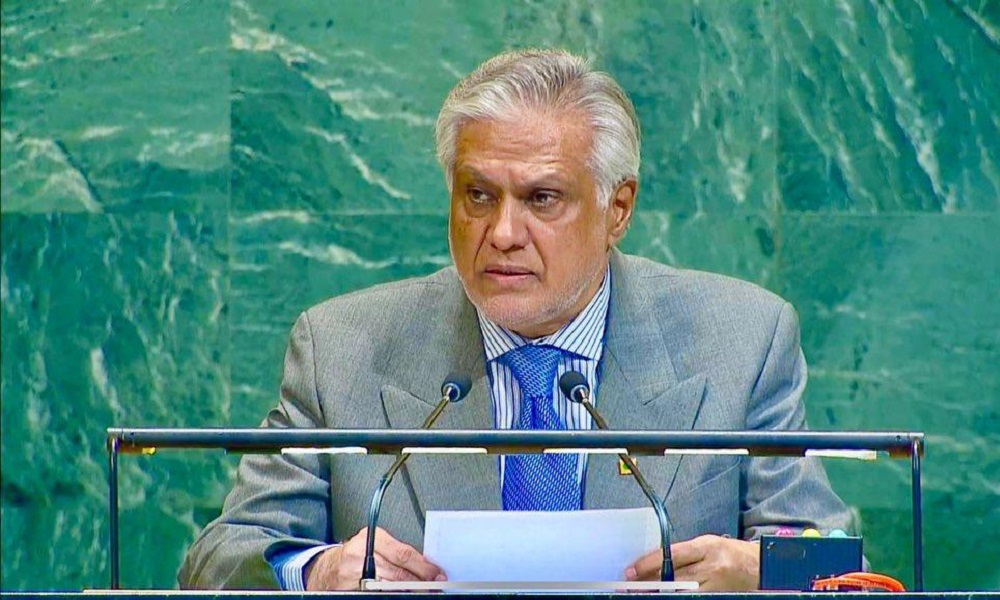
Mohammad Ishaq Dar, Pakistan’s Deputy Prime Minister and Minister of Foreign Affairs, has called on the Islamic Emirate to ensure that Afghan territory is not used for terrorism against Pakistan and other countries around the world.
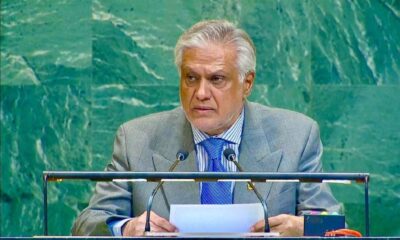
Ishaq Dar made the remarks on Tuesday at a meeting of the Council of Heads of Government of the Shanghai Cooperation Organisation (SCO) in Dushanbe, the capital of Tajikistan.
In his speech, he stressed that sustainable economic development in the region cannot be guaranteed without lasting peace and security. He also said that stability in Afghanistan is essential for maintaining peace and security across the region.
Pakistan’s foreign minister said his country wants a peaceful, stable, regionally integrated and prosperous Afghanistan, adding that Pakistan has made efforts to support Afghanistan’s development and the well-being of its people.
Pakistani officials have repeatedly alleged that attacks in Pakistan are organised from Afghan territory. The Islamic Emirate, however, has rejected these allegations, stating that Afghanistan is not responsible for Pakistan’s “security failures.”


Russian troops arrive in Uzbekistan for joint military exercises

Government assesses 115 private hospitals in Kabul, only two earn top grade

Arman FC begin second half of Afghanistan Champions League with 2-0 win

Pakistan FM urges IEA not to allow Afghan soil to be used against Pakistan

Trump blames migrants for violence in France as US midterms loom

Cricket Bonanza: Afghanistan set for packed international schedule

Afghanistan says 28 killed, 32 captured in Nuristan operation

Silk Road highway in Wakhan corridor now reaches the China border

CNN, MS NOW and Politico sue Trump, challenging White House ban

Afghanistan on climate front line as Kabul faces groundwater warning
Trump blames migrants for violence in France as US midterms loom

Tahawol: US–Iran tensions escalate with mutual threats

Saar: IEA–UNAMA relations: five years under review

Iran calls for extending Herat railway to Uzbekistan border

Violent protests spread across Europe as Albanian PM blames ‘foreign hand’
-

 Sport2 days ago
Afghanistan reach Brazil futsal tournament final after beating Cape Verde 4-2
-
 Latest News4 days ago
Nearly 19.2 million Afghans face winter hunger as child malnutrition set to surge, UN agencies warn
-
 Business4 days ago
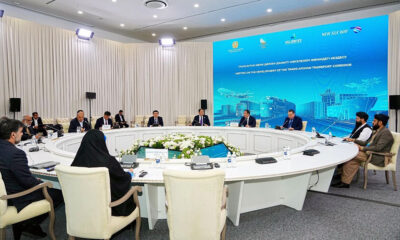
Regional partners seek progress on Trans-Afghan corridor and CASA railway
-

 Regional3 days ago
Trump says US may strike Iran’s ‘Pickaxe Mountain’ nuclear facility
-

 World4 days ago
Trump says he is talking to Russia and China about denuclearization
-
 Latest News3 days ago
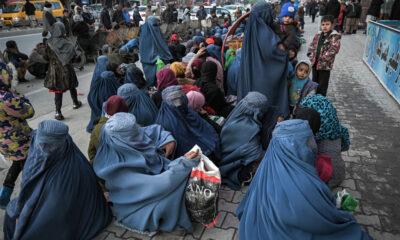
Afghanistan’s hunger crisis deepens as 16 million face food insecurity ahead of winter
-

 Sport4 days ago
Afghanistan Champions League: Abu Muslim Farah beat Sarsabz Yashlar 3-1
-
 Latest News4 days ago
Lavrov warns of western-backed ‘color revolutions,’ raises concerns over Afghanistan’s regional security