
Latest News
Ghor ex-governor claims her dismissal for fight against corruption


![GHOR _ 24_12_2015_PASHTO_SOT.mpg_snapshot_00.30_[2015.12.24_19.42.03]](https://ariananews.af/wp-content/uploads/2015/12/GHOR-_-24_12_2015_PASHTO_SOT.mpg_snapshot_00.30_2015.12.24_19.42.031.jpg)
The former governor of Ghor province has claimed that the reason of her dismissal was because she launched a program to fight against corruption.
Sima Jouyenda, Ghor ex-governor in an exclusive interview with Ariananews says that she prevented corruption in development projects during her mission in Ghor province.
“One of the main reason of my dismissal was fighting against corruption. I have prevented corruption in the most projects,” said Sima Jouyenda, former governor of Ghor.
Jouyenda accused her deputy of involving in fraud and irregularities in development projects, saying her deputy has embezzled more than $ 100 million in development projects.
She noted that her deputy was introduced to the general attorney but after her dismissal, her deputy appointed as acting governor.
“Amin Tokhi, my deputy has signed many contracts unlike his authorities and embezzled more than $ 100 million,” Jouyenda added.
However, deputy of former Ghor governor, Amin Tokhi says, “I deny this claim and I do not know anything about this issue. This is a conspiracy against me that was made by the Governor,” said Amin Tokhi, former deputy of Ghor governor.
Meanwhile, Afghanistan’s Independent Directorate of Local Organs says that no written was submitted to them regarding the embezzlement of Amin Tokhi.
Sima Jouyenda was the second governor who has appointed in National Unity Government.

Latest News
Regional leaders seek stronger trade links through Afghanistan at Termez Dialogue
Uzbekistan’s First Deputy Foreign Minister, Bakhromjon Aloev, said a more prosperous and economically integrated Afghanistan could help promote regional stability after decades of conflict.
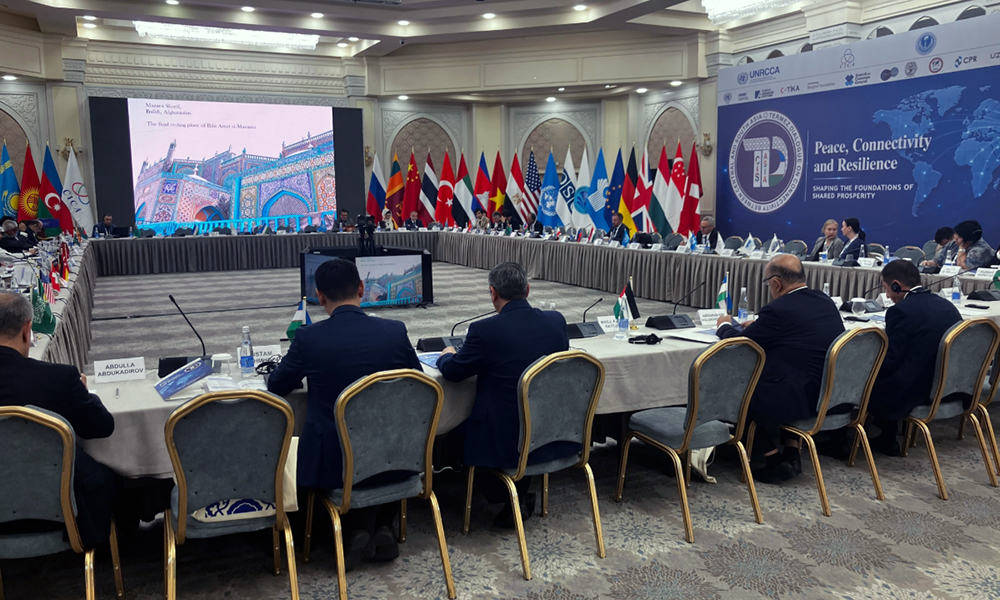
Senior officials from Central and South Asia gathered in Tashkent this week for the second Termez Dialogue, where regional connectivity, trade expansion and Afghanistan’s role as a transit hub featured prominently in discussions.
Participants at the forum broadly agreed that Afghanistan remains central to efforts to strengthen economic ties between Central and South Asia, given its strategic location linking the two regions.
Uzbekistan’s First Deputy Foreign Minister, Bakhromjon Aloev, said a more prosperous and economically integrated Afghanistan could help promote regional stability after decades of conflict. He noted that Central Asian countries are continuing to expand trade and economic engagement with Afghanistan despite ongoing challenges.
According to officials, Uzbek and Afghan entities have signed agreements worth approximately $5 billion since late 2025, underscoring growing commercial ties between the neighboring countries.
Afghanistan’s Minister of Industry and Commerce, Nooruddin Azizi, used the forum to reiterate Kabul’s commitment to expanding regional trade, improving logistics infrastructure and increasing the country’s transit capacity.
Afghan representatives also reportedly urged regional partners to advocate for the easing of international sanctions that continue to limit trade and investment opportunities.
Speaking on the sidelines of the event, the chairman of Afghanistan’s Chamber of Commerce and Investment, Syed Karim Hashemy, argued that existing sanctions disproportionately affect the private sector, which he said accounts for around 70 percent of the country’s economic activity.
He called for greater flexibility in banking and financial restrictions to facilitate cross-border trade and investment.
However, prospects for major international support remain uncertain. The European Union’s Special Representative for Central Asia, Eduards Stirpais, indicated that Brussels is unlikely to significantly alter its policy toward the Islamic Emirate in the near future, citing ongoing concerns over governance and human rights issues.
Despite these challenges, several participants stressed the importance of continued engagement with Afghanistan to advance regional connectivity projects, including the proposed Trans-Afghan Railway, which aims to link Central Asian markets with ports in South Asia.
Established under a 2022 United Nations resolution on strengthening connectivity between Central and South Asia, the Termez Dialogue serves as a platform for regional cooperation aimed at improving trade routes, transport networks and economic integration across the region.
Latest News
Aid shortages deepen as Afghanistan feels impact of Hormuz disruptions
According to WFP, an additional 2.3 million people in Afghanistan have been pushed into acute hunger since the crisis began nearly 100 days ago.
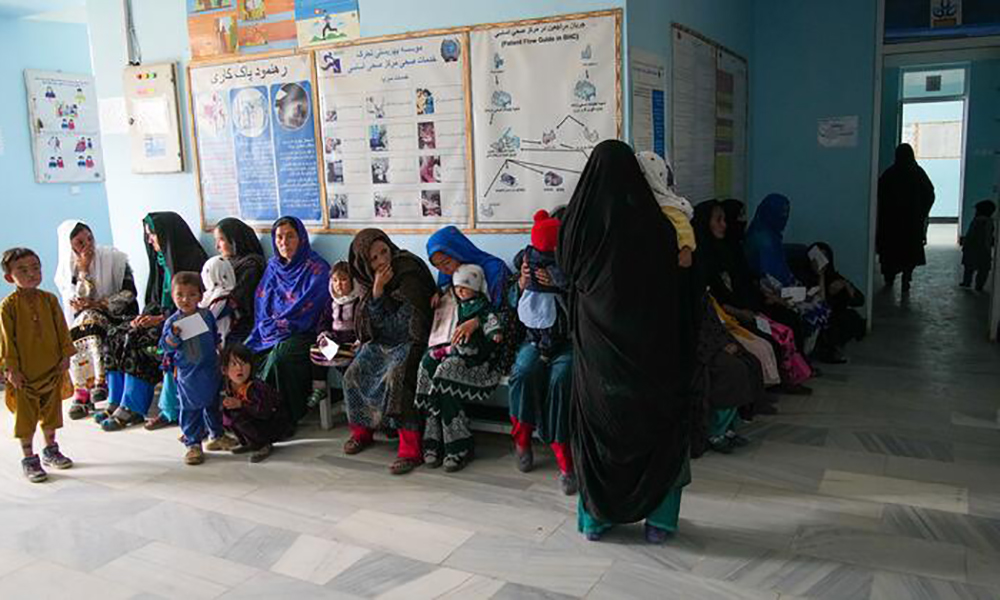
Afghanistan is facing worsening humanitarian challenges as disruptions linked to the ongoing Strait of Hormuz crisis drive up food, fuel and transport costs, placing additional pressure on aid operations across the country.
Speaking at UN Headquarters in New York on Thursday, World Food Programme (WFP) Acting Executive Director Carl Skau said warnings issued earlier in the crisis about the knock-on effects of higher energy prices were now materialising in some of the world’s most vulnerable countries.
Skau stated that few places illustrate the cascading consequences of the crisis more starkly than Afghanistan.
Fresh from a visit to the country, he described witnessing hundreds of mothers carrying visibly malnourished children away from a rural health clinic near Jalalabad because nutrition supplies had run out.
The shortages stem from a combination of funding cuts and supply-chain disruptions that have complicated deliveries previously routed through neighbouring countries.
“I’ve never seen anything like it,” Skau said. “The desperation in that clinic is hard to describe.”
Afghanistan is simultaneously coping with economic pressures linked to the regional crisis and the return of some 2.8 million people deported or repatriated from neighbouring countries over the past year.
According to WFP, an additional 2.3 million people in Afghanistan have been pushed into acute hunger since the crisis began nearly 100 days ago.
Rising food prices, higher transport costs and underfunded aid programmes are reducing the ability of humanitarian organizations to reach vulnerable communities.
The UN Children’s Fund (UNICEF) has also warned that shipping delays and rising transport costs are affecting the delivery of critical supplies, including vaccines, therapeutic food and medical assistance. Humanitarian cargo is now facing delays of up to six months in some cases.
UN officials say the impact of the Strait of Hormuz crisis extends far beyond the Middle East, with vulnerable countries such as Afghanistan bearing some of the heaviest consequences. They warn that prolonged disruptions could further increase hunger, deepen poverty and undermine fragile humanitarian gains.
The latest warnings come as aid agencies continue to appeal for greater international support to prevent a further deterioration of conditions for millions of Afghans who remain dependent on humanitarian assistance.

The Supreme Leader of the Islamic Emirate of Afghanistan (IEA), Sheikh Hibatullah Akhundzada, has said that the general amnesty announced following the Islamic Emirate’s return to power in 2021 was aimed at preventing revenge and helping restore security and stability across the country.
According to IEA deputy spokesman Hamdullah Fitrat, Akhundzada made the remarks during a meeting in Kandahar with governors, heads of Ulema councils, appellate court chiefs, tribal elders, and religious scholars from nine provinces in northeastern and northwestern Afghanistan.
Addressing the gathering, Akhundzada said the Islamic Emirate had instructed its fighters not to seek retribution against former government officials, security personnel, or others associated with the previous administration.
“We prevented the Mujahideen from taking revenge and prohibited them from doing so,” he said. “We told them to lay down their weapons; we would not kill them and would not hold them accountable. They laid down their weapons, and we granted them amnesty.”
The general amnesty was announced shortly after the Islamic Emirate took control of Afghanistan in August 2021, ending two decades of conflict between the former Western-backed government and the IEA. The move was widely presented by the authorities as an effort to encourage reconciliation and prevent further bloodshed during the transition of power.
Akhundzada said that after years of war and suffering, Afghans should be encouraged to forgive one another and move beyond longstanding grievances. He urged religious leaders and community elders to promote reconciliation and help prevent old disputes from being passed on to future generations.
He added that lasting peace requires communities to reject cycles of revenge and hostility, warning that unresolved conflicts could continue to fuel divisions if left unaddressed.
The meeting was also attended by officials from the Kandahar Ulema Council, the Supreme Court, the Central Darul Ifta, the Religious Publications Evaluation Department, and a number of teachers and madrasa administrators.


Regional leaders seek stronger trade links through Afghanistan at Termez Dialogue

Aid shortages deepen as Afghanistan feels impact of Hormuz disruptions

Eight Goalkeepers Set to Shine at the 2026 FIFA World Cup

EU faces risk of 1.3 million job losses amid energy price surge linked to Iran conflict

Tashkent Deputy Governor set to visit Kabul with Uzbek trade delegation

New Afghanistan-China transport corridor launched via Turkmenistan

Afghanistan signs $46 million deal to develop standard laboratory complexes

Large blast near Beit Shemesh part of pre-planned test: Israeli defense firm

Trump returns from China with stability but little progress

Afghanistan announce squad for India series

Tahawol: Discussion on fear of internal disputes in Iran

Tahawol: Welcoming Qatar’s cooperation with Afghanistan discussed

Saar: Former President’s strong criticism of Pakistan’s policies discussed

Tahawol: China’s efforts to host next round of Urumqi talks

Saar: Upcoming UNSC meeting on Afghanistan situation discussed
-

 Sport5 days ago
Afghanistan to play in Diamond Jubilee Tournament opener against Maldives
-
 Latest News3 days ago
Russian business official proposes visa-free travel between Russia and Afghanistan
-

 International Sports4 days ago
EMF EURO 2026 heads toward decisive group-stage finale in Bratislava
-
 Latest News3 days ago
China and Pakistan’s special envoys for Afghanistan discuss Urumqi Process
-

 Sport4 days ago
Afghanistan edge Maldives 1-0 in four-nation tournament opener
-

 Sport3 days ago
Six Afghan cricketers selected for 2026 Lanka Premier League
-
 Business2 days ago
Afghanistan’s trade with Central Asia records sharp growth
-

 Latest News2 days ago
Three Afghans among four farmworkers burned alive in Italy; two Pakistanis arrested