
Latest News
Gov’t warns Pakistan to persuade Taliban for peace talks

![PEACE_ 17_04_2016_DARI_SOT.mpg_snapshot_00.48_[2016.04.17_18.32.15]](https://ariananews.af/wp-content/uploads/2016/04/PEACE_-17_04_2016_DARI_SOT.mpg_snapshot_00.48_2016.04.17_18.32.15.jpg)
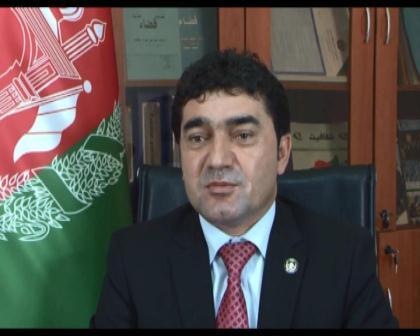
President’s deputy spokesman has warned Pakistan to make Taliban ready for Peace Talks; otherwise, the Afghan people would never believe in its commitments.
Islamabad is expected to have a key role in bringing the Taliban, which is based in Pakistan, to the table eventually.
Dawa Khan Mina Pal, president’s deputy spokesman stresses that Pakistan should fulfill the commitments of quartet meeting in Islamabad.
“Afghan government demands Pakistan to fulfill the commitments of the quartet meeting and make Taliban ready for peace negotiations,” Dawa Khan Mina Pal, president’s deputy spokesman said.
While Islamabad announces readiness for holding the fifth session of the quartet meeting, the Afghan government considers Taliban accept peace talks the main pre-condition to trust on Pakistan.
Previously, representatives from four nations involved in talks aimed at ending the violence in Afghanistan have agreed to continue to push for direct peace talks between the Taliban and the Afghan government.
They said the countries “agreed to continue joint efforts for setting a date for direct peace talks between the representatives of the Afghan government and Taliban groups expected to take place by the end of February 2016.”
But the question that remains is why Pakistan plays a dual game against the Afghan-Taliban peace talks process?.
A number of Afghan analysts are said to believe that Pakistan has many aims to gain and supports Taliban for achieving them.
“Pakistan is trying to strengthen Taliban and seeks to officially recognize it,” Nasratullah Istanikzai, political analyst said.
“Without reaching to targets, Pakistan would never take honest steps for Afghanistan’s peace,” Senator Nadir Baloch said.
The Taliban has not indicated whether it intends to join the peace process. Instead, the Taliban has intensified its insurgent activities and extended its control or influence to an estimated 30 percent of Afghan territory during the past year.
Relations in the neighborhood are plagued by mutual distrust. While Afghanistan harbors concerns about Pakistan providing sanctuary to the Afghan Taliban, particularly the Haqqani network, Islamabad voices concerns about Pakistani Taliban fighters operating from the Afghan soil.
Separately, Afghan President Ashraf Ghani appointed and introduced the new head of the High Peace Council in charge of persuading armed groups to end violence and join the national political reconciliation process.
The council’s new chief, Pir Sayed Ahmad Gilani, is a prominent Afghan jihadi leader who is respected by tribes across Afghanistan.
Former president Hamid Karzai set up the council in 2010 to assist the government in promoting peace and reconciliation with armed opposition groups.
But the panel, which consists of prominent Afghan religious and political as well as jihadi personalities, has failed to achieve a significant breakthrough amid growing demands for the council’s dissolution to save critical state financial resources.

Latest News
Death toll rises in armed attack in Herat; 11 killed, 8 injured
Authorities have confirmed that one suspect has been arrested in connection with the attack.
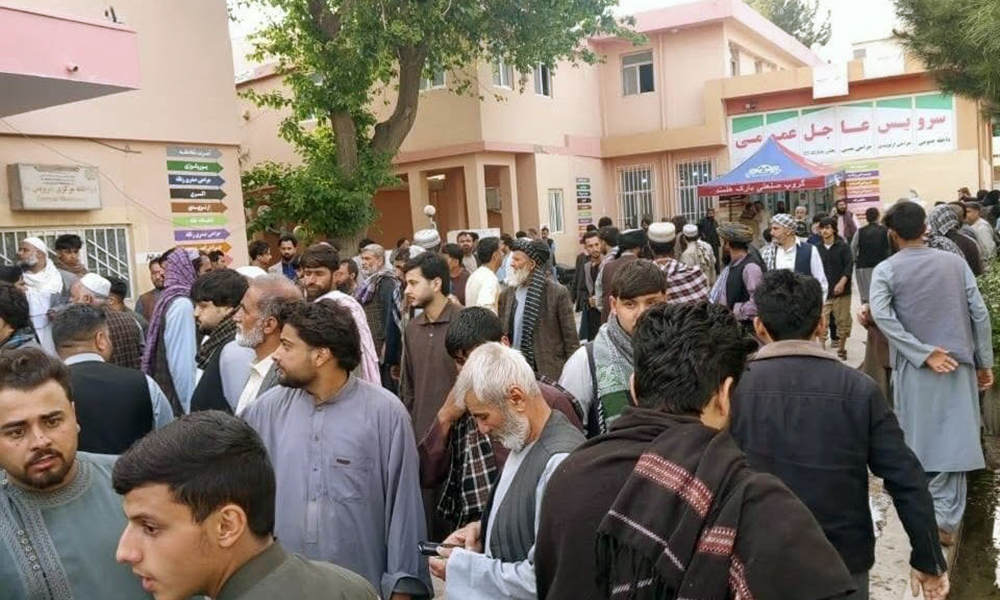
The death toll from a brutal armed attack in the Injil district of Herat province has increased, with local authorities confirming that at least 11 people were killed and 8 others injured.
Ahmadullah Muttaqi, Director of Information and Culture for Herat, reported that the attack occurred around 3:00 PM on Friday when unidentified gunmen opened fire on a group of families who had gathered for a picnic in the village of “Dah Mehre,” located in the Injil district.
Initial reports indicated that four people were killed and 15 others injured. However, as the severity of the injuries became clearer, seven more of the wounded tragically succumbed to their injuries overnight. The latest update puts the death toll at 11, with 8 survivors, two of whom are said to be in critical condition.
Authorities have confirmed that one suspect has been arrested in connection with the attack. Security forces are continuing to investigate the incident, with efforts underway to identify and apprehend additional perpetrators.
The attack has sent shockwaves through the region, with local authorities and communities expressing outrage and concern over the rising violence in the area.
Latest News
UN warns of deepening humanitarian crisis in Afghanistan, calls for urgent aid
Dujarric also highlighted a 5.9-magnitude earthquake that struck the Hindu Kush region on Sunday, causing additional casualties and damage, including in Kabul and nearby areas.
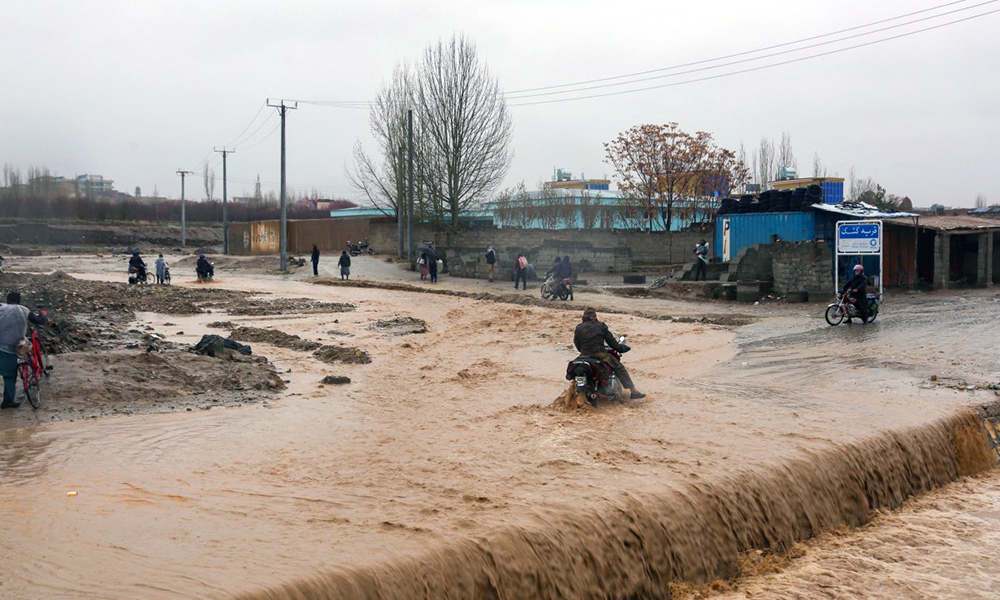
The United Nations has raised alarm over a worsening humanitarian crisis in Afghanistan, citing the combined impact of ongoing conflict and severe weather conditions, and urging the international community to step up assistance.
Speaking at a daily press briefing, UN Secretary-General spokesperson Stéphane Dujarric said that recent heavy rains and flooding have led to significant casualties and widespread destruction across the country.
“Nearly 100 people have reportedly been killed, more than 180 injured, and several others remain missing. Thousands of homes have been severely damaged or completely destroyed, along with critical infrastructure and large areas of agricultural land,” Dujarric said.
He noted that Nangarhar Province in eastern Afghanistan has been among the hardest hit regions, already recovering from a devastating earthquake in September last year.
Dujarric also highlighted a 5.9-magnitude earthquake that struck the Hindu Kush region on Sunday, causing additional casualties and damage, including in Kabul and nearby areas.
“We and our humanitarian partners have so far reached more than 8,000 people with assistance, including food, cash aid, health services, emergency shelter, and other life-saving support,” he added.
The UN said assessments are ongoing to ensure aid reaches the most vulnerable populations, as Afghanistan faces mounting humanitarian challenges amid overlapping crises.
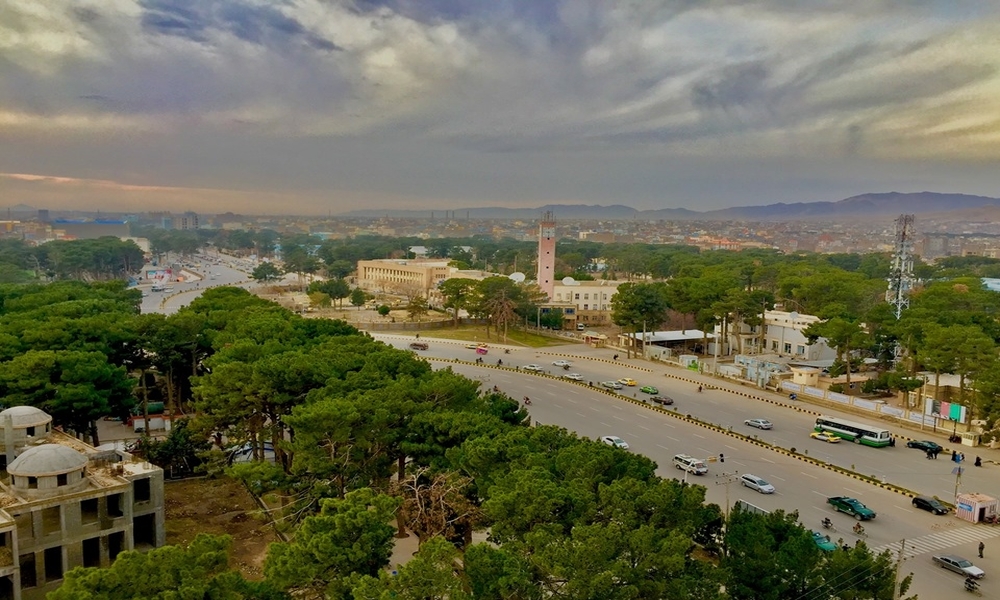
Seven people were killed and 13 injured in a shooting by unidentified armed men in Herat province, said Interior Ministry spokesperson Abdul Mateen Qani.
Qani added that after midday on Friday, unidentified gunmen on motorcycles opened fire on a group of civilians who had gathered for recreation near a picnic area in Qabarzon village, Injil district of Herat province.
According to Qani, initial information indicates that 7 people were killed and 13 others wounded in the attack. The condition of some of the injured is reported to be critical.


IEA issues new decree to regulate street vendors, boost urban order

Iranian source says US has agreed to unfreeze Iranian funds held in Qatar, other countries

Death toll rises in armed attack in Herat; 11 killed, 8 injured

US, Iran teams in Pakistan for peace talks amid doubts over Lebanon, sanctions

Rajasthan Royals beat Royal Challengers Bengaluru by six wickets

IEA Supreme Leader issues Eid-ul-Fitr message urging unity and support for Islamic system

IEA supreme leader orders replacement of foreign terminology in official documents

14 Pakistani soldiers killed after military post falls along Durand line: MoD

Afghan airstrikes target Pakistani military sites in retaliation for air attacks

Turkmenistan, Afghanistan discuss steps to speed up land acquisition for TAPI pipeline

Tawsia: New transit route with Tatarstan, MoU with Uzbekistan discussed

Tahawol: China to host 2nd round of Kabul–Islamabad talks discussed

Saar: Fragile ceasefire in the Middle East reviewed

Tahawol: Two‑week truce agreement between Iran-US reviewed

Saar: US–Iran two-week ceasefire agreement discussed
-
 Latest News4 days ago
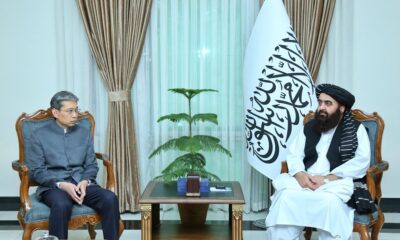
China seeking to build trust between Afghanistan and Pakistan
-
 Business4 days ago
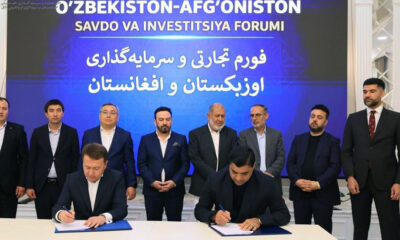
Afghanistan, Uzbekistan sign $400 million trade deals in push to deepen ties
-
 International Sports4 days ago
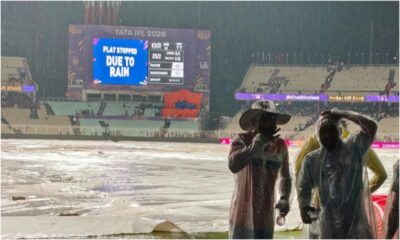
IPL 2026: Rain scuppers KKR vs PBKS match
-
 Latest News4 days ago
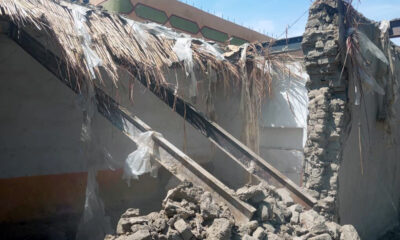
Heavy rains in Nangarhar leave 16 dead and injured
-
 Health5 days ago
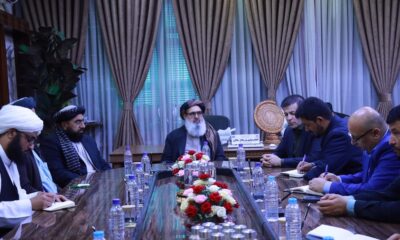
Afghanistan and Uzbekistan seek stronger ties in health sector
-
 Latest News4 days ago
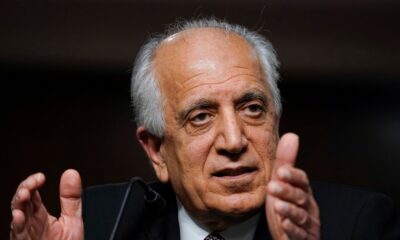
Fragile progress as US–Iran tensions shift toward negotiations, says Khalilzad
-
 Sport4 days ago
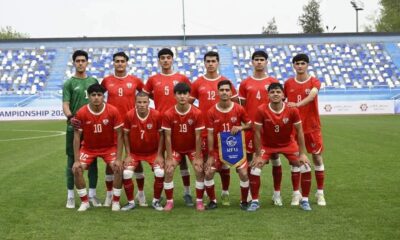
Afghanistan U-17s draw 0-0 against Turkmenistan in CAFA campaign
-
 Latest News4 days ago
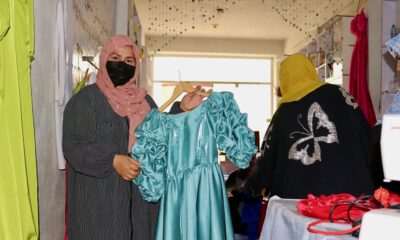
Japan and UNDP launch $2.35 million livelihoods initiative in Afghanistan