
Latest News
IEA dispels Pakistan’s remarks on Daesh in Afghanistan as ‘baseless’
“The Islamic Emirate has control over the entire geography of the country, and there is no unauthorized activity here, nor is it allowed,” said Fitrat.

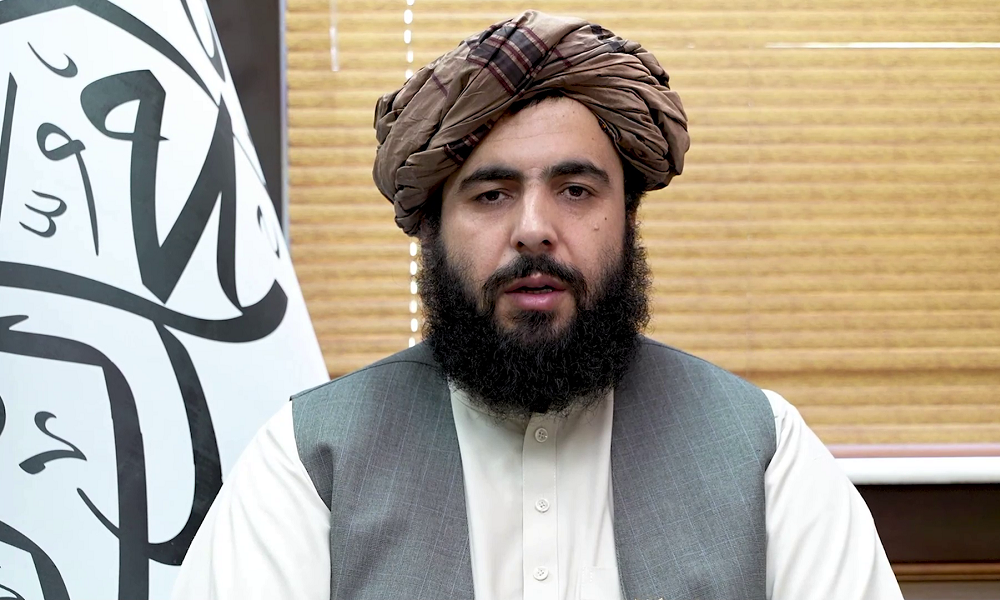
The Islamic Emirate’s spokesman Hamdullah Fitrat said Wednesday that the recent remarks to the United Nations Security Council by Pakistan’s envoy to the UN on Afghanistan not being able to control Daesh was “baseless” and that certain parties use such meetings to vent their frustrations.
Fitrat said Afghanistan is a secure country and no unauthorized activities are permitted.
He also stated that Afghanistan’s absence from UN meetings has led to certain countries being able to present a distorted image of the country.
“Unfortunately, different parties use such meetings to vent their frustrations over Afghanistan and try to present a distorted image of the country. The reality is that Afghanistan is a secure country with a unified government in power.
“The Islamic Emirate has control over the entire geography of the country, and there is no unauthorized activity here, nor is it allowed,” said Fitrat.
He added: “Another issue is that the United Nations should recognize Afghanistan’s seat, so that correct judgments can be made in these meetings and no one is provided with an opportunity for malicious propaganda.”
At the UNSC meeting, Pakistan’s envoy to the UN Munir Akram said the IEA has not been very successful in curbing Daesh and that the group has become a serious challenge for Afghanistan’s rulers.
Akram emphasized that the presence of over 20 terrorist groups in Afghanistan poses a threat to the entire region and the world.
He also added that the Tehreek-e-Taliban Pakistan (TTP) is active in Afghanistan with about 6,000 fighters and acts as an umbrella for terrorist groups in the region.
However, some experts believe that Pakistan is pursuing a political and security agenda and is using its claim of fighting terrorism to achieve its own objectives.



Latest News
Doha process private sector meeting highlights growth and coordination in Afghanistan
The session was divided into two segments, focusing on growth and inclusion in the first part, and coordination and transparency in the second.
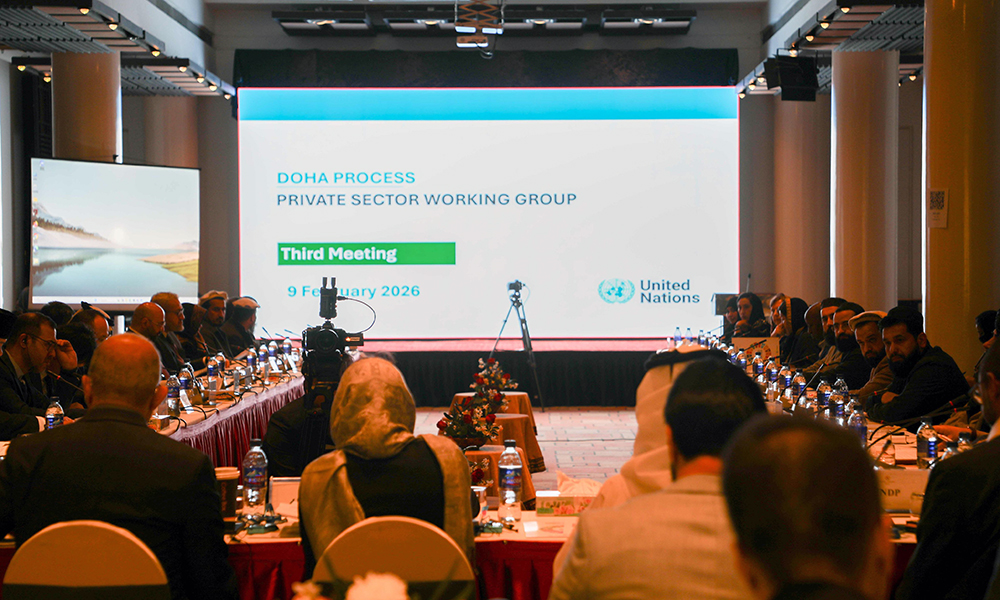
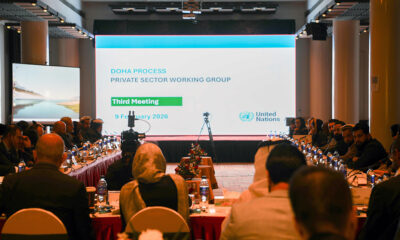
The 3rd session of the Doha Process Private Sector Working Group was held both in-person and online at Kabul’s Grand Hotel, hosted by the United Nations Assistance Mission in Afghanistan (UNAMA).
The meeting brought together representatives from the Islamic Emirate of Afghanistan, including the Ministries of Foreign Affairs, Finance, Industry and Commerce, Economy, Labor and Social Affairs, and the Central Bank, alongside UNAMA, UN agencies, international and regional organizations, as well as ambassadors, diplomats, and private sector experts.
The session was divided into two segments, focusing on growth and inclusion in the first part, and coordination and transparency in the second.
Afghanistan’s Islamic Emirate representatives shared achievements and progress since assuming governance, while participants acknowledged these efforts and highlighted their ongoing support for the private sector. All parties offered recommendations to address challenges and emphasized enhanced cooperation moving forward.
International Sports
IPL 2026: Franchise sales gather pace as global investors circle teams
Royal Challengers Bengaluru (RCB) has been put on the market by its current owner and is estimated to be worth up to $2 billion.
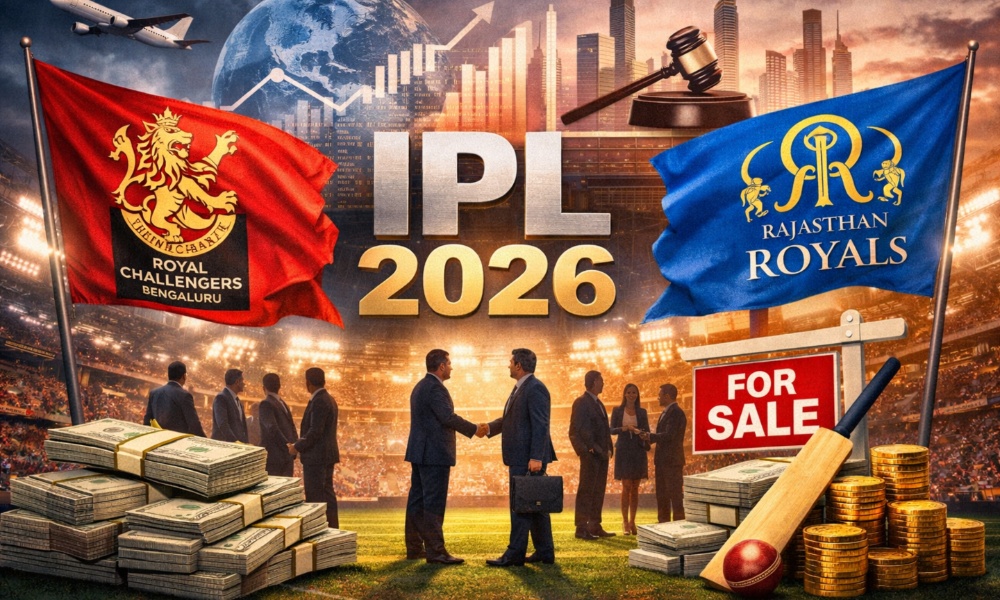
Developments off the field are drawing growing attention ahead of the 2026 Indian Premier League season, with two franchises — Royal Challengers Bengaluru and Rajasthan Royals — formally up for sale and attracting interest from high-profile domestic and international investors.
Royal Challengers Bengaluru (RCB), one of the league’s most recognisable teams, has been put on the market by its current owner, Diageo’s United Spirits Ltd, following a strategic review. The sale process is expected to be completed by the end of March 2026. Market estimates suggest the franchise could be valued at around $2 billion, reflecting the soaring commercial value of the IPL.
Several bidders have been shortlisted for RCB, including investment groups led by Indian industrialists, private equity firms and overseas sports owners. Among those reported to have shown interest is a consortium linked to the Glazer family, co-owners of English Premier League club Manchester United. Non-binding bids have already been submitted, with binding offers expected in the coming weeks.
Rajasthan Royals (RR), winners of the inaugural IPL title in 2008, are also in the process of being sold. A shortlist of potential buyers has been finalised, featuring a mix of Indian and international investors, including private equity firms, entrepreneurs and media-linked groups. The franchise is expected to attract a valuation of more than $1 billion, according to market estimates.
Final bids for Rajasthan Royals are anticipated in early March, while the RCB transaction is expected to move into its final phase later this month. Any change in ownership will require approval from the Board of Control for Cricket in India (BCCI).
The potential sales mark one of the most significant ownership shake-ups in IPL history and underline the league’s growing appeal as a global sports investment as preparations continue for the 2026 season.
Latest News
FM Muttaqi meets Uzbek Central Asia Institute Chief, stresses stronger bilateral cooperation
During the meeting, the two sides discussed ways to further strengthen political and economic cooperation, as well as key regional issues.
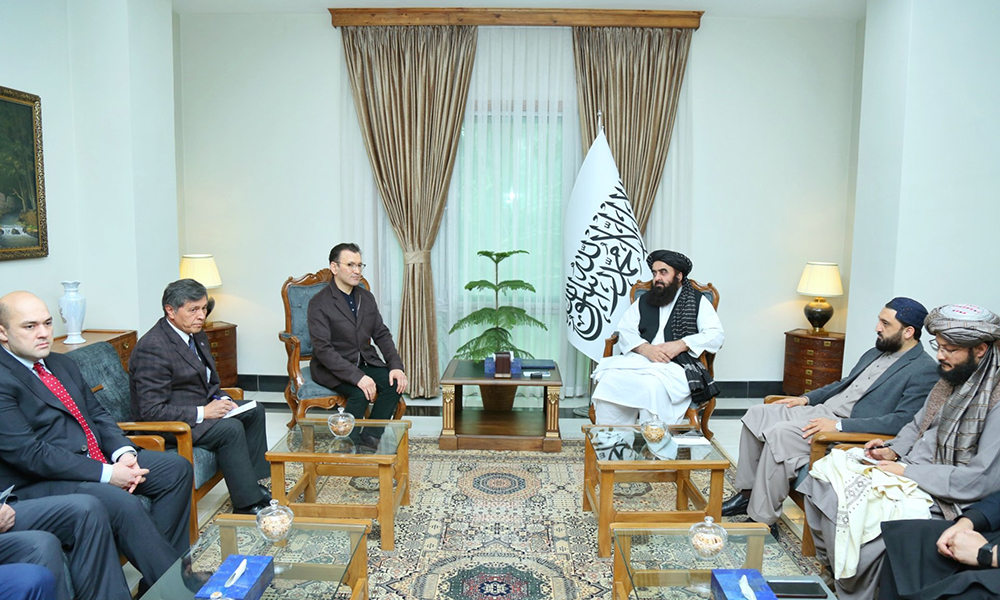
Afghanistan’s Minister of Foreign Affairs, Amir Khan Muttaqi, has met with a delegation led by Joulan Vakhabov, head of Uzbekistan’s International Institute of Central Asia and adviser to the country’s deputy president.
During the meeting, the two sides discussed ways to further strengthen political and economic cooperation, as well as key regional issues.
Muttaqi said Uzbekistan has adopted a positive and goodwill-based policy toward Afghanistan, expressing hope that bilateral relations and cooperation would continue to expand.
He also underscored the important role of research institutions in promoting mutual understanding, enhancing cooperation, and developing a realistic assessment of regional dynamics.
For his part, Vakhabov praised the progress and stability in Afghanistan and voiced optimism that trade between the two countries would increase further in the current year.


Doha process private sector meeting highlights growth and coordination in Afghanistan

Uzbekistan approves feasibility study agreement for Trans-Afghan Railway

Winter Olympics: Milan action continues with packed schedule on Tuesday

IPL 2026: Franchise sales gather pace as global investors circle teams

Arab states condemn Israel’s move to expand powers in occupied West Bank

Afghanistan–China joint market opens in Kabul

Pakistan approves re-export of stranded Afghan transit trade cargo

ATN secures broadcast rights to Carabao Cup semis across Afghanistan

Pakistan army orders evacuation of Tirah Valley, fears of mass displacement grow

Afghan traders sign deal to import pharmaceuticals from Bangladesh

Tahawol: Pakistan’s Foreign Policy Failure of Towards Afghanistan discussed

Saar: Regional Problems, Opportunities, and Challenges discussed

Saar: Afghanistan’s relations and opportunities with regional countries

Tahawol: Kabul’s response to Pakistan’s new accusation discussed

Saar: Discussion on Iran-US talks in Oman
-
 Latest News3 days ago
Afghanistan to grant one- to ten-year residency to foreign investors
-

 Sport4 days ago
Indonesia shock Japan to reach historic AFC Futsal Asian Cup final
-
 Sport3 days ago
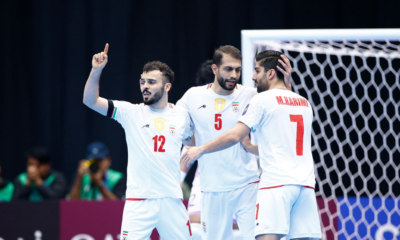
Iran clinch AFC Futsal Asian Cup 2026 in penalty shootout thriller
-
 Latest News3 days ago
Afghanistan says Pakistan is shifting blame for its own security failures
-
 International Sports2 days ago
Winter Olympics gain momentum as medal table takes shape
-
 Latest News5 days ago
Afghanistan facing deepening hunger crisis after US Aid Cuts: NYT reports
-
 World5 days ago
US, Ukraine, Russia delegations agree to exchange 314 prisoners, says Witkoff
-
 Latest News3 days ago
Traffic police receive new cars