
Business
Iran exports non-oil goods worth over $2 billion to Afghanistan in 11 months
Afghanistan was Iran’s fifth top export destination between March last year and February this year

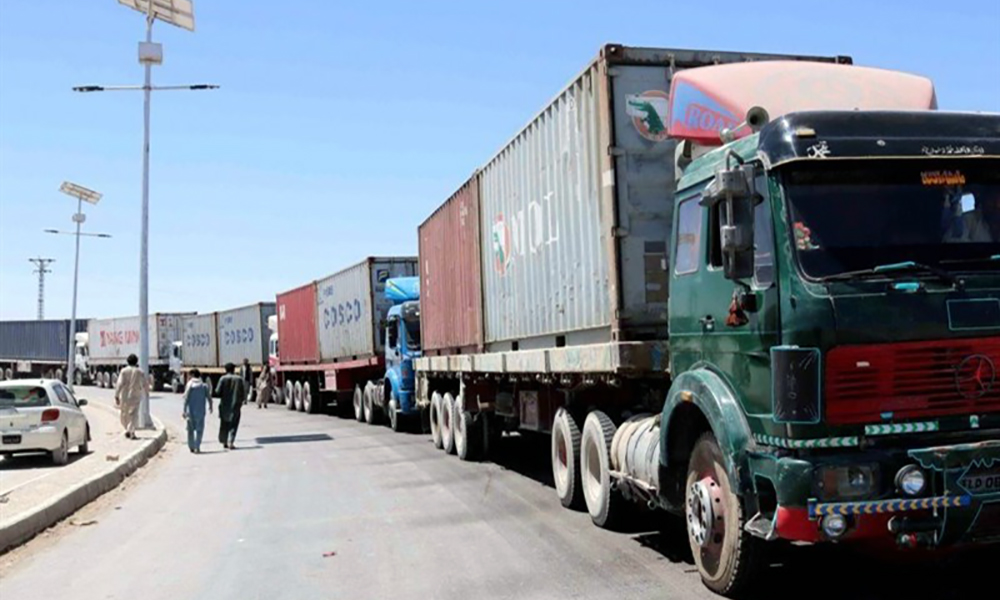
Iran exported non-oil commodities worth $2.2 billion to Afghanistan during the 11-month period from March 20, 2024 to February 18, 2025, the head of Iran Customs Administration (IRICA) said.
Foroud Asgari said Afghanistan was Iran’s fifth top export destination in the mentioned 11-month period, Tehran Times reported Sunday.
In the past year, Afghanistan and Iran have forged closer trade ties. In February, the governors of both central banks met on the sidelines of a banking technology summit in Yekaterinburg, Russia, where they discussed strengthening monetary and banking cooperation.
Also, in October, ports and maritime officials of Iran and Afghanistan met to discuss investment opportunities for the Afghan private sector in Iran’s southeastern Chabahar Port.
Tehran Times reported that this meeting was attended by the director general of the Ports and Maritime Department of Sistan-Baluchestan Province, the governor-general of the province, some Iranian MPs, and officials of the Afghanistan Trade and Industry Ministry.
Meanwhile, in a meeting with an Iranian trade delegation in Kabul last August, Afghanistan’s interim Deputy Prime Minister Mullah Abdul Ghani Baradar Akhund said that his country is eager to attract Iranian investors in order to develop the Afghan mining industry, generate solar electricity and expand railway connectivity.
The Iranian delegation also proposed to launch a joint special industrial zone with Afghanistan.
Afghanistan supplies more than 80 percent of its market needs through imports, and imports from Iran constitute 25 percent of this amount.
The establishment of national security and the central government in Afghanistan over the past two years have improved the conditions of trade between the two countries.





Business
Afghanistan, Belarus discuss expanding industrial and trade cooperation
Particular attention was given to companies producing tractors, industrial machinery, and equipment and vehicles used in the mining sector.
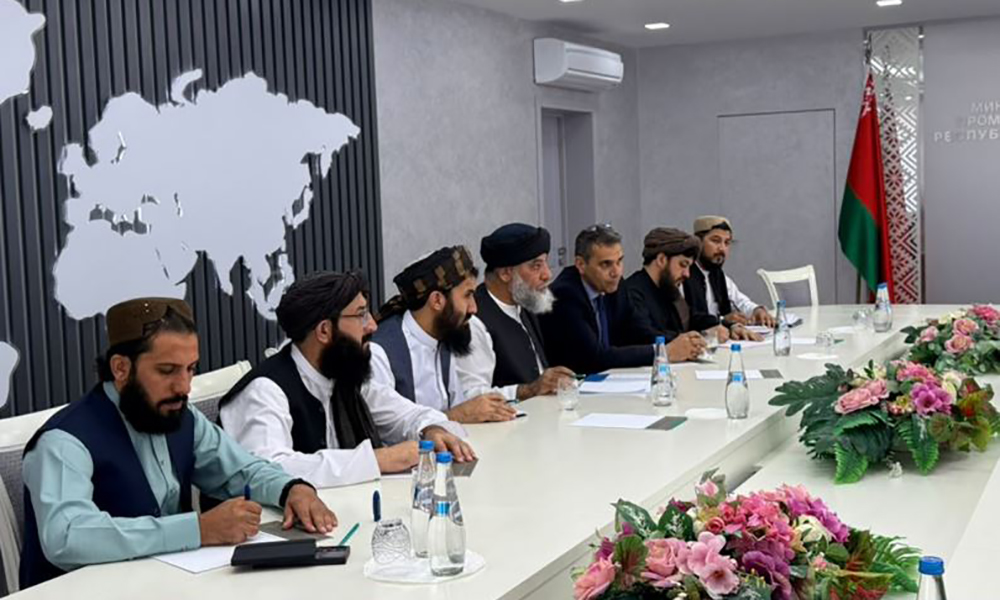
Afghanistan’s Minister of Industry and Commerce, Nooruddin Azizi, met with Belarus’ Minister of Industry during an official visit to the country.
The two sides discussed the establishment of manufacturing plants in Afghanistan, the regular organization of the Afghanistan-Belarus Business Forum, and follow-up on issues raised through the countries’ economic commission.
Belarusian officials expressed appreciation for Afghanistan’s participation in the country’s international industrial exhibition and voiced interest in expanding the presence of Belarusian manufacturing companies in Afghanistan.
Particular attention was given to companies producing tractors, industrial machinery, and equipment and vehicles used in the mining sector.
The second International Industrial Exhibition of Belarus is being held with the participation of around 500 companies from different countries. The exhibition has also attracted visitors from European and Asian countries.
Business
Afghanistan, Tajikistan seek stronger trade and investment ties
The two sides discussed increasing trade exchanges, establishing direct links between traders and investors, and organizing joint economic programs.
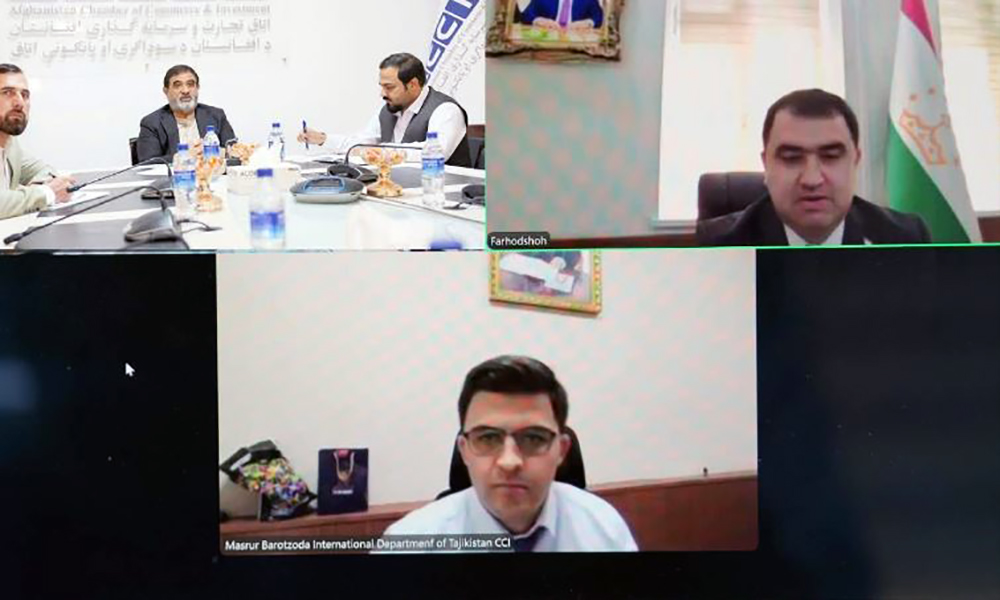
The heads of the chambers of commerce and industry of Afghanistan and Tajikistan have agreed to strengthen bilateral trade, promote investment and expand cooperation between the private sectors of the two countries.
Sayed Karim Hashemi, head of the Afghanistan Chamber of Commerce and Investment (ACCI), held an online meeting with Farhad Shah Rahman Alizoda, head of the Chamber of Commerce and Industry of Tajikistan, to discuss ways to expand economic ties.
The two sides discussed increasing trade exchanges, establishing direct links between traders and investors, and organizing joint economic programs.
Hashemi invited Tajik traders and investors to participate in the fifth Imam Abu Hanifa International Exhibition in Kabul.
Alizoda, meanwhile, invited an Afghan business delegation to attend a major trade and industrial exhibition in Dushanbe.
The two sides also stressed the importance of exchanging business delegations and developing long-term cooperation between the private sectors of Afghanistan and Tajikistan.
Business
Kazakhstan grain shipments to Afghanistan rise over 4-fold
Of the total, 7.2 million tons were transported for export, while 2.1 million tons were supplied to the domestic market.
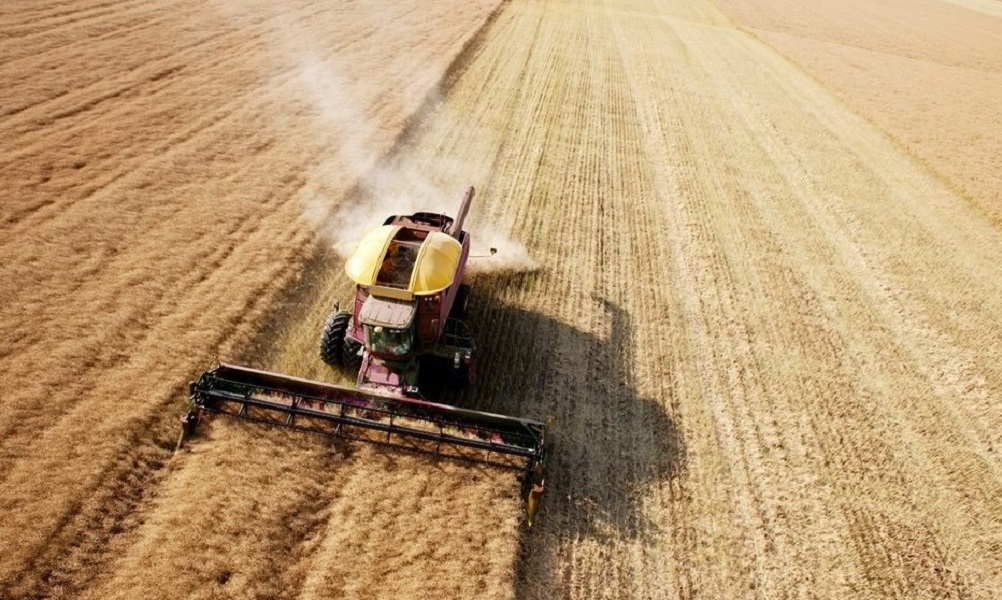
Grain shipments from Kazakhstan to Afghanistan increased 4.4 times in the first eight months of the year, reaching 655,000 tons, according to Kazakhstan’s Transport Vice Minister Zhanibek Taizhanov.
Speaking at a government meeting, Taizhanov said Kazakhstan transported 9.3 million tons of grain by rail during the period, a 13% increase compared with the same period in 2025.
Of the total, 7.2 million tons were transported for export, while 2.1 million tons were supplied to the domestic market.
Taizhanov said grain shipments to Central Asia increased by 37%, while shipments to China rose by 34%. Grain exports through Russian ports also increased by 9%.
Meanwhile, combined fodder exports rose by 38% to 2.6 million tons.
Earlier, Kazakhstan’s Vice Minister of Agriculture Azat Sultanov said the country plans to commission 15 additional vegetable storage facilities by the end of 2026, with a combined capacity of 129,000 tons.


Rashid Khan plans to build cricket academy and stadium in Nangarhar

Belgian minister says convicted Afghan criminals should return after serving sentences

Lithuania detains 35 Afghan and Iraqi migrants crossing from Belarus

Kazakhstan, Uzbekistan and UAE sign MoU on CASA railway project via Afghanistan

Pakistan says Mecca pact members to hold emergency talks on engaging Houthis

Saudi energy group signs major Afghanistan deals covering gas exploration and pipeline plans

Khalilzad: Afghanistan ready to attract major investment

El Niño likely to intensify, may become strongest ever recorded, WMO says

Khyber Chamber demands reopening of Torkham crossing

Messi returns to Inter Miami after Argentina retirement

Tawsia: Review of three key economic developments in Afghanistan

Tahawol: Pakistan’s airstrikes on civilians in Afghanistan discussed

Tahawol: Improvement in Afghanistan-China relations discussed

Saar: Expanding ties with regional and global countries discussed

Tahawol: Absence of Afghanistan’s envoy at UNGA discussed
-

 Sport5 days ago
Afghanistan vs India Asian Games quarter-final abandoned without a toss
-
 Regional4 days ago
US, Iran separately talk with mediators in latest bid to end war
-
 Business5 days ago
Afghanistan raises import tariffs on several goods to support domestic industry
-
 Latest News5 days ago
Khalilzad calls for end to Pakistan’s ‘double game’, urges new chapter with Afghanistan
-
 Regional3 days ago
US imposes sanctions on 13 tied to Iran weapons procurement
-
 Health5 days ago
Health minister visits Belarus to expand medical cooperation
-
 Sport5 days ago
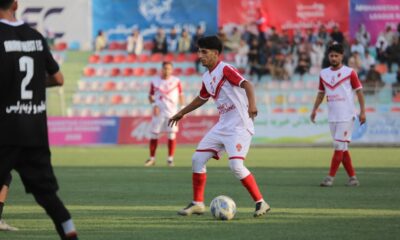
ACL: Sorkh Poshan Khafi maintain perfect record with 1-0 win over Ariana Khost
-

 Sport4 days ago
Istiqlal Kabul beat Khurasan Faryab 2-0 with late goals