
Regional
Iran to form interim leadership council as officials vow retaliation after Ayatollah’s death
Under Iran’s constitution, a temporary leadership structure can be formed in the event of a supreme leader’s death until a permanent successor is appointed by the Assembly of Experts.

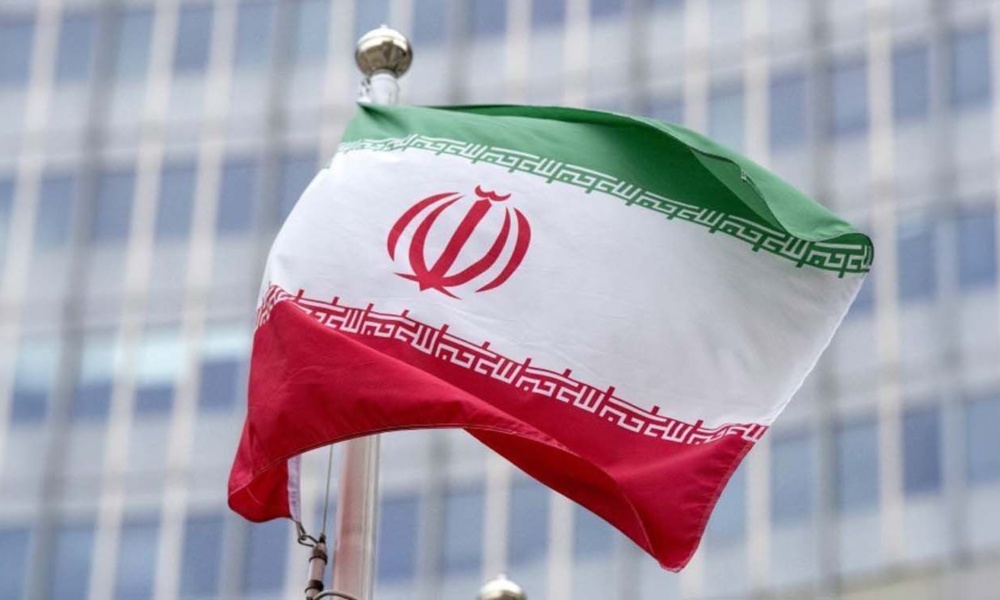
Iran will establish an Interim Leadership Council on Sunday to manage state affairs following the death of Supreme Leader Ayatollah Ali Khamenei, senior officials announced, as the country braces for further confrontation after days of intense military escalation with the United States and Israel.
Ali Larijani, secretary of Iran’s Supreme National Security Council, said preparations for the new governing body were finalized during a high-level meeting on Saturday. He described the move as necessary to ensure political stability and continuity of command during what he called a “critical and historic period.”
Under Iran’s constitution, a temporary leadership structure can be formed in the event of a supreme leader’s death until a permanent successor is appointed by the Assembly of Experts. The creation of the council signals Tehran’s effort to project institutional control amid heightened uncertainty and internal and external pressures.
“We Will Respond”
Larijani issued a stern warning to what he described as Iran’s “aggressive enemies,” vowing decisive retaliation.
“You have burned the hearts of the Iranian people; we will burn your hearts,” he said, referring to the recent strikes that Iranian authorities say killed dozens, including civilians.
According to Larijani, Tehran had previously warned Washington — through diplomatic channels via the Swiss embassy, which represents U.S. interests in Iran — that any direct military action would result in American bases in the region becoming targets.
He said Iran’s armed forces have mobilized significant resources to sustain operations, while acknowledging that the coming days could bring both “challenges and progress.”
Parliament: “Red Line Crossed”
Parliament Speaker Mohammad-Bagher Ghalibaf said the United States and Israel had “crossed a red line” with their strikes and would face consequences.
He described the current confrontation as existential for Iran and a decisive moment in its decades-long standoff with its adversaries. “They will be held accountable,” he said, warning that retaliation would be severe.
High-Stakes Transition
The announcement of an Interim Leadership Council comes at a volatile moment. Joint U.S.-Israeli strikes targeting senior Iranian officials and military infrastructure have triggered missile exchanges across the region, disrupted air travel, and prompted emergency sessions at the United Nations.
Analysts say the leadership transition will be closely watched both inside and outside Iran. Domestically, authorities are seeking to maintain unity and prevent unrest. Internationally, governments are assessing whether the interim structure will pursue escalation or leave room for diplomacy.
For now, Iranian officials are signaling resolve rather than restraint, raising concerns that the conflict could widen before any political settlement is reached.



Regional
US lawmakers, world leaders react to death of Ayatollah Ali Khamenei after Iran strikes
The announcement drew praise from some lawmakers who have long opposed Tehran’s leadership, while others condemned the military action and questioned its legality.

Political leaders in the United States and around the world reacted sharply and along partisan lines after the reported death of Iran’s Supreme Leader, Ayatollah Ali Khamenei, following joint U.S.-Israeli strikes on Iran.
The announcement drew praise from some lawmakers who have long opposed Tehran’s leadership, while others condemned the military action and questioned its legality.
Representative Yassamin Ansari, the only Iranian American member of Congress, described Khamenei as the “epitome of evil,” saying no one should mourn his death. However, she cautioned that removing a single leader would not dismantle Iran’s political system.
“Military force alone will not secure a democratic future for the Iranian people,” she wrote on social media, warning that without a clear plan, the escalation could endanger U.S. troops and further destabilize the region.
Former Representative Marjorie Taylor Greene criticized President Donald Trump, arguing that the focus on Iran did not align with his “America First” agenda and diverted attention from domestic economic concerns.
Senator Bernie Sanders labeled the conflict a “Trump-Netanyahu war,” referring to Israeli Prime Minister Benjamin Netanyahu. Sanders said the action was unconstitutional and violated international law, urging Congress to pass a War Powers Resolution to limit further military involvement.
In contrast, Senator Lindsey Graham praised Trump’s leadership, saying he was proud of the administration’s actions and describing the president as setting a new standard for Republican foreign policy.
Reza Pahlavi, the exiled Iranian crown prince and son of the late Shah Mohammad Reza Pahlavi, declared that Khamenei had been “erased from the pages of history.” He said the Islamic Republic was nearing its end and called on Iranians to prepare for what he described as a decisive moment for change.
Ukraine’s official government social media account posted a brief message celebrating the death of a “dictator,” while Australian Prime Minister Anthony Albanese told reporters that Khamenei would not be mourned, citing his role in Iran’s missile and nuclear programs and the regime’s repression at home.
The sharply divided reactions underscore the high stakes of the escalating confrontation, as global leaders weigh the consequences of a direct strike that has dramatically reshaped the political landscape in Iran and across the Middle East.
Regional
Iran’s Ali Khamenei, who based iron rule on fiery hostility to US and Israel, dies at 86
Ali Khamenei was born in Mashhad, northeast Iran, in April 1939. His religious commitment was clear when he became a cleric at the age of 11. He studied in Iraq and in Qom, Iran’s religious capital.
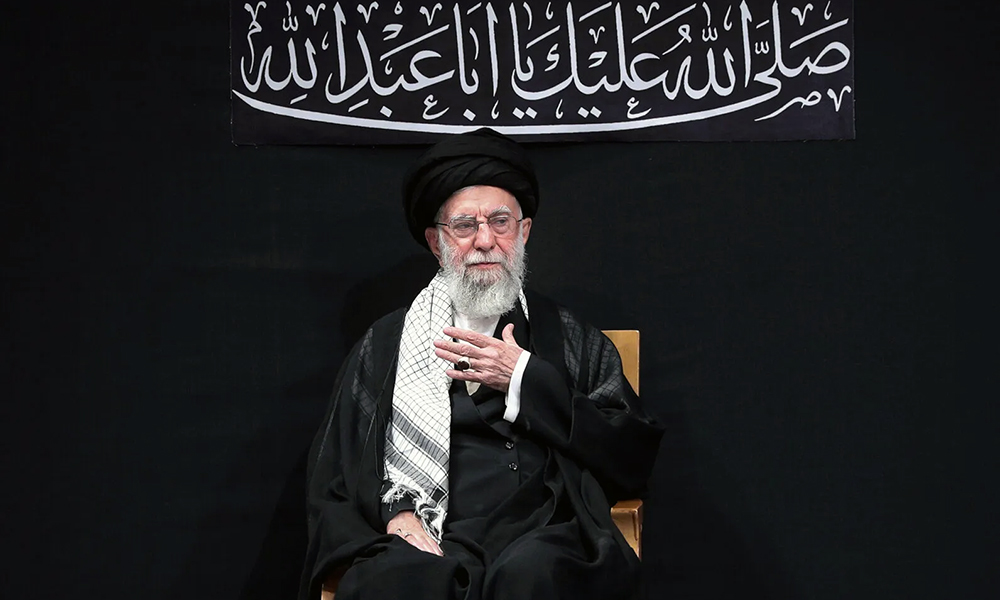
The 36-year rule of Ayatollah Ali Khamenei built Iran into a powerful anti-U.S. force, spreading its military sway across the Middle East, while using an iron fist to crush repeated unrest at home, Reuters reported.
He was killed on Saturday, aged 86, Iranian state media announced, in air strikes by Israel and the U.S. that pulverised his central Tehran compound, after decades of efforts to resolve the dispute over Iran’s nuclear program diplomatically failed.
At first dismissed as weak and indecisive, Khamenei seemed an unlikely choice for supreme leader after the death of the charismatic Ayatollah Ruhollah Khomeini, who founded the Islamic Republic of Iran. But Khamenei’s rise to the pinnacle of the country’s power structure afforded him a tight grip over the nation’s affairs.
Khamenei was “an accident of history” who went from “a weak president to an initially weak supreme leader to one of the five most powerful Iranians of the last 100 years”, Karim Sadjadpour at the Carnegie Endowment for International Peace told Reuters.
The ayatollah criticised Washington throughout his rule, continuing to deploy barbs after the start of Donald Trump’s second term as U.S. president in 2025.
As a new wave of protests spread through Iran, with slogans such as “Death to the dictator”, and as Trump threatened to intervene, Khamenei vowed in January that the country would not “yield to the enemy”.
The comment was typical of the ferociously anti-Western Khamenei, in office since 1989.
By maintaining the hardline stance of Khomeini, the Republic’s first supreme leader, Khamenei quashed the ambitions of a succession of independent-minded elected presidents who sought more open policies at home and abroad.
In the process, he ensured Iran’s isolation, critics say.
Khamenei long denied that Iran’s nuclear programme was aimed at producing an atomic weapon, as the West contended. In 2015 he cautiously supported a nuclear deal between world powers and the government of pragmatist President Hassan Rouhani that curbed the country’s nuclear programme in return for sanctions relief. The hard-won accord resulted in a partial lifting of Iran’s economic and political isolation, read the report.
But Khamenei’s hostility toward the U.S. was undimmed, intensifying in 2018 when Trump’s first administration withdrew from the nuclear agreement and reimposed sanctions to choke Iran’s oil and shipping industries.
Following the U.S. withdrawal, Khamenei sided with hardline supporters who criticised Rouhani’s policy of appeasement towards the West.
As Trump pressed Iran to agree to a new nuclear deal in 2025, Khamenei condemned “the rude and arrogant leaders of America”. “Who are you to decide whether Iran should have enrichment?” he asked.
Khamenei often denounced “the Great Satan” in speeches, reassuring hardliners for whom anti-U.S. sentiment was at the heart of the 1979 revolution, which forced the last shah of Iran into exile.
Iran saw major student-led protests in 1999 and 2002. But Khamenei’s authority was put to the test more profoundly in 2009, when the contested results of a presidential election that he had validated ignited violent street unrest, stoking a crisis of legitimacy that lingered until his death.
In 2022, Khamenei cracked down on protesters enraged by the death of Iranian-Kurdish woman Mahsa Amini, 22, who died in the custody of morality police in September of that year.
Faced with some of the most intense turmoil since the revolution, Khamenei blamed Western enemies then resorted to the hanging of protesters and the display of their bodies, suspended from cranes, after months of unrest.
As supreme leader, Khamenei’s word was law. He inherited enormous powers, including command of the armed forces and the authority to appoint many senior figures, among them the heads of the judiciary, security agencies and state radio and television.
He appointed allies as commanders of the elite Revolutionary Guards.
As the final authority in Iran’s complex system of clerical rule and limited democracy, Khamenei long sought to ensure that no group, even among his closest allies, mustered enough power to challenge him and his anti-U.S. stance.
Scholars outside Iran painted a picture of a secretive ideologue fearful of betrayal – an anxiety fuelled by an assassination attempt in 1981 that paralysed his right arm.
International organisations and activists repeatedly criticised violations of human rights in Iran. Tehran said it has the best human rights record in the Muslim world.
Ali Khamenei was born in Mashhad, northeast Iran, in April 1939. His religious commitment was clear when he became a cleric at the age of 11. He studied in Iraq and in Qom, Iran’s religious capital.
His father, a religious scholar of ethnic Azeri descent, was a traditionalist cleric opposed to mixing religion and politics. In contrast, his son embraced the Islamist revolutionary cause.
“He (Khamenei’s father) came across as a modernist or progressive cleric,” said Mahmoud Moradkhani, a nephew who opposes Khamenei’s rule and lives in exile. Unlike his son, “he was not a part of the fundamentalists”, Moradkhani said.
In 1963, Khamenei served the first of many terms in prison when at 24 he was detained for political activities. Later that year he was imprisoned for 10 days in Mashhad, where he underwent severe torture, according to his official biography.
After the shah’s fall, Khamenei took up several posts in the Islamic Republic. As deputy minister of defence, he became close to the military and was a key figure in the 1980-88 war with neighbouring Iraq, which claimed an estimated total of one million lives.
A skilled orator, he was appointed by Khomeini as a Friday prayer leader in Tehran.
There were questions about his rapid, unprecedented rise. He won the presidency with Khomeini’s support – the first cleric in the post – and was a surprise choice as Khomeini’s successor, given that he lacked both Khomeini’s popular appeal and superior clerical credentials, Reuters reported.
His ties to the powerful Guards paid off in 2009. That year, the force crushed protests after President Mahmoud Ahmadinejad won re-election amid opposition accusations of vote fraud.
He also presided over a vast financial empire through Setad, an organisation founded by Khomeini but expanded hugely under Khamenei, with assets worth tens of billions of dollars.
Khamenei expanded Iranian influence in the region, empowering Shi’ite militias in Iraq and Lebanon, and propping up then-President Bashar al-Assad by deploying thousands of soldiers to Syria.
He spent billions over four decades on these allies – the “Axis of Resistance”, which also included Hamas, the Palestinian Islamist group, and Yemen’s Houthis – to oppose Israeli and U.S. power in the Middle East.
But in 2024 Khamenei saw these alliances unravel, and Iran’s regional influence shrivel, with the ousting of Assad and a series of defeats inflicted by Israel on Hezbollah in Lebanon and on Hamas in Gaza, including the killing of their leaders.
Under Khamenei’s rule, Iran and Israel fought a shadow war for years, with Israel assassinating Tehran’s nuclear scientists and Revolutionary Guard commanders.
It exploded into the open during Israel’s war on Hamas in Gaza from 2023. In April 2024, Iran fired hundreds of missiles and drones at Israel after it bombed Tehran’s embassy compound in Damascus. Israel struck Iranian soil in response.
But that was only a prelude to June 2025, when Israel’s military unleashed hundreds of fighter jets to strike Iranian nuclear and military targets as well as senior personnel. The surprise attack provoked a barrage of missiles in both directions, transforming simmering conflict into all-out war. The U.S. joined the air offensive on Iran, which lasted 12 days.
The U.S. and Israel had warned they would strike again if Iran pressed ahead with its nuclear and ballistic missile programmes and, on Saturday, they launched the most ambitious attack on Iranian targets in decades.
Negotiations between U.S. and Iranian officials took place as recently as Thursday, but senior U.S. officials said that Iran had not been willing to give up its ability to enrich uranium, which the Iranians argued they wanted for nuclear energy but U.S. officials said would enable the country to build a nuclear bomb.
On the diplomatic front, Khamenei rejected any normalisation of ties with the United States. He argued that Washington had backed hardline groups like Islamic State to inflame a sectarian war in the region.
Like all Iranian officials, Khamenei denied any intent to develop nuclear weapons and went so far as to issue an Islamic ruling, or fatwa, in the mid-1990s on “production and usage” of nuclear weapons, saying: “It is against our Islamic thoughts.”
He also supported a fatwa issued by Khomeini in 1989, which called on Muslims to kill the Indian-born author Salman Rushdie after the publication of his novel “The Satanic Verses”.
Khamenei’s official website confirmed the ongoing validity of the death edict as recently as 2017. Five years later, Rushdie was stabbed while giving a public lecture in New York. The writer was gravely wounded, but survived. The perpetrator, who was sentenced to 25 years in prison in 2025 for attempted murder, did not testify at the trial.
The late ayatollah leaves an Islamic Republic wrestling with uncertainty amid the attacks from Israel and the United States, as well as growing dissent at home, especially among younger generations.
“I just want to live a peaceful, normal life … Instead, they (the rulers) insist on a nuclear programme, supporting armed groups in the region, and maintaining hostility toward the United States,” Mina, 25, told Reuters by phone from Kuhdasht in the western Lorestan province at the start of 2026, read the report.
“Those policies may have made sense in 1979, but not today,” the jobless university graduate added. “The world has changed.”
Regional
UN Security Council to hold emergency meeting on Iran amid military escalation
The Security Council session comes hours after the United States and Israel launched coordinated strikes on Iranian targets early Saturday
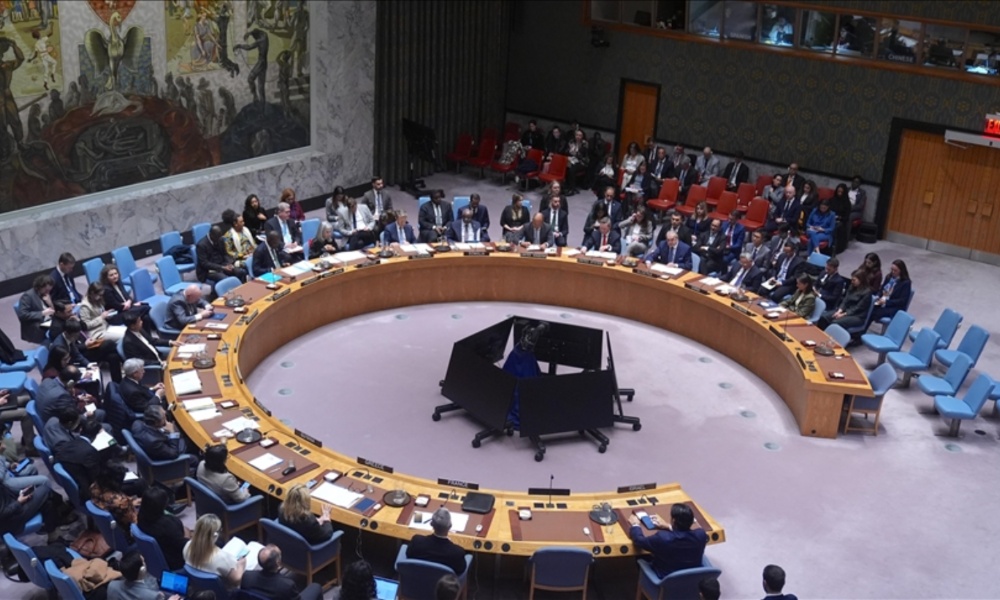
The United Nations Security Council will convene an emergency session on Saturday following large-scale airstrikes on Iran by the United States and Israel, a move that has triggered sharp international backlash and heightened fears of a broader regional conflict.
The emergency meeting was requested by France, Bahrain, China, Russia and Colombia, according to a statement from Russia’s permanent mission to the UN.
“The reckless actions by Washington and West Jerusalem against a sovereign UN member state constitute a direct violation of the fundamental principles and norms of international law,” the Russian mission said, warning that the strikes risk undermining peace, stability and security across the Middle East.
Moscow said it would demand that the United States and Israel “immediately cease their illegal and escalatory actions” and shift toward a political and diplomatic resolution.
Escalation after joint strikes
The Security Council session comes hours after the United States and Israel launched coordinated strikes on Iranian targets early Saturday, saying the operation was aimed at neutralizing threats posed by the Iranian government.
In separate video statements, Israeli Prime Minister Benjamin Netanyahu and U.S. President Donald Trump defended the military action. Both leaders suggested the strikes could create conditions for political change in Tehran, with Trump saying the operation could give Iranians an opportunity to determine their own future.
Iran condemned the attacks as a violation of its sovereignty and international law and responded with retaliatory missile and drone strikes targeting Israeli territory and U.S. assets in the region.
Growing international concern
Diplomatic tensions have mounted rapidly, with several governments urging restraint and warning of the potential for a wider war.
France, one of the countries that requested the emergency meeting, has previously called for renewed diplomatic engagement to address concerns over Iran’s nuclear and ballistic missile programs while avoiding further escalation.
The Security Council gathering is expected to feature heated exchanges among permanent members, particularly between Russia and the United States, as divisions deepen over the legality and consequences of the strikes.
With active hostilities ongoing and civilian casualties reported, the UN session will serve as an early test of whether global powers can contain the crisis — or whether the confrontation will continue to spiral.


Afghan forces launch retaliatory strikes in eastern provinces amid rising tensions with Pakistan

Heavy clashes at Torkham as Afghan and Pakistani forces exchange fire

Iran to form interim leadership council as officials vow retaliation after Ayatollah’s death

US lawmakers, world leaders react to death of Ayatollah Ali Khamenei after Iran strikes

Iran’s Ali Khamenei, who based iron rule on fiery hostility to US and Israel, dies at 86

IEA releases three Pakistani soldiers to mark Ramadan

AFC Futsal Asian Cup: Afghanistan to face Iran in crucial Group D clash

Afghanistan’s Chief of Armed Forces underscores readiness and equipment for national defense

Afghanistan welcomes investment and technology partnerships with India

Grateful to Afghans and Ulama for obeying the Islamic Emirate, says Hibatullah Akhundzada

Tahawol: Joint Israeli-US attacks on Iran discussed

Saar: Afghan retaliatory operations against Pakistan discussed

Tahawol: Carrying out retaliatory operations against Pakistan discussed

Saar: Resumption of retaliatory operations against Pakistan discussed

Tahawol: IEA’s military response against Pakistan discussed
-
 Latest News2 days ago
Afghan Air Force conducts airstrikes in Islamabad, other cities
-
 Latest News1 day ago
Pakistani military jet downed in Afghanistan’s Jalalabad, pilot captured alive
-
 Latest News2 days ago
IEA: Special circle in Pakistan has launched mission to destabilize region
-

 Sport5 days ago
Richard Pybus appointed as head coach of Afghanistan’s national cricket team
-

 International Sports5 days ago
AFC Champions League Elite gears up for Round of 16 as league stage concludes
-
 World3 days ago
India’s Modi backs Israel in address at Israeli parliament
-
 Latest News2 days ago
Turkey launches initiative to diffuse Afghanistan-Pakistan tension
-
 Latest News5 days ago
Bennett expresses concern over civilian casualties in Pakistani airstrikes on Afghanistan