
Iranian MP claims Afghan, Pakistani borders under terrorists’ control
Rezazada asked the Iranian Ministry of Interior to undertake a special planning to seal the borders.

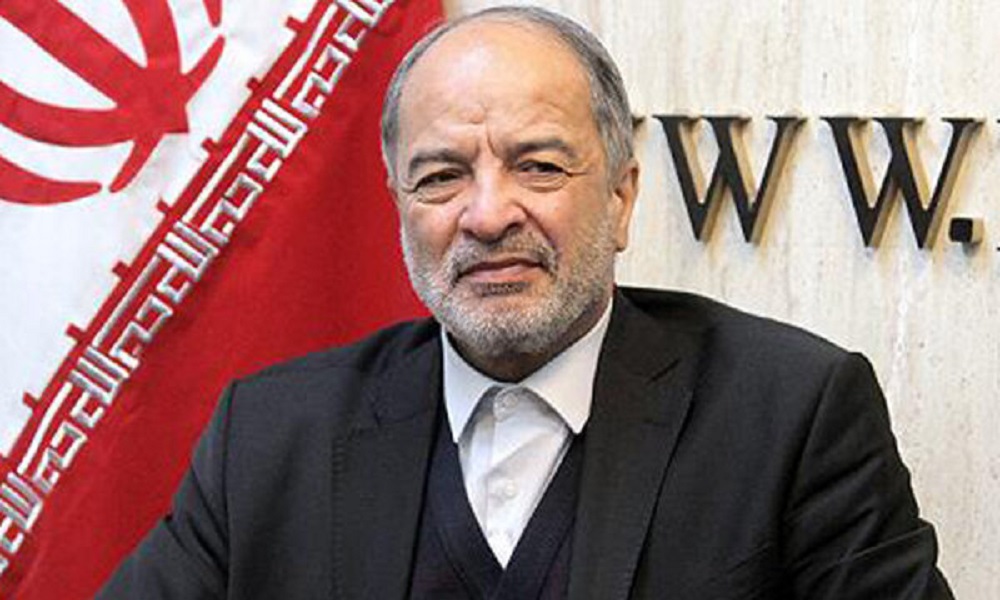
Yaqub Rezazada, a member of the National Security Commission of the Iranian Parliament, has claimed Afghanistan and Pakistan borders are not in the hands of the governments of the two countries, but are under the control of “evildoers and terrorists.”
In an interview with Shafqana news agency, Rezazadeh warned that terrorists use Afghanistan and Pakistan borders to infiltrate into Iran, and the borders are used to smuggle arms.
“The Islamic Republic of Iran shares about 1,950 kilometer borders with Afghanistan and Pakistan; In other words, the five provinces of South Khorasan, Razavi Khorasan, North Khorasan, Sistan and Baluchistan, and even our Hormozgan border with Afghanistan and Pakistan, and according to my knowledge of these two borders, unfortunately, the rulers of Afghanistan and Pakistan do not have full surveillance.”
The MP added that Iranian forces are making great efforts to maintain the security of the borders, but the topography of borders is such that it is very difficult to monitor by humans. He said that electronic devices, cameras and modern equipment should be used to monitor the borders.
Rezazada asked the Iranian Ministry of Interior to undertake a special planning to seal the borders.
He further said that the inability to control the borders has caused thousands of Afghans, Pakistanis and Bangladeshis to be smuggled into Iran every year.
He added that there may be terrorists among the smuggled people.
Earlier, Iran’s president-elect Masoud Pezeshkian said during his election campaign that if he wins, he will seal the border with Afghanistan.
According to him, Western countries should accept responsibility for their actions in Afghanistan, which led to the migration of millions of Afghans.
The Islamic Emirate has previously dismissed concerns about the security of Afghanistan’s borders and has said that it has complete control over the borders and that no terrorist group is present in Afghanistan.










Sorkh Poshan Khafi secured a convincing 6-0 victory over Esteqlal Kabul today (Friday) in the 23rd match of the sixth season of the Afghanistan Champions League at the Football Federation Stadium in Kabul.
Reza Gholami opened the scoring for Sorkh Poshan Khafi in the fourth minute with a header before Sohrab Afghan doubled the lead in the 21st minute.
Afghan struck again four minutes into the second half to make it 3-0, while Yar Mohammad added the fourth goal in the 52nd minute.
Sorkh Poshan Khafi completed the rout with two further goals in the 68th and 70th minutes, securing a 6-0 win.
The sixth season of the Roshan Afghanistan Champions League is being broadcast live on Ariana Television.


Exclusive interview with Abdul Latif Mansoor, Minister of MRRD

Sorkh Poshan Khafi rout Istiqlal Kabul 6-0 in ACL season six

Tawsia: Overview of Afghanistan’s iron mines

Afghanistan Champions League: Arman FC and Aino Mina play out goalless draw

Afghanistan says Pakistani military post destroyed near Spin Boldak

Saudi energy group signs major Afghanistan deals covering gas exploration and pipeline plans

ATN secures exclusive rights to broadcast T20I series in India across Afghanistan

Trump floats idea of renaming Atlantic or Pacific Ocean

US hits Egyptian bank branches with Iran sanctions as war marks six months

Nepal flood rescue mission enters critical phase as thousands remain missing
Exclusive interview with Abdul Latif Mansoor, Minister of MRRD
Tawsia: Overview of Afghanistan’s iron mines

Tahawol: Discussion on fresh Pakistani airstrikes on Afghanistan

Saar: Calls for international support for Afghanistan discussed

Tahawol: Opening of the 81st UN General Assembly Session
-

 Sport5 days ago
Afghanistan to face Japan and Nepal in Asian Games cricket group stage
-
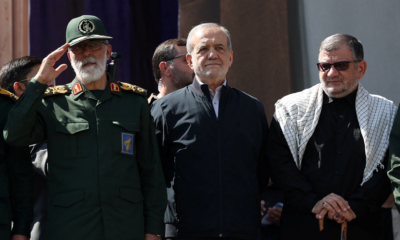
 Regional5 days ago
Iran and US trade threats after Houthi attacks escalate regional conflict
-

 World4 days ago
CNN, MS NOW and Politico sue Trump, challenging White House ban
-
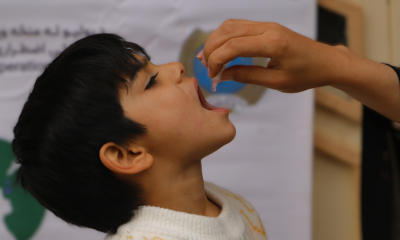
 Health5 days ago
Four-day polio vaccination campaign begins across Afghanistan
-

 Latest News4 days ago
UN reiterates call for respect for international law after Kunar airstrikes
-
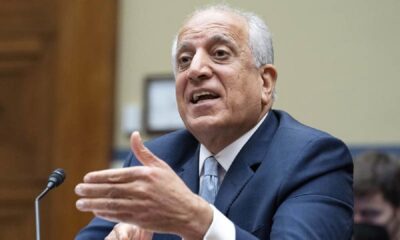
 Latest News4 days ago
Khalilzad condemns Pakistan airstrikes, says current strategy is not working
-

 Latest News2 days ago
Ariana Afghan Airlines ranks seventh among 45 Central Asian airlines
-

 Latest News4 days ago
Afghan Official: Pakistan’s airstrikes will not go unanswered