
Regional
Iranian sailors recovering in Sri Lankan hospital after US submarine attack

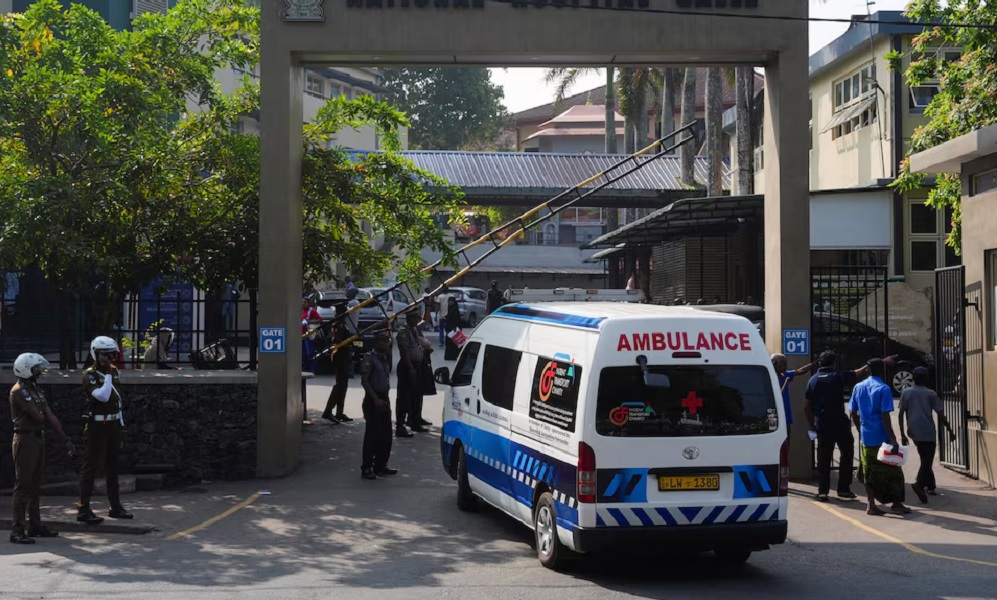
Iranian sailors rescued from a torpedo attack on an Iranian warship in the Indian Ocean are recovering in a hospital in southern Sri Lanka, officials said on Thursday, a day after the strike killed dozens of crew members and left many others missing.
Sri Lankan authorities said 32 sailors who survived the attack were taken to Karapitiya Teaching Hospital in the port city of Galle for treatment of injuries and exhaustion following the explosion and sinking of the vessel.
Hospital officials indicated that most of the survivors suffered relatively minor wounds and were expected to recover, Reuters reported.
The Iranian warship, identified by Sri Lankan officials as the frigate IRIS Dena, was sunk on Wednesday after being struck by a torpedo fired from a U.S. submarine in the Indian Ocean, roughly 40 nautical miles off Sri Lanka’s southern coast.
The incident occurred far from the main theatres of fighting between Iran, Israel and the United States, marking a dramatic widening of the conflict at sea.
Rescue teams responding to a distress call recovered at least 87 bodies from the water, while around 60 crew members remain missing from the roughly 180 people believed to have been aboard the ship.
Sri Lankan navy personnel reported finding survivors floating in the sea amid debris and oil slicks after the vessel sank.
U.S. Defense Secretary Pete Hegseth confirmed that an American submarine carried out the strike, saying the Iranian warship had been targeted with a torpedo while operating in international waters.
A video released by the Pentagon appeared to show a large explosion ripping through the rear of the vessel before it began to sink.
The IRIS Dena, commissioned in 2021, had recently participated in multinational naval exercises in India before beginning its return voyage to Iran when it was attacked.
Sri Lankan authorities said search operations for missing crew members are continuing in the waters south of the island.
The strike is one of the most significant naval incidents of the escalating confrontation involving Iran, the United States and Israel, extending hostilities into the wider Indian Ocean region.









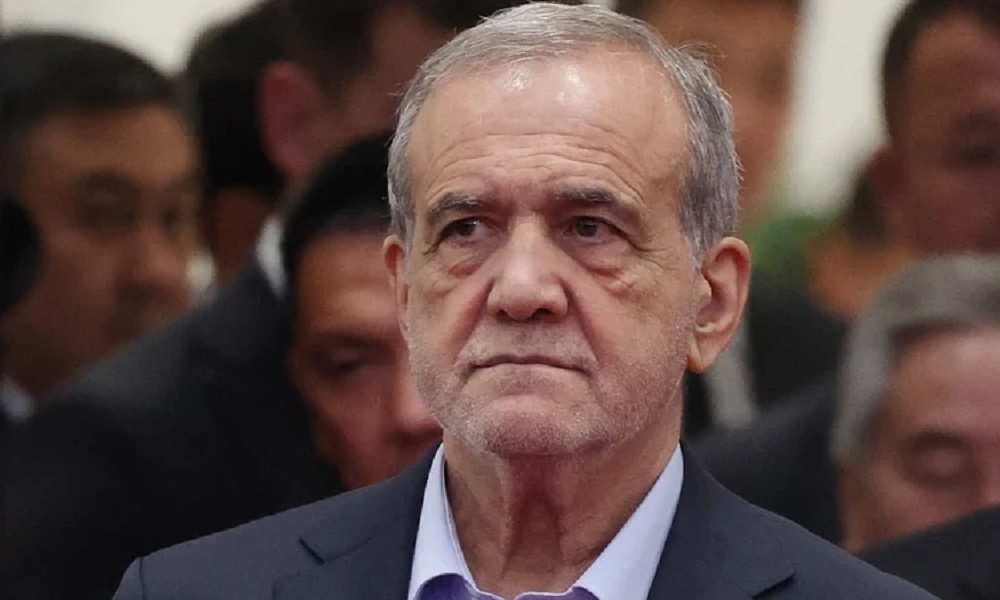
Iranian President Masoud Pezeshkian left Tehran for New York on Tuesday to attend the 81st United Nations General Assembly, where he says he will defend Iran’s positions and highlight what Tehran describes as the hardships facing its people and the wider region.
Speaking at a press conference before his departure on Tuesday, Pezeshkian said the UN gathering provides Iran with an opportunity to present its views to the international community.
“We will defend our positions with strength at international forums,” he said.
Pezeshkian said he would meet politicians, cultural figures and media representatives during his visit and discuss issues including regional conflicts, international law and what he described as violations of commitments made to Iran during previous negotiations.
Iranian Foreign Minister Abbas Araghchi is already in New York. He arrived on Monday ahead of the General Assembly and is expected to hold talks and consultations with foreign officials during the UN gathering.
Araghchi has said Iran’s main objective at the UN is to defend the rights and interests of the Iranian people and use the gathering as a platform for diplomacy.
The Iranian delegation’s presence comes amid ongoing tensions between Tehran and Washington.
A senior Iranian official told Reuters on Tuesday that Iran was prepared to reopen the Strait of Hormuz within seven days if the United States eased military pressure and lifted its blockade of Iranian ports. The official said the Iranian delegation in New York had full authority to pursue diplomatic discussions.
Pezeshkian meanwhile said Iran had repeatedly entered negotiations and agreements only to see the other side fail to honour its commitments. He argued that lasting peace and security required respect for the rights of nations and individuals.
He also criticised military actions and developments in Gaza and other parts of the Middle East, saying attacks on civilians and public facilities could not simply be justified as counter-terrorism measures.
Pezeshkian is expected to address the UN General Assembly on Wednesday. His visit comes as the United States and Iran remain at odds over the conflict and the possibility of renewed diplomacy.
The Iranian president has said his trip will be aimed at presenting Iran’s position, explaining developments in the region and conveying what he called the message of the Iranian people to the international community.
Regional
G7 foreign ministers call on Iran to stop arming Houthis
The ministers of Britain, Canada, France, Germany, Italy, Japan and the United States said in a statement after a meeting on the sidelines of the United Nations General Assembly
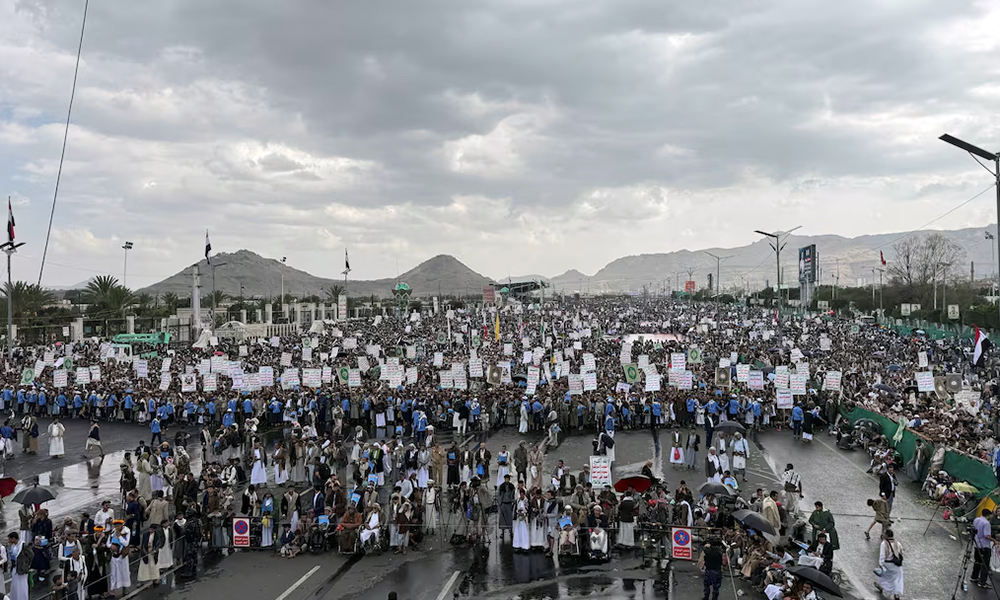
G7 foreign ministers on Monday called on Iran to end its arming and support of Houthis in Yemen, which they said constituted a dangerous pattern of escalation that risked undermining international trade and creating global instability, Reuters reported.
“We condemn in the strongest terms the unacceptable continued strikes carried out by the Houthis in Yemen and against the Kingdom of Saudi Arabia,” the ministers of Britain, Canada, France, Germany, Italy, Japan and the United States said in a statement after a meeting on the sidelines of the United Nations General Assembly, read the report.
“We call on the Houthis to immediately cease all military actions, all threats and attacks against civilian shipping, and to return to the political process in good faith.”
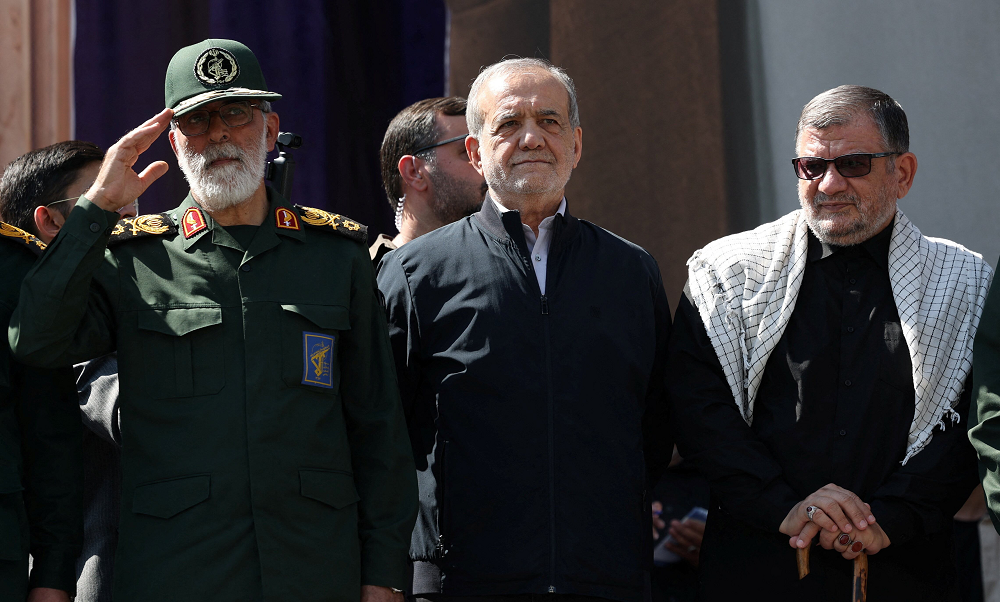
Iran and the United States exchanged new threats on Sunday, with President Donald Trump warning Iran would fail economically or face its leadership being wiped out if it didn’t make a deal, and the Iranian military saying it would retaliate harshly to any fresh attack.
The conflict has looked stalemated for months, with no sign either side was ready for concessions even as it has deepened a global energy crisis, cratered swathes of Iran’s economy and spilled over into new regional escalations, Reuters reported.
In a phone call with a Fox News reporter, Trump said Iran’s leaders should make a deal, rot economically or be wiped out, the reporter said.
However, with Iran’s President Masoud Pezeshkian expected in New York this week for the United Nations General Assembly, Trump said he would be open to meeting him, the Fox reporter added.
Trump has repeatedly made vague threats of major military escalations during the conflict that began with US and Israeli strikes on February 28, without carrying them out.
Earlier, Iran’s military central command said any new attack would trigger sustained retaliation against US bases and interests and that Washington’s regional allies would be considered parties to the conflict.
The Iranian military added that it had information that an attack was being prepared, without elaborating on what that information might be.
HOUTHIS TARGET RIYADH
US Gulf allies have already been badly scarred by a war that the US and Israel launched with no warning, bringing their cities under Iranian fire and hammering their economies with the crucial Strait of Hormuz waterway blockaded.
On Saturday their predicament worsened further, with Yemen’s Iran-backed Houthi group launching missile and drone strikes at the Saudi capital after having made sudden military gains in Yemen’s reignited civil war earlier this month.
Reuters video showed a massive plume of black smoke billowing from the area of Riyadh’s main international airport following booms overnight.
The US State Department issued a security alert citing the Houthi hostilities. It said there was potential for unforeseen escalation in the Middle East, and Americans should exercise more vigilance and be aware of possible flight cancellations and airspace closures.
Saudi Arabia did not comment on the incident, though a Saudi-led coalition fighting the Houthis said it had foiled other attacks on the kingdom.
Recent escalation by the Houthis has forced Riyadh into a painful dilemma: continue airstrikes on the group to stop it seizing more Yemeni territory or step back in the hopes of averting drone strikes on critical infrastructure.
ENERGY EXPORTS BLOCKADED
The Houthi gains along the coast mean the group’s forces now sit on the Bab el-Mandeb Strait, giving them easier control over shipping travelling between the Red Sea and Asia and the ability to blockade the crucial waterway.
With Iran already having blockaded most shipping in the Strait of Hormuz, the oil-rich Gulf’s energy exports are now almost entirely cut off from global markets, adding to pressure on oil prices.
A US blockade of Iranian ports is meanwhile stopping Iran from selling its own oil, contributing to major problems in the Islamic Republic’s economy.
Despite the economic damage, there is little sign of a return to the interim ceasefire agreement that was struck in June but fell apart in July amid disputes over its terms.
Iran reiterated on Sunday that it would not reopen the Strait of Hormuz until the terms of that June agreement, as it interpreted them, were met.
Iranian Parliament Speaker Mohammad Baqer Qalibaf said Iran would have to keep on fighting as well as negotiating, to push back its enemies and to consolidate any gains with diplomacy.


ACL: Sorkh Poshan Khafi maintain top spot after fourth straight win

Tahawol: Reactions to Pakistan’s attacks on Afghanistan discussed

Saar: Uncertain fate of Afghanistan’s seat at UN discussed

Omar Zawak edge Arman FC 4–2 in dramatic Afghanistan Champions League clash

Pezeshkian heads to UN as Iran vows to defend its position

Afghanistan’s trade diversification challenges Pakistan

Saudi energy group signs major Afghanistan deals covering gas exploration and pipeline plans

ATN secures exclusive rights to broadcast T20I series in India across Afghanistan

Afghanistan squad announced for three-match T20I series against India

China evacuates thousands as Typhoon Narra brings torrential rain
Tahawol: Reactions to Pakistan’s attacks on Afghanistan discussed
Saar: Uncertain fate of Afghanistan’s seat at UN discussed

Tahawol: Uncertain future of Afghanistan’s permanent UN seat

Saar: Pakistan military strikes Afghan provinces discussed

Tahawol: Impact of middle East war on Afghanistan
-
 Latest News5 days ago
Afghanistan seeks stronger ties with Saudi Arabia, dialogue with Pakistan: Mujahid
-
 Latest News5 days ago
Afghan man in Germany kills wife and goes to police station
-
 Regional5 days ago
China presses Iran to help rein in Houthis after Saudi appeal
-

 World4 days ago
US and Denmark reach deal on Greenland, Trump says
-
 World5 days ago
UN allows Palestinian president to again speak via video after US denies visa
-
 Latest News3 days ago
Pakistan says Kohat attackers had roots in Afghanistan
-
 Latest News4 days ago
Afghanistan condemns mosque attack in Khyber Pakhtunkhwa
-
 Latest News4 days ago
Afghan official meets Iranian oil minister to discuss energy cooperation