
Regional
Pakistan diplomat warns of ‘nuclear response’ if India strikes Islamabad
Pakistan’s ambassador to Moscow claimed he had “credible intelligence” suggesting that an attack by India was imminent

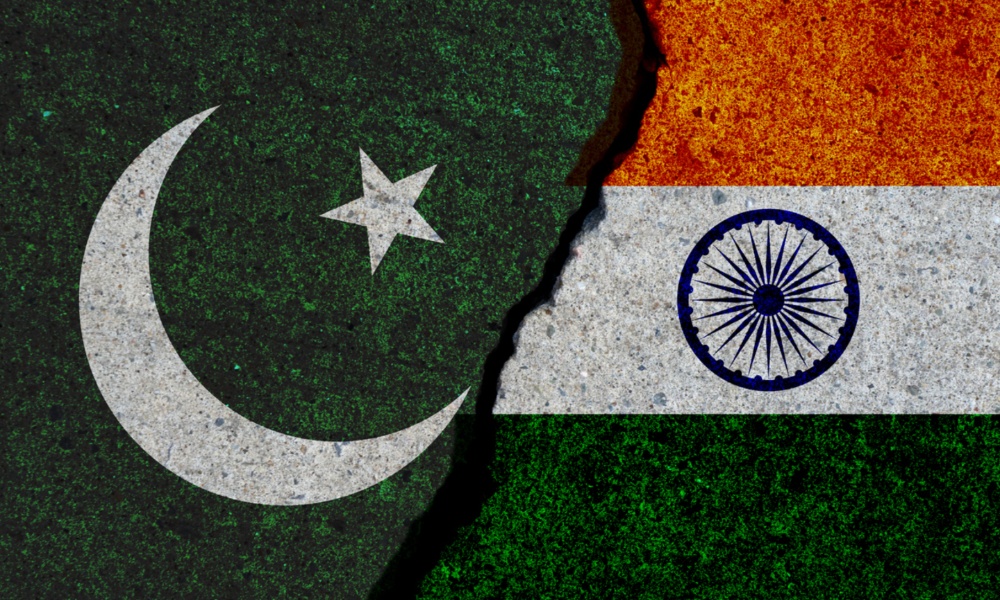
Amid growing tensions between India and Pakistan, Pakistan’s ambassador to Russia warned this weekend of a potential “nuclear” response if the Indian military decides to strike Islamabad.
The Pakistani envoy added that this response may also take place in case India “disrupts” Pakistan’s water supply.
Speaking to Russian broadcaster RT, Muhammad Khalid Jamali, Pakistan’s ambassador to Moscow, claimed he had “credible intelligence” suggesting that an attack by India was imminent.
“There are some other leaked documents whereby it has been decided to strike certain areas of Pakistan,” Jamali said. “So that makes us feel that this is going to happen and it’s imminent.”
He added that if such a scenario does play out, Pakistan will retaliate by using “the full spectrum of power, both conventional and nuclear.”
Jamail’s warning comes a day after Pakistan’s Defence Minister Khawaja Asif stated that any structure built by India to divert water would be met with strikes.
“That will be aggression against Pakistan… even if they (India) made an architectural attempt of this kind, then Pakistan will destroy that structure,” said Asif.
Tensions between India and Pakistan have escalated following the terror attack in Jammu and Kashmir’s Pahalgam last month, which killed 26 tourists.
On Saturday, India took fresh steps to completely block out Pakistan amid the rising tension, banning the import of all goods originating in Pakistan, prohibiting Pakistan-flagged vessels calling at Indian ports, and stopping the exchange of mail and parcels by land and air routes.
India’s government cited national security and national interest as reasons for the measures, which came against the backdrop of India also undercutting Pakistan at international fora as part of the efforts to build a global consensus against Islamabad, the Hindustan Times reported.
The latest move follows on previous orders issued by India against Pakistan, including the suspension of the Indus Waters Treaty, the closure of its airspace to Pakistani aircraft, the expulsion of most Pakistani nationals, and the closure of the only operational land border crossing at Attari.
It has also asked the International Monetary Fund (IMF) to review loans to the neighbouring country, Hindustan Times reported.
Pakistan meanwhile has unveiled several counter-measures such as closing its airspace to Indian airliners and suspending all trade, as it offered to participate in an independent investigation of the attack — a proposition that New Delhi sees as meaningless.
Last month, a group of heavily armed militants emerged from the woods and targeted tourists on the Baisaran grassland near Pahalgam. Twenty-six people were killed in the attack.





Regional
Iran tells Pakistan army chief no talks with Washington until demands are met
The demands include ending a US blockade on its ports, the lifting of sanctions on its oil exports as well as ending hostilities on all regional fronts.
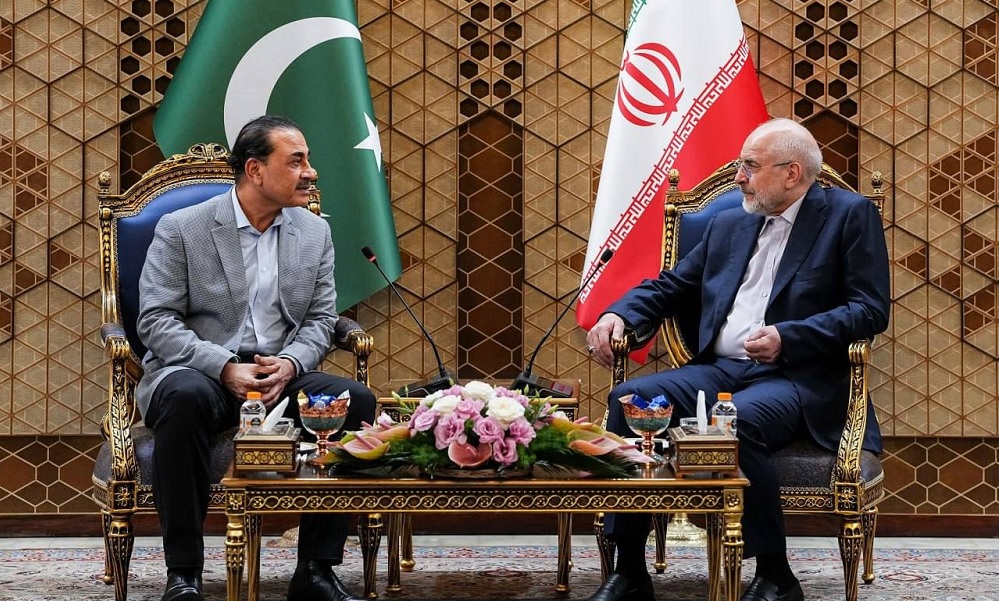
Iran told Pakistan’s army chief on Tuesday that there would be no talks with Washington until Tehran’s demands were met, Iranian media reported, underscoring its hardening stance despite mediation efforts by key interlocutor Pakistan.
President Masoud Pezeshkian discussed mediation efforts and regional developments with Field Marshal Asim Munir in Tehran, according to Nournews.
Pakistan is a key intermediary between the United States and Iran. Earlier mediation efforts helped produce an interim peace agreement in June, but the Islamabad Memorandum quickly unravelled as fighting between Iran and the US resumed weeks after.
Munir also met Iranian parliament speaker Mohammad Baqer Qalibaf, who said Washington could not regain Tehran’s trust until it fulfilled seven conditions Iran set last month for reopening the Strait of Hormuz, according to an Iranian readout of the meeting.
The demands include ending a US blockade on its ports, the lifting of sanctions on its oil exports as well as ending hostilities on all regional fronts.
Iran’s security chief, Mohsen Rezaei, delivered a similar message during a separate meeting with Munir, saying there would be no talks with Washington until Tehran’s demands were met, according to Iranian media.
Rezaei also said all enriched nuclear materials would remain in Iran, reiterating Supreme Leader Ayatollah Mojtaba Khamenei’s position that near-weapons-grade uranium should not be shipped abroad.
US Vice President JD Vance said earlier this month that Iran must make a “meaningful” reduction in its uranium enrichment capacity to satisfy US demands and end the countries’ eight-month-old war.
Israel, the United States and other Western states have long accused Iran of seeking nuclear weapons, including pointing to its move to enrich uranium to 60%, far higher than needed for civilian uses and closer to the 90% needed for a weapon.
Iran denies seeking nuclear weapons.
Regional
Rubio heads to Central Asia while other US officials hit foreign policy hot spots
US officials have portrayed resource-rich Central Asia — the region between China, Russia and Iran — as worthy of more attention than it received from US President Donald Trump’s predecessors.
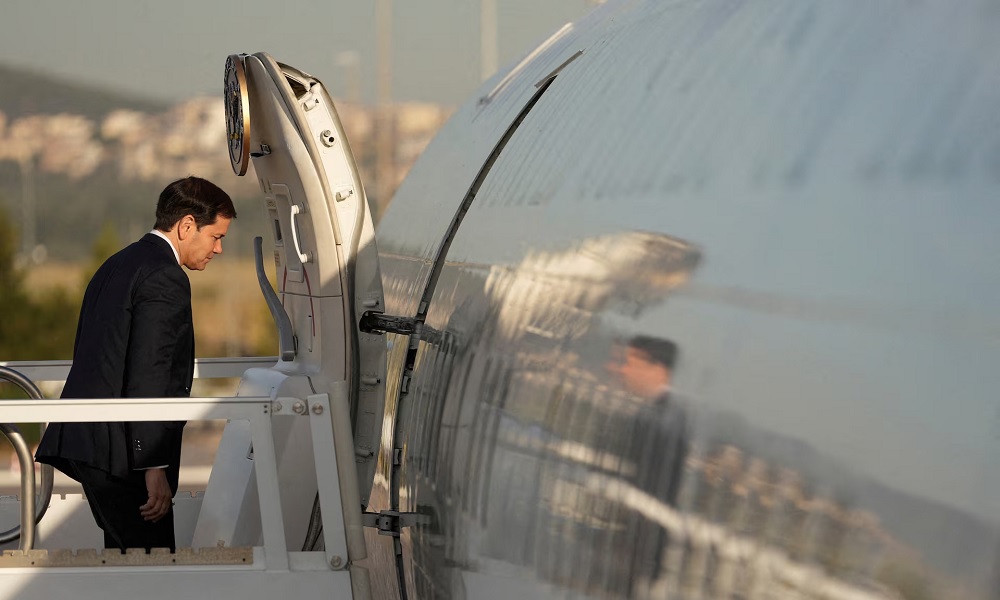
While the Iran war smolders, Saudi Arabia fights the Houthis and a new rift opens in US-Ukraine relations, Secretary of State Marco Rubio travels on Sunday to Uzbekistan, a nation far removed from the biggest US foreign policy challenges.
The top US diplomat is scheduled to land in Samarkand on Sunday to meet with leaders from the C5+1, a grouping that brings together the United States and the Muslim-majority post-Soviet states of Uzbekistan, Kazakhstan, Kyrgyzstan, Tajikistan and Turkmenistan.
US officials have portrayed resource-rich Central Asia — the region between China, Russia and Iran — as worthy of more attention than it received from US President Donald Trump’s predecessors.
Trump hosted C5 leaders at the White House last November, when Kazakhstan agreed to join the Abraham Accords, a series of agreements under which Muslim-majority countries have normalized or deepened relations with Israel. Separately, Trump met with Uzbek President Shavkat Mirziyoyev at the United Nations General Assembly last September.
Regional politics aside, the trip fits an emerging pattern in which Rubio often visits regions not at the center of the news cycle, while leaving some more fraught foreign-policy portfolios to other Trump aides, including special envoys Steve Witkoff and Jared Kushner and Vice President JD Vance.
For instance, Rubio has not visited Kyiv or Moscow since becoming secretary of state. He was not present for talks between US and Ukrainian officials in Florida earlier this month, when US officials pressed Ukraine to stop hitting Russian refineries. Vance, not Rubio, represented the US in Pakistan during peace talks with Iran in April.
Rubio’s previous foreign trip, in early October, took him to Greece, Portugal and Iceland.
Trump administration officials have typically rejected any suggestion that cabinet-level officials should focus their travels on geopolitical capitals and hot spots.
Deputy Secretary of State Christopher Landau, for instance, said on X last week that the idea only certain destinations were worthy of visits from secretaries of state “perfectly encapsulates the decadence and degeneracy of the contemporary US foreign policy establishment.”
US-RUSSIA RELATIONS LOOM
One Central Asian diplomat, speaking on the condition of anonymity, said officials in the region are wondering to what extent the US will continue targeting Russian sanctions evasion. All C5 states, while drawing closer to the US, have deep historical ties with Moscow, and the region has facilitated Russian imports and exports that violate US and European Union sanctions, Western officials say.
In the past, the US has pushed regional states to clamp down on those illicit flows.
But Trump struck a deal with Moscow this month to import Russian diesel, a move to lower domestic fuel prices before the congressional midterm elections. On Friday, Trump waived all provisions of legislation that would have allowed him to slap massive tariffs on some nations that buy significant amounts of Russian crude or otherwise help Moscow evade sanctions. Among the nations that could have been affected, experts have said, are India and Kazakhstan.
India, which Rubio will visit after Uzbekistan, remains the world’s No. 2 Russian crude importer after China, despite Trump saying in February that India had agreed to stop buying oil from Russia.
Additional questions hang over a potential trade deal with India and an expansion of the Abraham Accords in Central Asia.
A US official, speaking on the condition of anonymity, described the trade deal on Friday as “pretty much done,” raising the possibility that an agreement could be announced during the Rubio trip.
Separately, the US has talked to additional Central Asian nations about joining the Abraham Accords, Reuters reported last year, conversations that could in theory continue in Samarkand.
More than 200 business executives will accompany Rubio to Uzbekistan, the State Department said. The Central Asian diplomat said the Trump administration has focused its commercial efforts on expanding access to the area’s rare earth mineral resources.
The trip to Uzbekistan was largely organized by Sergio Gor, the US ambassador to India, the Central Asian diplomat said. Gor, who was born in Uzbekistan and is a friend of Rubio, also serves as the US special envoy for South and Central Asian affairs.
After Uzbekistan, Rubio will visit the Indian cities of Mumbai and Jamnagar to meet with business leaders, including Reliance Industries Chairman Mukesh Ambani, who earned the Trump administration’s favor earlier in the year by backing a new refinery in Texas. Rubio most recently visited India five months ago.
The trip is due to wrap up on Thursday.
Regional
Trump says US may strike Iran’s ‘Pickaxe Mountain’ nuclear facility
Pickaxe Mountain is a heavily fortified underground facility linked to Iran’s nuclear programme, located near one of the country’s major nuclear sites.
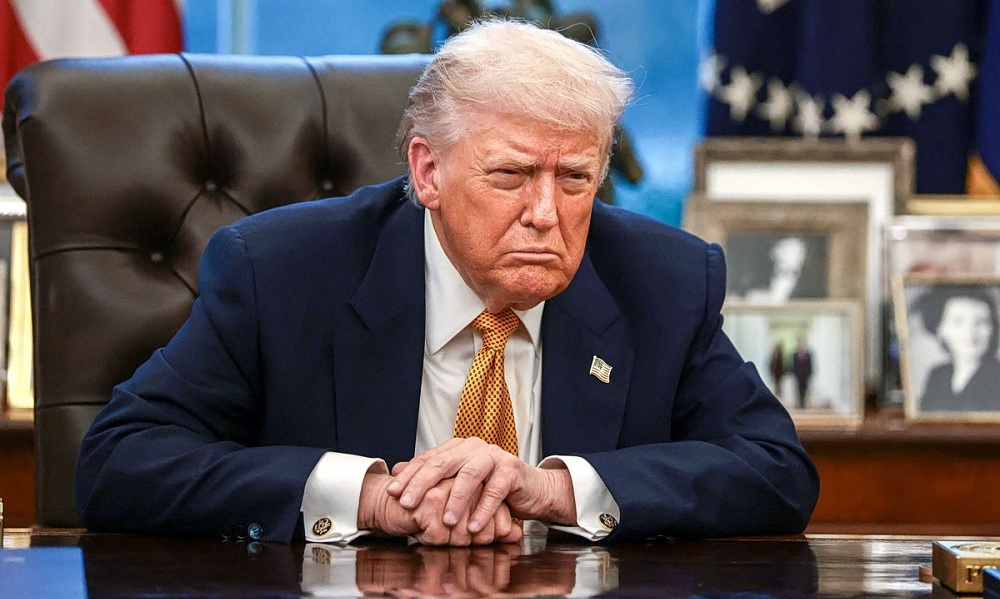
US President Donald Trump has said Washington may launch further strikes against Iran’s underground nuclear facilities, including the site known as Pickaxe Mountain, as he seeks to prevent Tehran from developing a nuclear weapon, Reuters reported.
In an interview with Newsmax on Thursday night, Trump said the United States was determined to ensure Iran never obtains a nuclear weapon, arguing that such a development would pose a serious threat.
“Their nuclear is buried under millions of tons of mountain. Now we’re looking at Pickaxe Mountain. We may have to go there. We’ll take a shot at that one. We’ll knock it out fast,” Trump said.
Pickaxe Mountain is a heavily fortified underground facility linked to Iran’s nuclear programme, located near one of the country’s major nuclear sites.
Trump also ruled out the use of nuclear weapons in the conflict, saying conventional military capabilities would be sufficient to achieve US objectives.
“I wouldn’t use nuclear. We don’t have to,” he said.
The US president reiterated that he was not considering deploying American ground troops into Iran, signalling that Washington’s military approach would continue to rely on other forms of military action.
Trump did not confirm whether he had authorised the use of the GBU-43/B Massive Ordnance Air Blast (MOAB) bomb, commonly known as the “Mother of All Bombs,” against Iranian energy infrastructure or nuclear facilities. He stressed that the weapon was not nuclear, read the report.
The remarks come amid escalating tensions between Washington and Tehran following US-Israeli strikes on Iran that began in February, with Iran’s nuclear programme remaining a central issue in the conflict.
The potential targeting of deeply buried nuclear facilities could further intensify the conflict and raise concerns about the broader regional security situation.


ARCS, UNAMA discuss aid for families affected by past hardships

Afghanistan’s new Wakhan road to China faces major hurdles

EU allocates 12 million euros for humanitarian assistance in Afghanistan

Afghanistan beat Bangladesh by seven wickets to reach tri-series final

Russia to expand security and defence cooperation with Afghanistan
Cricket Bonanza: Afghanistan set for packed international schedule

Afghanistan says 28 killed, 32 captured in Nuristan operation

Silk Road highway in Wakhan corridor now reaches the China border

Afghanistan on climate front line as Kabul faces groundwater warning

ACB announces Afghanistan squads for Bangladesh, Zimbabwe series

Tahawol: Doha meeting and Afghanistan’s political and economic future discussed

Saar: Concerns over expansion of conflict between Iran and US discussed

Governments warn citizens over security risks in France after riots

Tahawol: Iran’s reaction to Pakistan’s mediation discussed

Saar: Review of SCO meeting in Tajikistan
-

 Sport5 days ago
Afghanistan reach Brazil futsal tournament final after beating Cape Verde 4-2
-
 World4 days ago
Violent protests spread across Europe as Albanian PM blames ‘foreign hand’
-

 Sport4 days ago
Afghanistan finish runners-up after 6-0 defeat to Brazil in futsal final
-

 Latest News5 days ago
Hegseth says only a few NATO allies were involved in fighting in Afghanistan
-

 World5 days ago
France rocked by nationwide clashes, looting and fires
-
 Business5 days ago
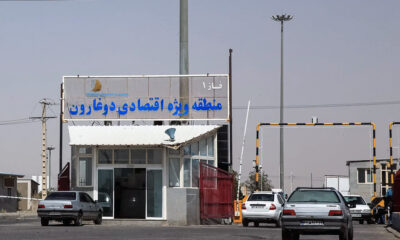
Dogharoun border handling 70% of Iran’s exports to Afghanistan
-

 Sport5 days ago
Toofan Herat beat Istiqlal Kabul 2-0 in Afghanistan Champions League clash
-

 Regional5 days ago
Rubio heads to Central Asia while other US officials hit foreign policy hot spots