
Regional
Russia seeks to serve as mediator between US and Iran
A source briefed on the discussions, speaking on condition of anonymity, told Reuters that Russia had offered to act as an intermediary, but Moscow was not asked to serve in such a role.

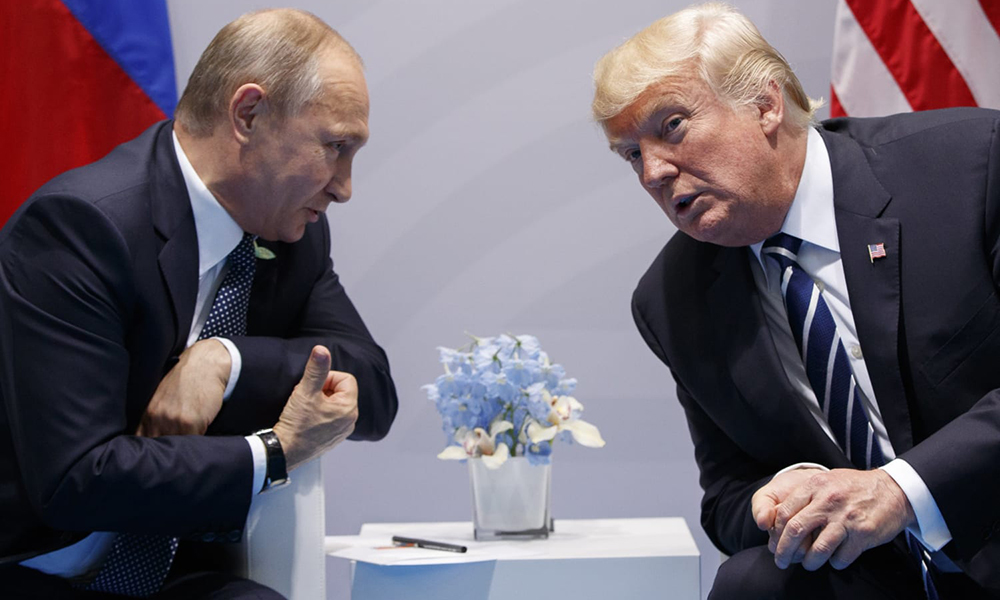
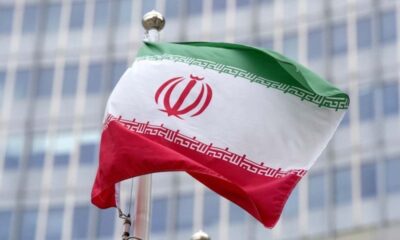
Russia has offered to mediate between the United States and Iran, a source briefed on discussions told Reuters on Tuesday, as the Kremlin vowed to do everything possible to facilitate a peaceful solution to tensions over Tehran’s nuclear program, Reuters reported.
Russia’s state-run Zvezda media outlet reported earlier on Tuesday, citing Kremlin spokesman Dmitry Peskov, that President Vladimir Putin had agreed to mediate between Tehran and Washington in talks over nuclear weapons.
A source briefed on the discussions, speaking on condition of anonymity, told Reuters that Russia had offered to act as an intermediary, but Moscow was not asked to serve in such a role.
Iran’s mission to the United Nations in New York declined to comment.
The development comes after U.S. President Donald Trump upended U.S. policy after taking office in January, taking a more conciliatory stance towards Russia that has left Western allies wary as he tries to broker an end to Moscow’s three-year war in Ukraine.
Peskov told reporters on Tuesday that Iran was Russia’s partner and ally and Moscow would continue to develop relations.
“President Putin believes and is convinced that the problem of Iran’s nuclear dossier should be solved solely by peaceful means,” he said. “Of course, Russia, being an Iranian ally, will be doing all what is possible to facilitate the peaceful solution to the problem.”
Trump last month restored his “maximum pressure” campaign on Iran in a bid to stop Tehran from building a nuclear weapon. But he also said he was open to a deal and was willing to talk to Iran’s President Masoud Pezeshkian.
“The Trump administration will talk to our adversaries and allies alike, but … from a position of strength to defend our national security,” Brian Hughes, spokesperson for the White House National Security Council, said on Tuesday.
Iran has denied wanting to develop a nuclear weapon. However, it is “dramatically” accelerating enrichment of uranium to up to 60% purity, close to the roughly 90% weapons-grade level, the U.N. nuclear watchdog has warned, read the report.
Western states say there is no need to enrich uranium to such a high level under any civilian program and that no other country has done so without producing nuclear bombs. Iran says its nuclear program is peaceful.
“The United States will not tolerate Iran obtaining a nuclear weapon or their support of terror in the Middle East and around the world,” Hughes said.
U.S. Secretary of State Marco Rubio spoke with Israeli Prime Minister Benjamin Netanyahu on Tuesday, conveying “that he anticipates close coordination in addressing the threats posed by Iran and pursuing opportunities for a stable region,” State Department spokesperson Tammy Bruce said.
Iran agreed a deal in 2015 with Britain, Germany, France, the U.S., Russia and China – known as the Joint Comprehensive Plan of Action (JCPOA) – that lifted sanctions on Tehran in return for restrictions on its nuclear program.
Washington quit the agreement in 2018 during Trump’s first term as president, and Iran began moving away from its nuclear-related commitments.
Britain, France and Germany have told the U.N. Security Council that they are ready – if needed – to trigger a so-called “snap back” of all international sanctions on Iran to prevent the country from acquiring a nuclear weapon, Reuters reported.
They will lose the ability to take such action on October 18 next year when the 2015 U.N. resolution on the deal expires. Trump has directed his U.N. envoy to work with allies to snapback international sanctions and restrictions on Iran.






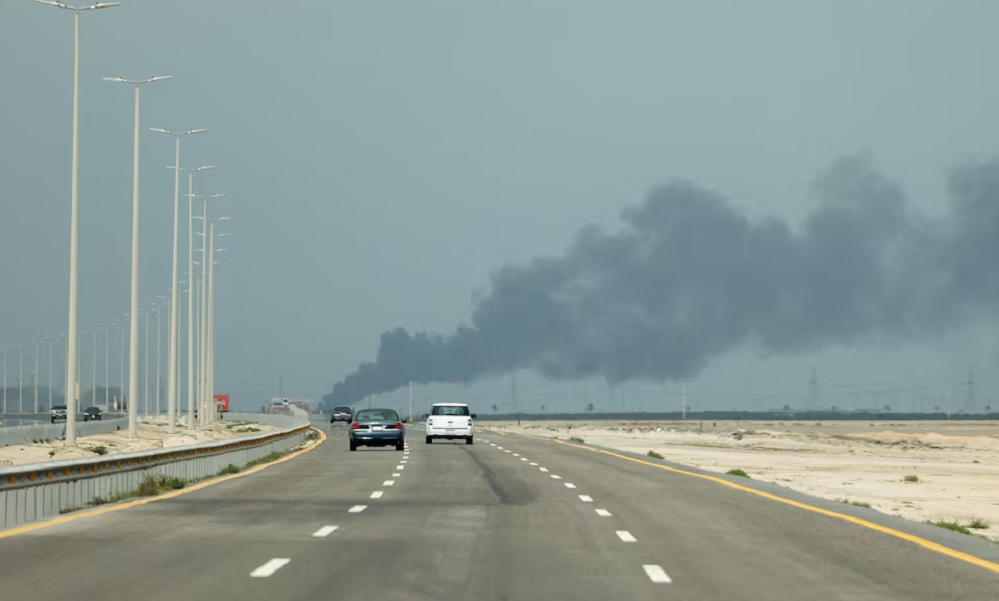
Key U.S. allies in the Middle East are moving closer to direct involvement in the conflict with Iran, as sustained attacks on Gulf infrastructure intensify pressure on regional governments, according to a report by The Wall Street Journal.
Both Saudi Arabia and the United Arab Emirates are reportedly weighing deeper coordination with the United States and Israel, following repeated Iranian missile and drone strikes that have disrupted their economies and threatened regional energy security.
While neither country has formally committed troops, recent developments suggest a shift toward more active participation. The report indicates that Gulf support is already enhancing U.S. operational capabilities, including facilitating airstrike logistics and potentially opening new avenues to target Iran’s financial networks.
Saudi Arabia signals shift in stance
Saudi Arabia appears to be reassessing its position as attacks on critical infrastructure continue. Riyadh has reportedly allowed U.S. forces access to the King Fahd Air Base, a move that could support expanded military operations.
Foreign Minister Faisal bin Farhan warned that the kingdom’s tolerance for Iranian attacks is limited. “Any belief that Gulf countries are incapable of responding is a miscalculation,” he said following recent strikes on energy facilities.
Crown Prince Mohammed bin Salman is said to be considering stronger action to restore deterrence, with officials suggesting it may be only a matter of time before Saudi Arabia takes a more direct role in the conflict.
According to the WSJ report, one source said that “it is only a matter of time before the kingdom enters the war.”
UAE ramps up pressure on Tehran
The United Arab Emirates has also taken steps to increase pressure on Tehran, particularly through economic measures. Authorities in Dubai have shut down Iranian-linked institutions, including the Iranian Hospital and Iranian Club, citing violations of national laws and alleged links to state-backed activities.
Officials warned that further action could include freezing billions of dollars in Iranian assets held within the UAE, a move that could significantly impact Iran’s already strained economy.
Long regarded as a key financial hub for Iranian businesses, the UAE’s shift signals a notable escalation in its stance, even as it continues to deliberate over potential military involvement.
Regional tensions and strategic stakes
The growing alignment among Gulf states follows a series of attacks on energy facilities across Saudi Arabia, Kuwait, the UAE, and Qatar. Doha has condemned the strikes as a dangerous escalation and a direct threat to regional stability.
At the center of the war remains control over the Strait of Hormuz, a critical artery for global oil shipments. Iran’s ability to disrupt traffic through the strait continues to give it significant strategic leverage.
Risk of wider regional war
As the conflict approaches the one-month mark, Gulf states are maintaining close coordination with Washington over next steps. However, analysts warn that continued Iranian strikes could force regional powers into open confrontation.
With economic, security, and geopolitical stakes rising, the prospect of a broader regional war is becoming increasingly likely unless tensions are quickly contained through diplomatic efforts.
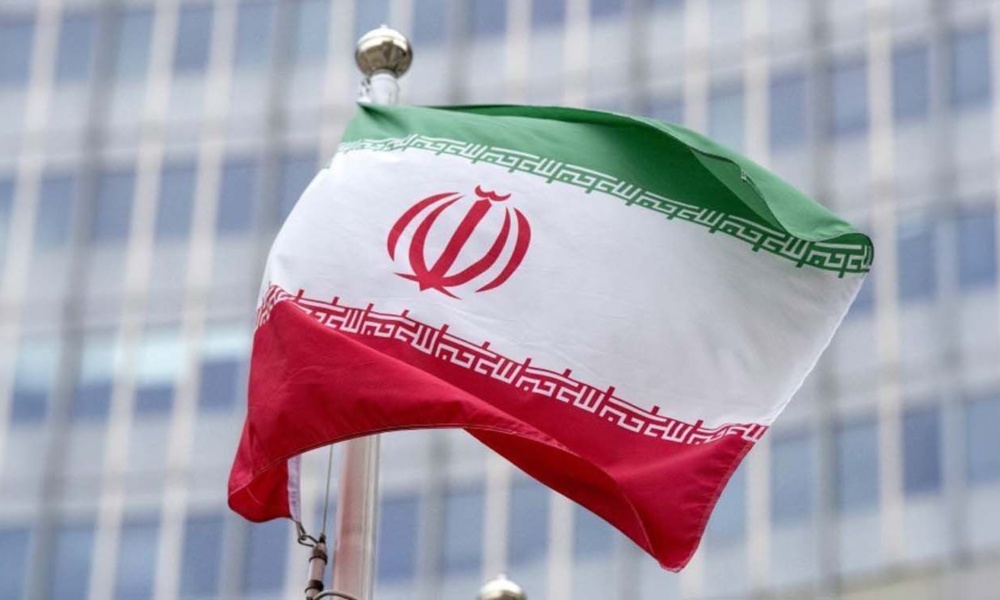
Claims by Donald Trump that the United States is engaged in “good and productive conversations” with Iran have been firmly denied by Tehran, further clouding the already tense standoff between the two sides.
Iran’s Parliamentary Speaker, Mohammad Bagher Ghalibaf, dismissed the assertion, stating that no negotiations are currently taking place. In remarks posted on social media, he accused Washington of spreading “fake news” in an attempt to manipulate global financial and oil markets during a period of heightened volatility.
“No negotiations have been held with the US, and fake news is used to manipulate the financial and oil markets and escape the quagmire in which the US and Israel are trapped,” he said late Monday.
The denial comes after Trump signaled a temporary pause in planned military strikes on Iranian energy infrastructure, including power plants, following his earlier ultimatum that Tehran reopen the strategic Strait of Hormuz within 48 hours or face attack.
Analysts question timing of “talks”
Political analyst Mitchell Plitnick suggested the claim of ongoing talks may have been aimed more at calming markets than reflecting genuine diplomatic progress.
“He saw that markets were likely to react negatively to threats of attacking Iran’s electrical grid and moved to stabilize the situation,” Plitnick said, adding that there is no evidence of active communication between Washington and Tehran.
Iranian officials have consistently maintained that there has been no direct contact with the U.S., reinforcing skepticism over Trump’s statements.
Strategic stakes remain high
The dispute is closely tied to control of the Strait of Hormuz, a critical maritime chokepoint through which a large share of the world’s oil supply passes. Iran has warned it could restrict or even close the waterway if its territory or infrastructure is targeted, a move that could have far-reaching consequences for global energy markets.
Analysts note that this leverage gives Tehran a significant strategic advantage in the ongoing war, particularly as fears of supply disruptions continue to influence oil prices and global economic stability.
Fragile pause amid risk of escalation
While Trump has delayed potential strikes for several days, the situation remains highly volatile. The absence of confirmed diplomatic engagement raises concerns that the pause may be temporary, with the risk of rapid escalation still looming.
As tensions persist, international observers continue to call for transparency, restraint, and renewed diplomatic efforts to prevent a broader conflict in the region.
Regional
Trump backs down on strikes on Iran’s power network, says US and Tehran holding talks
Iranian attacks have effectively closed the Strait, which carries a fifth of global oil and liquefied natural gas.
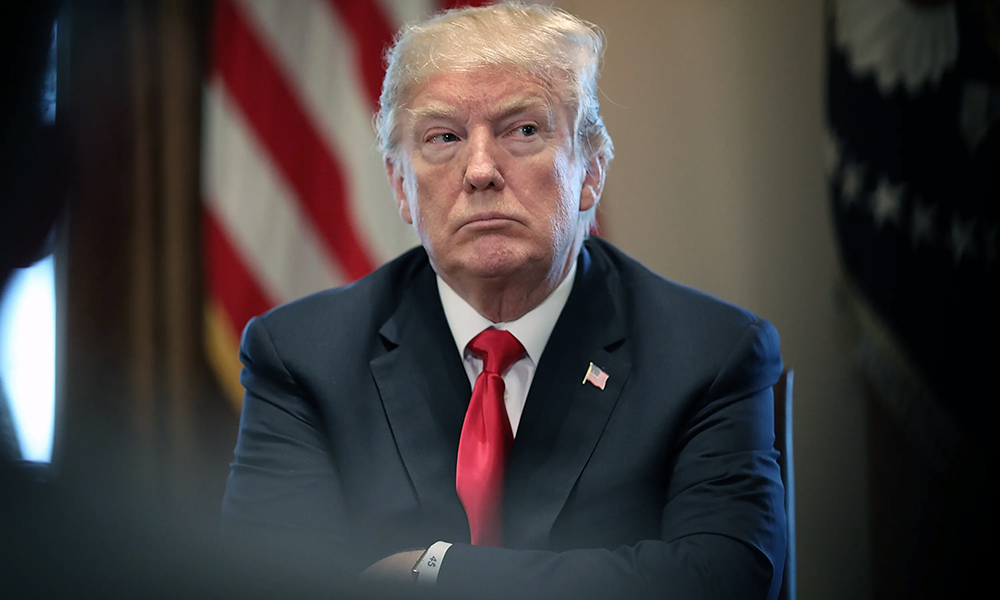
President Donald Trump backed down on targeting Iran’s power network on Monday, saying the U.S. and Iran have held constructive talks and that he would postpone any strikes on power plants and energy infrastructure, Reuters reported.
Trump’s statement came after Iran threatened to attack Israel’s power plants and those supplying U.S. bases across the Gulf region if the U.S. targets Iran’s power network.
The dollar plunged and stocks surged following Trump’s post.
The United States and Iran “have had, over the last two days, very good and productive conversations regarding a complete and total resolution of our hostilities in the Middle East,” Trump wrote in a post on Truth Social.
“I have instructed the Department of War to postpone any and all military strikes against Iranian power plants and energy infrastructure for a five-day period, subject to the success of the ongoing meetings and discussions.”
On Saturday, Trump warned that Iranian power plants would be destroyed if Tehran failed to “fully open” the Strait of Hormuz to all shipping within 48 hours. Trump set a deadline of around 7:44 p.m. EDT (2344 GMT) on Monday.
Iranian attacks have effectively closed the Strait, which carries a fifth of global oil and liquefied natural gas, read the report.
More than 2,000 people have been killed in the war the U.S. and Israel launched on February 28, which has upended markets, driven up fuel costs, fuelled global inflation fears and convulsed the postwar Western alliance.


Tahawol: Escalating threats between Iran-US discussed

Saar: Discussion on criticism of Pakistan’s policies

Islamic Emirate releases American prisoner Dennis Coyle

UK announces additional £3 million in aid for vulnerable people in Afghanistan

Around 2.3 million tourists visited Afghanistan’s recreational areas during Eid: Ghufran

Pakistani military jet downed in Afghanistan’s Jalalabad, pilot captured alive

Afghan Air Force conducts airstrikes in Islamabad, other cities

Prominent Muslim scholar issues fatwa calling for Afghanistan-Pakistan ceasefire

Afghan air force strikes key Pakistani military installations in retaliatory operation

IEA: Special circle in Pakistan has launched mission to destabilize region
Tahawol: Escalating threats between Iran-US discussed

Tahawol: Possibility of US ground forces entering Iran war discussed

Saar: Using US prisoners as political pressure

Tahawol: Pakistan’s efforts to destabilise Afghanistan

Saar: Decline in international assistance to Afghanistan
-

 Sport4 days ago
Afghanistan national buzkashi falls short in Kokpar World Championship semifinals
-

 Sport3 days ago
Ireland to host Afghanistan for ODI series in August
-
 Latest News2 days ago
Deadly violence likely without dialogue between Afghanistan and Pakistan: ICG
-
 Latest News4 days ago
Mojtaba Khamenei calls for improved Afghanistan–Pakistan relations, offers help
-

 Sport5 days ago
FIFA sanctions Israeli Football Association over discrimination violations
-

 Latest News4 days ago
Malaysian PM welcomes temporary Afghanistan–Pakistan truce, urges lasting peace
-
 Latest News1 day ago
Pakistan seeks Russian mediation to resolve Afghanistan tensions
-
 Latest News5 days ago
IEA defense ministry accuses Pakistan of ceasefire violations