
Latest News
Senior officials from previous govt ‘fled to luxury homes abroad’


As Afghanistan’s former government collapsed, in August last year, many senior officials in the Ashraf Ghani regime fled the country to luxurious homes they had purchased abroad ahead of the Islamic Emirate of Afghanistan (IEA) takeover.
In a review of public documents and interviews, the Wall Street Journal on Monday stated that some officials who held top jobs during Ghani’s tenure, are now living in mansions along California’s coast and in major cities around the world.
Some of these former officials, including lawmakers, are also living in clusters in the United Arab Emirates and Turkey, WSJ reported.
This comes as thousands of Afghan evacuees struggle world-wide, and Afghans at home live in abject poverty.
According to the WSJ, an investigation was carried out by them to determine the whereabouts of dozens of Ghani’s cabinet officials, influential figures that made up his inner circle, and key lawmakers involved in security and foreign-policy matters.
Most were found to have relocated overseas, often in countries where publicly available property and company records are limited.
Ghani, who fled on the afternoon of August 15, initially stayed at the St. Regis Hotel in Abu Dhabi while his wife selected a private villa for their permanent residence that was provided by the Emiratis, the Journal reported. A spokesman for the UAE told the Journal that Ghani and his family were welcomed on humanitarian grounds, along with other Afghans fleeing the country.
Many of the former Afghan officials spoken to by the WSJ said they left because they feared retaliation from the IEA. However, the few that stayed behind, including former President Hamid Karzai and former CEO Abdullah Abdullah, have largely been left alone.
The WSJ reported that US public records offer a window into the lives of some former Afghan officials in America. Among them is Hamdullah Mohib, the ousted president’s closest ally and national-security adviser. Mohib fled Afghanistan with the president.
According to the report, Mohib has long held close connections to the US. His wife is American but he remained a British citizen through his time in office.
In an interview, Mohib said he had been concerned about security and his pregnant wife’s health, and had moved his family to the Shangri-La Hotel in Abu Dhabi, paid for by the UAE, before Kabul’s fall.
The UAE said it also provided accommodation on humanitarian grounds, the WSJ reported.
The family later moved to a four-bedroom home in Florida, on an attractive bay lined with palm trees, according to public records and confirmed by Mohib. The house is owned by his mother-in-law. Mohib said he owns no property under his name anywhere in the world.
US property and company records show that Eklil Hakimi, the president’s longtime finance minister and ally, bought at least 10 properties in California, including during Hakimi’s time in office, and after leaving in 2018, the Journal reported.
According to California property records, Hakimi and his wife’s properties include a five-bedroom home and pool, in a luxury Laguna Niguel community near the beach. It is worth $2.5 million, according to the real-estate company Zillow. In total, the 10 properties are worth more than $10 million. The couple’s latest acquisition, made early this year, was a $1.1 million beachfront South Cove condo in a new development in California, WSJ reported.
Afghanistan’s last finance minister, Khalid Payenda, owns two properties near Washington, DC, one of which was bought with cash, WSJ reported. Zillow shows them to be worth more than $1 million.
Former Afghan vice president, Abdul Rashid Dostum, is now in Turkey. WSJ reported that a local journalist posted a photo on Twitter that said it showed him receiving a guest at his residence in the expensive gated Or-An community in Ankara. It couldn’t be determined when Dostum purchased the home, and a spokesman for Dostum declined to comment, WSJ reported.
A database of Dubai property records reviewed by the Journal contained records for several high-profile former Afghan officials.
Ghani’s minister of economy, Mustafa Mastoor, owns a condo in a development on the Dubai Marina, according to Dubai records reviewed by the Journal.
Also in Dubai is the former powerful governor of Balkh province, Atta Mohammad Noor, who has moved to an apartment he owns, located in an expensive area of Dubai known as The Palm.



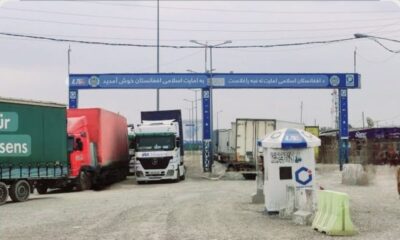




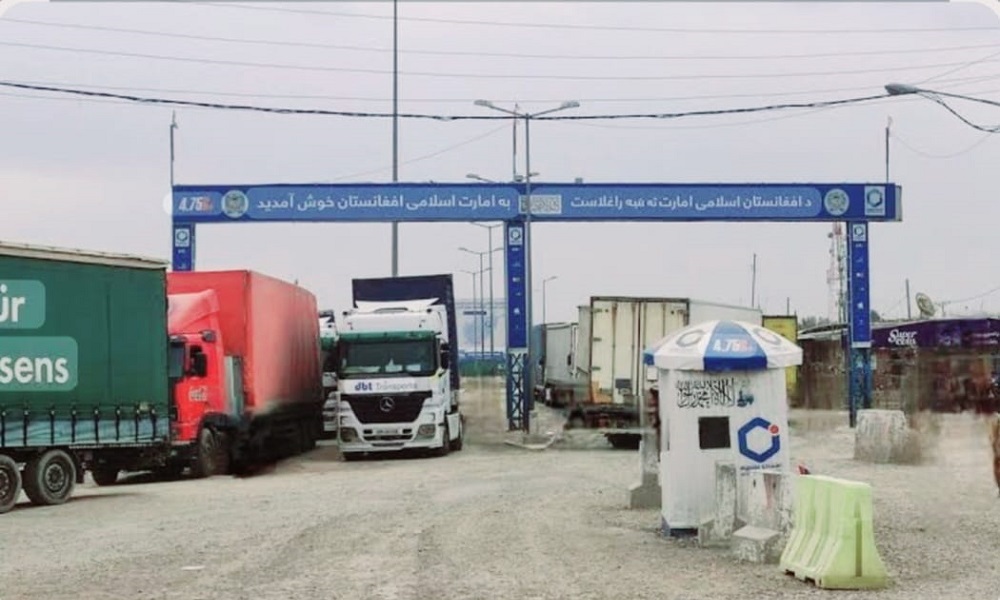
Mohammad Yousuf Saeedi, spokesperson for the governor of Herat, announced on Friday that Iranian cargo truck drivers will no longer need visas to enter Afghanistan.
Saeedi said that, by order of the leader of the Islamic Emirate, starting Saturday, Iranian transit vehicles will be allowed to enter Afghanistan without a visa or a “road pass.”
According to him, the implementation of this decision will reduce transportation costs and, as a result, lower the prices of goods.
Noor Ahmad Islamjar, the governor of Herat, visited the Islam Qala border crossing on Friday to review the implementation of this order. During the visit, he discussed the details of executing the plan with officials from relevant departments, including representatives from the Ministry of Foreign Affairs, Public Works, Customs, and Transport.
Starting Saturday (March 28), foreign cargo vehicles are expected to enter the Islam Qala border without the need for a visa or road pass, unload their goods, and then return to their destinations.
The statement added that implementing this plan could reduce transportation fares on one hand and, by lowering transport costs, help decrease the prices of goods on the other.
This process will create daily job opportunities for more than 1,000 people.
Latest News
Afghans in Iran face growing uncertainty as war enters second month
The organization said that since the start of the war, more than 35,000 Afghans have returned to Afghanistan.
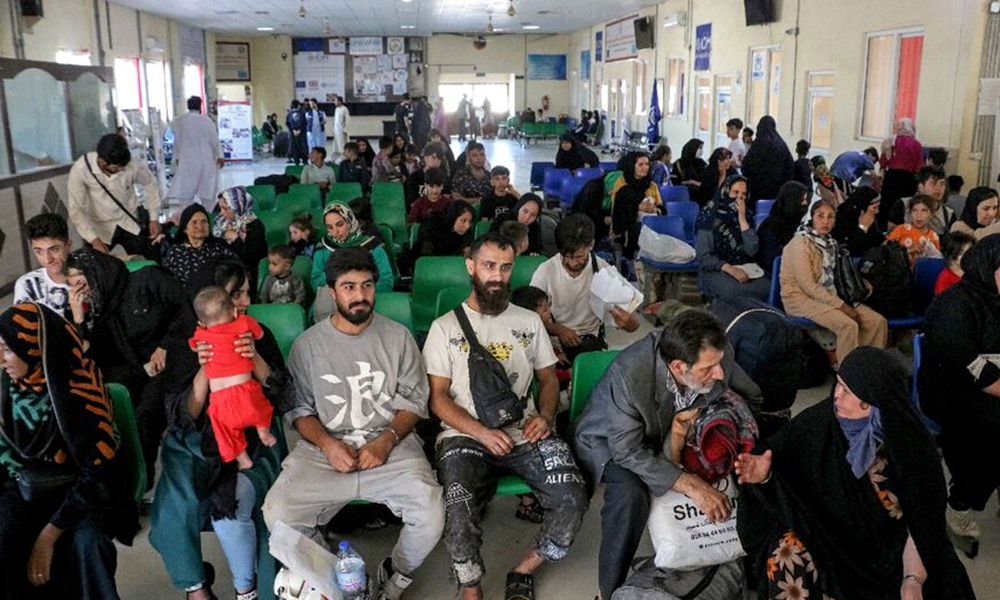
Millions of Afghans living in Iran are facing increasing uncertainty and hardship as the war in the country enters its second month, according to the Norwegian Refugee Council (NRC).
In a statement, NRC Secretary General Jan Egeland warned that more than four million Afghans residing in Iran are among the most vulnerable groups affected by the ongoing conflict. Many Afghan families have lost their only sources of income as informal work has collapsed amid continuous airstrikes and economic disruption.
According to the NRC, a large number of Afghans live in major cities that have come under heavy attacks. Many are unable to flee to safer areas because they have nowhere to go or lack legal permission to travel.
The organization said that since the start of the war, more than 35,000 Afghans have returned to Afghanistan, while over one million Afghan migrants in Iran remain at risk of deportation to a country already struggling with humanitarian challenges.
Egeland noted that after a month of sustained Israeli and U.S. bombardment across Iran, the civilian population is exhausted and deeply traumatized. Millions of people have already fled their homes in search of safety, while others remain trapped in dangerous conditions.
Reports indicate that thousands of homes, hospitals, and schools have been damaged or destroyed across Iran. NRC staff in Tehran say many neighborhoods have suffered significant destruction, while families are taping their windows to prevent injuries from shattered glass caused by nearby explosions.
The war has also severely disrupted daily life, with internet outages and major disruptions to banking services making it increasingly difficult for residents to access basic needs.
According to available data, about 2,700 people have been killed across the Middle East in attacks involving the United States, Israel, and Iran, with more than half of the casualties reported inside Iran. Iran’s Health Ministry says that between February 28 and March 25, at least 1,500 people were killed and over 18,000 injured in the country.
Humanitarian organizations warn that funding for life-saving assistance in both Iran and Afghanistan remains critically low. Aid agencies say they lack sufficient resources to prevent hunger and provide emergency shelter for displaced families.
Egeland warned that if the war continues, the region could face a far larger humanitarian crisis, with millions potentially forced to flee across borders and placing further pressure on already fragile neighboring countries.
He called on all parties involved in the conflict to respect international humanitarian law, stop attacks on civilians and civilian infrastructure, and work toward a diplomatic solution to end the crisis.
Latest News
Russia deems US military presence in Afghanistan unacceptable
Kabulov’s remarks came in response to growing concerns regarding the U.S. military’s presence in the Middle East, particularly amid rising tensions with Iran.
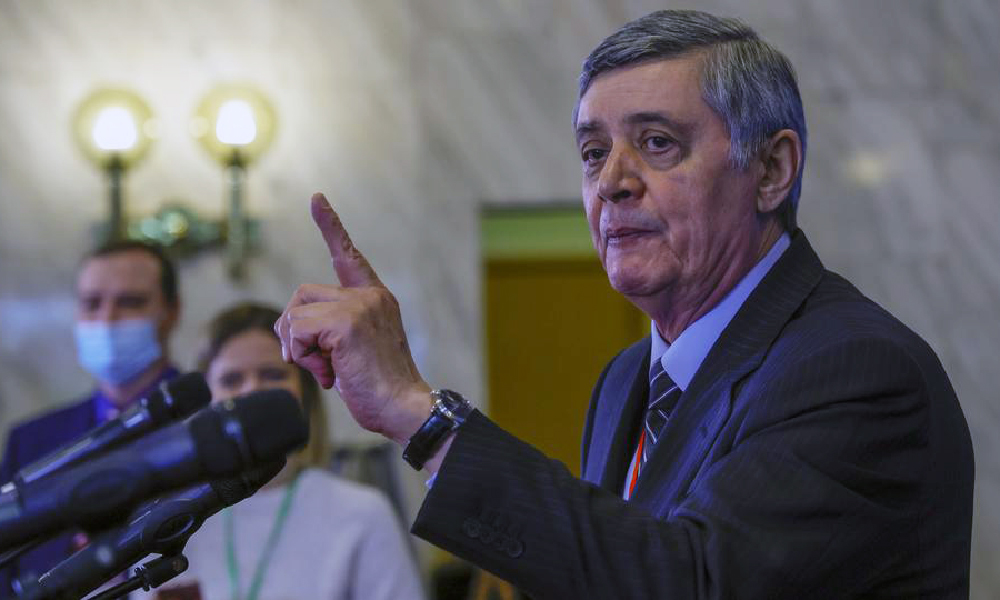
Russia has strongly condemned any potential return of U.S. military forces to Afghanistan, specifically the possibility of reopening Bagram Air Base, calling such moves “categorically unacceptable.” The statement was made by Zamir Kabulov, the Russian President’s special representative for Afghanistan and senior adviser to the Russian Foreign Ministry, in an interview with RIA Novosti.
Kabulov emphasized that Moscow opposes the establishment of any U.S. or NATO military infrastructure on Afghan soil or in neighboring regions, under any pretext. He also expressed hope that the Taliban-led government in Afghanistan, known as the Islamic Emirate of Afghanistan, would share Russia’s stance on the issue.
Kabulov’s remarks came in response to growing concerns regarding the U.S. military’s presence in the Middle East, particularly amid rising tensions with Iran. There have been reports suggesting that the U.S. might seek access to Bagram Air Base again as part of a strategic pivot in the region.
Recalling the previous administration under former U.S. President Donald Trump, Kabulov noted that the U.S. had persistently sought to regain control of Bagram Air Base following its chaotic withdrawal from Afghanistan in August 2021. “There is nothing new in these demands,” Kabulov stated, referring to the ongoing push by the U.S. to re-establish a military foothold in the region.
Russia’s firm stance reflects its broader geopolitical concerns regarding the influence of the U.S. and NATO near its borders, particularly in Central Asia and Afghanistan.


Exclusive interview with Indrika Ratwatte, Deputy UN Special Representative for Afghanistan

US Vice President Vance emerges as key figure in Iran peace efforts: Report

Tawsia: Efforts to boost Afghanistan’s domestic production and economic diplomacy

Trump extends deadline for striking Iranian energy plants to April 7

IEA says Iranian drivers no longer need visas to enter Afghanistan

Pakistani military jet downed in Afghanistan’s Jalalabad, pilot captured alive

Afghan Air Force conducts airstrikes in Islamabad, other cities

Prominent Muslim scholar issues fatwa calling for Afghanistan-Pakistan ceasefire

Afghan air force strikes key Pakistani military installations in retaliatory operation

IEA: Special circle in Pakistan has launched mission to destabilize region
Exclusive interview with Indrika Ratwatte, Deputy UN Special Representative for Afghanistan
Tawsia: Efforts to boost Afghanistan’s domestic production and economic diplomacy

Tahawol: Discussion on day 27 of Iran–US war

Saar: Islamic Emirate confident of Durand Line control

Tahawol: Efforts to release Mohammad Rahim from Guantanamo Bay Detention Camp
-

 Latest News4 days ago
Pakistan seeks Russian mediation to resolve Afghanistan tensions
-
 Latest News5 days ago
World must re-engage to prevent all-out Afghanistan-Pakistan war: Financial Times
-
 Latest News3 days ago
Around 2.3 million tourists visited Afghanistan’s recreational areas during Eid: Ghufran
-

 Sport4 days ago
Afghanistan squad hit by withdrawals ahead of AFC Asian Cup Qualifiers
-
 Latest News1 day ago
Tajikistan shifts stance on Afghanistan amid rising border tensions
-
 Latest News3 days ago
Islamic Emirate releases American prisoner Dennis Coyle
-
 Latest News4 days ago
Airstrike on Kabul drug rehabilitation centre sparks legal concerns
-
 Latest News2 days ago
Two civilians killed, eight injured in fresh shelling by Pakistan in Kunar