
Tahawol: Efforts to start work of TAPI project in Afghanistan











Regional
US and Iran hold first talks since June after Trump’s ‘annihilation’ threat
Iranian officials said Araghchi conveyed Tehran’s conditions, including an end to what Iran describes as US acts of aggression and the lifting of measures affecting Iranian shipping and assets.
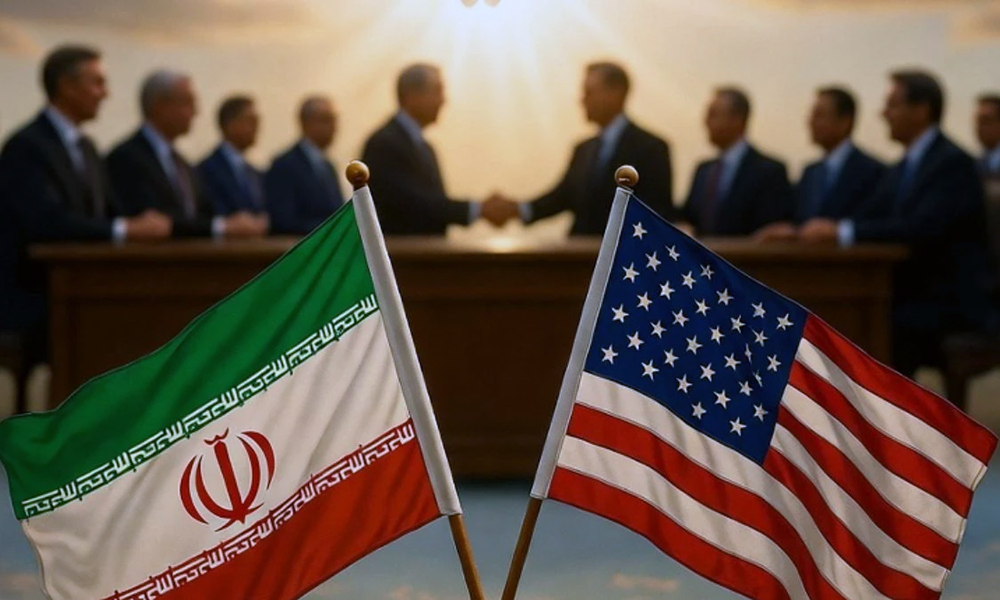
The United States and Iran have held their first high-level talks since June, with discussions taking place on the sidelines of the United Nations General Assembly in New York amid continued fighting and growing international pressure to end the conflict.
Iranian Foreign Minister Abbas Araghchi and US special envoy Steve Witkoff took part in the talks, which were mediated by Qatar. US envoy Jared Kushner also participated on the American side, according to reports.
No breakthrough was immediately reported. Witkoff said the two sides had completed a round of discussions that he hoped would prove “constructive and promising”, adding that mediators would continue their efforts.
Iranian officials said Araghchi conveyed Tehran’s conditions, including an end to what Iran describes as US acts of aggression and the lifting of measures affecting Iranian shipping and assets.
The talks came just hours after US President Donald Trump warned in his address to the UN General Assembly that he could “annihilate” Iran if no agreement was reached.
Trump said Iran faced a choice between reaching a deal and what he described as destruction, while also saying he believed an agreement could be reached after the US midterm elections in November.
Trump later described the three-hour discussions as very productive. Witkoff, however, clarified that the two sides communicated through mediators who shuttled between the delegations rather than holding direct face-to-face negotiations.
The latest contact follows months of conflict between Iran, Israel and the United States. The fighting has also disrupted shipping through the Strait of Hormuz, one of the world’s most important energy routes.
Iran has indicated that it could reopen the strategic waterway if Washington takes steps to ease military and economic pressure on Tehran. Iranian officials have linked the issue to demands including the lifting of the US naval blockade and the release of frozen Iranian assets.
The Strait of Hormuz is a key route for global energy supplies, and its closure has contributed to volatility in international oil markets.
Despite the renewed diplomatic contact, significant differences remain between Washington and Tehran over the war, Iran’s nuclear programme, sanctions, shipping through the Strait of Hormuz and US military operations in the region.
Iranian President Masoud Pezeshkian is due to address the UN General Assembly on Wednesday, with further diplomatic efforts expected to continue in New York.
World
Trump warns in UN speech he could ‘annihilate’ Iran without peace deal
Members of the Cuban delegation walked out of the hall as Trump referenced his pressure campaign against the country.
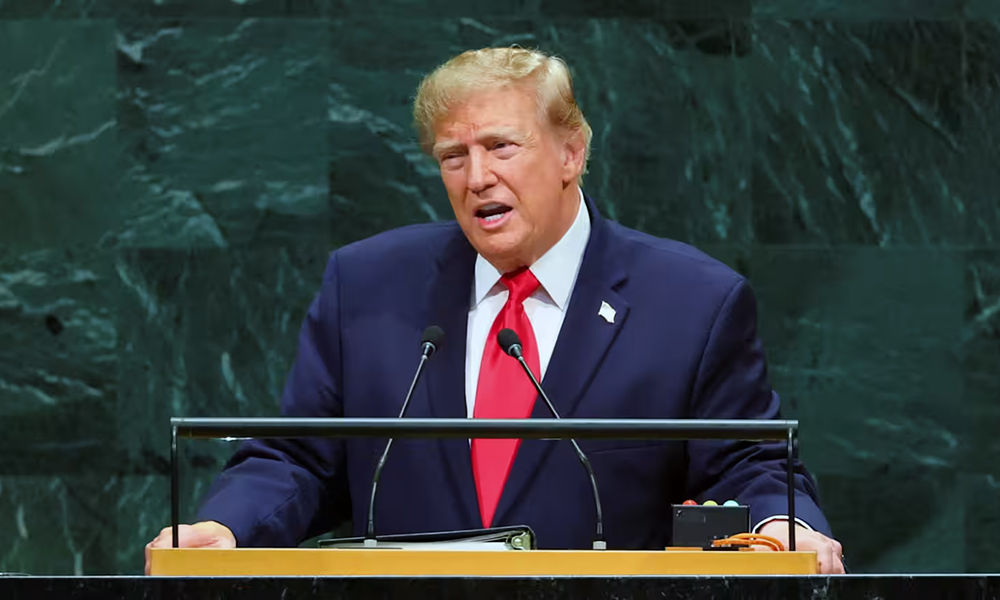
US President Donald Trump used his UN General Assembly speech on Tuesday to make the case for his war on Iran, arguing he has prevented Tehran from obtaining a nuclear weapon and warning that he could “annihilate the Islamic Republic” if no deal is reached to end the conflict, Reuters reported.
While predicting his administration would strike a peace deal with Iran following the November 3 US midterm elections, Trump called on other nations to join America in isolating Iran economically to force it to the negotiating table.
“I have a big decision to make. Will a deal be made with Iran that lets them rebuild and create a far greater country than it ever was before?” Trump said. “Or do I annihilate the Islamic Republic and do it quickly, never giving them a chance to kill and destroy people and countries again?”
He later told reporters at the United Nations that US officials had held a “very good” three-hour meeting with the Iranian delegation on Tuesday. He subsequently appeared to clarify that special envoys Steve Witkoff and Jared Kushner had met with mediators rather than Iranian officials directly.
“Steve and Jared had a very productive meeting today with mediators of Iran, merely mediators,” he told reporters at the start of a meeting with Gulf leaders at the UN. “Let’s see what happens with that.”
Since returning to office last year for a second term, Trump has sent waves through the global order, joining Israel to attack Iran, ordering a raid on Venezuela that captured the country’s leader, and threatening to seize Greenland.
In a 37-minute speech ahead of a whirlwind diplomatic schedule that included meetings with the leaders of Britain, Ukraine and Japan, Trump laid out his foreign policy vision, arguing that the Iran war had spared the world the threat of a nuclear-armed menace while asserting US dominance in the Western Hemisphere is essential to preventing crises from taking root.
“Our actions in Venezuela are proof that the United States will no longer permit threats to America to gain a foothold anywhere in the Western Hemisphere,” Trump said. “While others have spoken of peace, I have made peace.”
Outside the UN headquarters, dozens of anti-Iranian-government demonstrators gathered, a few of them holding up signs calling for democracy and decrying dictatorship.
Trump brushed aside suggestions that the midterm elections, in which his Republican Party risks losing control of Congress, could constrain his handling of the war. Some analysts have argued that a Democratic takeover of the legislature would weaken his leverage in the conflict.
“What they don’t realize is that I’m not running,” Trump said, referring to the leadership in Tehran. “I did that already, and won in a landslide. We won in a giant landslide, and I’ll be here for 2-1/2 years.”
Taking aim at US neighbors, Trump labeled Mexico “the epicenter of cartel violence,” urged its government to “reclaim control of its soil,” and said his administration was pursuing “a fundamental change in the situation in Cuba.”
Members of the Cuban delegation walked out of the hall as Trump referenced his pressure campaign against the country.
“It’s an absolutely failed state, it’s failing like never before, and it will fall,” said Trump.
Yet Trump’s appearance was less dramatic than in 2025, when he used a combative speech to chastise world leaders, warning that some countries were “going to hell,” and complained about UN facilities after being briefly stranded on a malfunctioning escalator and suffering an initial teleprompter failure, read the report.
Trump renewed his criticism of the UN, highlighting his efforts to cut its bureaucracy, but offered no fresh attacks or indications that the US would leave any additional UN agencies.
Trump spoke less than a week after a UN fact-finding mission said it had reasonable grounds to believe US forces committed war crimes in two strikes on Iran, including one that hit a primary school in the southern city of Minab.
He renewed his criticism of international bodies that could serve as a check on US power, singling out the International Criminal Court and declaring that US military personnel would not be subject to its authority.
“We will never allow US service members or anyone else to be investigated or given show trials by an anti-American tribunal with no jurisdiction over us,” he said.
Ahead of a UN Security Council meeting on AI and international security on Wednesday, Trump acknowledged the challenges of the new technology but said, “I’m not going to stifle growth of something that will be bigger than the Industrial Revolution.”
The speech kicked off a day of high-level diplomacy at the United Nations, where Trump was due to meet more than a dozen world leaders as wars in the Middle East and Ukraine continued to test his foreign policy agenda.
British Prime Minister Andy Burnham said he had “established a good connection” with Trump in their first-ever meeting, where they discussed trade, Ukraine and the status of the Falkland Islands. Trump called Burnham a “natural business person” after the meeting.
At the press-facing start of their talks, Japanese Prime Minister Sanae Takaichi said the meeting would demonstrate the strength of the US-Japan alliance amid a “severe security environment, including in Asia,” an apparent nod to China. Trump is due to meet Chinese President Xi Jinping in Washington later this week.
Trump lavished praise on Takaichi, calling her a friend and predicting she would “go down as one of the great prime ministers.”
On his meeting with Ukrainian President Volodymyr Zelenskiy, Trump told reporters that the two talked about finding a solution to end Russia’s war in Ukraine.
Business
Afghanistan, Turkmenistan agree to establish joint road transport commission
The sides also agreed to establish a joint commission to address road transport issues and improve coordination.
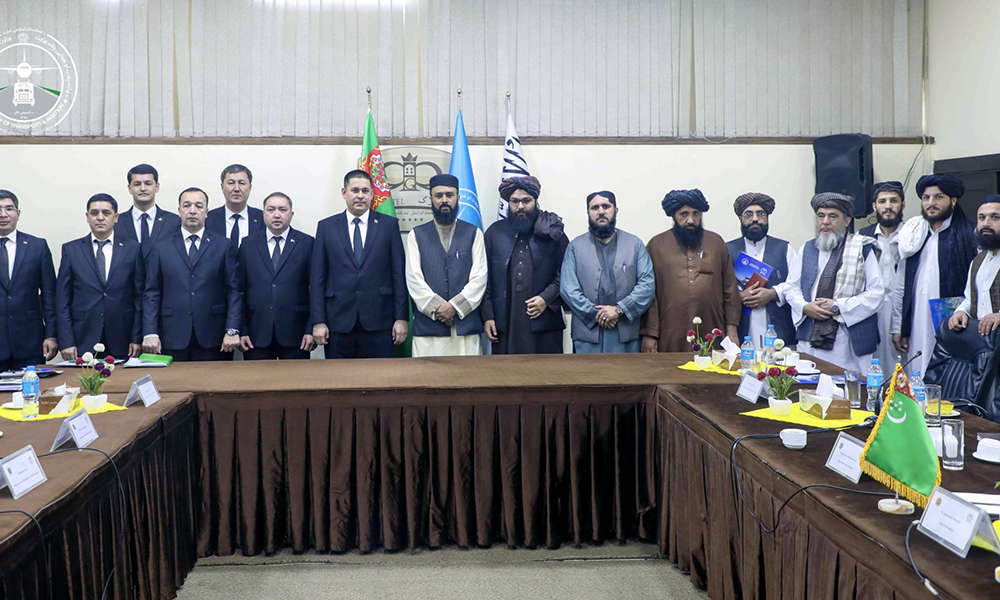
Afghanistan and Turkmenistan have agreed to establish a joint commission on road transport and facilitate transit between the two countries following two days of talks in Herat.
Afghanistan’s Ministry of Transport and Civil Aviation said the meeting brought together technical delegations from both countries to strengthen bilateral transport and transit cooperation.
The talks focused on easing visa procedures for Afghan and Turkmen drivers and traders, operationalising the Lapis Lazuli transit corridor and increasing the movement of transit vehicles between the two countries.
The sides also agreed to establish a joint commission to address road transport issues and improve coordination.
Representatives from Afghanistan’s ministries of foreign affairs, industry and commerce and the railway authority attended the talks, alongside the Ministry of Transport and Civil Aviation. Railway links, bilateral trade and wider transit cooperation were also discussed, with private-sector representatives expected to participate in future discussions.
The agreement comes as Turkmenistan works to strengthen its role as a regional transport and logistics hub, using its road, rail and Caspian Sea infrastructure to connect Central Asia with markets to the west and south.
A key part of that network is the International Seaport of Turkmenbashi, which links Turkmenistan with Azerbaijan and onward routes towards the South Caucasus and Europe.
Turkmenistan’s transport infrastructure also forms part of the wider Middle Corridor, or Trans-Caspian International Transport Route, connecting China and Central Asia with Azerbaijan, Georgia and Türkiye before reaching European markets.
For Afghanistan, the Lapis Lazuli Corridor is particularly important. It connects Afghanistan through Turkmenistan and across the Caspian Sea to Azerbaijan, Georgia and Türkiye, providing a potential route towards European markets.
Rail links such as the Herat-Torghundi line could further connect Afghanistan’s markets with Turkmenistan’s wider transport network.
The latest agreement puts road transport and transit facilitation at the centre of efforts by the two neighbours to expand trade and strengthen regional connectivity.


US and Iran hold first talks since June after Trump’s ‘annihilation’ threat

Trump warns in UN speech he could ‘annihilate’ Iran without peace deal

Afghanistan, Turkmenistan agree to establish joint road transport commission

India condemns Pakistani airstrikes on Afghanistan

ACL: Sorkh Poshan Khafi maintain top spot after fourth straight win

Saudi energy group signs major Afghanistan deals covering gas exploration and pipeline plans

ATN secures exclusive rights to broadcast T20I series in India across Afghanistan

Afghanistan squad announced for three-match T20I series against India

China evacuates thousands as Typhoon Narra brings torrential rain

Trump floats idea of renaming Atlantic or Pacific Ocean

Tahawol: Reactions to Pakistan’s attacks on Afghanistan discussed

Saar: Uncertain fate of Afghanistan’s seat at UN discussed

Tahawol: Uncertain future of Afghanistan’s permanent UN seat

Saar: Pakistan military strikes Afghan provinces discussed

Tahawol: Impact of middle East war on Afghanistan
-
 Latest News5 days ago
Afghanistan seeks stronger ties with Saudi Arabia, dialogue with Pakistan: Mujahid
-

 World4 days ago
US and Denmark reach deal on Greenland, Trump says
-
 Latest News3 days ago
Pakistan says Kohat attackers had roots in Afghanistan
-

 Latest News4 days ago
Afghanistan condemns mosque attack in Khyber Pakhtunkhwa
-
 Latest News3 days ago
OIC to hold Afghanistan Contact Group meeting on sidelines of UN General Assembly
-
 Latest News4 days ago
Afghan official meets Iranian oil minister to discuss energy cooperation
-

 Sport2 days ago
Afghanistan to face Japan and Nepal in Asian Games cricket group stage
-
 Regional5 days ago
At least 15 killed in blast near mosque in Khyber Pakhtunkhwa