
World
Trump administration defends killing American in Minneapolis, contradicts videos

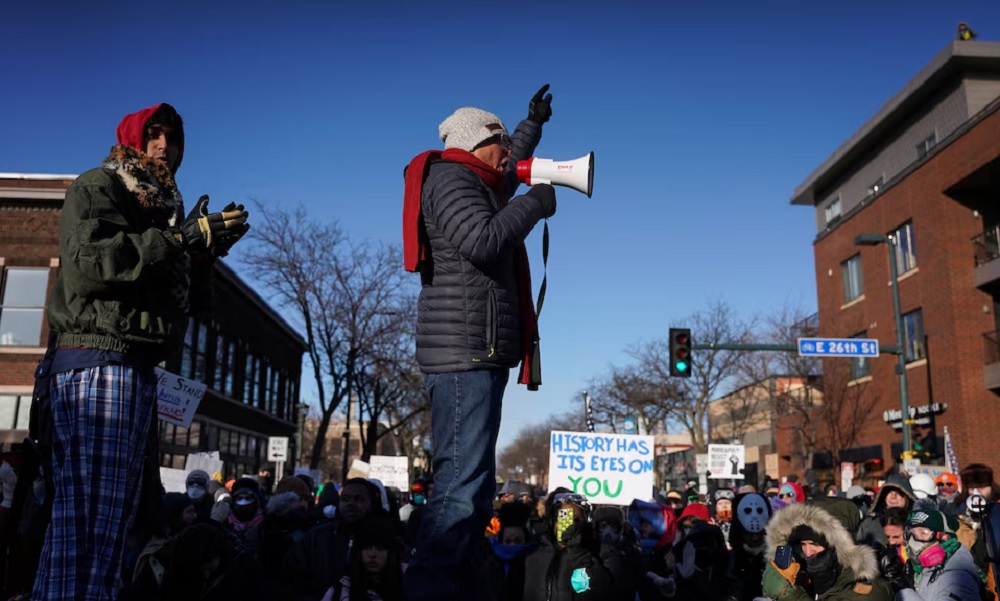
Officials in U.S. President Donald Trump’s administration defended on Sunday the fatal shooting of a U.S. citizen by immigration agents in Minneapolis, even as video evidence contradicted their version of events and as tensions grew between local law enforcement and federal officers.
As residents visited a makeshift shrine of flowers and candles in frigid temperatures and snow to mark Saturday’s fatal shooting of Alex Pretti, Trump administration officials stated that Pretti assaulted officers, compelling them to fire in self-defense. That account was at odds with videos recorded by bystanders, Reuters reported.
Pretti is the second American to be fatally shot by federal immigration officers this month in Minneapolis, where Trump, a Republican, has deployed thousands of armed and masked agents in a deportation effort with little precedent.
Minnesota Governor Tim Walz, a Democrat, again called on Trump to pull federal agents out of the state, which has asked a federal judge to restrain what it says are unconstitutional excesses in Trump’s surge.
“The victims are Border Patrol agents,” Gregory Bovino, a senior Border Patrol official, told CNN’s “State of the Union” program.
That official line, echoed by Homeland Security Secretary Kristi Noem and other members of the administration, drew outrage from local Democratic leaders and law enforcement and Democrats in the U.S. Congress, who pointed to the bystander videos that show all Pretti had in his hands was a cellphone before agents grappled him to the ground and ultimately shot him at close range.
Federal agents over the past few weeks have been met by countless angry residents protesting in the city’s icy streets, some of them blowing whistles. Thousands of people again filled the streets of Minneapolis on Sunday to protest against the surge in U.S. Immigration and Customs Enforcement agents, chanting and waving signs saying: “ICE OUT!”
HOLDING A PHONE, NOT A GUN
Videos of Saturday’s killing verified by Reuters show Pretti, 37, holding a phone in his hand, not a gun, as he tries to help other protesters who had been pushed to the ground by agents.
Pretti can be seen filming while a federal agent pushes away one woman and shoves another woman to the ground. Pretti moves between the agent and the women, then raises his left arm to shield himself as the agent pepper sprays him.
Several agents then take hold of Pretti, who struggles with them, and force him onto his hands and knees. As the agents pin Pretti down, someone shouts what sounds like a warning about a gun.
Video footage then appears to show one of the agents removing a handgun from Pretti’s waistband area and stepping away from the group with it.
Moments later, an officer points his gun at Pretti’s back and fires four shots in quick succession. More shots are heard as another agent appears to fire at Pretti.
Darius Reeves, the former head of ICE’s field office in Baltimore, told Reuters that federal agents’ apparent lack of communication was troubling. “It’s clear no one is communicating to me, based on my observation of how that team responded,” Reeves said.
Minnesota officials say Pretti had a valid state permit to carry a concealed gun in public, which the U.S. Supreme Court ruled was a constitutional right in 2022.
‘VIDEOS SPEAK FOR THEMSELVES’
Brian O’Hara, the Minneapolis police chief, told the CBS “Face the Nation” program that “the videos speak for themselves,” calling the Trump administration’s version of events deeply disturbing. He said he had seen no evidence that Pretti brandished a gun.
Tensions in the city were already running high after a federal immigration agent fatally shot U.S. citizen Renee Good on January 7 after approaching her in her parked vehicle. Trump officials said she was trying to ram the agent with the vehicle but other observers said bystander video suggests she was attempting to steer away from the officer who shot her.
State and local law enforcement are investigating whether the agent who killed Good broke any Minnesota laws. The U.S. Justice Department withdrew its cooperation from that probe, and at least a dozen federal prosecutors said they were resigning over the Justice Department’s handling of Good’s killing.
At Minnesota’s request, a federal judge issued a temporary order on Saturday night forbidding the Trump administration from destroying or altering evidence related to Pretti’s killing.
Chief executives of some of Minnesota’s largest companies, including Target, Cargill and Best Buy, published a letter calling for the “immediate de-escalation of tensions and for state, local and federal officials to work together to find real solutions.”
In separate statements, former U.S. Presidents Barack Obama and Bill Clinton decried the killings of Good and Pretti, with Clinton accusing the Trump administration of lying and Obama saying American values are under assault.
“This has to stop,” Barack and Michelle Obama said.
Pretti worked as an intensive care nurse at a Veterans Affairs hospital. On Sunday, more than 200 healthcare workers gathered at the site of his killing, leaving flowers and other tributes. One woman in medical scrubs, when asked what brought her out, said she had worked with Pretti and began to sob.
“He was caring and he was kind,” she said, asking not to be named for fear of retribution from the federal government. “None of this makes any sense.”
At a Sunday press conference, Minnesota Attorney General Keith Ellison recounted a story that he said was from his 31-year-old son, a nurse in Minnesota’s healthcare system.
“When he was at work today and last night, he said, ‘Look, our colleagues were crying and in tears, and they took this hit to one of their own very personally,'” Ellison told reporters.
Trump has defended the operations as necessary to reduce crime and enforce immigration laws.







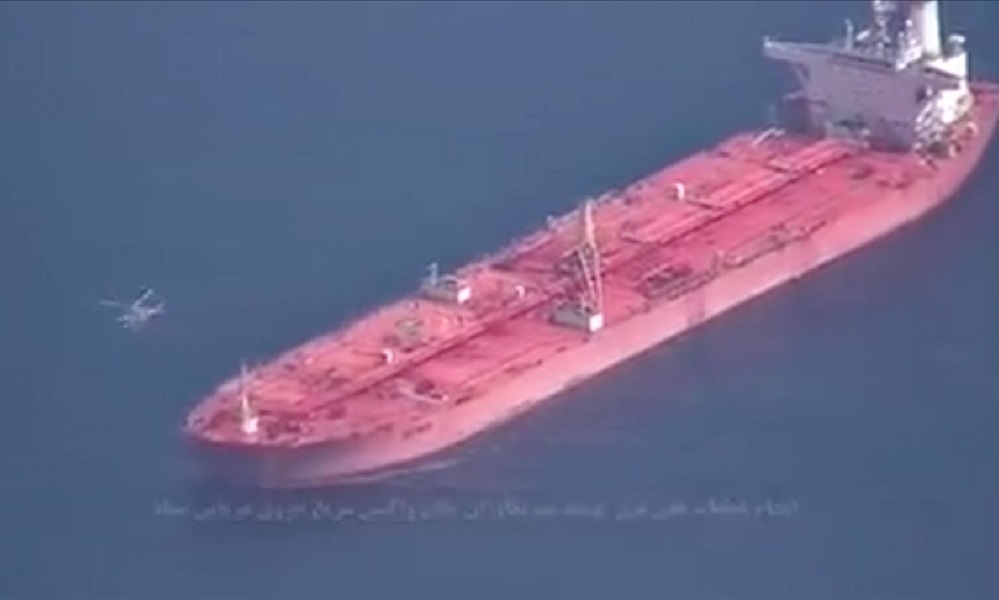
Iran’s Islamic Revolutionary Guard Corps (IRGC) said Thursday that it carried out an attack on an oil tanker linked to a U.S. company in the Strait of Hormuz after the vessel allegedly ignored repeated warnings from Iranian authorities.
In a statement, the IRGC said the tanker Safesea Vishnu, which it described as owned by a U.S. company and sailing under the flag of the Marshall Islands, was struck north of the strategic waterway early in the morning.
Iranian officials claimed the ship failed to comply with maritime instructions issued by Iranian forces operating in the area.
The IRGC warned that shipping traffic in the Persian Gulf and the Strait of Hormuz faces increasing risks, placing responsibility for the heightened tensions on the United States. The IRGC urged commercial vessels transiting the region to follow Iranian maritime regulations in order to avoid potential attacks.
The incident comes amid a broader escalation of hostilities between Iran, the United States, and Israel.
On March 2, Tehran announced it was closing the Strait of Hormuz in response to ongoing U.S. and Israeli military operations against Iran. The strait is one of the world’s most critical energy corridors, carrying a significant share of global oil shipments.
Since the announcement, shipping and insurance costs in the region have surged, while global oil prices have risen amid fears of supply disruptions. Analysts warn that prolonged instability in the waterway could have major economic consequences worldwide.
The reported attack also follows continued U.S. and Israeli airstrikes on Iranian targets that began on February 28. Iranian authorities say the strikes have killed around 1,300 people and wounded more than 10,000 others.
In response, Tehran has launched drone and missile attacks targeting Israeli territory as well as locations in Iraq and several Gulf states that host U.S. military facilities, raising concerns about a widening regional conflict and threats to international shipping routes.
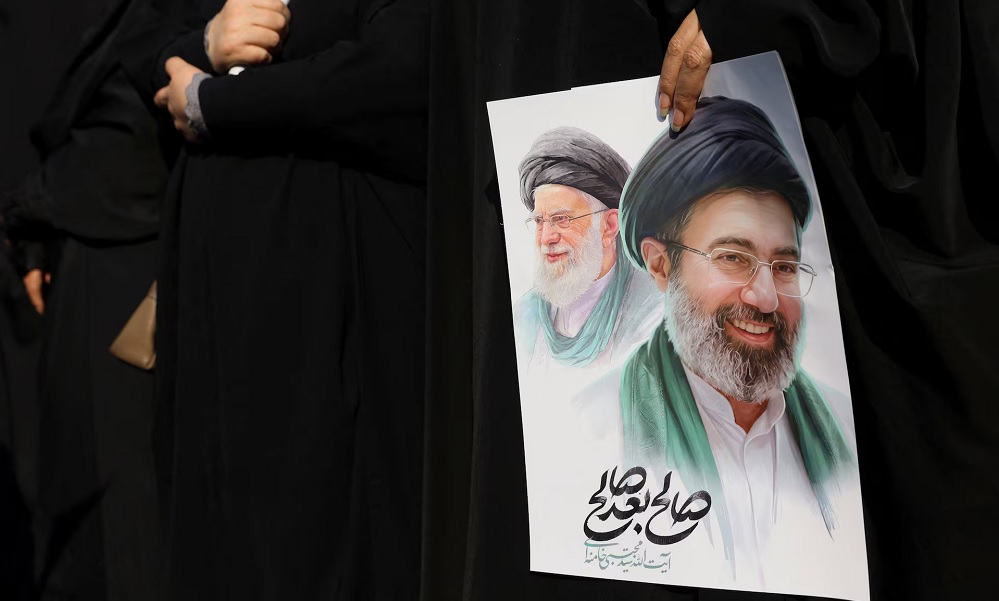
U.S. intelligence indicates that Iran’s leadership is still largely intact and is not at risk of collapse any time soon after nearly two weeks of relentless U.S. and Israeli bombardment, Reuters reported citing three sources familiar with the matter.
A “multitude” of intelligence reports provide “consistent analysis that the regime is not in danger” of collapse and “retains control of the Iranian public,” said one of the sources, all of whom were granted anonymity to discuss U.S. intelligence findings.
The latest report was completed within the last few days, the source said.
With political pressure building over soaring oil costs, President Donald Trump has suggested he will end the biggest U.S. military operation since 2003 “soon.” But finding an acceptable end to the war could be difficult if Iran’s hardline leaders remain firmly entrenched.
The intelligence reporting underscores the cohesion of Iran’s clerical leadership despite the killing of Supreme Leader Ayatollah Ali Khamenei on February 28, the first day of the U.S. and Israeli strikes.
Israeli officials in closed discussions also have acknowledged there is no certainty the war will lead to the clerical government’s collapse, a senior Israeli official told Reuters.
The sources stressed that the situation on the ground is fluid and that the dynamics inside Iran could change.
The Office of the Director of National Intelligence and the Central Intelligence Agency declined to comment.
The White House did not immediately respond to a request for comment.
SHIFTING OBJECTIVES
Since launching their war, the U.S. and Israel have struck a range of Iranian targets, including air defenses, nuclear sites, and members of the senior leadership.
The Trump administration has given varying reasons for the war. In announcing the beginning of the U.S. operation, Trump urged Iranians to “take over your government,” but top aides have since denied that the objective was to oust Iran’s leadership.
In addition to Khamenei, the strikes have killed dozens of senior officials and some of the highest-ranking commanders in the Islamic Revolutionary Guard Corps (IRGC), an elite paramilitary force that controls large parts of the economy.
Still, the U.S. intelligence reports indicate that the IRGC and the interim leaders who assumed power after Khamenei’s death retain control of the country.
The Assembly of Experts, a group of senior Shiite clerics, earlier this week declared Khamenei’s son, Mojtaba, the new supreme leader.
Israel has no intention of allowing any remnants of the former government to stay intact, said a fourth source familiar with the matter.
It is unclear how the current U.S.-Israeli military campaign would topple the government.
It would likely require a ground offensive that would allow people inside Iran to safely protest in the streets, said the source.
The Trump administration has not ruled out sending U.S. troops into Iran.
INTELLIGENCE SUGGESTS KURDS LACK FIREPOWER TO FIGHT IRAN
Reuters reported last week that Iranian Kurdish militias based in neighboring Iraq consulted with the U.S. about how and whether to attack Iran’s security forces in the western part of the country.
Such an incursion could put pressure on Iranian security services there, allowing Iranians to rise up against the government.
Abdullah Mohtadi, the head of the Komala Party of Iranian Kurdistan, part of a six-party coalition of Iranian Kurdish parties, said in an interview on Wednesday that the parties are highly organized inside Iran and that “tens of thousands of young people are ready to take up arms” against the government if they receive U.S. support.
Mohtadi said he has received reports from inside Iranian Kurdistan that IRGC units and other security forces have abandoned bases and barracks out of fear of U.S. and Israeli strikes.
“We have been witnessing tangible signs of weakness in Kurdish areas,” he said.
But recent U.S. intelligence reports have cast doubt on the ability of the Iranian Kurdish groups to sustain a fight against Iranian security services, according to two sources familiar with those assessments.
The intelligence indicates that the groups lack the firepower and numbers, they said.
The Kurdish Regional Government, which governs the autonomous region of Iraqi Kurdistan where the Iranian Kurdish groups are based, did not immediately respond to a request for comment.
The Iranian Kurdish groups have in recent days asked senior officials in Washington and U.S. lawmakers for the U.S. to provide them with weapons and armored vehicles, another person familiar with the matter said.
But Trump said on Saturday that he had ruled out having the Iranian Kurdish groups go into Iran.
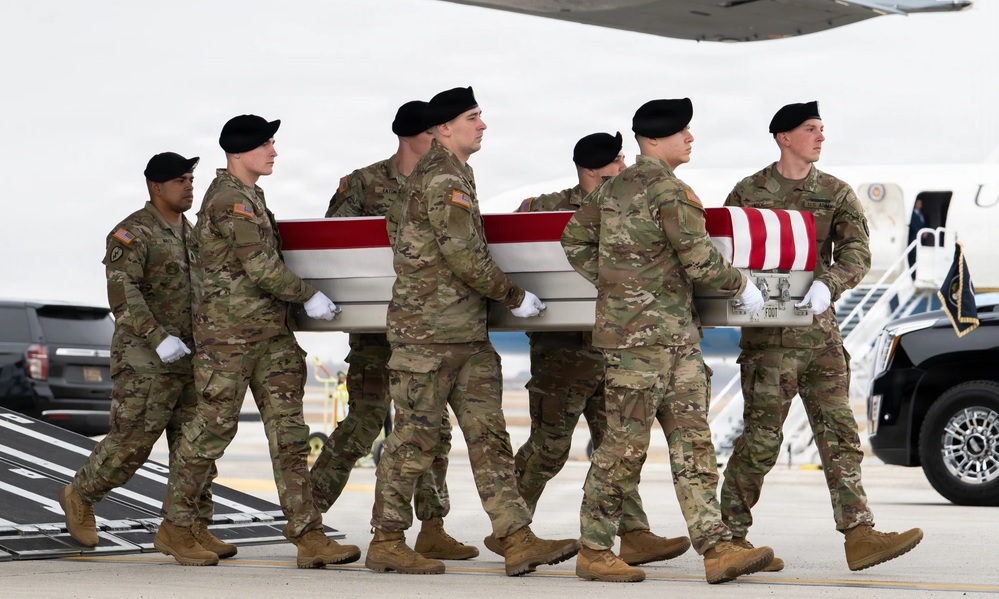
As many as 150 U.S. troops have been wounded in the 10-day-old war with Iran, Reuters reported citing two people familiar with the matter.
The casualty figure has not been previously reported. Prior to Reuters’ publication of the figure, the Pentagon had only disclosed eight U.S. personnel seriously injured.
In a statement after Reuters published its report, the Pentagon estimated the figure to be approximately 140 wounded and said the vast majority of them were minor.
“Since the start of Operation Epic Fury, approximately 140 U.S. service members have been wounded over 10 days of sustained attacks,” said chief Pentagon spokesperson Sean Parnell.
He said 108 of the wounded service members had already returned to duty.
Parnell said the eight seriously wounded service members were receiving the highest level of medical care.
Reuters could not determine the types of injuries and whether they include traumatic brain injuries, which are common after exposure to blasts.
Iran has launched retaliatory strikes against U.S. military bases since the start of the conflict on Feb. 28. It has also struck diplomatic missions in Arab Gulf states as well as hotels and airports and damaged oil infrastructure.
The Pentagon says the number of Iranian strikes has fallen sharply since the start of the war, as the U.S. military bombs Iran’s weapons inventories and targets Iran’s more limited number of missile launchers.
Asked if Iran was a stronger adversary than he expected when the U.S. military drew up its war plans, General Dan Caine, chairman of the Joint Chiefs of Staff, told reporters earlier on Tuesday that the fight was not harder than expected.
“I think they’re fighting, and I respect that, but I don’t think they are more formidable than what we thought,” Caine told a Pentagon briefing.


Tahawol: Discussion on intensification of attacks in Middle East

Saar: Ongoing US-Israeli strikes on Iran discussed

Mojtaba Khamenei: Iran’s neighbors must close all U.S. bases

Afghanistan’s national buzkashi team set to compete in Kazakhstan

Iran claims it targeted a US-linked oil tanker in Strait of Hormuz

Pakistani military jet downed in Afghanistan’s Jalalabad, pilot captured alive

Afghan Air Force conducts airstrikes in Islamabad, other cities

IEA releases three Pakistani soldiers to mark Ramadan

Afghanistan’s Chief of Armed Forces underscores readiness and equipment for national defense

Afghanistan welcomes investment and technology partnerships with India
Tahawol: Discussion on intensification of attacks in Middle East
Saar: Ongoing US-Israeli strikes on Iran discussed

Tahawol: Regional impacts of Middle East crisis reviewed

Saar: Diplomatic efforts to ease Kabul-Islamabad tensions discussed

Tahawol: Demands to end Afghanistan–Pakistan conflict reviewed
-
 Latest News5 days ago
International Women’s Day: Khalilzad urges IEA to allow girls’ education
-

 Latest News4 days ago
Afghanistan’s Virtue Ministry: Over 3,400 women’s rights complaints addressed in 10 months
-
 Regional4 days ago
Majority consensus reached on Iran’s next supreme leader
-
 Latest News5 days ago
Turkey stresses importance of peace and stability in Afghanistan
-
 Regional5 days ago
Saudi has told Iran not to attack it, warns of possible retaliation – Reuters
-
 Latest News4 days ago
American billionaire Tom Pritzker describes Afghanistan trip in email to Epstein
-

 Latest News5 days ago
Mastermind of 2025 bank attack in Afghanistan killed in Peshawar
-
 Latest News4 days ago
Muttaqi and Chinese envoy discuss regional developments