
Latest News
Trump administration weighs adding 36 countries to travel ban, memo says
Other reasons for concern were the nationals of the country were involved in acts of terrorism in the United States, or antisemitic and anti-American activity.


U.S. President Donald Trump’s administration is considering significantly expanding its travel restrictions by potentially banning citizens of 36 additional countries from entering the United States, according to an internal State Department cable seen by Reuters.
Earlier this month, the Republican president signed a proclamation that banned the entry of citizens from 12 countries, saying the move was needed to protect the United States against “foreign terrorists” and other national security threats.
The directive was part of an immigration crackdown Trump launched this year at the start of his second term, which has included the deportation to El Salvador of hundreds of Venezuelans suspected of being gang members, as well as efforts to deny enrollments of some foreign students from U.S. universities and deport others.
In an internal diplomatic cable signed by U.S. Secretary of State Marco Rubio, the State Department outlined a dozen concerns about the countries in question and sought corrective action, read the report.
“The Department has identified 36 countries of concern that might be recommended for full or partial suspension of entry if they do not meet established benchmarks and requirements within 60 days,” the cable sent out over the weekend said.
The cable was first reported by the Washington Post.
Among the concerns the State Department raised was the lack of a competent or cooperative government by some of the countries mentioned to produce reliable identity documents, the cable said. Another was “questionable security” of that country’s passport.
Some countries, the cable said, were not cooperative in facilitating the removal of its nationals from the United States who were ordered to be removed. Some countries were overstaying the U.S. visas their citizens were being granted, Reuters reported.
Other reasons for concern were the nationals of the country were involved in acts of terrorism in the United States, or antisemitic and anti-American activity.
The cable noted that not all of these concerns pertained to every country listed.
“We are constantly reevaluating policies to ensure the safety of Americans and that foreign nationals follow our laws,” a senior State Department official said, declining to comment on specific internal deliberations and communications.
“The Department of State is committed to protecting our nation and its citizens by upholding the highest standards of national security and public safety through our visa process,” the official said.
The countries that could face a full or a partial ban if they do not address these concerns within the next 60 days are: Angola, Antigua and Barbuda, Benin, Bhutan, Burkina Faso, Cabo Verde, Cambodia, Cameroon, Cote D’Ivoire, Democratic Republic of Congo, Djibouti, Dominica, Ethiopia, Egypt, Gabon, The Gambia, Ghana, Kyrgyzstan, Liberia, Malawi, Mauritania, Niger, Nigeria, Saint Kitts and Nevis, Saint Lucia, Sao Tome and Principe, Senegal, South Sudan, Syria, Tanzania, Tonga, Tuvalu, Uganda, Vanuatu, Zambia, and Zimbabwe.
That would be a significant expansion of the ban that came into effect earlier this month. The countries affected were Afghanistan, Myanmar, Chad, Congo Republic, Equatorial Guinea, Eritrea, Haiti, Iran, Libya, Somalia, Sudan and Yemen, read the report.
The entry of people from seven other countries – Burundi, Cuba, Laos, Sierra Leone, Togo, Turkmenistan and Venezuela – has also been partially restricted.
During his first in office, Trump announced a ban on travelers from seven Muslim-majority nations, a policy that went through several iterations before it was upheld by the Supreme Court in 2018.






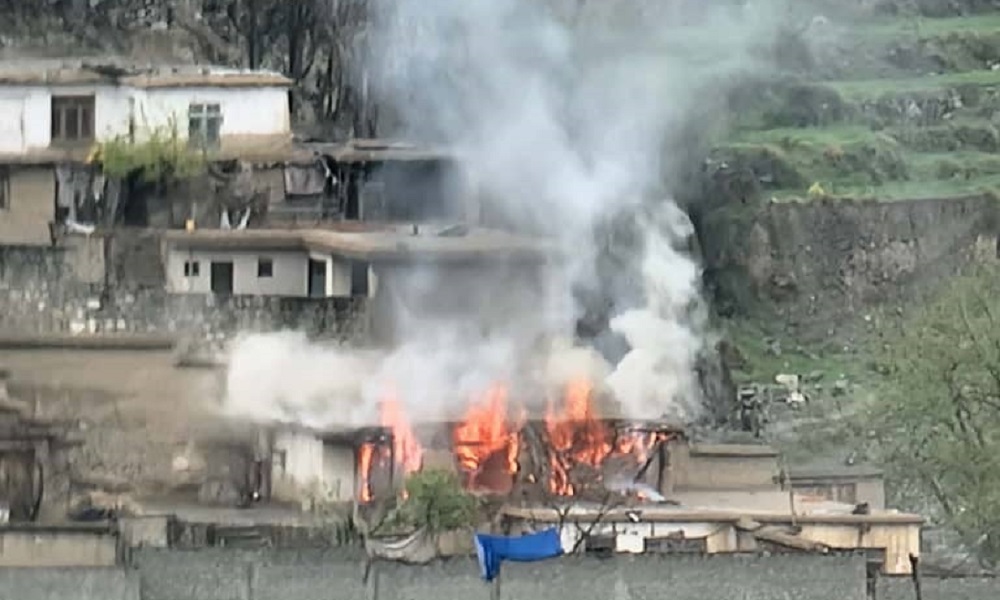
Farid Dehqan, spokesperson for the Khas Kunar police command, said that rocket attacks by the Pakistani military regime are still ongoing in the province.
These attacks come despite earlier announcements by the Pakistani military of a temporary ceasefire for Eid.
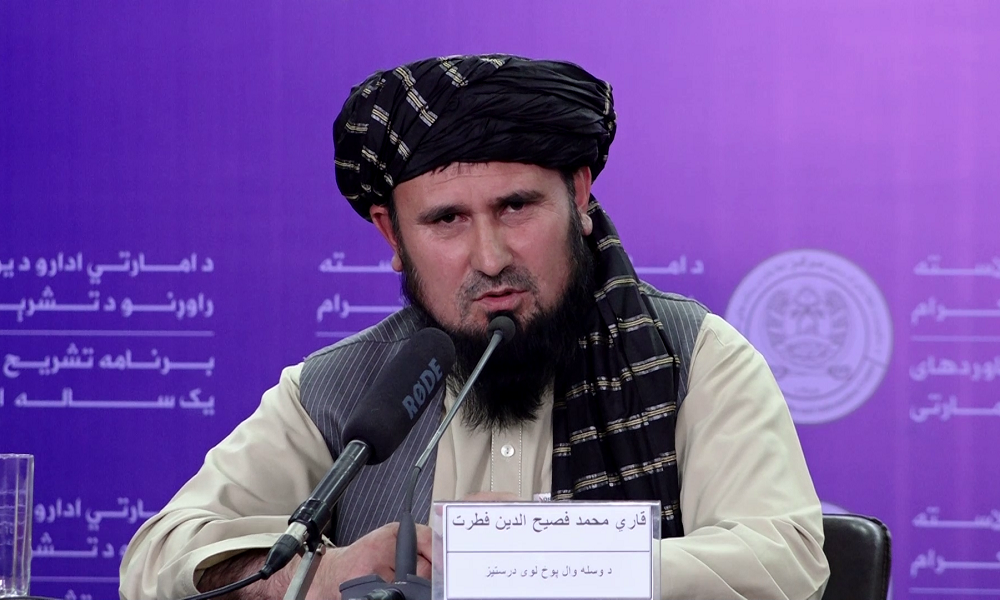
Afghanistan’s Chief of Armed Forces, Fasihuddin Fitrat, said in his Eid message that Pakistan’s military regime has violated the ceasefire along the Durand line.
According to the Eid message released by the Ministry of Defense, several civilians were killed in attacks carried out by Pakistani forces in border areas.
Fitrat added that the continuation of Pakistan’s attacks despite the ceasefire “demonstrates a lack of commitment and deception” on the part of the country.
He stressed that the Islamic Emirate has refrained from retaliatory action in order to prevent further deterioration of the situation and has remained committed to the ceasefire.
However, he warned that if such attacks are repeated, “the ceasefire will become meaningless,” and the Islamic Emirate will deliver a “decisive response” to Pakistan’s actions.
It is worth noting that the Islamic Emirate and Pakistan reached a temporary ceasefire on the occasion of Eid al-Fitr through mediation by Qatar, Turkey, and Saudi Arabia.
Latest News
Security Sources: Pakistani military shelling in Kunar and Nuristan leaves female doctor dead
The sources said the vehicle was struck by gunfire and subsequently fell into the Kunar River.
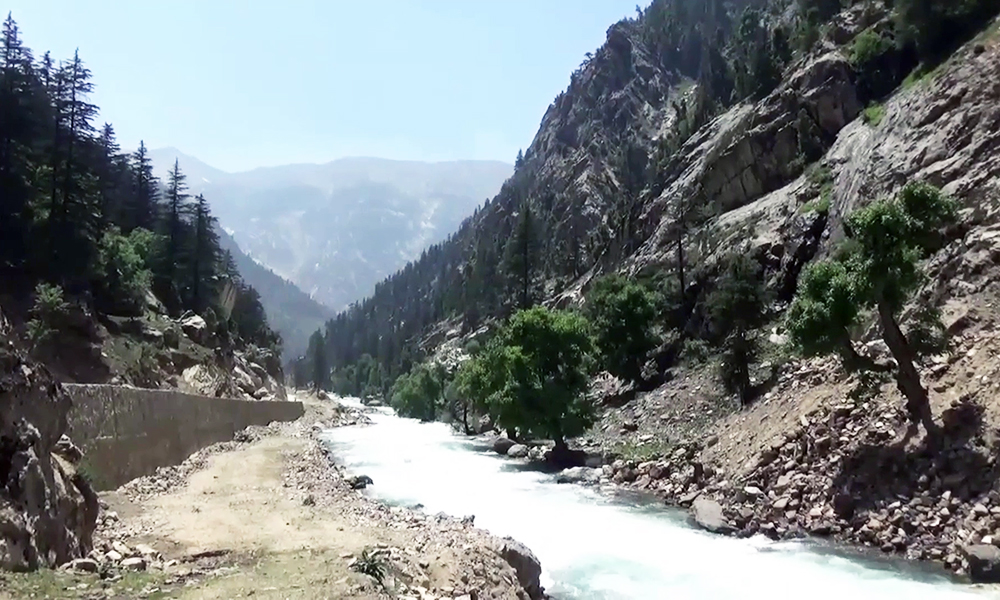
Security sources report that several security incidents in the eastern provinces of Kunar and Nuristan have resulted in the death of a female doctor, injuries to others, and several people reported missing.
According to the sources, early Thursday morning at around 9:30 a.m., Pakistani military forces opened fire on a Toyota vehicle in the Dokalam Baghcha area of Nari district in Kunar province.
The sources said the vehicle was struck by gunfire and subsequently fell into the Kunar River. As a result of the incident, a female doctor was killed and another person was injured. Five other individuals who were reportedly in the vehicle remain missing, the sources added.
In a separate incident, security sources stated that around 11:00 a.m. in the Seno area of Shultan district, Kunar province, Pakistani forces carried out artillery shelling that left one person injured. The injured individual was transferred to the provincial hospital for medical treatment.
Meanwhile, security sources in Nuristan say that despite Pakistan’s announced ceasefire, the main road between Kamdesh and Barg-e-Matal districts has been completely closed to traffic since Thursday morning.
According to the sources, the closure of the route has caused serious difficulties for local residents, preventing any movement in the area. The sources also claim that Pakistani military posts are located within close proximity of the road and have opened fire on people attempting to pass through the area.


Pakistan’s rocket attacks still ongoing on Nari district, Kunar

FIFA Council highlights football’s role in peace, announces record investments

FIFA sanctions Israeli Football Association over discrimination violations

IEA defense ministry accuses Pakistan of ceasefire violations

Israel launches new wave of attacks on Iran as regional crisis deepens

Pakistani military jet downed in Afghanistan’s Jalalabad, pilot captured alive

Afghan Air Force conducts airstrikes in Islamabad, other cities

Afghanistan’s Chief of Armed Forces underscores readiness and equipment for national defense

Afghanistan welcomes investment and technology partnerships with India

Prominent Muslim scholar issues fatwa calling for Afghanistan-Pakistan ceasefire

Tahawol: Temporary ceasefire draws broad support

Saar: Emphasis on resolving conflicts through diplomacy

Tahawol: Global reactions to Pakistan’s recent attacks discussed

Saar: Consequences of Pakistani airstrikes on Afghans discussed

Tahawol: Pakistan’s new attacks on Kabul hospital discussed
-

 Latest News4 days ago
IEA Supreme Leader issues Eid-ul-Fitr message urging unity and support for Islamic system
-
 Latest News5 days ago
Afghan airstrike targets a military camp in South Waziristan
-

 Business4 days ago
Turkmenistan, Afghanistan discuss steps to speed up land acquisition for TAPI pipeline
-

 Sport5 days ago
IPL 2026 kicks off in under two weeks; Afghan players set to shine
-

 Latest News2 days ago
IEA announces temporary pause in defensive operations against Pakistan for Eid
-

 Sport3 days ago
Afghanistan national buzkashi team defeats Hungary 14–0
-
 Latest News5 days ago
China offers to mediate between Kabul and Islamabad
-

 Latest News4 days ago
CAIR-Texas calls for probe after Afghan refugee dies in ICE custody