
Business
UAE set to run Kabul airport in deal with IEA: sources

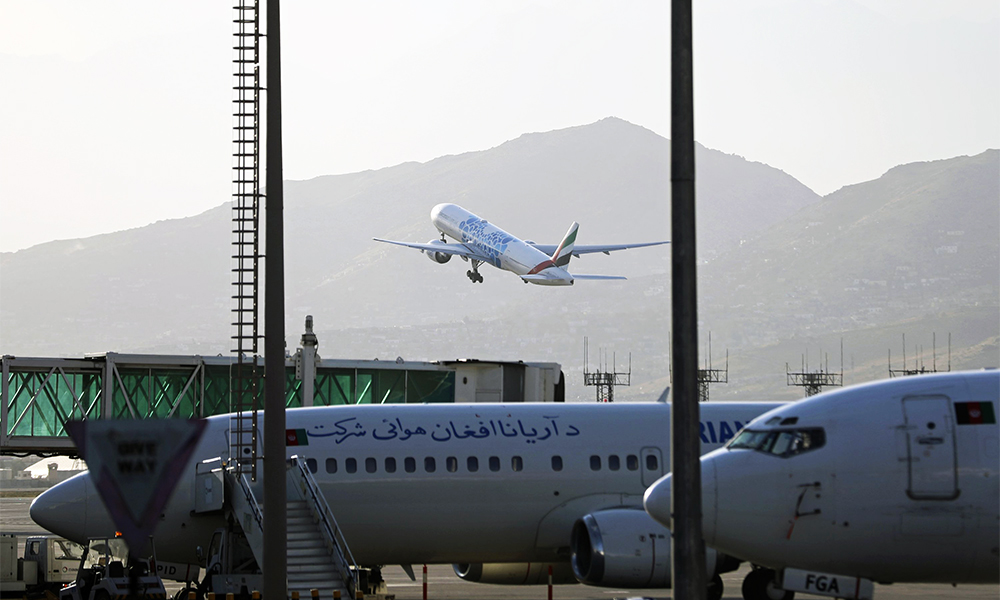
The Islamic Emirate of Afghanistan (IEA), and the United Arab Emirates are poised to strike a deal for the Gulf nation to run Kabul airport and several others in Afghanistan that could be announced within weeks, according to sources familiar with the negotiations, Reuters reported.
According to the report the IEA, whose government remains an international pariah without formal recognition, have courted regional powers, including Qatar and Turkey, to operate Kabul airport, landlocked Afghanistan’s main air link with the world, and others.
But after months of back-and-forth talks, and at one point raising the possibility of a joint UAE-Turkey-Qatar deal, the IEA is set to hand the operations in their entirety to the UAE, who had previously run Afghan airports, the sources said.
An agreement would help the IEA ease their isolation from the outside world as they govern an impoverished country beset by drought, widespread hunger and economic crisis. It would also hand Abu Dhabi a win in its diplomatic tussle with Qatar for influence, Reuter’s story read.
Under the deal with the UAE, Afghans will be employed at the airports, including in security roles, crucial for the IEA who want toshow they can create jobs but also because they staunchly oppose the presence of foreign forces, sources said.
According to Reuters an Emirati state-linked contractor had been contracted to provide security services, which should be announced soon, while negotiations over airspace management are ongoing, they said.
The IEA in May awarded the ground services contract to UAE state-linked GAAC, which was involved in running security and ground handling services at Afghan airports before the IEA takeover, shortly after IEA officials had visited Abu Dhabi.
Meanwhile, Qatar and Turkey’s joint negotiations with the IEA broke down around the same time, sources said.
Emirati officials had no immediate comment when contacted by Reuters. GAAC did not respond to a request for comment.
An IEA transport ministry spokesman confirmed an aviation security contract had already been signed with the UAE but said the air traffic contract was not finalised or confirmed yet, Reuters reported.
There is little direct commercial benefit in the airport operations, but Kabul airport would provide a key source of intelligence on movements in and out of the country, Western officials say.
The sources said UAE airlines, which have not flown to Afghanistan since the IEA takeover last year, were expected to resume flights to Kabul and possibly other Afghan airports after the deal was finalized, read the report.
Other airlines, who too have stayed away, could also again operate flights if the UAE deal can address substantial security concerns, including the threat posed by the Afghan branch of the Islamic State whose targets have included the IEA.
In the months leading up to the ground services being awarded to the UAE, the IEA repeatedly made unexplained changes to its team negotiating with Qatar and Turkey, the sources said.
Then the IEA sought to alter agreed terms by upping airport fees and taxes and weaken Qatar and Turkey’s control over revenue collection, they added.
A Qatari official had no immediate comment when contacted by Reuters. A Turkish official, speaking on condition of anonymity, confirmed talks with the IEA had stopped “some time ago”.
The UAE’S efforts are part of a quiet but assertive push by Abu Dhabi to expand longstanding ties with the IEA that have included government aid and diplomatic efforts in the months since the IEA took power in August.
Western officials say Abu Dhabi sees Afghanistan, which shares a large land border with UAE’s Gulf neighbour Iran, as part of its wider backyard and so believes it has legitimate interests in the country’s political and economic stability, Reuters reported.
But those officials also say the UAE is keen to counter the influence in Afghanistan of Qatar, a Gulf state lauded by Western nations for serving as gateway to the IEA but a rival of Abu Dhabi’s in a contest for regional influence.
Western officials worry that rivalry is now playing out in Afghanistan. The UAE, along with Saudi Arabia, Egypt and Bahrain, cut ties with Qatar from 2017 until 2021 as part of a long-running, bitter dispute between the two rich Gulf states that was largely resolved last year.
Qatar has hosted the IEA’s political office in Doha, long one of few places to meet the IEA and where the United States negotiated with the IEA to withdraw from Afghanistan.
Qatar also helped run Kabul’s Hamid Karzai International Airport after the collapse of the Western-backed government last year. Its state-owned Qatar Airways operated charter flights and Qatari special forces provided security on the ground.
But Qatar’s relationship with the IEA now appears strained, according to Western officials who say the IEA have become wary of being too dependent on any one nation.




Business
Afghani strengthens nearly 10% against US dollar amid banking sector reforms
The bank said it has expanded oversight of financial institutions and private lenders, improving transparency and promoting more consistent standards across the sector.
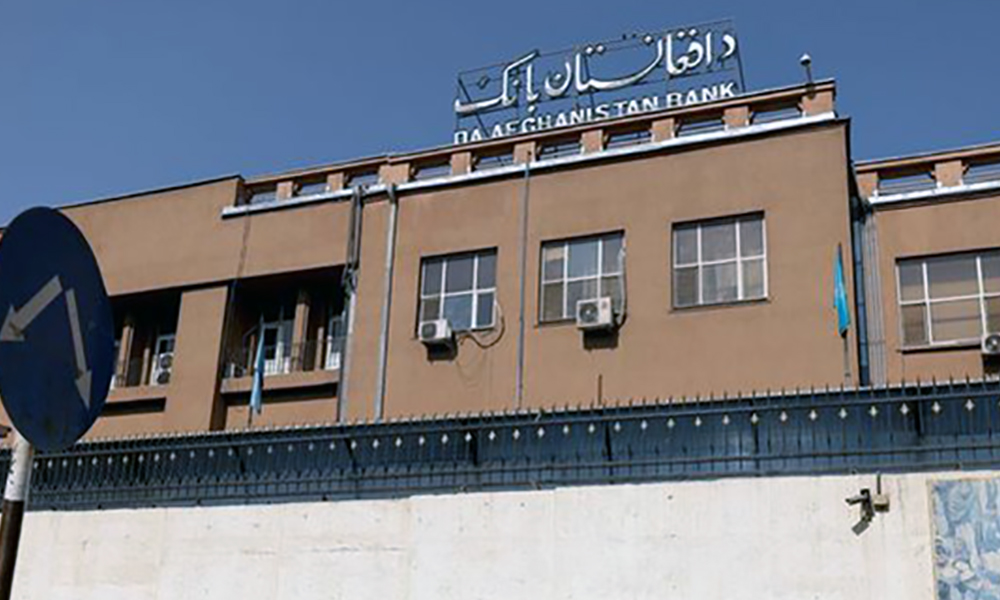
Afghanistan’s central bank, Da Afghanistan Bank, says the national currency has appreciated by 9.93% against the US dollar during the year 1404, citing steady progress in the country’s financial and banking systems.
Officials attributed the gains to cautious monetary policies that have helped stabilise the Afghani against major global currencies while also boosting its value against the dollar.
The bank said it has expanded oversight of financial institutions and private lenders, improving transparency and promoting more consistent standards across the sector.
As part of efforts to better manage liquidity, authorities also collected and destroyed worn-out banknotes in circulation. At the same time, officials reported growth in electronic banking, with digital payment usage rising in recent months.
Central bank spokesperson Haseebullah Noori said initiatives are underway to broaden access to banking services nationwide, including the wider rollout of Islamic banking options.
Analysts welcomed the stabilisation efforts but stressed the need to address ongoing challenges facing domestic banks, including the impact of international financial sanctions on Afghanistan.
They added that expanding Islamic banking could help draw more savings into the formal financial system, noting that a significant share of personal wealth remains outside banks. Bringing those funds into the sector, they said, could inject billions of Afghanis into the economy and further support financial stability.
Business
Uzbekistan delivers over 290 tons of aid to Afghanistan
The assistance, provided ahead of Eid al-Fitr, is intended to support vulnerable communities while reinforcing ties between the neighboring countries.
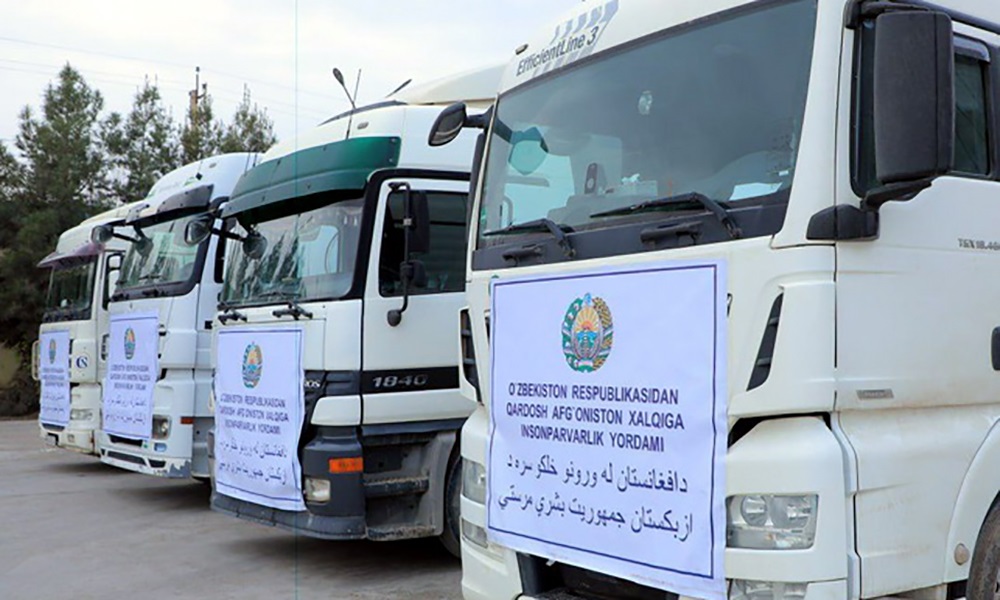
Uzbekistan has delivered more than 290 tons of humanitarian aid to Afghanistan, according to the country’s Ministry of Foreign Affairs.
The assistance, provided ahead of Eid al-Fitr, is intended to support vulnerable communities while reinforcing ties between the neighboring countries.
The shipment includes essential food supplies such as flour, rice, wheat, vegetable oil, instant meals, pasta, and confectionery. An official handover ceremony was held in the border town of Hairatan.
Local officials, including Balkh province representatives and authorities from Hairatan, expressed appreciation for the continued support, acknowledging Uzbekistan’s efforts to assist the Afghan people.
Among those present at the ceremony were Uzbekistan’s Ambassador to Afghanistan, Oybek Usmanov, and Surkhandarya regional governor Ulugbek Kosimov.
The aid delivery underscores Uzbekistan’s ongoing humanitarian engagement and its broader efforts to promote regional cooperation and stability.
Business
Turkmenistan, Afghanistan discuss steps to speed up land acquisition for TAPI pipeline
By the end of the year, the vessels are expected to deliver about 11,700 pipes as part of preparations for construction of the TAPI pipeline.
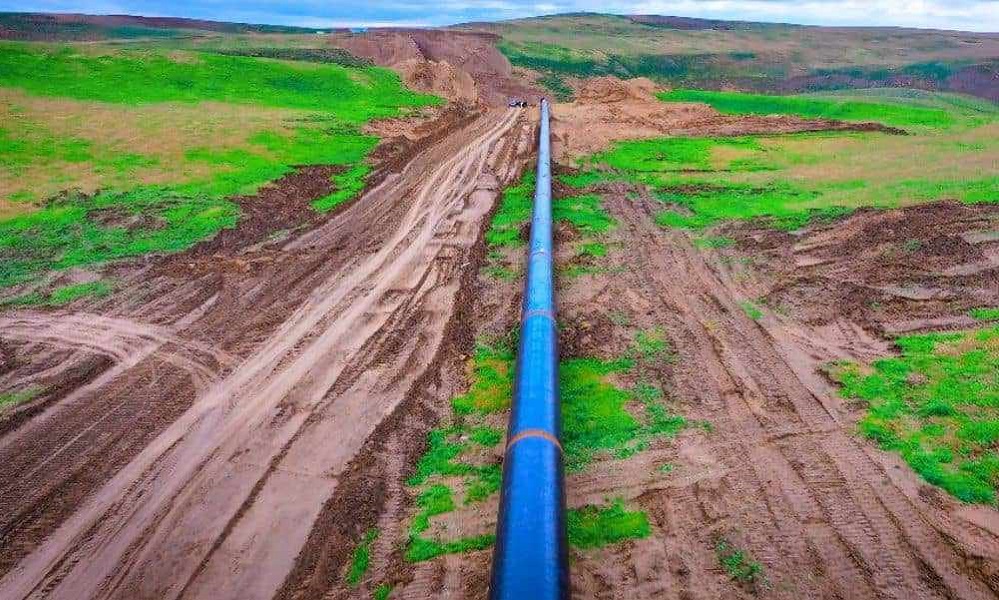
Officials from Turkmenistan and Afghanistan have held talks aimed at accelerating land acquisition for the long-planned Turkmenistan-Afghanistan-Pakistan-India (TAPI) pipeline, according to Afghanistan’s Ministry of Agriculture, Irrigation, and Livestock.
The issue was discussed during a meeting between TAPI project head Murad Amanov, Afghanistan’s acting Minister of Agriculture, Irrigation, and Livestock Mullah Attaullah Omari, and Turkmenistan’s ambassador to Afghanistan Hoja Ovezov.
Amanov briefed Afghan officials on recent progress and emphasized the need to accelerate procedures related to land acquisition and the determination of land prices in line with the framework agreement signed by the four participating countries.
Meanwhile, vessels operated by the Azerbaijan Caspian Shipping Company (ASCO), part of AZCON Holding, have begun transporting pipes for the project. The shipments are being carried from the Port of Baku to the Turkmenbashi International Seaport.
By the end of the year, the vessels are expected to deliver about 11,700 pipes as part of preparations for construction of the TAPI pipeline.


Islamic Emirate releases American prisoner Dennis Coyle

UK announces additional £3 million in aid for vulnerable people in Afghanistan

Around 2.3 million tourists visited Afghanistan’s recreational areas during Eid: Ghufran

Berlin does not recognize IEA envoy as charge d’affaires of Afghan embassy

US allies in Middle East ‘edging closer’ to joining conflict

Pakistani military jet downed in Afghanistan’s Jalalabad, pilot captured alive

Afghan Air Force conducts airstrikes in Islamabad, other cities

Prominent Muslim scholar issues fatwa calling for Afghanistan-Pakistan ceasefire

Afghan air force strikes key Pakistani military installations in retaliatory operation

IEA: Special circle in Pakistan has launched mission to destabilize region

Tahawol: Possibility of US ground forces entering Iran war discussed

Saar: Using US prisoners as political pressure

Tahawol: Pakistan’s efforts to destabilise Afghanistan

Saar: Decline in international assistance to Afghanistan

Tawsia: Assessment of Afghanistan’s economic activities in 1404
-
 Sport4 days ago
Afghanistan national buzkashi falls short in Kokpar World Championship semifinals
-

 Sport3 days ago
Ireland to host Afghanistan for ODI series in August
-
 Latest News5 days ago
Security Sources: Pakistani military shelling in Kunar and Nuristan leaves female doctor dead
-
 Latest News3 days ago
Mojtaba Khamenei calls for improved Afghanistan–Pakistan relations, offers help
-

 Latest News2 days ago
Deadly violence likely without dialogue between Afghanistan and Pakistan: ICG
-

 Sport4 days ago
FIFA sanctions Israeli Football Association over discrimination violations
-

 Latest News3 days ago
Malaysian PM welcomes temporary Afghanistan–Pakistan truce, urges lasting peace
-
 Latest News4 days ago
IEA defense ministry accuses Pakistan of ceasefire violations