
Latest News
UN report claims Afghanistan’s morality police are violating human rights
According to the report, the ministry has enforced decrees that have a disproportionate impact on women and girls, like dress codes, segregated education and employment, and having a male guardian when they travel.

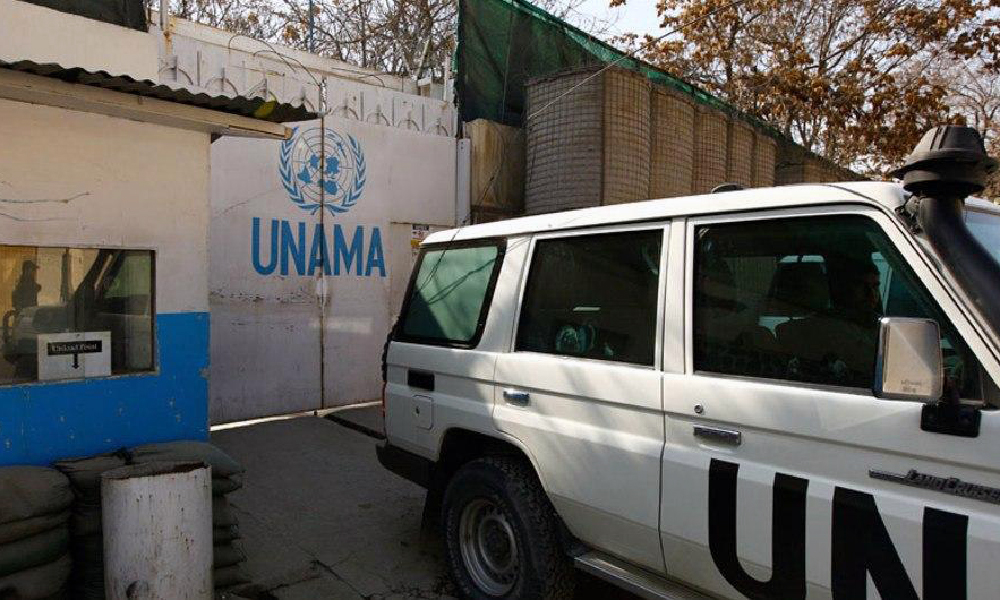
The UN said Tuesday the ministry for the propagation of virtue and prevention of vice were violating human rights and fundamental freedoms and that decrees and methods used to enforce rules were contributing to “a climate of fear and intimidation among segments” of society in Afghanistan.
The report, titled ‘De Facto Authorities’ Moral Oversight in Afghanistan: Impacts on Human Rights’ was published Tuesday and also contained the Islamic Emirate’s response to the UN’s findings.
The report stated: “As part of this engagement, Afghanistan’s de facto authorities were invited to provide factual comments on the content of the report.”
According to the report, the ministry has enforced decrees that have a disproportionate impact on women and girls, like dress codes, segregated education and employment, and having a male guardian when they travel.
“The punishments attached to non-compliance with instructions and decrees are often arbitrary, severe and disproportionate,” the report read.
“Sweeping bans with a discriminatory effect on women have been introduced. Human rights violations, as well as the unpredictability of enforcement measures, contribute to a climate of fear and intimidation among segments of the population,” the report stated.
UNAMA said it had recorded at least 1,033 instances between August 2021 and March 2024 where ministry employees “applied force during the implementation of instructions, resulting in violations of the liberty, and physical and mental integrity” of people.
The IEA responded by saying the decrees issued by the supreme leader lay “the foundation of the formal documents that are based on Islamic sources. It is a widely recognized principle in all common regimes that decrees and relevant legal documents are issued to reform society and should have their implementation ensured.”
UNAMA also stated that the use of corporal punishment was a violation of the prohibition on torture and cruel, inhuman and degrading treatment or punishment.
The organization added that the requirement for women to travel with a mahram (male guardian) beyond 78 kilometers from their home limits their right to freedom of movement and creates financial and logistical barriers for them to access employment and healthcare.
In response to this, the Islamic Emirate said the presence of mahram with a woman “is not only an Islamic value; it is also a cultural value.”
“A woman encounters criticism from the general public when she travels without a mahram. It is frowned upon in Afghan society for women to travel without a mahram.”
The IEA added that Islam also “specifies a certain distance for a woman to be accompanied by a mahram when she travels. To this end, the mahram’s presence with a woman serves to safeguard her honor and chastity.”
The report meanwhile stated that since the ministry’s establishment, its scope of responsibility has continued to expand. “In addition to intensifying monitoring of compliance with existing policies, it has introduced new instructions and expanded into new areas of enforcement,” UNAMA stated.
These areas include monitoring of the media, the eradication of drug addiction, policing of gold dealers, regulating businesses and dispute mediation between individuals, among others.
The Islamic Emirate in turn said “acts are seen as either legal or illegal,” and that the ministry was a key organization within the Islamic Emirate’s governing framework and that its “role is growing as required by the situation”.
However, Fiona Frazer, the head of UNAMA’s Human Rights Service said: “Given the multiple issues outlined in the report, the position expressed by the de facto authorities that this oversight will be increasing and expanding gives cause for significant concern for all Afghans, especially women and girls.”
Overall, the ministry rejected the UN report, calling its findings false and contradictory.
“Decrees and relevant legal documents are issued to reform society and should have their implementation ensured,” the ministry said.
CLICK HERE FOR THE FULL REPORT
Related stories:
Protection of Islamic system ‘obligatory’: virtue and vice minister Hanafi
UNAMA issues latest rights report, notes ongoing challenges for women, girls and media



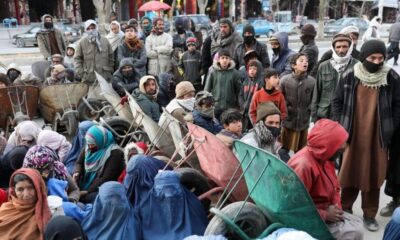


As Afghanistan marks the fifth anniversary of the Islamic Emirate’s return to power, Richard Lindsay, the UK’s Special Representative for Afghanistan, said on Friday the country cannot reach its full potential without the participation of women and girls in education, employment and public life.
Lindsay said in a post on X that the resilience of Afghan women and girls over the past five years has been “incredible,” but said their resilience should not be a substitute for their fundamental rights.
Lindsay stressed that the UK remains committed to supporting the people of Afghanistan.
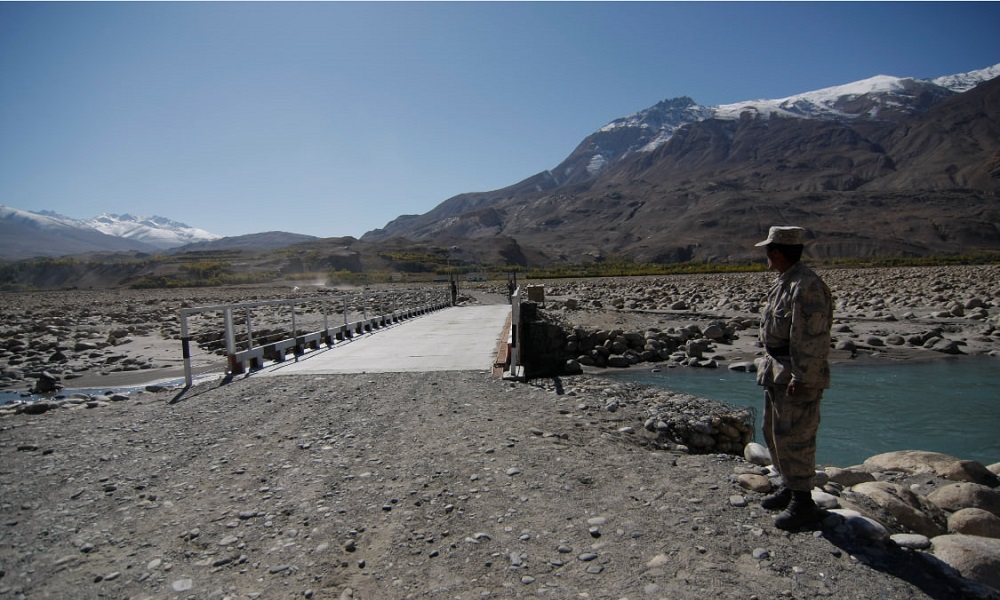
Tajikistan has sent a protest note to the Afghan authorities following an alleged violation of its airspace, damage to residential buildings and the death of a civilian in Darvoz district of the Gorno-Badakhshan Autonomous Region (GBAO), the Tajik Foreign Ministry said on Friday.
Tajik media outlet Asia-Plus, citing the Information and Press Department of Tajikistan’s Foreign Ministry, reported that armed clashes in recent days in Afghanistan’s Badakhshan province, particularly in districts bordering Tajikistan’s Darvoz district, have posed a threat to the security of Tajik border areas and resulted in violations of international law.
The ministry said Tajikistan’s airspace was violated during the fighting, several homes were damaged and one civilian was killed in Darvoz district.
In response, Tajikistan delivered a formal protest note to the Afghan side, expressing strong concern over the incident and calling on the Afghan authorities to respect the inviolability of Tajikistan’s state border.
Dushanbe also demanded that effective measures be taken to prevent similar incidents from occurring again.
An official source in the Darvoz district administration told Asia-Plus that the victim was identified as 21-year-old Yosuman Yatimzoda, a resident of Dashtak village.
She leaves behind a young child. According to sources, Yatimzoda was also pregnant.
The incident occurred at around 6:40 p.m. on August 13. Yatimzoda was at home doing household chores when a bullet entered through a window and struck her in the liver area.
“The woman was taken to the district central hospital, but she died on the way,” an Asia-Plus source said.
However, the Islamic Emirate of Afghanistan (IEA) has not yet commented on the report.
Latest News
IEA rejects Pakistan’s concerns, says Afghan soil will not be used against any country
His remarks came after Sharif said Pakistan wants peace and stability in Afghanistan but considers the use of Afghan soil for terrorist activities “unacceptable.”

The Islamic Emirate has rejected concerns raised by Pakistani Prime Minister Shehbaz Sharif over the alleged use of Afghan territory for militant activities, reiterating that Afghanistan’s soil will not be used against any country.
Islamic Emirate spokesman Zabihullah Mujahid said Islamabad should raise its concerns directly with Kabul rather than making accusations, so that necessary measures can be taken.
Mujahid also said Afghanistan cannot prevent insecurity and internal challenges inside Pakistan, urging Islamabad to address its own domestic problems.
Calling Pakistan a “brotherly country,” Mujahid said instability in Pakistan is not in Afghanistan’s interest. He also called for greater trust among regional countries, particularly neighboring states.
His remarks came after Sharif said Pakistan wants peace and stability in Afghanistan but considers the use of Afghan soil for terrorist activities “unacceptable.”
Sharif urged the Afghan leadership to take immediate steps to prevent Afghanistan from becoming a safe haven for militants.


Tawsia: $420M investment in TAPI gas distribution network in Herat discussed

Afghanistan cannot reach full potential without women and girls: UK envoy

Tajikistan sends protest note to Afghanistan after airspace violation, civilian death

IEA rejects Pakistan’s concerns, says Afghan soil will not be used against any country

FM Muttaqi says Islamic Emirate sees no need for talks with opponents

Pakistan’s governance system has ‘collapsed’: Mohsin Naqvi

Spain sweep FIFA World Cup player awards after historic triumph

Iran, Afghanistan and Tajikistan discuss expanding regional transit cooperation

Afghanistan temporarily eases fuel import standards to help curb rising prices

First Chinese transit shipment arrives in Herat via Iran’s railway corridor
Tawsia: $420M investment in TAPI gas distribution network in Herat discussed

Tahawol: Trade cooperation between Afghanistan and Iran discussed

Saar: Discussion on Islamic Emirate’s five-year journey

Tahawol: Afghanistan’s future in the global press discussed

Saar: The Islamic Emirate’s five-year rule discussed
-
 Sport5 days ago
Abasin Defenders stun Kabul Zalmi in Kabul Premier League
-
 Sport5 days ago
Kabul Premier League gets underway with high-scoring opener
-
 Latest News2 days ago
HesabPay unveils new visa card and digital payment app in Kabul
-
 Regional5 days ago
Iran ties Hormuz reopening to US concessions on several demands
-

 Sport4 days ago
Afghanistan beat Ireland by 3 wickets in third ODI
-
 Latest News5 days ago
MoU on TAPI gas purchase signed between Afghan Gas and Türkmengaz
-
 Sport4 days ago
Abasin Defenders beat Shamshad Eagles by four wickets in Kabul Premier League
-

 International Sports2 days ago
AFC Champions League Elite draw nears as Al-Nassr seeded above Al-Hilal