
Latest News
UNAMA chief briefs Security Council on Afghanistan situation
Roza Otunbayeva said challenges remain and that it is the responsibility of the IEA to indicate whether they want Afghanistan to be reintegrated into the international system and, if so, whether they are willing to take the necessary steps

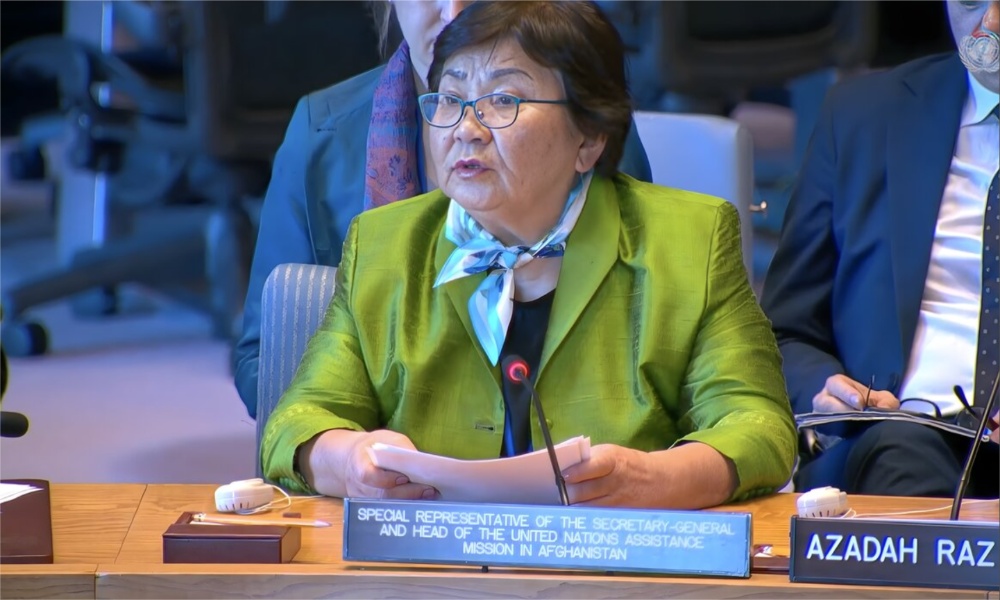
In a briefing to the United Nations Security Council by the Secretary-General’s Special Representative for Afghanistan, Roza Otunbayeva, said UNAMA’s focus for the past few months has been to establish a political pathway to enable Afghanistan to be fully reintegrated in the international system.
However, she said “challenges remain” adding that “it is the responsibility of the de facto authorities to indicate whether they want Afghanistan to be reintegrated into the international system and, if so, whether they are willing to take the necessary steps.
“The de facto authorities have so far treated the Afghan state’s international obligations selectively, rejecting some on the basis they allegedly impinge on the country’s sovereignty or violate their traditions.
“But to be very clear, these international obligations affect not only the possibility of progress along the political pathway but, most crucially, the wellbeing of Afghanistan’s entire population, whose voices must be included in the political pathway,” she said.
Otunbayeva said while Afghans in the country have welcomed the absence of conflict under Islamic Emirate rule, more and more are expressing concerns about Afghanistan’s further isolation from the rest of the world. “Afghans increasingly resent the intrusions on their private lives by the de facto authorities,” she said.
She stated that Afghans continue to face a severe humanitarian crisis defined by decades of conflict, entrenched poverty, climate-induced shocks, large population growth and increasing protection risks, especially for women and girls.
In 2025, more than 50 percent of the population — some 23 million people — require humanitarian assistance. But this assistance is rapidly decreasing.
“The defunding of assistance is already having and will continue to have a significant impact on the Afghan people. In the past month, more than 200 health facilities have closed, impacting some 1.8 million people, essential malnutrition services for children have been limited and implementing partners have significantly reduced their footprint and coordination capacity,” she stated.
Otunbayeva added that despite the challenges Afghan women face, they have continued to meaningfully and comprehensively participate in the humanitarian response. Humanitarian partners remain committed to upholding the principle of women’s participation.
She also noted that while there have been some instances of interference in aid delivery, the Islamic Emirate authorities in Kabul and in the provinces “have generally cooperated with the UN and partners to enable provision of assistance and resolve cases of interference”.
Otunbayeva touched on the state of the economy and said while it grew around 2.7 percent in 2024, the current growth cannot compensate for the drop in foreign aid and the growing population.
“In the longer term, the de facto authorities’ positive vision of economic self-sufficiency cannot reach its full potential unless ongoing obstacles to its reintegration into the international system are resolved.”
She went on to highlight a number of challenges including those relating to human rights, women’s rights, and girls’ education adding that UNAMA has also been closely observing the Islamic Emirate’s enforcement of its Law on the Prevention of Vice and Promotion of Virtue and its negative economic effects and impacts on Afghans’ human rights and private lives.
“The law demonstrates the de facto authorities’ prioritization of ideology over international obligations. It remains a major impediment to implementing the political pathway needed to reintegrate Afghanistan into the international community,” she said.
Otunbayeva went on to state that the “space for engagement is narrowing. There is a growing frustration on the part of some key international stakeholders that political engagement is not working.”
She questioned how the UN could move forward but said the mechanisms to address the issues that prevent Afghanistan’s reintegration with the international community are in place today.
However, “the most helpful development would be a clear signal from the de facto authorities they are committed to the reintegration of Afghanistan with the international community with all that it implies,”she said.
Washington’s envoy to the UN, Dorothy Shea, also addressed the security council and said: “The security threat emanating from Afghanistan is a continuing driver of regional instability.”
She said the US is calling on the IEA to abide by their counterterrorism commitments.
“The United States is skeptical of the Taliban’s (IEA) willingness to engage in good faith in the Doha Process. We cannot build confidence with a group that unjustly detains Americans, has a long history of harboring terrorist groups on its soil, and ignores the basic rights and needs of its own people.”
The Chinese ambassador called on the Islamic Emirate to suppress terrorist groups in Afghanistan while Pakistan and Russia both expressed concern about the weapons that were left behind during the US troop withdrawal.
Pakistan’s envoy to the UN, Munir Akram added that the presence of several terrorist groups in Afghanistan is a threat to the entire region.
“Unfortunately, while fighting ISIS, the Kabul authorities are indifferent to containing other groups that pose a threat to the region and the world, such as Al-Qaeda, TTP, Baloch Liberation Army and Majid terrorist organization, all of which are present in Afghanistan.
“TTP, with more than 6,000 troops, is the largest terrorist group inside Afghanistan and has launched many attacks against Pakistan. They have advanced weapons left behind by foreign soldiers in Afghanistan,” he said.
In response, the Islamic Emirate says it has always tried to interact with the world, but some countries create obstacles.
Hamdullah Fitrat, deputy spokesman for the Islamic Emirate, says that UN decisions should not be influenced by big countries.
The IEA has also repeatedly said it will not allow terrorist organizations the threaten another country from Afghanistan. Authorities have also repeatedly dismissed claims of US weapons falling into the hands of foreign terrorist groups.
The IEA has said all weapons and military equipment that was left behind by the US during their withdrawal are in the possession of the Islamic Emirate and are protected.




Hamdullah Fitrat, Deputy Spokesperson for the Islamic Emirate of Afghanistan, has strongly rejected the repeated allegations by Pakistani officials that Afghanistan is involved in insecurity in Pakistan, saying that creating or supporting insecurity in Pakistan is not in Afghanistan’s interests.
In a statement published on his account, Fitrat said that whenever Pakistani officials are unable to ensure security in their own country, they blame Afghanistan for incidents in an attempt to mislead public opinion.
According to Fitrat, Afghanistan neither has the necessary means to create insecurity in other countries nor would it benefit from such actions, as insecurity in Pakistan also harms Afghanistan economically, socially and in humanitarian terms.
The deputy spokesperson added that instead of focusing on their own security responsibilities, Pakistani officials wrongly blame Afghanistan and spend resources on plans aimed at destabilizing the country.
Fitrat described this approach as a way of evading core responsibilities, destabilizing the region and wasting economic resources. He further said that this misguided stance has distracted Pakistan’s security forces from their primary duties.
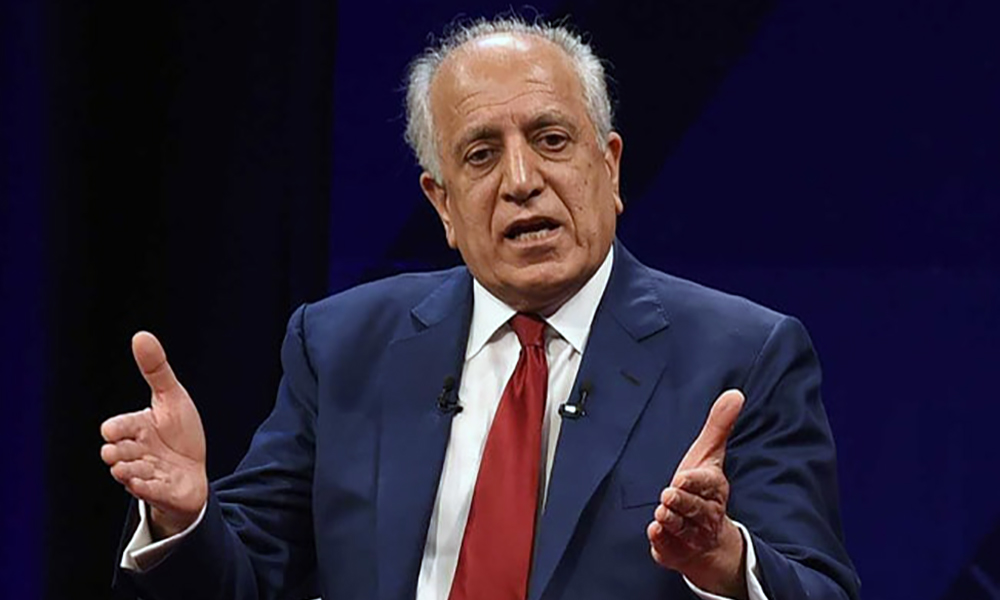
Zalmay Khalilzad, the former U.S. special representative for Afghanistan, has warned that relations between Afghanistan and Pakistan could deteriorate further amid reports of alleged Pakistani recruitment and arming of Afghans.
In a statement, Khalilzad said there had been numerous reports alleging that Pakistan was arming Afghans to fight the Taliban in Afghanistan. He added that new reports suggested the Pakistani military was recruiting Afghans to fight anti-Pakistan insurgents.
He cautioned that, given the current situation, ties between Kabul and Islamabad were likely to worsen significantly.
Khalilzad’s remarks come amid ongoing tensions between the two neighboring countries.
Latest News
UNICEF urges continued efforts for polio-free Afghanistan
According to the World Health Organization, 42 cases of wild poliovirus type 1 have been recorded in Afghanistan this year.
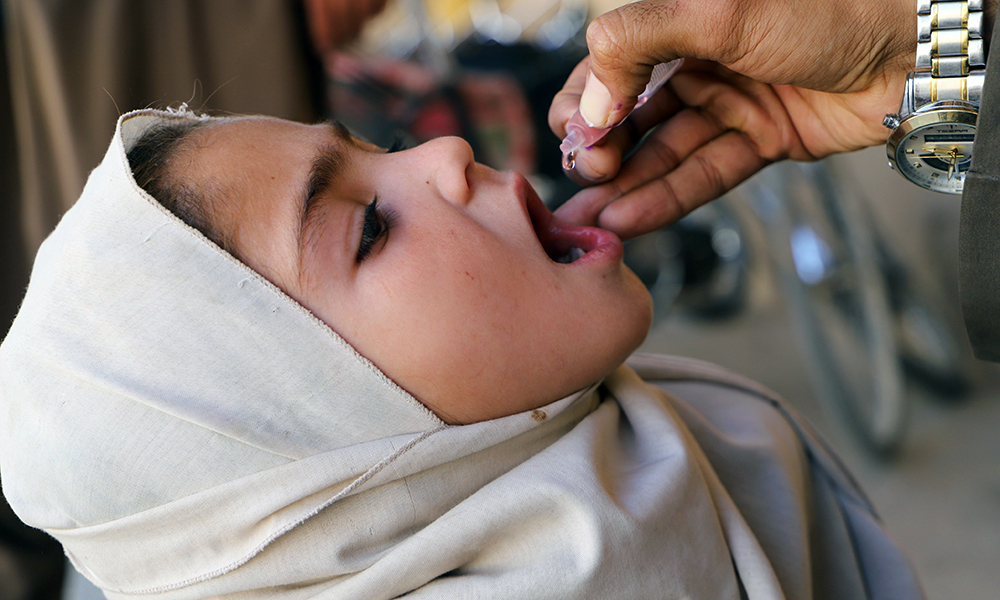
UNICEF Afghanistan has highlighted the importance of continued national efforts to eradicate polio and vaccinate every child, as the country marks World Polio Day on October 24.
In a message posted on X, UNICEF Afghanistan said the day provides an opportunity to highlight national efforts towards a polio-free Afghanistan and honour frontline workers who work tirelessly to end the disease and ensure every child is vaccinated.
Meanwhile, Afghanistan’s Polio-Free initiative warned on Thursday, October 22, that the presence of the poliovirus in any area could threaten the health of children across the country. The initiative urged the public to cooperate with vaccination campaigns and ensure that no child is left without the vaccine.
The warning comes as polio remains a public health concern in Afghanistan, with the United Nations reporting multiple cases of the disease. According to the World Health Organization, 42 cases of wild poliovirus type 1 have been recorded in Afghanistan this year, while six cases have been reported in neighbouring Pakistan.

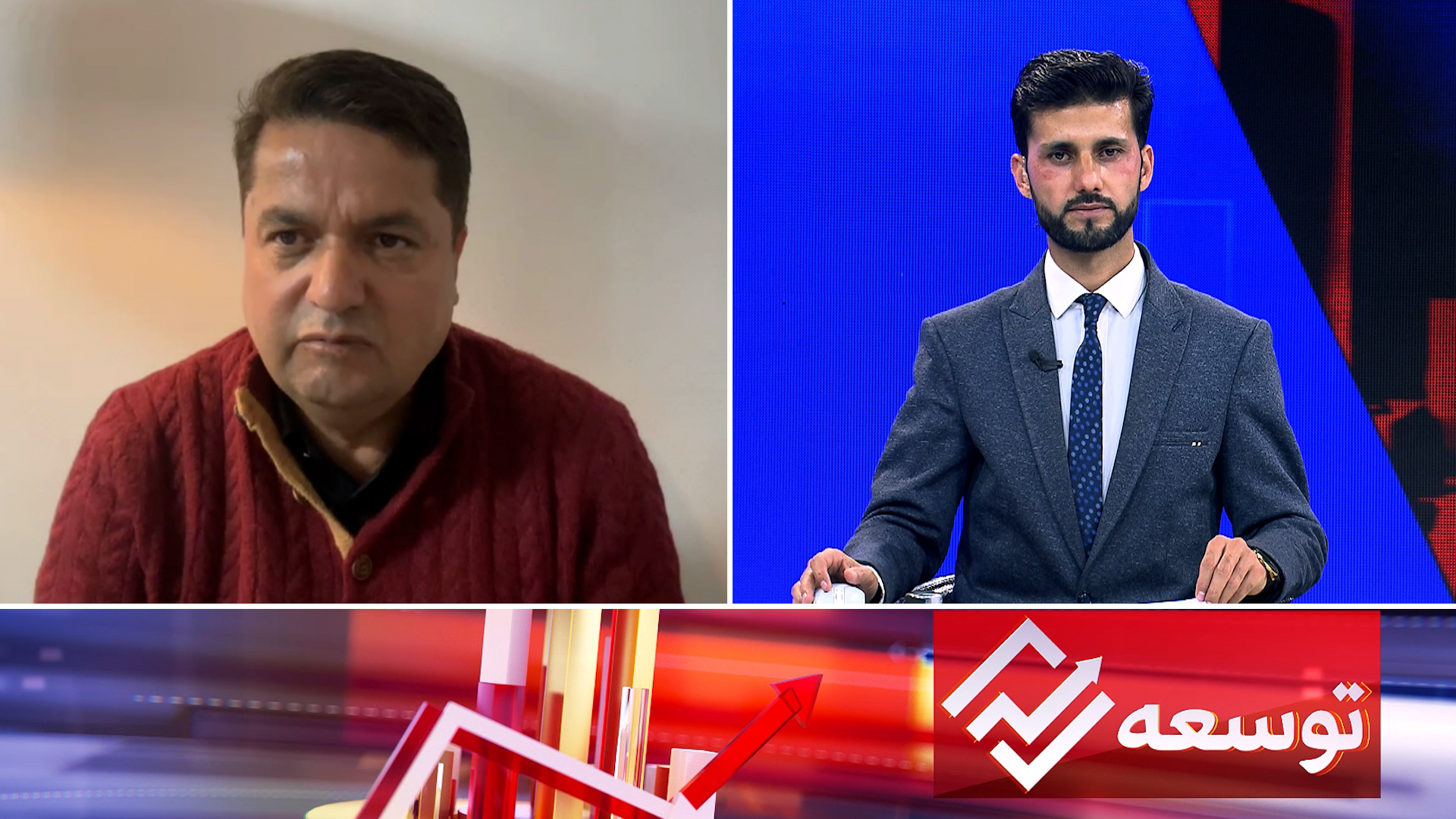
Tawsia: New opportunities in Afghanistan’s energy, trade and agriculture sectors discussed

IEA rejects Pakistan’s allegations linking Afghanistan to insecurity

Exclusive interview with Ali Bilal, runner-up in Mr. Olympia Men’s Physique category

Khalilzad warns of worsening relations between Afghanistan and Pakistan

IMF forecasts 1.3 percent regional economic contraction in 2026

Cricket Bonanza: Afghanistan set for packed international schedule

Afghanistan says 28 killed, 32 captured in Nuristan operation

Afghanistan on climate front line as Kabul faces groundwater warning

ACB announces Afghanistan squads for Bangladesh, Zimbabwe series

Trump rejects Iranian proposal to open Hormuz and end fighting
Tawsia: New opportunities in Afghanistan’s energy, trade and agriculture sectors discussed
Exclusive interview with Ali Bilal, runner-up in Mr. Olympia Men’s Physique category

Tahawol: Doha meeting and Afghanistan’s political and economic future discussed

Saar: Concerns over expansion of conflict between Iran and US discussed

Governments warn citizens over security risks in France after riots
-

 Sport5 days ago
Afghanistan finish runners-up after 6-0 defeat to Brazil in futsal final
-
 World5 days ago
Violent protests spread across Europe as Albanian PM blames ‘foreign hand’
-
 Business5 days ago
Iran calls for extending Herat railway to Uzbekistan border
-
 Latest News3 days ago
Russian troops arrive in Uzbekistan for joint military exercises
-
 World5 days ago
Trump endorses Netanyahu in close Israeli election
-
 Latest News2 days ago
Afghanistan’s new Wakhan road to China faces major hurdles
-
 Latest News3 days ago
Qatar calls for shift from humanitarian aid to economic recovery in Afghanistan
-
 World3 days ago
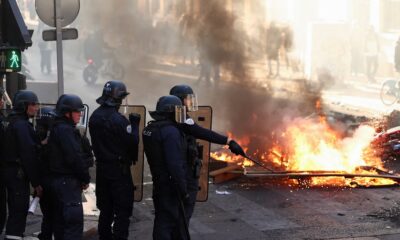
Governments warn citizens over security risks in France after riots