
Latest News
Peace is Not a ‘Personal Project’, Abdullah Says Urging Politicians to Collaborate

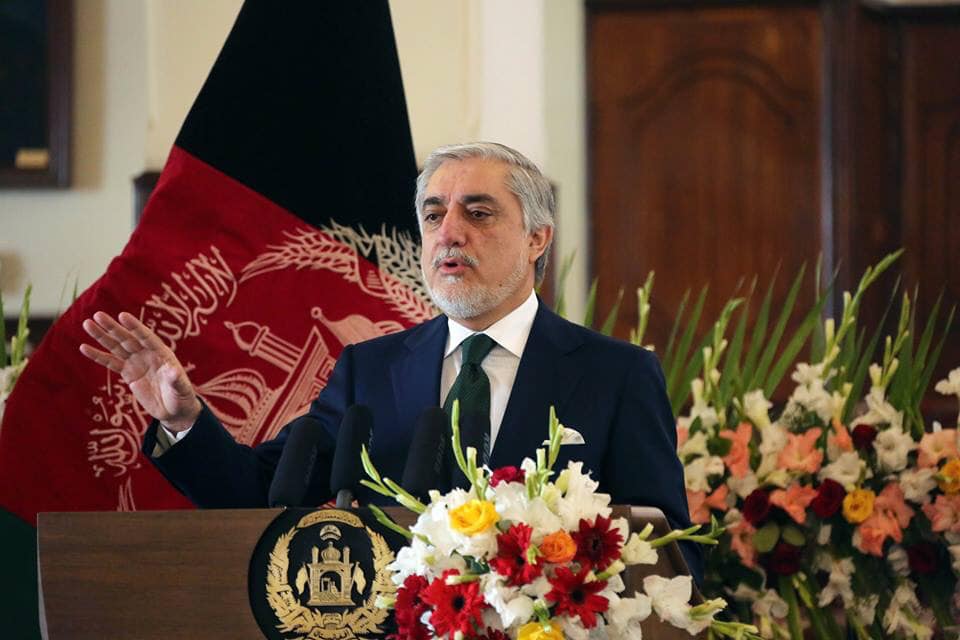
Chief Executive Abdullah Abdullah says the Taliban have some shared and similar views regarding the peace process with the Afghan government and that Kabul should show its will and ability for a deal with the armed group.
Addressing a ceremony on Friday in the Presidential Palace to mark the 30th anniversary of Soviet withdrawal from Afghanistan, Abdullah urged the Afghan politicians to do not consider the peace process as a personal issue and instead should help the government in reaching to an agreement with the Taliban.
“I expected the politicians to collaborate with each other on common points,” he said, adding that the politicians should compete through legitimate ways which he said is elections.
“They should know that peace is not our personal project, but peace is the desire of the people of Afghanistan,” he added.
On February, the Taliban held a two-days of talks with the Afghan politicians in Moscow, where the armed group’s delegation chief Sher Mohammad Abbas Stanikzai said that the current constitution of Afghanistan is a major obstacle to peace and that it does not meet the demands of the people. He asked for a new constitution for the war-torn country.
However, Second Vice President Mohammad Sarwar Danish said that they did not expect anything else from the Taliban as he stressed that the armed group is dependent on outsiders and a copy of their policy.
Some participants of today’s gathering in ARG, meanwhile, warned that lack of consensus in the peace efforts would deepen the crisis in the country and that will lead into the loss of the achievements gained in the nearly two decades.
“Those [politicians] who meet with the Taliban outside on behave of the people, would not achieve desirable results and its outcomes will be very bad,” said Fazl Hadi Muslimyar, the speaker of Upper House of the parliament.
He stressed that the government is representing the Afghan people and that the politicians should let the government take the peace talks’ initiative with the Taliban.








Latest News
Kazakh envoy urges engagement to prevent instability in Afghanistan
Kazakhstan, he said, is pursuing a policy of “pragmatic engagement without recognition,” maintaining transport, energy, and humanitarian cooperation with Afghanistan while withholding formal diplomatic recognition of the current authorities.
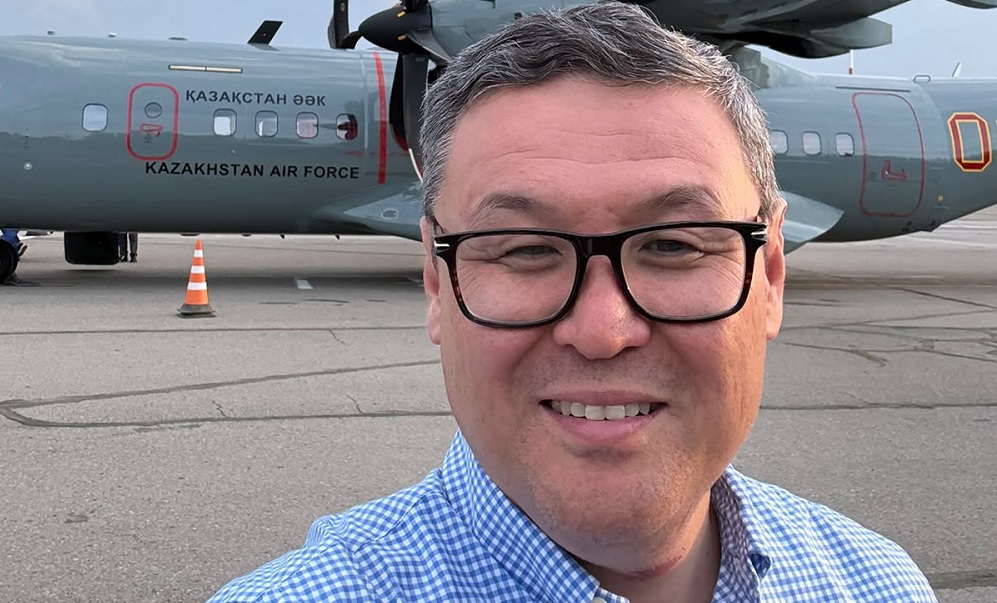
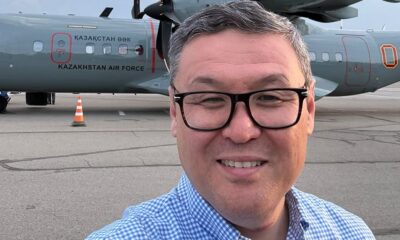
Kazakhstan’s Special Representative for Afghanistan, Yerkin Tukumov, has called for continued international engagement with Afghanistan, warning that economic, humanitarian, and institutional vacuums could contribute to instability and security threats in the region.
Writing in an opinion article published by EuAlive, Tukumov argued that constructive engagement with Afghanistan is necessary to address common challenges, including terrorism, illegal migration, and drug trafficking.
“The experience of recent decades has demonstrated that any vacuum—whether economic, humanitarian, or institutional—is inevitably filled by destructive processes in Afghanistan,” he said.
Tukumov noted that Afghanistan continues to face significant humanitarian challenges, with nearly 29 million people in need of assistance. He also pointed to the return of millions of Afghan refugees from Iran and Pakistan since 2023, which has placed additional pressure on the country’s economy and public services.
According to the Kazakh envoy, approximately 3.7 million Afghan children are suffering from malnutrition, while issues related to security, governance, and the rights of women and girls remain concerns for the international community.
Despite these challenges, Tukumov said Afghanistan has avoided the economic and political collapse predicted by some observers following the Taliban’s return to power in 2021. He noted that government revenues have grown gradually, while small and medium-sized businesses and industrial parks have emerged in major Afghan cities.
Kazakhstan, he said, is pursuing a policy of “pragmatic engagement without recognition,” maintaining transport, energy, and humanitarian cooperation with Afghanistan while withholding formal diplomatic recognition of the current authorities.
Tukumov emphasized the growing importance of Central Asia in Afghanistan’s external relations, describing the region as a key source of energy, food supplies, and economic cooperation. Trade between Afghanistan and Central Asian countries has increased significantly in recent years, he added.
The envoy also highlighted Kazakhstan’s educational and humanitarian initiatives in Afghanistan, including scholarship programs for Afghan students and assistance in sectors such as healthcare, agriculture, and water management.
He suggested that education and healthcare could become important areas of cooperation between Kazakhstan and the European Union in Afghanistan. Such efforts, he said, could include the construction of medical facilities, the deployment of mobile health units, and expanded professional training programs.
Tukumov argued that humanitarian assistance and economic cooperation should not be viewed as concessions but as practical tools for promoting long-term stability and preventing future crises.
“By investing in healthcare, education, and human capital, the international community can help strengthen resilience and create conditions for sustainable development in Afghanistan,” he wrote.
The comments come amid ongoing regional and international discussions on how to engage with Afghanistan while addressing humanitarian needs and broader security concerns.
Latest News
Afghanistan intensifies fight against synthetic drugs
Officials described synthetic drugs as one of the country’s most pressing concerns and said targeted programs have been introduced to combat the problem.

Afghanistan’s Ministry of Interior Affairs says a nationwide campaign against narcotics, with a particular focus on synthetic drugs, is being intensified as authorities seek to curb the growing threat posed by illicit substances.
Speaking at a seminar in Kabul titled “Causes of Youth Drug Addiction and Prevention Methods,” Abdul Haq Mati, Head of Survey and Analysis at the Counter-Narcotics Deputy Office of the Ministry of Interior, said significant progress has been made in combating traditional narcotics. However, he noted that synthetic drugs remain a major challenge, with many of these substances being smuggled into the country from neighboring states.
Mati said security and law enforcement agencies are tasked with identifying, arresting and referring key figures involved in drug trafficking networks to judicial authorities. He added that efforts to prevent the trafficking and distribution of synthetic drugs are continuing across the country.
The seminar brought together students, officials from the Counter-Narcotics Department and university professors to discuss the causes of youth addiction and strategies for prevention.
Officials described synthetic drugs as one of the country’s most pressing concerns and said targeted programs have been introduced to combat the problem, building on measures previously used against traditional narcotics.
While acknowledging the progress made in anti-narcotics efforts, several university professors stressed that security measures alone would not be sufficient to address the issue. They called for greater investment in employment opportunities, education and social development initiatives aimed at tackling the root causes of addiction.
Participants also highlighted the importance of effectively managing and disrupting the entire narcotics supply chain, from street-level distribution to larger trafficking networks, as a key component in reducing the social and economic impact of drug abuse.
Students attending the seminar said awareness campaigns play an important role in prevention but argued that unemployment and limited access to education remain major factors that leave young people vulnerable to drug use.
The event, organized by a university in cooperation with the Counter-Narcotics Department, concluded with calls for stronger youth-focused programs, continued enforcement of anti-drug laws and greater efforts to address the underlying causes of addiction.
Participants agreed that a combination of prevention, public awareness, employment opportunities and law enforcement remains essential to protecting young people from drug addiction and curbing the spread of narcotics across the country.
Latest News
Kazakh deputy PM calls for de-escalation between Afghanistan and Pakistan
Zhumangarin further said that Kazakhstan was the first country to remove the Islamic Emirate from its list of banned organizations.

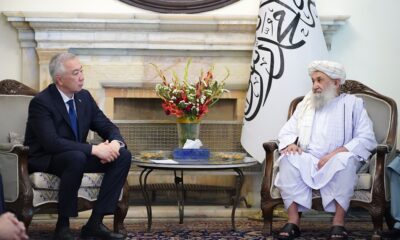
Serik Zhumangarin, Kazakhstan’s Deputy Prime Minister and Minister of National Economy, on Sunday called for a reduction in tensions between Afghanistan and Pakistan.
During his visit to Kabul, he said that disputes between the two countries should be resolved through dialogue and diplomatic channels.
Zhumangarin stated that Afghanistan and Pakistan, as two neighboring Muslim countries, should settle all disagreements at the negotiating table. He added that Kazakhstan is ready to play a mediating role and assist in easing tensions between Kabul and Islamabad if formally requested.
“Any conflict should be resolved through dialogue,” he said. “The President of Kazakhstan also emphasizes this point, and we urge both sides to address all disputed issues through diplomatic means.”
The Kazakh deputy prime minister also highlighted his country’s close relations with Afghanistan, noting that Astana kept its embassy in Kabul open even during difficult periods. According to him, Kazakhstan was among the first countries to grant official status to its diplomatic mission in Afghanistan and appoint a resident ambassador in Kabul.
Zhumangarin further said that Kazakhstan was the first country to remove the Islamic Emirate from its list of banned organizations. He also noted that Afghanistan’s embassy in Kazakhstan and its consulate general in Almaty continue to operate.
The Kazakh official expressed hope that the issue of formally recognizing the Islamic Emirate would progress through diplomatic and political processes and reach a conclusion in the near future.
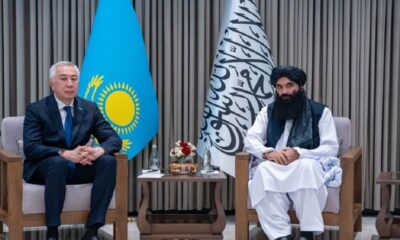
A high-level Kazakh delegation led by Serik Zhumangarin arrived in Kabul on June 20. During meetings with officials of the Islamic Emirate, the delegation discussed expanding economic, trade, and political cooperation between the two countries.


Kazakh envoy urges engagement to prevent instability in Afghanistan

US and Iran conclude high-level talks in Switzerland, mediators say

Afghanistan intensifies fight against synthetic drugs

Saar: Iran vs US Talks Begin – Will Tensions Ease?

Kazakh deputy PM calls for de-escalation between Afghanistan and Pakistan

Norway’s Viking-inspired World Cup team photo goes viral

Afghanistan announce squad for India series

Afghanistan, Russia sign military cooperation agreement

Major pharma firms eye investment in Afghanistan

Afghanistan expands oil production as investment in Amu Darya fields grows
Saar: Iran vs US Talks Begin – Will Tensions Ease?

Tahawol: Discussion on reopening of Strait of Hormuz

Saar: Afghanistan-Pakistan tense relations disucssed

Tawsia: Last week’s key economic developments discsused

Tahawol: Afghanistan–UN ongoing engagement discussed
-
 Business4 days ago
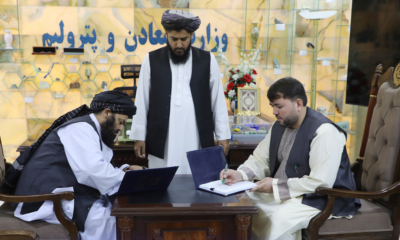
Afghanistan signs $67 million contract for cement production in Samangan
-
 Saar4 days ago
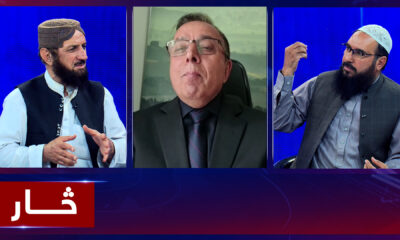
Saar: Trump’s remarks on US military equipment in Afghanistan discussed
-

 Sport5 days ago
2nd ODI: India crush Afghanistan by 170 runs to seal series lead
-
 Latest News4 days ago
Trump says US may seek return of military equipment left in Afghanistan
-
 Health4 days ago
Polio cases in Afghanistan rise to six in 2026 as two new cases confirmed
-
 Latest News3 days ago
Khalilzad calls for Afghanistan-Pakistan dialogue after airstrikes
-
 Latest News5 days ago
Türkiye captures senior ISIS-K operative
-

 International Sports4 days ago
Messi hat-trick powers Argentina to 3-0 victory over Algeria in World Cup opener