
Latest News
Afghan leaders call on Taliban to reduce violence and end the war

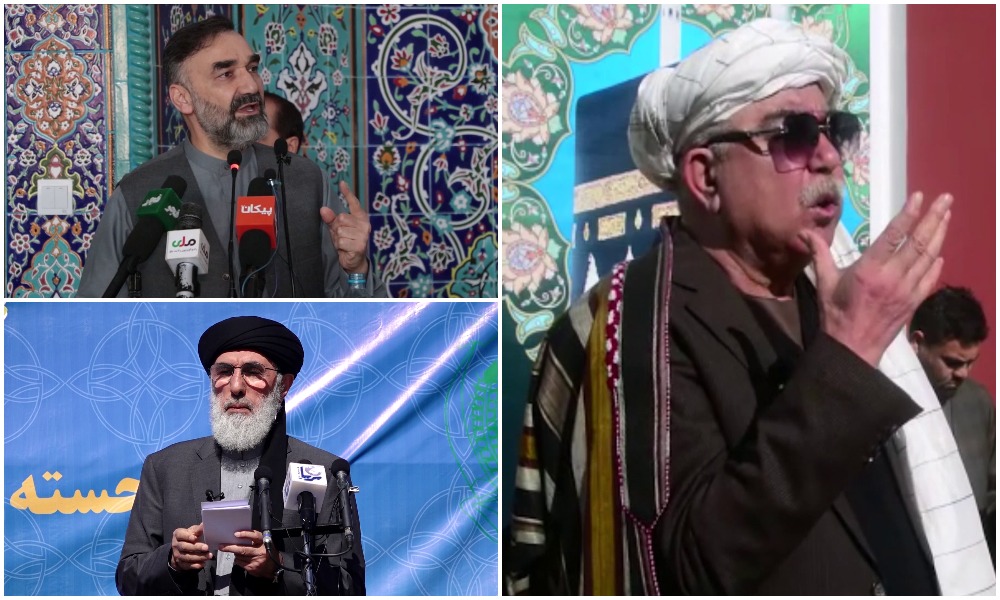
Marshal Abdul Rashid Dostum, the former vice president, and Atta Mohammad Noor, the former governor of Balkh province, on Thursday stressed the need to reduce violence and end the killing of people in Afghanistan.
Afghanistan’s third marshal, Dostum, said during Eid-ul-Fitr prayers in Sheberghan, the capital of Jawzjan province, the Taliban need to consider a continuous ceasefire to achieve peace.
Dostum says the role and position of the people in peace talks must be taken seriously.
Dostum stressed the need to end the war and reduce violence in Afghanistan.
Dostum added that he will not accept the presence of the Taliban with their idea of closing schools and depriving girls of education.
“We support peace and we must make sure that all the people of Afghanistan, all the ethnic figures of the Afghan people see themselves in those decisions,” Dostum said.
Referring to the removal of Naqibullah Fayeq, the former governor of Faryab, Dostum called on the government to leave the decisions on the appointment of governors and district governors to the people.
Meanwhile, Atta Mohammad Noor, the former governor of Balkh, warned the Taliban that if they do not come to the negotiating table and if they think of conquering Afghanistan through war, the people will mobilize alongside the country’s security forces.
Noor, said: “If the fratricide persists, it is where the national mobilization can respond with force alongside the Afghan armed forces under the umbrella of the regime.”
A number of local officials in Balkh are also emphasizing a permanent ceasefire.
“The main goal of the Islamic Republic of Afghanistan is a permanent ceasefire and an end to the killing of innocent people,” said Farhad Azimi, the governor of Balkh.
Mohammad Afzal Hadid, head of the Balkh Provincial Council, said: “If someone wants to rule the Afghan people with oppression and torture, such governments are not sustainable.”
However, the Taliban have previously said that the Eid ceasefire will not last after Eid and that they will continue their attacks.
Meanwhile, Hezb-e-Islami leader Gulbuddin Hekmatyar says that with the withdrawal of foreign troops and a change in government position, or the creation of a transitional government, there is no reason for the war to continue in the country.
Hekmatyar called on the Taliban to pursue a new strategy for peace.
Hekmatyar emphasizes that Afghanistan is in a critical situation and that intelligence units of a number of countries are trying to disrupt the situation for the benefit of themselves.
“Our expectation from the Taliban is that the Taliban need to adopt a new strategy, considering the situation and the fact that foreign forces are leaving and one of the major causes of their war is gone,” he said.
He believes that the only way to achieve unconditional consensus around peace is through influential domestic political channels. He also stressed that if the system changed the military and security structures should remain in place.
The Taliban have intensified fighting in more than 22 provinces of Afghanistan since the withdrawal of US troops from Afghanistan started and are likely to escalate further after a three-day Eid ceasefire.












Kazakhstan’s Foreign Minister Mukhtar Tileuberdi has called for pragmatic and coordinated international engagement with Afghanistan, saying the country’s long-term stability is closely linked to the security and sustainable development of Central Asia.
Speaking during the general debate of the 81st session of the United Nations General Assembly in New York on Friday, Tileuberdi said humanitarian assistance to Afghanistan remains essential but alone cannot break the cycle of poverty, displacement and dependency.
He said Kazakhstan supports a “pragmatic, coordinated and step-by-step” approach to international engagement with Afghanistan, with the United Nations playing a central role.
Tileuberdi also said Kazakhstan is working with the UN to operationalize the United Nations Regional Centre for the Sustainable Development Goals for Central Asia and Afghanistan in Almaty.
He said the success of the centre should be measured by the results and assistance it delivers to the region.


Abu Muslim Farah defeat Khurasan Faryab 2-0 in ACL season six

Saar: Concerns over Pakistan’s political crisis discussed

Afghanistan Champions League: Omar Zawak Herat beat Toofan Herat 1-0

Blast in Pakistan’s Dera Ismail Khan kills 11, injures 30

Ariana Afghan Airlines increases Kabul-Delhi cargo flights

Saudi energy group signs major Afghanistan deals covering gas exploration and pipeline plans

Trump floats idea of renaming Atlantic or Pacific Ocean

US hits Egyptian bank branches with Iran sanctions as war marks six months

Nepal flood rescue mission enters critical phase as thousands remain missing

Iranian clubs to face Gulf opponents at neutral venues in Asian Champions League Elite
Saar: Concerns over Pakistan’s political crisis discussed

Exclusive interview with Abdul Latif Mansoor, Minister of MRRD

Tawsia: Overview of Afghanistan’s iron mines

Tahawol: Discussion on fresh Pakistani airstrikes on Afghanistan

Saar: Calls for international support for Afghanistan discussed
-

 World5 days ago
CNN, MS NOW and Politico sue Trump, challenging White House ban
-

 Latest News3 days ago
Ariana Afghan Airlines ranks seventh among 45 Central Asian airlines
-

 Latest News5 days ago
UN reiterates call for respect for international law after Kunar airstrikes
-

 Regional4 days ago
US and Iran hold first talks since June after Trump’s ‘annihilation’ threat
-

 Latest News3 days ago
Silk Road highway in Wakhan corridor now reaches the China border
-

 Regional3 days ago
Iran airlines cancel flights as US sanctions hit
-

 Latest News5 days ago
Afghan Official: Pakistan’s airstrikes will not go unanswered
-
 Regional5 days ago
G7 foreign ministers call on Iran to stop arming Houthis