
Latest News
IRC scales up support for Afghan flood victims

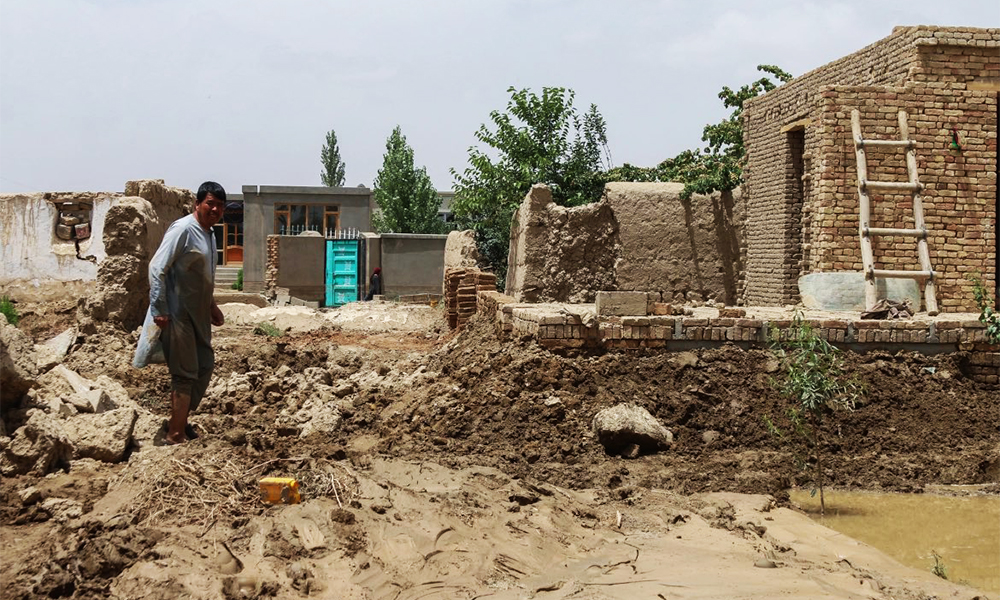
The International Rescue Committee (IRC) is scaling up support to the communities affected by the recent devastating floods in Kabul, Maidan Warak and Logar provinces in Afghanistan.
The floods, triggered by heavy rainfall and exacerbated by climate change, have caused immense devastation in the region.
Climate change has emerged as a potent threat, disproportionately affecting regions like Maidan Wardak and Logar provinces, where populations rely on agricultural productivity and where they already face multiple challenges, including poverty and limited access to resources.
As a result of the floods, these populations have had to flee their homes, meaning they are left without basic provisions such as food and adequate shelter.
Rising temperatures, changing weather patterns, and increased frequency of extreme events, such as floods, are compounding the struggles of these communities, disrupting livelihoods, and eroding the resilience of the local population. Regrettably, those who contribute the least to climate change are bearing the brunt of its consequences, the IRC said in a statement.
In addition, the IRC underscored the urgent need for global action to address climate change, its impact on vulnerable communities, and the inherent injustice in its unequal distribution of harm.
Mohammed Riyas, Regional Emergency Director for IRC in Asia, said: “Communities in Maidan Wardak and Logar provinces are grappling with the aftermath of these devastating floods, with more rainfall projected in the coming days. The situation demands immediate attention and support.
“While climate change is a global crisis, it is unequivocally evident that its impact is felt disproportionately by those who have contributed the least to its causes. We must stand in solidarity and recognise the moral imperative to support vulnerable communities as they face the consequences of a crisis they did not create.
“The IRC’s emergency response teams are working tirelessly to provide essential aid and services to those affected in Kabul and Logar, including health and medical support. In the coming days, we will also distribute cash to affected populations so that they are able to buy essential items. Just today, IRC launched a report that highlights that cash-based anticipatory action can help recover from, and build resilience to, climate disasters in fragile settings affected by both conflict and climate change.”
The IRC calls on governments, international organizations, and individuals worldwide to rally together in addressing climate change and supporting vulnerable communities disproportionately impacted by its effects. Further, the humanitarian response plan is less than 25% funded, whilst 28.8 million people are in need of urgent humanitarian assistance. IRC calls on international donors to not leave the most vulnerable countries behind in climate financing, especially when many disasters are predictable.







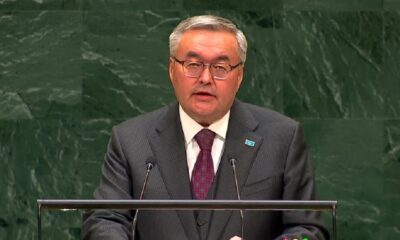




Kazakhstan’s Foreign Minister Mukhtar Tileuberdi has called for pragmatic and coordinated international engagement with Afghanistan, saying the country’s long-term stability is closely linked to the security and sustainable development of Central Asia.
Speaking during the general debate of the 81st session of the United Nations General Assembly in New York on Friday, Tileuberdi said humanitarian assistance to Afghanistan remains essential but alone cannot break the cycle of poverty, displacement and dependency.
He said Kazakhstan supports a “pragmatic, coordinated and step-by-step” approach to international engagement with Afghanistan, with the United Nations playing a central role.
Tileuberdi also said Kazakhstan is working with the UN to operationalize the United Nations Regional Centre for the Sustainable Development Goals for Central Asia and Afghanistan in Almaty.
He said the success of the centre should be measured by the results and assistance it delivers to the region.


Saar: Concerns over Pakistan’s political crisis discussed

Afghanistan Champions League: Omar Zawak Herat beat Toofan Herat 1-0

Blast in Pakistan’s Dera Ismail Khan kills 11, injures 30

Ariana Afghan Airlines increases Kabul-Delhi cargo flights

Khalilzad questions Pakistan’s commitment to Afghan welfare

Saudi energy group signs major Afghanistan deals covering gas exploration and pipeline plans

Trump floats idea of renaming Atlantic or Pacific Ocean

US hits Egyptian bank branches with Iran sanctions as war marks six months

Nepal flood rescue mission enters critical phase as thousands remain missing

Iranian clubs to face Gulf opponents at neutral venues in Asian Champions League Elite
Saar: Concerns over Pakistan’s political crisis discussed

Exclusive interview with Abdul Latif Mansoor, Minister of MRRD

Tawsia: Overview of Afghanistan’s iron mines

Tahawol: Discussion on fresh Pakistani airstrikes on Afghanistan

Saar: Calls for international support for Afghanistan discussed
-

 World5 days ago
CNN, MS NOW and Politico sue Trump, challenging White House ban
-

 Latest News3 days ago
Ariana Afghan Airlines ranks seventh among 45 Central Asian airlines
-

 Latest News4 days ago
UN reiterates call for respect for international law after Kunar airstrikes
-

 Latest News5 days ago
Khalilzad condemns Pakistan airstrikes, says current strategy is not working
-

 Regional3 days ago
US and Iran hold first talks since June after Trump’s ‘annihilation’ threat
-

 Latest News3 days ago
Silk Road highway in Wakhan corridor now reaches the China border
-

 Latest News4 days ago
Afghan Official: Pakistan’s airstrikes will not go unanswered
-

 Sport4 days ago
Afghan boxing referee heads to China for international festival