Connect with us

Iranian MP claims Afghan, Pakistani borders under terrorists’ control

Rezazada asked the Iranian Ministry of Interior to undertake a special planning to seal the borders.

Published

on

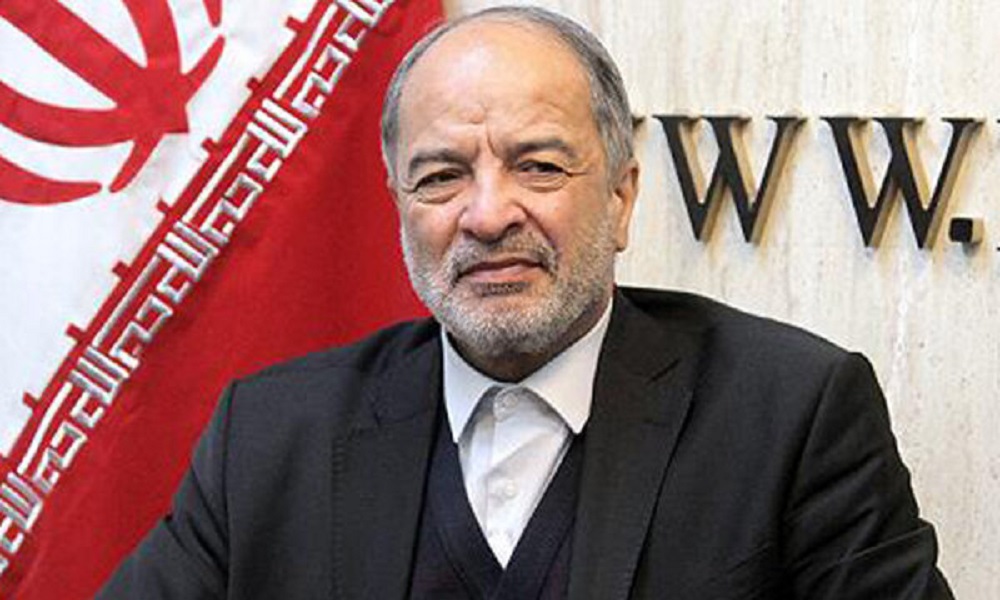
Yaqub Rezazada, a member of the National Security Commission of the Iranian Parliament, has claimed Afghanistan and Pakistan borders are not in the hands of the governments of the two countries, but are under the control of “evildoers and terrorists.”

In an interview with Shafqana news agency, Rezazadeh warned that terrorists use Afghanistan and Pakistan borders to infiltrate into Iran, and the borders are used to smuggle arms.

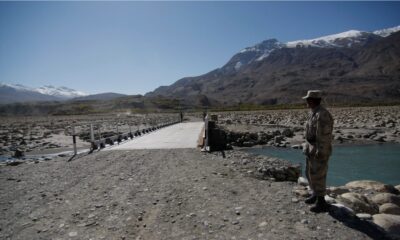
“The Islamic Republic of Iran shares about 1,950 kilometer borders with Afghanistan and Pakistan; In other words, the five provinces of South Khorasan, Razavi Khorasan, North Khorasan, Sistan and Baluchistan, and even our Hormozgan border with Afghanistan and Pakistan, and according to my knowledge of these two borders, unfortunately, the rulers of Afghanistan and Pakistan do not have full surveillance.”

The MP added that Iranian forces are making great efforts to maintain the security of the borders, but the topography of borders is such that it is very difficult to monitor by humans. He said that electronic devices, cameras and modern equipment should be used to monitor the borders.

Rezazada asked the Iranian Ministry of Interior to undertake a special planning to seal the borders.

He further said that the inability to control the borders has caused thousands of Afghans, Pakistanis and Bangladeshis to be smuggled into Iran every year.

He added that there may be terrorists among the smuggled people.

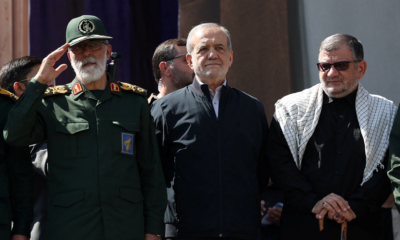
Earlier, Iran’s president-elect Masoud Pezeshkian said during his election campaign that if he wins, he will seal the border with Afghanistan.

According to him, Western countries should accept responsibility for their actions in Afghanistan, which led to the migration of millions of Afghans.

The Islamic Emirate has previously dismissed concerns about the security of Afghanistan’s borders and has said that it has complete control over the borders and that no terrorist group is present in Afghanistan.

 

Sport

Indonesia shock Japan to reach historic AFC Futsal Asian Cup final

Published

on

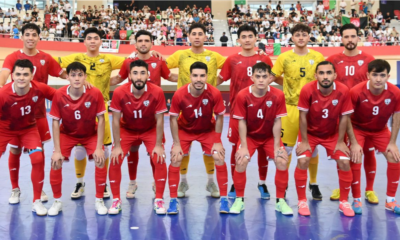
Indonesia produced a stunning performance to defeat four-time champions Japan 5–3 after extra time on Thursday, securing their first-ever place in the AFC Futsal Asian Cup Indonesia 2026 final. The hosts will face Iran in Saturday’s title clash.

Indonesia led 3–2 late in the match before Japan forced extra time with a last-minute penalty, but the home side regained control in the additional period to complete a famous victory.

Both teams made a fast start. Japan’s Shoto Yamanaka and Ryoto Kai threatened early, while Indonesia responded through Yogi Saputra and Samuel Eko. Chances continued at both ends, with Kokoro Harada hitting the post and Indonesia testing Japan from distance.

The breakthrough came in the 11th minute when Samuel Eko reacted quickest to a loose ball, spinning and firing into the bottom corner. Japan pushed back strongly, striking the woodwork again and forcing several saves from keeper Ahmad Habiebie.

Indonesia nearly doubled their lead before halftime through Eko, but Tabuchi kept Japan in the game.

Early in the second half, Indonesia captain Mochammad Iqbal was denied at close range before an own goal by Takehiro Motoishi made it 2–0 in the 23rd minute. Japan responded by intensifying their attacks, hitting the post once more.

Motoishi pulled one back in the 31st minute after Ahmad failed to hold his low shot. Japan equalized in the 35th minute through Kazuya Shimizu’s powerful strike. Firman Adriansyah appeared to win it for Indonesia late on, but Japan forced extra time with a penalty converted by Shimizu after a handball.

Indonesia showed their resilience in extra time. Reza Gunawan punished a misplaced pass to restore the lead just before the break, and Rizki Amanda capitalized on another Japanese error to finalize the 5–3 victory.

The historic win sends Indonesia into the continental final for the first time, igniting celebrations across the host nation.

Fans can watch the final live on Ariana Television.

Continue Reading

World

Trump rejects Putin offer of one-year extension of New START deployment limits

Published

on

U.S. President Donald Trump on Thursday rejected an offer from his Russian counterpart to voluntarily extend the caps on strategic nuclear weapons deployments after the treaty that held them in check for more than two decades expired.

“Rather than extend “New START … we should have our Nuclear Experts work on a new, improved and modernized Treaty that can last long into the future,” Trump wrote in a post on his Truth Social platform, Reuters reported.

Arms control advocates warn that the expiration of the treaty will fuel an accelerated nuclear arms race, while U.S. opponents say the pact constrained the U.S. ability to deploy enough weapons to deter nuclear threats posed by both Russia and China.

Trump’s post was in response to a proposal by Russian President Vladimir Putin for the sides to adhere for a year to the 2010 accord’s limit of 1,550 warheads on 700 delivery systems — missiles, aircraft and submarines.

New START was the last in a series of arms control treaties between the world’s two largest nuclear weapons powers dating back more than half a century to the Cold War. It allowed for only a single extension, which Putin and former U.S. President Joe Biden agreed to for five years in 2021.

In his post, Trump called New START “a badly negotiated deal” that he said “is being grossly violated,” an apparent reference to Putin’s 2023 decision to halt on-site inspections and other measures designed to reassure each side that the other was complying with the treaty.

Putin cited U.S. support for Ukraine’s battle against Russia’s 2022 full-scale invasion as the reason for his decision.

White House spokeswoman Karoline Leavitt told reporters that the U.S. would continue talks with Russia.

BOTH SIDES SIGNAL OPENNESS TO TALKS

Earlier, Kremlin spokesman Dmitry Peskov said Russia was still ready to engage in dialogue with the U.S. if Washington responded constructively to Putin’s proposal.

“Listen, if there are any constructive replies, of course we will conduct a dialogue,” Peskov told reporters.

The UN has urged both sides to restore the treaty.

Besides setting numerical limits on weapons, New START included inspection regimes experts say served to build a level of trust and confidence between the nuclear adversaries, helping make the world safer.

If nothing replaces the treaty, security analysts see a more dangerous environment with a higher risk of miscalculation. Forced to rely on worst-case assumptions about the other’s intentions, the U.S. and Russia would see an incentive to increase their arsenals, especially as China plays catch-up with its own rapid nuclear build-up.

Trump has said he wants to replace New START with a better deal, bringing in China. But Beijing has declined negotiations with Moscow and Washington. It has a fraction of their warhead numbers – an estimated 600, compared to around 4,000 each for Russia and the U.S.

Repeating that position on Thursday, China said the expiration of the treaty was regrettable, and urged the U.S. to resume dialogue with Russia on “strategic stability.”

UNCERTAINTY OVER TREATY EXPIRY DATE

There was confusion over the exact timing of the expiry, but Peskov said it would be at the end of Thursday.

Russia’s Foreign Ministry said Moscow’s assumption was that the treaty no longer applied and both sides were free to choose their next steps.

It said Russia was prepared to take “decisive military-technical countermeasures to mitigate potential additional threats to national security” but was also open to diplomacy.

That warning was in apparent response to the possibility that Trump could expand U.S. nuclear deployments by reversing steps taken to comply with New START, including reloading warheads on intercontinental ballistic missiles and submarine-launched missiles from which they were removed.

A bipartisan congressionally appointed commission in 2023 recommended that the U.S. develop plans to reload some or all of its reserve warheads, saying the country should prepare to fight simultaneous wars with Russia and China.

Ukraine, which has been at war with Russia since Moscow’s 2022 invasion, said the treaty’s expiry was a consequence of Russian efforts to achieve the “fragmentation of the global security architecture” and called it “another tool for nuclear blackmail to undermine international support for Ukraine.”

Strategic nuclear weapons are the long-range systems that each side would use to strike the other’s capital, military and industrial centres in the event of a nuclear war. They differ from so-called tactical nuclear weapons that have a lower yield and are designed for limited strikes or battlefield use.

If left unconstrained by any agreement, Russia and the U.S. could each, within a couple of years, deploy hundreds more warheads, experts say.

“Transparency and predictability are among the more intangible benefits of arms control and underpin deterrence and strategic stability,” said Karim Haggag, director of the Stockholm International Peace Research Institute.

Continue Reading

Latest News

Afghans among top asylum seekers in Russia in 2025, report shows

Published

on

Afghan citizens were among the top three nationalities applying for asylum in Russia in 2025, according to new statistics reviewed by TASS. The figures show that 281 Afghan nationals submitted asylum requests during the year, placing Afghanistan in the third-highest position.

The data shows that Syrians ranked second with 3,196 applications. The highest number of requests came from Ukrainian citizens, who filed 3,332 applications in 2025—slightly lower than in previous years but still the largest group overall.

Uzbekistan (176 applicants) and Germany (129) also appeared among the top five nationalities seeking asylum in Russia last year. Overall, 8,220 foreigners applied for temporary asylum in 2025, an increase of 1,341 compared to 2024.

Temporary asylum in Russia grants legal residence, permission to work without a permit, access to medical care under compulsory insurance, travel documents, education opportunities, and financial assistance. It is also considered the first step toward securing a temporary residence permit and eventually Russian citizenship.

Continue Reading

Trending

Copyright © 2025 Ariana News. All rights reserved!