
Latest News
Afghanistan’s Central Bank working to shift economy from cash to cards

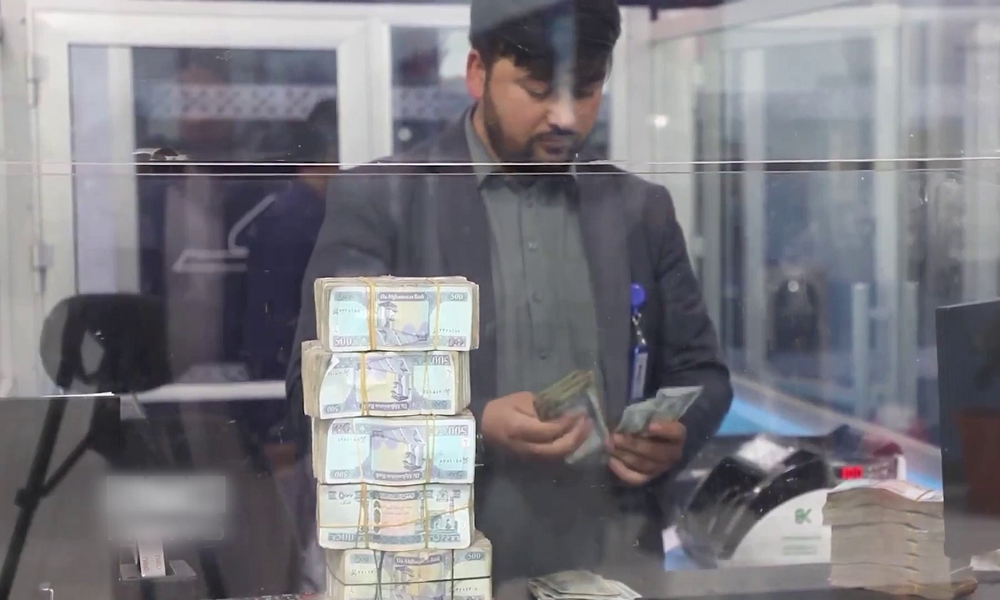
Da Afghanistan Bank (DAB), the country’s central bank, says it is stepping up efforts to reduce Afghanistan’s dependence on cash by promoting the use of electronic payment systems—including bank cards and automated machines—as part of a broader financial modernization agenda.
DAB spokesperson Hasibullah Noori announced that systems are being designed to enable users to carry out transactions through all types of automated payment technologies, a move aimed at improving transaction speed and reducing physical currency degradation.
People will be able to use electronic cards for their financial transactions, Noori said, adding that this will help reduce the wear and tear of paper money and also improve transaction efficiency.
The initiative, while modest in scope so far, signals the central bank’s intention to shift Afghanistan’s heavily cash-based economy toward a more digitally enabled financial ecosystem.
Afghanistan remains one of the most cash-reliant economies in the world, with the vast majority of daily personal and commercial transactions conducted using physical currency. This dependency is driven by multiple longstanding challenges including limited banking penetration, particularly in rural areas where over 70% of Afghans live.
International isolation and sanctions since the Islamic Emirate’s return to power in August 2021 have also led to increased challenges as Afghanistan deals with restricted access to the global banking system, frozen assets, and a reliance on informal transfer networks like hawala for both private and humanitarian finance.
Although DAB is promoting the use of electronic cards, many experts argue the supporting infrastructure is virtually nonexistent in most areas. Outside of Kabul and a few provincial capitals, point-of-sale (POS) terminals, card readers, and payment networks are rare.
Additionally, many of the cards currently in circulation are linked to limited-use payroll accounts for civil servants or NGO employees and are not widely accepted in markets, transport systems, or shops.
Economic analysts say however that before pushing digital payments, the central bank must invest in foundational infrastructure, including mobile banking systems, merchant acceptance networks, and public financial education.





Latest News
Afghanistan highlights water diplomacy at Tashkent ministerial forum
Speaking at the event, Mujeeb-ur-Rahman Omar Akhundzada emphasized the need for equitable water distribution between Afghanistan and Central Asian nations.
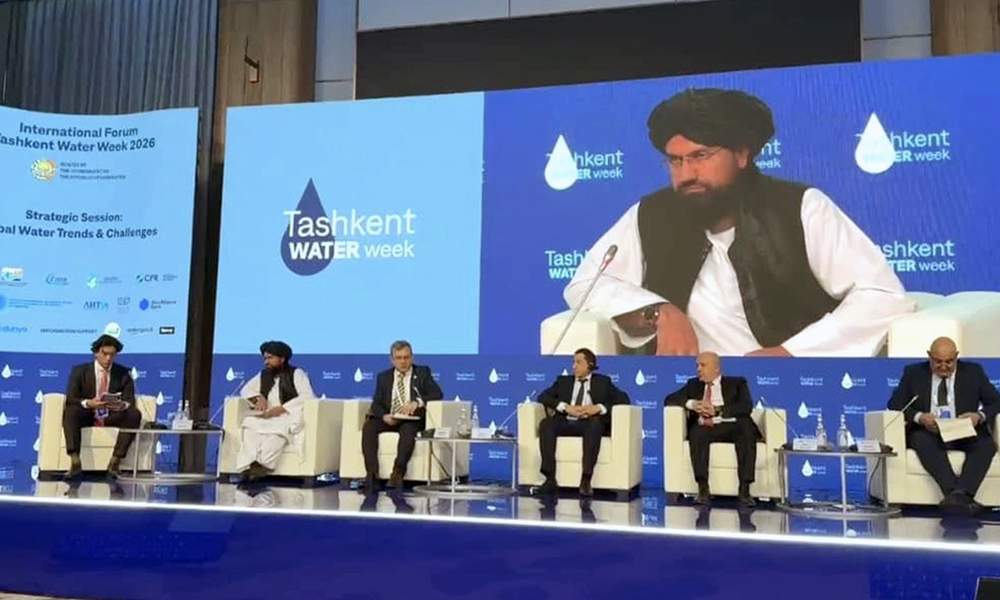
Afghanistan has underscored the importance of water diplomacy and regional cooperation during a ministerial forum held in Tashkent, the capital of Uzbekistan.
The country’s Deputy Minister for Water at the Ministry of Water and Energy participated in the “Water Week” forum, where he called for stronger collaboration among regional partners in managing shared water resources.
Speaking at the event, Mujeeb-ur-Rahman Omar Akhundzada emphasized the need for equitable water distribution between Afghanistan and Central Asian nations. He also highlighted the importance of enhancing water diplomacy and adopting modern technologies to improve water management systems.
Akhundzada further stressed the urgency of joint regional efforts to tackle the effects of climate change and prevent environmental degradation along the Amu Darya River. He reaffirmed Afghanistan’s commitment to respecting the water rights of neighboring countries while strengthening its domestic water infrastructure.
On the sidelines of the forum, Akhundzada met with Shavkat Khamrayev to discuss expanding bilateral cooperation in water management between Afghanistan and Uzbekistan.
Afghanistan’s participation in the forum is seen as a significant step toward boosting its engagement in regional and international water discussions, potentially paving the way for deeper cooperation across Central Asia.
United Nations human rights experts have called for an urgent and lasting ceasefire between Afghanistan and Pakistan following a sharp escalation in cross-Durand Line fighting that has caused widespread civilian suffering.
In a statement issued Tuesday, the experts warned that renewed hostilities since late February have resulted in at least 289 civilian casualties in Afghanistan, including 76 deaths and 213 injuries.
More than 115,000 people have reportedly been displaced, with extensive damage to homes, hospitals, markets, and displacement camps. The violence has also forced school closures and disrupted trade in affected regions.
The latest unrest follows the collapse of a ceasefire agreement reached in October 2025. Fighting reignited after Pakistani airstrikes targeted positions linked to Tehreek-e-Taliban Pakistan (TTP), prompting retaliatory attacks along the disputed Durand Line.
Concerns over civilian harm
UN experts strongly condemned a March 16 airstrike by Pakistan that struck a drug rehabilitation centre in Kabul, reportedly causing mass civilian casualties. They also raised concerns over attacks inside Pakistan attributed to TTP groups, which have also resulted in civilian harm.
“Both sides must commit to a permanent ceasefire, address the root causes of the conflict, and ensure accountability for violations of international law,” the experts said.
They emphasized the obligation of all parties to adhere to international human rights and humanitarian law, particularly the protection of civilians and civilian infrastructure. The experts also called for independent, transparent investigations into alleged violations.
Disputed claims and rising tensions
Pakistan has defended its military operations, saying they were carried out in response to alleged support by Afghan authorities for the TTP, a group under UN sanctions. Authorities in Afghanistan have rejected the claims denying any involvement.
UN experts noted that Pakistan has not publicly presented credible evidence linking TTP attacks directly to Afghan authorities.
They further stressed that under international law, states must not support or tolerate armed groups conducting cross-Durand Line attacks and must resolve disputes through peaceful means.
Calls for dialogue
The United Nations experts confirmed they have been in contact with officials from both countries, urging restraint, de-escalation, and a return to dialogue.
With tensions continuing to rise, they warned that ongoing violence risks further civilian casualties and deepening instability unless immediate steps are taken toward a sustainable peace agreement.
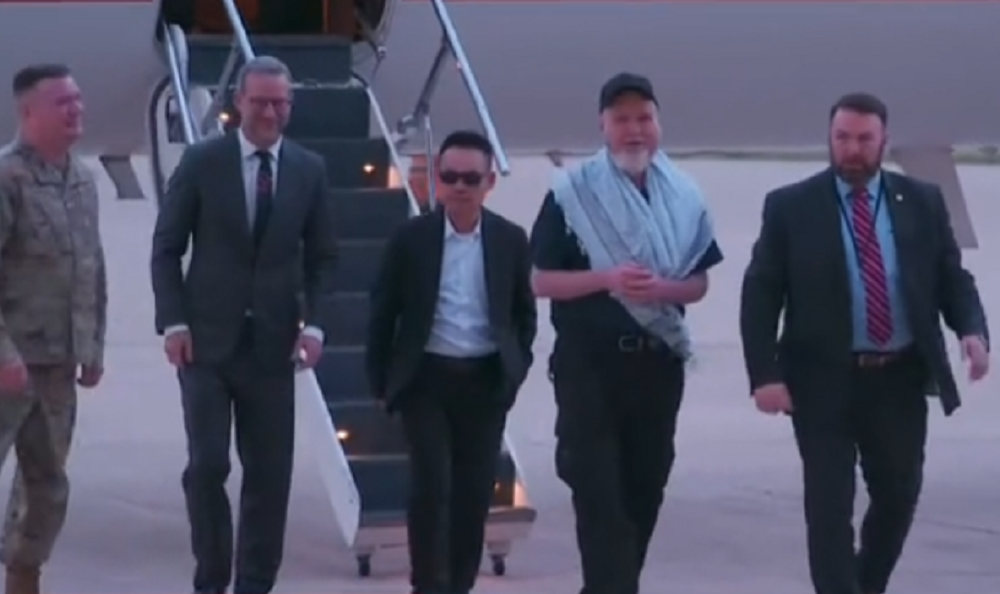
An American citizen, Dennis Coyle, arrived in the United States on Wednesday after being released by the Islamic Emirate in Afghanistan, marking a significant development amid ongoing diplomatic efforts between Washington and Kabul.
U.S. officials confirmed that Coyle arrived on American soil, landing at a major international airport in Texas, where he was met by close family members, including immediate relatives who had long campaigned for his release. Emotional scenes were reported as family members welcomed him home after an extended period in detention.
While authorities have not disclosed full details surrounding his release, officials indicated that quiet diplomatic engagement played a key role in securing his freedom. The case had drawn attention from human rights groups and policymakers, who had called for his release on humanitarian grounds.
Sources familiar with the situation said Coyle is expected to undergo medical evaluations following his return, a standard procedure for detainees released after prolonged confinement. Family members have requested privacy as he begins the process of reintegration.
Coyle’s release comes at a time of complex relations between the United States and the Islamic Emirate, with limited formal diplomatic ties but ongoing indirect engagement on humanitarian and security issues.
Analysts say the development could signal potential openings for further negotiations, particularly regarding other detainees still held in Afghanistan and abroad. It also follows renewed calls by families of other prisoners—including Afghan nationals held overseas—for similar humanitarian consideration.
U.S. officials have not confirmed whether additional releases are under discussion, but emphasized their continued commitment to securing the return of all American citizens detained abroad.
For now, Coyle’s return marks a positive development, offering hope to other families awaiting similar outcomes.


Afghanistan to face Myanmar in crucial AFC clash

Afghanistan highlights water diplomacy at Tashkent ministerial forum

Russia sought to blackmail US using intelligence to Iran, Zelenskiy says

Trump to hit Iran harder if Tehran does not accept defeat, White House says

Tahawol: Efforts to release Mohammad Rahim from Guantanamo Bay Detention Camp

Pakistani military jet downed in Afghanistan’s Jalalabad, pilot captured alive

Afghan Air Force conducts airstrikes in Islamabad, other cities

Prominent Muslim scholar issues fatwa calling for Afghanistan-Pakistan ceasefire

Afghan air force strikes key Pakistani military installations in retaliatory operation

IEA: Special circle in Pakistan has launched mission to destabilize region
Tahawol: Efforts to release Mohammad Rahim from Guantanamo Bay Detention Camp

Saar: End of ceasefire between Afghanistan-Pakistan reviewed

Tahawol: Escalating threats between Iran-US discussed

Tahawol: Possibility of US ground forces entering Iran war discussed

Saar: Using US prisoners as political pressure
-
 Latest News4 days ago
Deadly violence likely without dialogue between Afghanistan and Pakistan: ICG
-
 Latest News3 days ago
Pakistan seeks Russian mediation to resolve Afghanistan tensions
-

 International Sports4 days ago
FIFA World Cup 2026: Play-Off Tournament takes centre stage
-
 Sport4 days ago
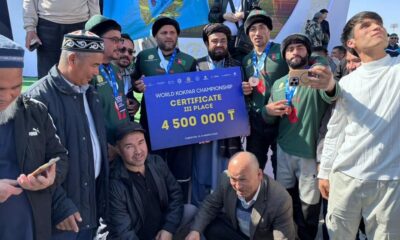
Afghanistan secures third place at 2026 World Kokpar Championship
-
 Business4 days ago
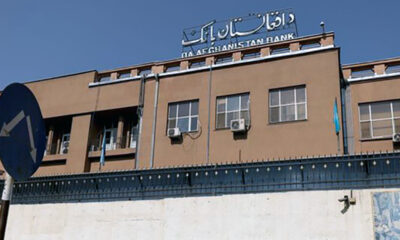
Afghani strengthens nearly 10% against US dollar amid banking sector reforms
-
 Latest News3 days ago
World must re-engage to prevent all-out Afghanistan-Pakistan war: Financial Times
-
 Regional5 days ago
Trump says US considering ‘winding down’ Iran war
-

 Sport2 days ago
Afghanistan squad hit by withdrawals ahead of AFC Asian Cup Qualifiers