
Latest News
Dubai reopens to tourism and expects ‘aggressive’ bounce back

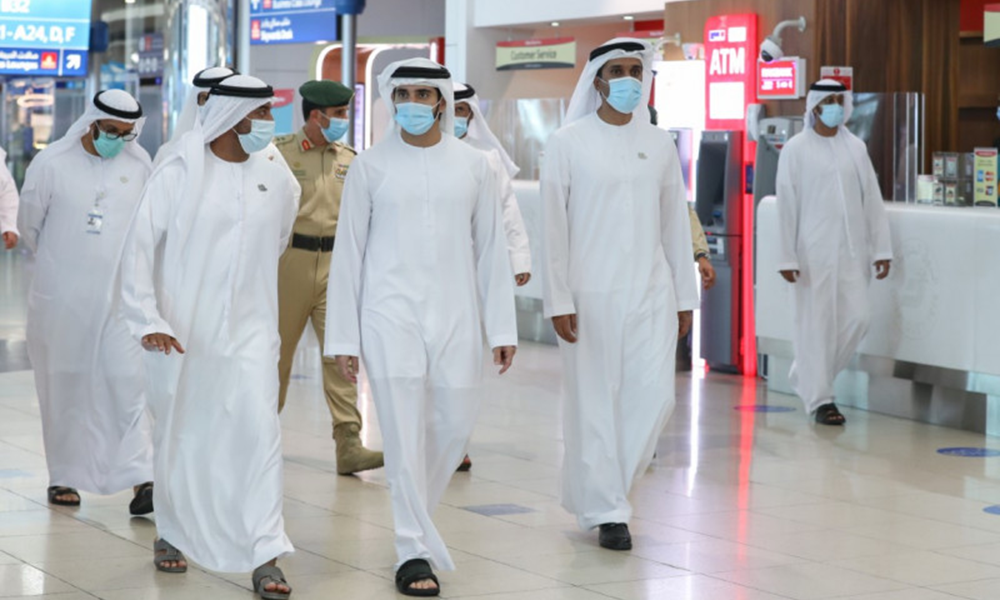
Dubai expects an “aggressive bounce back in tourism by the end of the year after the Middle East hub reopened to holiday-makers on Tuesday.
In an interview with Bloomberg TV on Wednesday, Helal Al Marri, director-general of Dubai’s Department of Tourism and Commerce Marketing, said: “We’re looking forward to seeing aggressive growth coming once things normalize towards the year-end.”
Dubai has spent years transforming itself into a business and tourism hub and attracts millions of visitors a year.
Dubai closed its borders in March and enforced a strict lockdown policy in a bid to curb the spread of COVID-19. Flights in and out of Kabul were also suspended and for three months no visas were issued for Afghans traveling to Dubai.
However, flights have slowly resumed to a handful of countries over the past month, including Afghanistan.
Discussing the latest move to reopen to tourism, Al Marri said: “We’re definitely in a much better place today, people are much more optimistic, and we’re seeing it as definitely something very positive.”
He said that as other countries get things under control, as things normalize, “we definitely see the other side as being a very quick rebound to tourism.”
“We envisage as we move towards the year-end and as the markets do open up, people are going to start recruiting again, people are going to start to really try to drive that growth because that’s what they’re there for with their businesses,” Al Marri said.
This comes after Dubai’s Crown Prince Sheikh Hamdan bin Mohammed bin Rashid Al Maktoum toured Dubai International Airport on Tuesday and said that the Emirate was ready to welcome the world once again through its international airport.
“I have reviewed the procedures and protocols in place to welcome tourists back to Dubai. What we have seen clearly demonstrates Dubai’s comprehensive preparedness to welcome the world once again and resume international tourism.
“We have implemented the highest international safety standards to ensure the wellbeing of travelers and tourists,” Sheikh Hamdan said in a statement.
However, on Wednesday, Emirates airlines updated its travel advisory and informed passengers from selected countries, who intend to fly into Dubai, that they will be required to carry out a COVID-19 test before departure.
Certificates must be issued no more than 96 hours before departure, the Dubai-based airline said.
“All passengers traveling with Emirates from the countries or airports specified below have to carry a COVID-19 negative certificate issued by a local government approved laboratory to be accepted on the flight.
“Where specified, a certificate from a UAE government-designated laboratory in the country of origin is also acceptable,” Emirates stated.
The countries affected are:
Afghanistan
Bangladesh
Egypt
India
Iran
Pakistan
Philippines
Russian Federation
Tanzania
USA – Dallas Fort Worth (DFW), Houston (IAH), Los Angeles (LAX), San Francisco (SFO), Fort Lauderdale (FLL) and Orlando (MCO), including passengers originating from California, Florida and Texas connecting to an Emirates flight to Dubai.







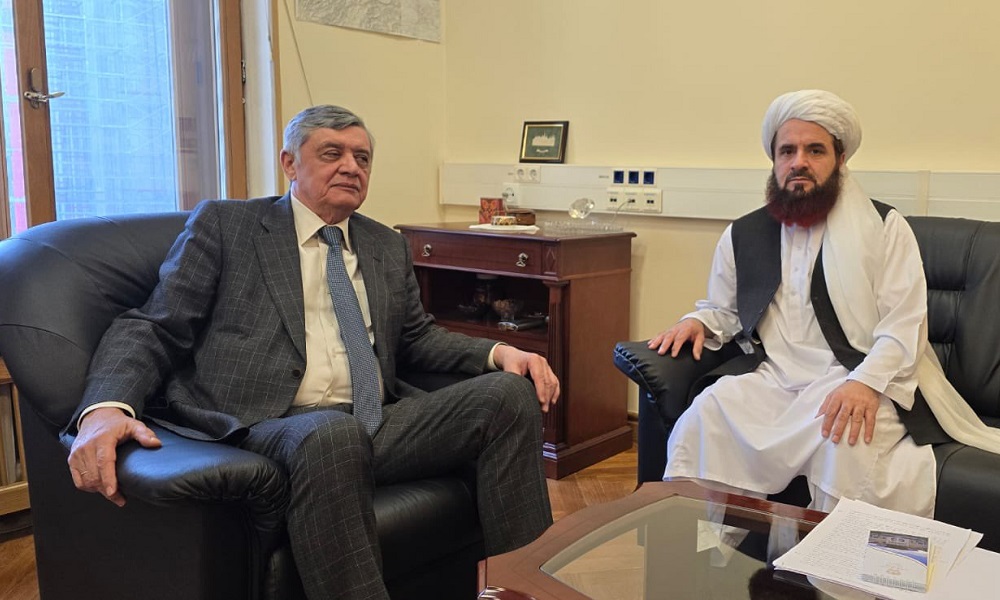
Zamir Kabulov, Russia’s special envoy for Afghanistan, has called the recent clashes between Afghanistan and Pakistan “concerning” and stressed that the disputes should be resolved through dialogue and diplomacy.
In a meeting with Gul Hasan Hasan, the Ambassador of the Islamic Emirate of Afghanistan in Moscow, Kabulov reiterated that Russia is prepared to act as a mediator if needed to help resolve tensions between the two countries, according to a statement issued Wednesday by the Afghan Embassy in Moscow.
The meeting also covered the state of bilateral relations between Afghanistan and Russia and ways to further develop cooperation.
The statement noted that Hasan briefed Kabulov on Pakistan’s violations of Afghan territory and outlined the official position of the Islamic Emirate.
Latest News
WFP warns of worsening humanitarian crisis as insecurity escalates in Afghanistan
Air and ground strikes have reportedly impacted more than 30 districts in Nangarhar, Nuristan, Kunar, Laghman, Paktika, Paktya, Khost, Kandahar and Helmand provinces.
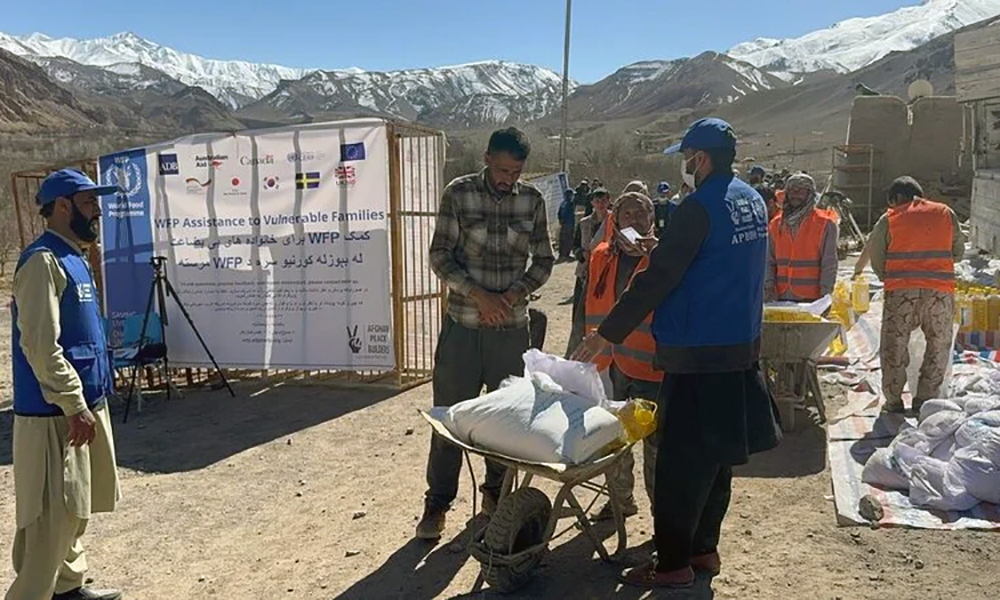
The World Food Programme (WFP) has warned that escalating violence along Afghanistan’s eastern, southern and western borders is deepening an already severe humanitarian crisis, placing hundreds of thousands of vulnerable families at greater risk of hunger and displacement.
Speaking via video link from Bangkok at a press briefing in Geneva, WFP Afghanistan Representative and Country Director John Aylieff said renewed fighting along the disputed Durand Line frontier with Pakistan and ongoing violence in Iran are compounding years of conflict, economic collapse and natural disasters.
Afghanistan shares a roughly 2,400-kilometre frontier with Pakistan, affecting nearly one-third of its provinces. Since late February, intensified violence along the Durand Line has displaced an estimated 20,000 families across eastern, southeastern and southern regions.
Air and ground strikes have reportedly impacted more than 30 districts in Nangarhar, Nuristan, Kunar, Laghman, Paktika, Paktya, Khost, Kandahar and Helmand provinces.
As a result, WFP has temporarily suspended emergency food distributions, school feeding programmes, social protection initiatives and livelihood support activities in several affected areas. Approximately 160,000 people have been impacted by the suspension of emergency food assistance.
The renewed conflict has struck communities still recovering from the August 31 earthquake that devastated parts of eastern Afghanistan, particularly in mountainous Kunar and Nangarhar provinces. Many families who lost homes and livelihoods in that disaster now find themselves once again on the frontline of violence.
WFP noted that more than half of the affected districts were already facing emergency levels of hunger, while four of the impacted provinces are experiencing critical levels of acute child malnutrition.
On Afghanistan’s western border, ongoing instability in Iran is raising concerns about a new wave of returnees. Afghanistan recorded more than 2.5 million returns from Iran and Pakistan in 2025, and projections for 2026 had already anticipated similar numbers before the latest escalation.
Increased fighting could drive even higher returns, further straining limited resources.
WFP said it supported over half a million returnees at border crossings in 2025 with cash assistance, fortified biscuits and specialized nutrition support for women and children.
For many returnees, coming home means confronting unemployment, food shortages and renewed insecurity.
WFP shared the example of a father of four who returned from Iran after losing his factory job, only to find no work and insufficient food for his family in Afghanistan. Such cases underscore the growing vulnerability of returnees amid deteriorating conditions.
Funding shortfalls threaten aid response
Afghanistan remains one of the world’s most severe hunger crises, with 17.4 million people — roughly one in three Afghans — in urgent need of food assistance. An estimated 3.7 million children are projected to require treatment for acute malnutrition in 2026.
WFP warned that its emergency operations face a critical funding shortfall. By April 2026, funding for life-saving assistance is expected to run out unless additional support is secured.
The agency requires $313 million over the next six months to sustain operations.
With rising displacement, potential mass returns and ongoing conflict, WFP urged the international community not to scale back support at what it described as a pivotal moment for Afghanistan’s humanitarian response.
Latest News
Amir Khan Muttaqi, Zhao Xing discuss regional security and violations of Afghan territory
Respect for Afghanistan’s sovereignty and territorial integrity, he said, remains essential for fostering regional stability and building trust among neighboring states.
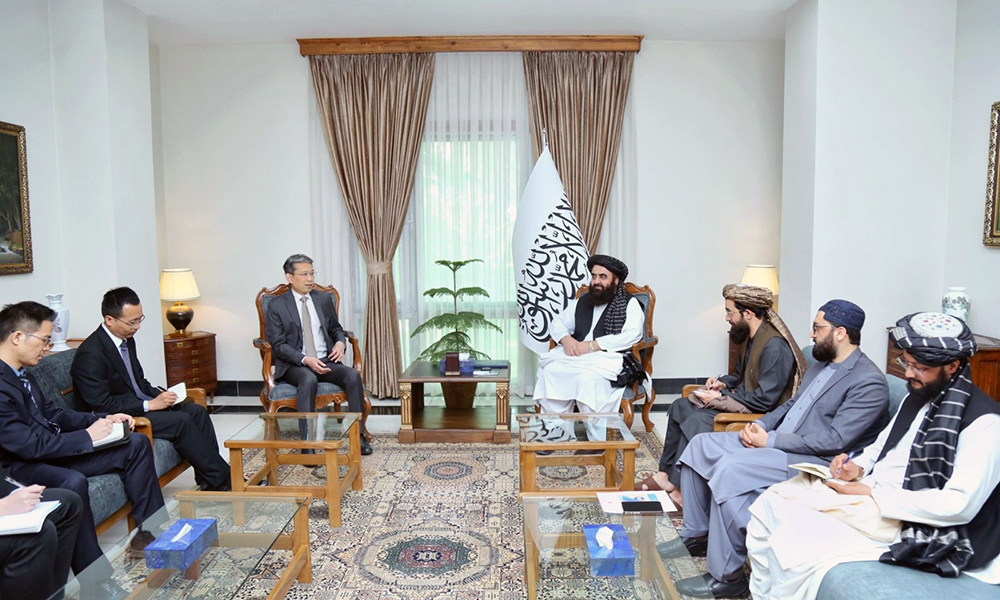
Afghanistan’s Foreign Minister Amir Khan Muttaqi met with Chinese Ambassador Zhao Xing in Kabul to review bilateral relations and address recent regional security developments, including what Afghan officials described as violations of Afghan sovereignty by Pakistan.
According to a statement issued after the meeting, the two sides discussed strengthening political and economic cooperation between Afghanistan and China, alongside broader concerns about escalating tensions in the region.
Muttaqi reiterated the Islamic Emirate’s foreign policy approach, describing it as balanced and focused on economic engagement. He emphasized that Afghanistan seeks constructive relations with all countries based on mutual respect, non-interference, and good neighborly ties.
Respect for Afghanistan’s sovereignty and territorial integrity, he said, remains essential for fostering regional stability and building trust among neighboring states.
The discussions reportedly included concerns raised by Afghan officials over incidents involving Pakistan along the disputed Durand Line, which Kabul has characterized as infringements on Afghan soil.
Zhao expressed concern over the evolving regional situation and reaffirmed that China views stability in Afghanistan and the broader region as a shared interest. He underscored Beijing’s support for resolving disputes through dialogue and diplomatic channels rather than escalation.
Zhao also noted that external forces sometimes attempt to disrupt regional stability and development, adding that countries in the region can counter such challenges through closer coordination and cooperation.
China and Afghanistan have maintained diplomatic engagement in recent years, with economic cooperation — particularly in trade, mining and infrastructure — forming a central pillar of their bilateral relationship.


Tahawol: Discussion on ongoing US–Israel war with Iran

Iran postpones Khamenei mourning ceremony amid Israeli threats

Saar: Turkiye’s efforts to revive ceasefire between Kabul-Islamabad

NATO condemns Iran’s targeting of Türkiye, reaffirms strong defense posture

At least 80 killed after US submarine sinks Iranian warship near Sri Lanka

Pakistani military jet downed in Afghanistan’s Jalalabad, pilot captured alive

Afghan Air Force conducts airstrikes in Islamabad, other cities

IEA releases three Pakistani soldiers to mark Ramadan

Afghanistan’s Chief of Armed Forces underscores readiness and equipment for national defense

Afghanistan welcomes investment and technology partnerships with India
Tahawol: Discussion on ongoing US–Israel war with Iran
Saar: Turkiye’s efforts to revive ceasefire between Kabul-Islamabad

Tahawol: Discussion on ongoing conflicts between Afghanistan and Pakistan

Saar: Ongoing retaliatory operations against Pakistan discussed

Saar: Afghan forces’ operation against Pakistani military
-
 Latest News4 days ago
Pakistani military jet downed in Afghanistan’s Jalalabad, pilot captured alive
-

 Latest News2 days ago
Afghan air force strikes key Pakistani military installations in retaliatory operation
-
 Latest News4 days ago
Afghan forces conduct fresh airstrikes on Pakistani military targets
-
 World4 days ago
US lawmakers, world leaders react to death of Ayatollah Ali Khamenei after Iran strikes
-
 Latest News5 days ago
UAE and Iran call for diplomatic resolution to Afghanistan–Pakistan tensions
-
 Regional3 days ago
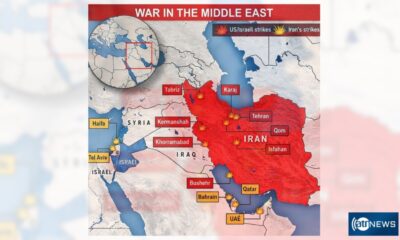
Iran launches widespread drone and missile strikes on Gulf states amid US-Israeli attacks
-
 Regional2 days ago
Middle East conflict intensifies; UK base in Cyprus targeted
-
 Regional3 days ago
Iran to form interim leadership council as officials vow retaliation after Ayatollah’s death