
Latest News
EU and IFC launch €5 million program to support Afghanistan’s private sector
The initiative is part of broader cooperation between the EU and the World Bank Group to promote inclusive, private sector–led economic recovery in Afghanistan.


The European Union has launched a new €5 million programme in partnership with the International Finance Corporation (IFC), a member of the World Bank Group, aimed at stabilising Afghanistan’s private sector and supporting job creation across the country.
Under a newly signed administration agreement, the funding will support the Afghanistan Private Sector Stabilisation Programme, which seeks to boost small and medium-sized enterprises (SMEs), encourage entrepreneurship and expand access to financial services.
The initiative is part of broader cooperation between the EU and the World Bank Group to promote inclusive, private sector–led economic recovery in Afghanistan.
The program places a strong emphasis on the economic participation of women, youth and returnees, and will work closely with private sector actors to improve the business environment and create sustainable livelihoods.
It is designed to complement existing EU efforts, particularly in rural development and microfinance, and will be reinforced by future World Bank initiatives.
Scheduled to begin next month and run for 42 months, the program will focus on five key areas: strengthening private sector coordination and advocacy; building the capacity of SMEs and start-ups, especially those involving women, returnees and internally displaced persons; improving financial inclusion; mobilizing private capital to generate jobs in key sectors; and expanding women’s economic participation through greater private sector engagement.
EU Chargé d’Affaires to Afghanistan, Veronika Boskovic Pohar, said the initiative reflects the EU’s comprehensive support for the Afghan population, ranging from humanitarian assistance to longer-term economic recovery. She said the program is intended to promote job creation and entrepreneurship in strategic value chains, with a particular focus on women, youth and returnees.
IFC Regional Director for the Middle East, Pakistan and Afghanistan, Khawaja Aftab Ahmed, said the agreement underscores a shared commitment to supporting Afghan entrepreneurs.
He noted that strengthening businesses is a practical way to protect livelihoods and help Afghans rebuild their economy with dignity, even amid ongoing challenges.



Latest News
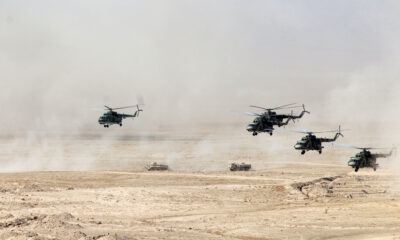
CSTO to strengthen Tajik–Afghan border security amid escalating clashes
The CSTO, which includes Russia, Belarus, Kazakhstan, Kyrgyzstan, and Tajikistan, has pledged to ensure the region’s border security is strengthened in light of the growing instability.
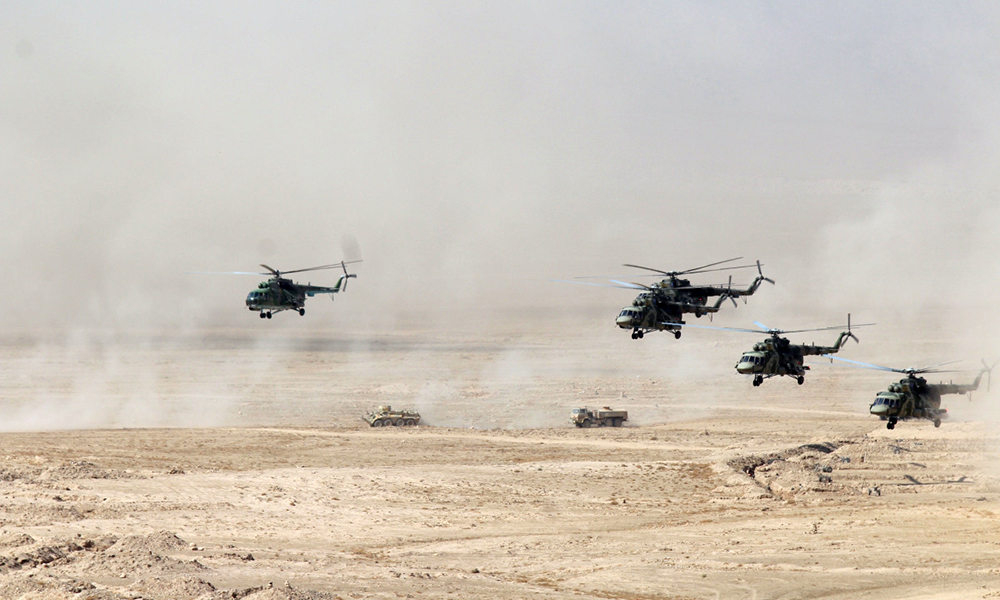
The Russia-led Collective Security Treaty Organization (CSTO) is stepping up efforts to enhance security along the Tajik–Afghan border, following a series of rising clashes in the region. The decision comes as Tajikistan grapples with increasing instability at the border, exacerbated by violent incidents and the growing presence of armed groups.
On January 29, Tajik border forces engaged in a deadly firefight with suspected drug traffickers in the Khatlon Province, resulting in the deaths of three traffickers. Others managed to flee into Afghanistan. Fortunately, no casualties were reported among Tajik forces. The confrontation also led to the seizure of weapons, ammunition, and over 70 packages of illicit narcotics, including hashish and opium.
This incident underscores the intensifying security challenges along the border, where armed clashes have surged in recent months. Notably, in November, a series of attacks targeted Chinese workers in the region, killing five individuals and prompting China to suspend several infrastructure and mining projects due to safety concerns.
To address these escalating security threats, CSTO Secretary General Taalatbek Masadykov confirmed that the organization is finalizing plans to deliver advanced military equipment to bolster Tajikistan’s border defense capabilities. Masadykov stated that CSTO member states are currently coordinating the types of weapons, military gear, and technical resources to be provided, with contracts and suppliers still under negotiation.
The CSTO, which includes Russia, Belarus, Kazakhstan, Kyrgyzstan, and Tajikistan, has pledged to ensure the region’s border security is strengthened in light of the growing instability. However, no specific timeline has been set for the delivery of the new equipment.
As tensions continue to rise, the international community is closely monitoring developments, with concerns mounting over the potential spillover of violence from Afghanistan into neighboring Central Asian countries.
Latest News
Mujahid: IEA seeks positive ties with US, denies receiving foreign aid
“The policy of the Islamic Emirate is based on self-reliance. Afghans must resolve their internal challenges themselves,” Mujahid said.
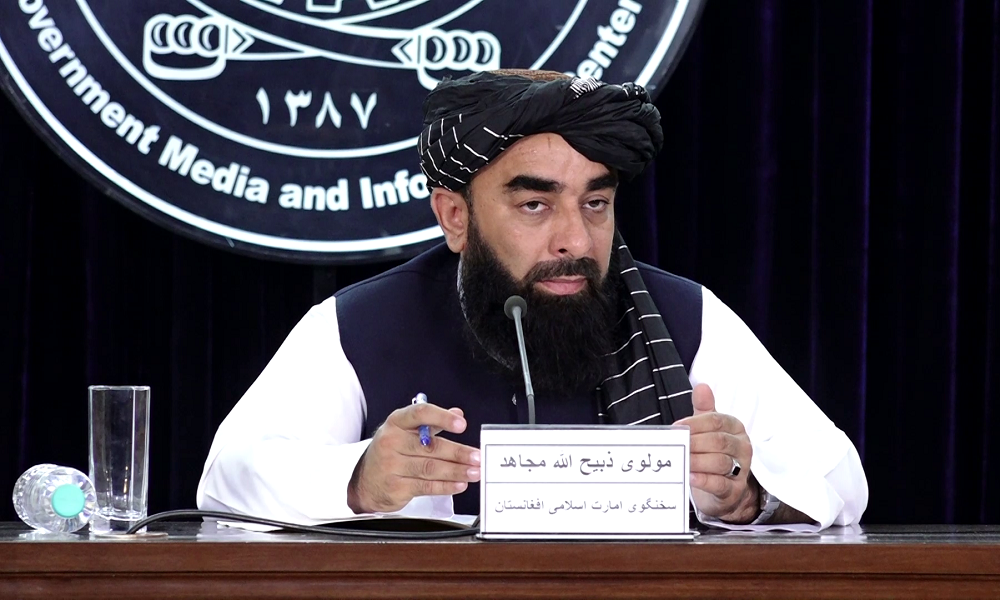
Zabihullah Mujahid, spokesperson for the Islamic Emirate of Afghanistan (IEA), said the group seeks positive and balanced relations with all countries, including the United States, while insisting that no foreign financial aid has been provided directly to the Emirate or the Afghan government.
In an exclusive interview with Payam Afghan TV, Mujahid responded to recent U.S. Senate legislation aimed at restricting aid to Afghanistan, stating that Washington has not sent any assistance directly to the Islamic Emirate. He said humanitarian aid to Afghanistan has been suspended or provided solely on humanitarian grounds.
Mujahid added that past international assistance was channeled through domestic institutions and human rights organizations and remained under the control of those entities, with no direct involvement from the Islamic Emirate.
“The policy of the Islamic Emirate is based on self-reliance. Afghans must resolve their internal challenges themselves,” Mujahid said.
He emphasized that the Emirate’s focus is on attracting investment and promoting economic development while safeguarding national sovereignty and preventing foreign political interference. Mujahid cited engagement with China, Russia, and neighboring countries as examples of this approach.
He concluded that the Islamic Emirate is open to cooperation with European and American investors, aiming to turn Afghanistan into a regional and global economic hub, provided its sovereignty and internal affairs are fully respected.
Latest News
US Senate advances bill to block funds reaching IEA
Committee Chairman Senator Jim Risch cited the human cost of the Afghanistan war, noting that more than 2,000 U.S. service members were killed and over 20,000 injured during the conflict.
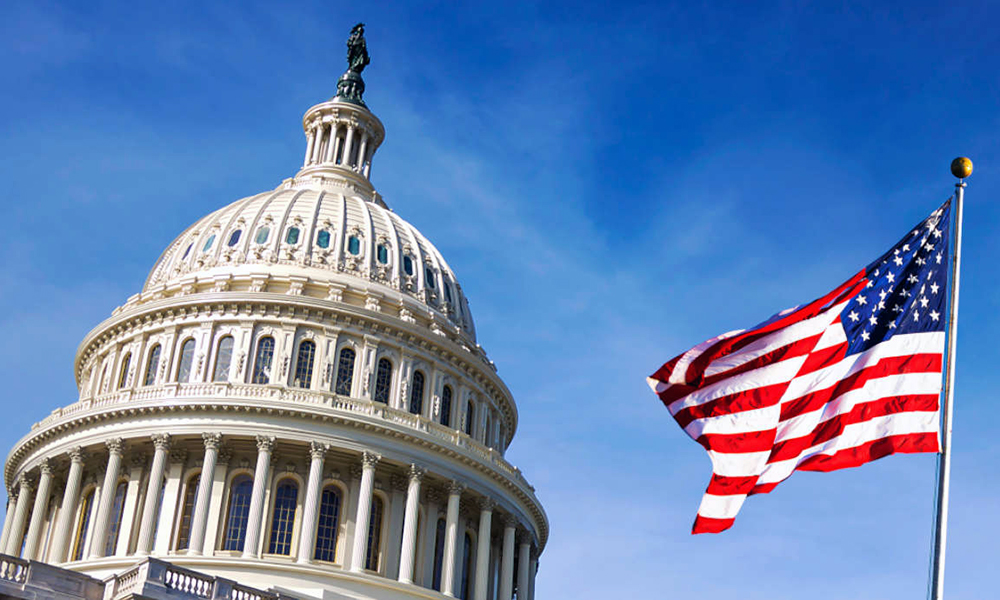
The U.S. Senate has advanced legislation aimed at preventing American taxpayer funds from reaching the Islamic Emirate of Afghanistan (IEA), marking a new step in Washington’s efforts to restrict financial support to groups it designates as terrorist organizations.
The No Tax Dollars for Terrorists Act, approved by the Senate Foreign Relations Committee, now moves to the full Senate for consideration. The bill seeks to bar U.S. funds from directly or indirectly benefiting the IEA and establishes official U.S. policy opposing financial or material support to the group by foreign governments or non-governmental organizations.
Committee Chairman Senator Jim Risch cited the human cost of the Afghanistan war, noting that more than 2,000 U.S. service members were killed and over 20,000 injured during the conflict. He described any transfer of U.S. funds to the IEA as “a betrayal of the victims of the war,” calling the legislation a common-sense measure to ensure taxpayer dollars are not diverted to militant groups.
The bill was introduced in January 2025 by Senator Tim Sheehy, with co-sponsorship from Senators Bill Hagerty, Tommy Tuberville, and Steve Daines. It also directs the State Department to develop strategies to counter foreign assistance that could benefit the IEA.
In response, Zabihullah Mujahid, spokesperson for the Islamic Emirate, said the United States has not provided funds directly to the Emirate. He added that international assistance entering Afghanistan is intended exclusively for humanitarian purposes.
Supporters of the legislation say it reinforces U.S. efforts to cut off financial resources to militant groups while allowing humanitarian aid to continue through international organizations operating in Afghanistan.


CSTO to strengthen Tajik–Afghan border security amid escalating clashes

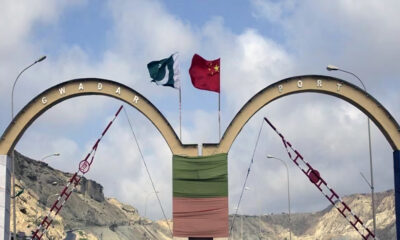
Pakistan, China plan to extend CPEC to Afghanistan, revive trilateral framework

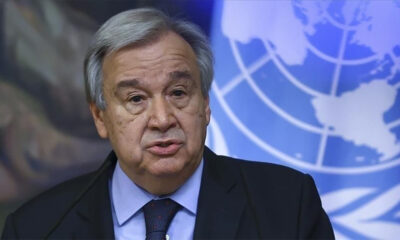
Guterres warns of UN’s ‘imminent financial collapse’

Iran ready for ‘fair’ talks with US but not on defence capabilities

Afghanistan roar into U19 World Cup 2026 semis after defeating Ireland

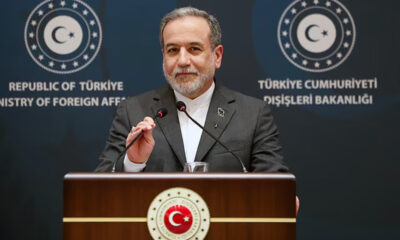
Turkey withdraws from Afghanistan-Pakistan mediation amid rising tensions

ICG report says Pakistan most impacted by IEA’s return in Afghanistan

Pakistan approves re-export of stranded Afghan transit trade cargo

Afghanistan–China joint market opens in Kabul

Afghanistan set to face West Indies in crucial T20I series

Tahawol: Defense Ministry’s high-level visit to Russia discussed

Saar: Ongoing tensions between US and Iran reviewed

Tahawol: Tashkent’s interest in military cooperation with Kabul discussed

Saar: Kabul, Ashgabat call for regional cooperation discussed

Tahawol: Russia’s reaction to recent US moves discussed
-
 Sport3 days ago
AFC Futsal Asian Cup 2026: Day One Review
-

 Sport5 days ago
Thrilling battles await as AFC Futsal Asian Cup Indonesia 2026 set to kickoff in hours
-

 Sport4 days ago
Afghanistan’s Mahdi Norouzi ruled out of AFC Futsal Asian Cup due to injury
-

 Sport3 days ago
Scotland name Afghanistan-born Zainullah Ihsan in T20 World Cup squad
-

 Sport2 days ago
Afghanistan shine on Day Two of AFC Futsal Asian Cup Indonesia 2026
-
 Sport2 days ago
Afghanistan eye second straight win ahead of Malaysia clash at AFC Futsal Asian Cup
-
 Business4 days ago
Afghanistan’s exports drop sharply in December 2025: World Bank
-

 Latest News2 days ago
Australia announces $50 million in new humanitarian aid for Afghanistan