
International Sports
FIFA announces hosts and groups for expanded FIFA Series 2026
Under the expanded format announced in November 2025, the FIFA Series 2026 will feature 12 groups of four teams each, to be played during the international match windows in March and April.

FIFA has confirmed the full list of hosts and group compositions for the expanded FIFA Series 2026 bringing together 48 national teams from all six confederations in one of the most inclusive international initiatives in global football.
Under the expanded format announced in November 2025, the FIFA Series 2026 will feature 12 groups of four teams each, to be played during the international match windows in March and April. The participating teams represent almost a quarter of FIFA’s 211 Member Associations, underscoring the growing scale and global reach of the competition.
Eleven FIFA Member Associations will host the events, with Rwanda staging two groups, bringing the total number of groups to 12.
The series includes nine men’s groups and three women’s groups, with competitions taking place across Africa, Asia, Europe, Oceania, North America and South America.
The men’s groups will be hosted by Australia, Azerbaijan, Indonesia, Kazakhstan, New Zealand, Puerto Rico, Rwanda and Uzbekistan, while the women’s groups will be staged in Brazil, Côte d’Ivoire and Thailand.
FIFA said the line-up highlights the truly global nature of the FIFA Series and its commitment to supporting both men’s and women’s national teams.
All matches in the FIFA Series 2026 will be broadcast globally, improving access for fans worldwide and increasing exposure for participating national teams, particularly those from emerging football nations.
The competition brings together teams with a wide range of competitive profiles.
On the men’s side, participants range from established teams such as Australia, currently ranked 26th in the FIFA/Coca-Cola World Ranking, to developing nations like the US Virgin Islands, ranked 207th. In the women’s competition, teams include Brazil, ranked seventh globally, as well as Turks and Caicos Islands, ranked 194th.
Five men’s teams involved in the FIFA Series 2026 — Australia, Cabo Verde, Curaçao, New Zealand and Uzbekistan — have already qualified for the FIFA World Cup 2026™, adding competitive relevance to the development-focused tournament.
Beyond on-field competition, FIFA said the series also supports off-field development, giving host and participating associations valuable experience in event delivery, referee development, competition organisation and operational planning under conditions similar to major international tournaments.
FIFA added that the FIFA Series 2026 aligns with its Strategic Objectives for the Global Game 2023–2027, offering cross-confederation competition without adding pressure to the international match calendar, while promoting technical growth, organisational development and global exchange. Match schedules for all events will be announced at a later date.
MEN’S GROUPS
Australia (AFC)
Australia (host)
Cameroon
China PR
Curaçao
Azerbaijan (UEFA)
Azerbaijan (host)
Oman
Sierra Leone
St Lucia
Indonesia (AFC)
Bulgaria
Indonesia (host)
Solomon Islands
St Kitts and Nevis
Kazakhstan (UEFA)
Comoros
Kazakhstan (host)
Kuwait
Namibia
New Zealand (OFC)
Cabo Verde
Chile
Finland
New Zealand (host)
Puerto Rico (Concacaf)
American Samoa
Guam
Puerto Rico (host)
US Virgin Islands
Rwanda(CAF) – Group A
Estonia
Grenada
Kenya
Rwanda (host)
Rwanda (CAF) – Group B
Aruba
Liechtenstein
Macau
Tanzania
Uzbekistan (AFC)
Gabon
Trinidad and Tobago
Uzbekistan (host)
Venezuela
Match schedules for all FIFA Series 2026 events will be announced in due course.




International Sports
Crystal Palace cruise into EFL Cup fourth round
Strand Larsen doubled the advantage eight minutes after the restart, meeting Ben Chilwell’s cross from the left to score his second of the night.

Crystal Palace advanced to the fourth round of the English Football League (EFL) Cup with a comfortable 3-0 victory over Championship side Middlesbrough at Selhurst Park.
Jørgen Strand Larsen scored twice with headers, one in each half, before substitute Daichi Kamada added a superb third to seal Palace’s progress.
Palace, who made eight changes from their 3-2 Premier League win over Fulham, took the lead when Óscar Mingueza delivered a cross from the right for Strand Larsen to head home.
Strand Larsen doubled the advantage eight minutes after the restart, meeting Ben Chilwell’s cross from the left to score his second of the night.
Kamada then completed the victory shortly after coming on, expertly chipping the ball over Middlesbrough goalkeeper Sol Brynn from outside the penalty area.
Middlesbrough struggled to create clear chances, with Amario Cozier-Duberry forcing Palace goalkeeper Walter Benítez into a save with 15 minutes remaining.
Strand Larsen was named Player of the Match after a standout performance.
Chelsea vs Leeds live on ATN
Football fans in Afghanistan can watch tonight’s EFL Cup action live and exclusively on Ariana Television Network (ATN), with Chelsea taking on Leeds United.
ATN will broadcast Chelsea vs Leeds live tonight, giving fans across Afghanistan the chance to watch the match exclusively on Ariana Television.
International Sports
Messi returns to Inter Miami after Argentina retirement
The Argentine superstar marked his return by creating both of Miami’s goals, underlining his continued importance to the club after revealing his decision to step away from the Argentina national team.
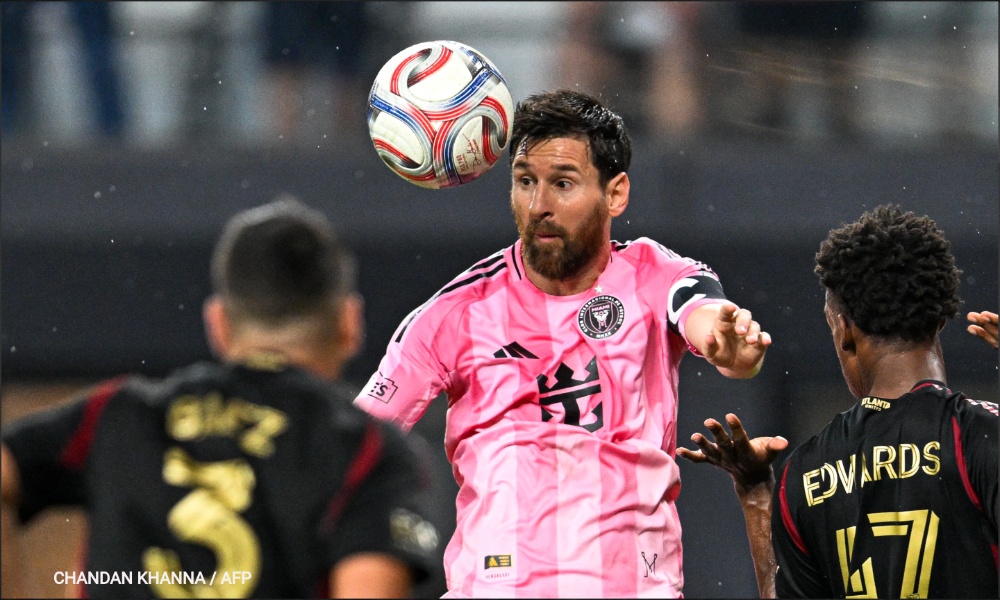
Lionel Messi returned to Inter Miami action on Saturday following his announcement that he is retiring from international football, helping the Major League Soccer champions to a 2-2 draw with Atlanta United.
The Argentine superstar marked his return by creating both of Miami’s goals, underlining his continued importance to the club just days after revealing his decision to step away from the Argentina national team.
The match was delayed by 90 minutes because of thunderstorms and lightning, but Messi provided plenty of fireworks once play finally got underway.
Miami opened the scoring in the 32nd minute when Brazilian midfielder Casemiro rose to head home Messi’s corner.
Atlanta hit back just three minutes later, with former Newcastle forward Miguel Almirón firing a low shot beyond the Miami defence.
Messi was again at the centre of the action just before half-time. He started a move down the left that eventually allowed former Liverpool and Barcelona striker Luis Suárez to calmly finish and restore Miami’s lead.
But Atlanta refused to surrender, with Swiss striker Breel Embolo converting an 87th-minute penalty to earn the visitors a point.
For Messi, the match represented his first appearance since announcing his international retirement and offered an early glimpse of the next chapter of his career, with his focus now firmly on Inter Miami.
The result came during a busy night of MLS action.
Toronto and Chicago played out a remarkable 4-4 draw, while Philadelphia defeated Montreal 2-0, with 16-year-old Cavan Sullivan scoring his fourth goal of the season.
Sullivan now has 11 goal contributions this season, surpassing Freddy Adu’s previous record of 10 for a 16-year-old.
In Orlando, Antoine Griezmann scored in the 28th minute to give the hosts a 1-0 victory over San Diego, while Austin rescued a 1-1 draw against San Jose through Guilherme Biro’s seventh-minute stoppage-time equaliser.
International Sports
Iranian clubs to face Gulf opponents at neutral venues in Asian Champions League Elite
Tehran-based Esteghlal and Tabriz-based Tractor will face UAE sides Al Ain, Al Wasl and Shabab Al Ahli, as well as Qatar’s Al Gharafa, Al Sadd and Al Shamal.
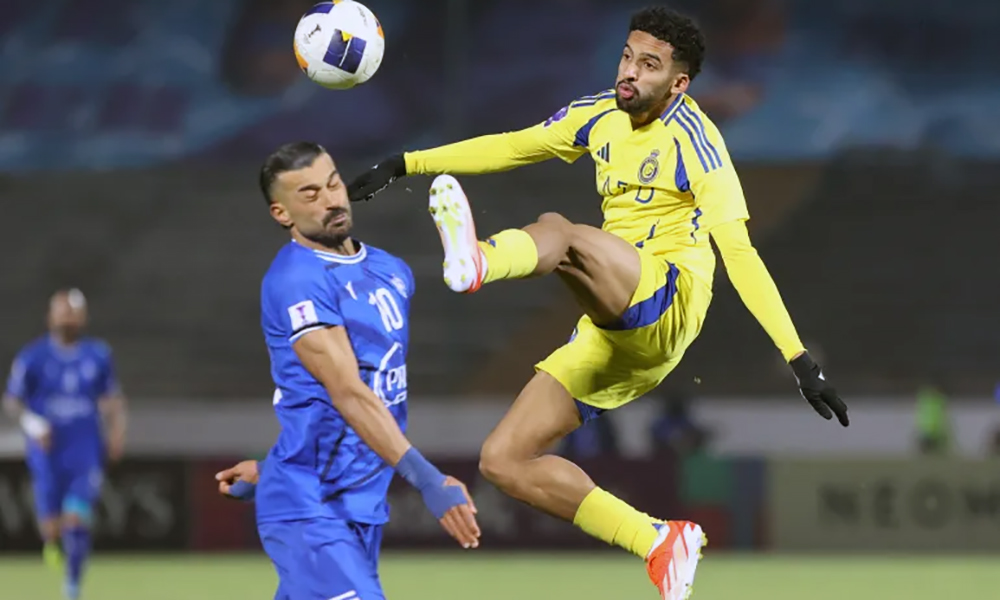
Iranian clubs Esteghlal and Tractor will play their AFC Champions League Elite matches against teams from Qatar and the United Arab Emirates at neutral venues, following the August 18 league-stage draw in Kuala Lumpur.
The Asian Football Confederation’s (AFC) premier club competition is scheduled to begin on September 14, with matches involving the Iranian clubs to be played at neutral venues.
Tehran-based Esteghlal and Tabriz-based Tractor will face UAE sides Al Ain, Al Wasl and Shabab Al Ahli, as well as Qatar’s Al Gharafa, Al Sadd and Al Shamal.
The 2026/27 AFC Champions League Elite features an expanded 32-team format, with 16 clubs competing in each of the Western and Eastern zones. The top eight teams from each zone will advance to the round of 16.
The knockout stages will continue through the regional rounds, with the quarterfinals, semifinals and final scheduled to be played in Saudi Arabia from April 23 to May 1, 2027.
Meanwhile, Ariana Television Network (ATN) will broadcast AFC Champions League Elite matches across Afghanistan, bringing fans nationwide live coverage of some of the biggest club football fixtures in Asia.
Fans across Afghanistan are urged to stay tuned to ATN for more updates, match schedules and broadcast details.


Sorkh Poshan Khafi beat Toofan Herat 3-1 in Afghanistan Champions League

ACL: Arman FC fight back to beat Khurasan Faryab 2-1

Tahawol: Impact of middle East war on Afghanistan

Pakistan says Kohat attackers had roots in Afghanistan

Saar: Pakistan blames Afghanistan for deadly attack

Four mediators struggle to secure lasting Pakistan-Afghanistan ceasefire

Syria and Saudi Arabia condemn Kabul bombing, express solidarity with Afghanistan

Afghanistan’s trade diversification challenges Pakistan

Saudi energy group signs major Afghanistan deals covering gas exploration and pipeline plans

ATN secures exclusive rights to broadcast T20I series in India across Afghanistan
Tahawol: Impact of middle East war on Afghanistan
Saar: Pakistan blames Afghanistan for deadly attack

Tahawol: Kabul’s warning over any threat from Pakistan discussed

Debate on Afghanistan and New Investment Opportunities

Tahawol: Reasons behind Qatari, Turkish security officials’ Kabul visit discussed
-
 Latest News5 days ago
UN warns of mounting humanitarian and human rights pressures in Afghanistan
-

 Regional5 days ago
Saudi Arabia calls alleged Mecca attack a ‘red line’ as Houthis deny involvement
-
 Latest News5 days ago
Five Years On: IEA touts economic growth despite international isolation
-
 Sport5 days ago
India take 2-0 lead in 3-match series against Afghanistan
-

 Latest News4 days ago
Five years out of school: Amnesty raises alarm over Afghan girls’ education
-
 Latest News4 days ago
Russia urges dialogue and economic support for Afghanistan, warns against excessive pressure
-
 Sport4 days ago
ACL: Ariana Khost win, Aino Mina and Khurasan Faryab draw
-
 Latest News3 days ago
Afghanistan seeks stronger ties with Saudi Arabia, dialogue with Pakistan: Mujahid