
Latest News
IEA leader urges scholars to strengthen Sharia implementation and preserve Jihad history
The leader emphasized that implementing Islamic law and properly explaining it to the public are among the key responsibilities of scholars.

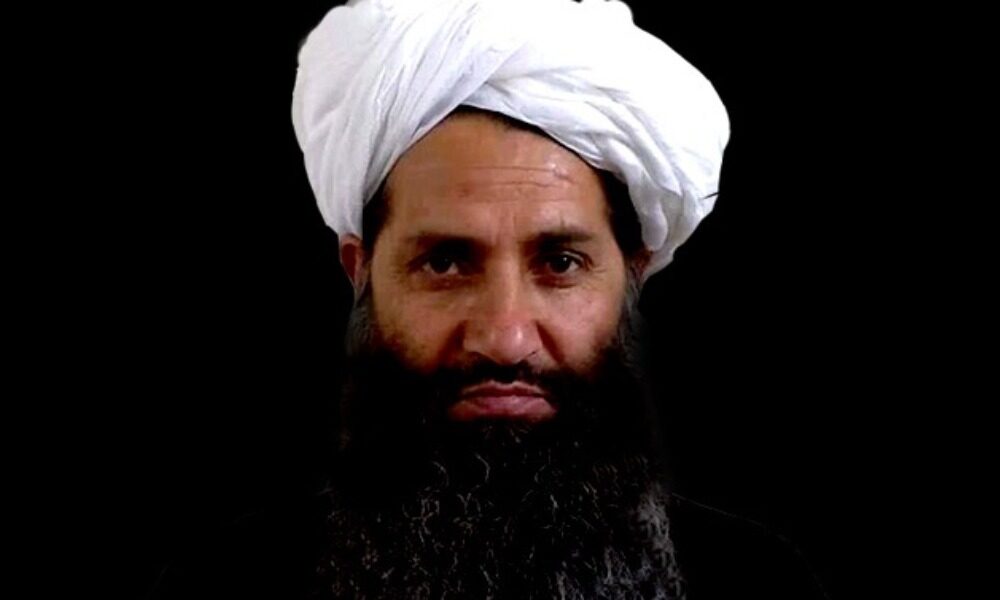
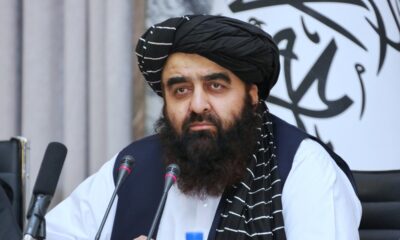
The supreme leader of the Islamic Emirate of Afghanistan Hibatullah Akundzada has called on religious scholars to strengthen the implementation of Sharia and preserve the history of jihad.
The call was made at a meeting with members and officials of the Ulema councils of Parwan and Kapisa provinces, Hamdullah Fitrat, Deputy Spokesman of the Islamic Emirate said.
Fitrat said the meeting was attended by the Foreign Minister, a number of religious scholars, and senior officials of the Islamic Emirate.
During the gathering, the leader praised the activities of the Ulema councils in Parwan and Kapisa, saying scholars now have an important opportunity to promote Islamic teachings and strengthen public awareness among the people.
He said scholars are responsible for addressing religious issues in their provinces and guiding society in accordance with Islamic principles.
“Strengthen unity and solidarity among yourselves, because the unity of scholars leads to the unity of the Muslim Ummah,” the leader told participants, according to Fitrat.
He also stressed the importance of Fiqh discussions, saying such gatherings help improve religious research, clarify religious matters, and strengthen cooperation and brotherhood among scholars.
According to Fitrat, the leader said Allah has honored religious scholars with Islamic knowledge, describing them as inheritors of the prophets and trustees of Allah on earth.
He said scholars throughout history have made sacrifices to protect Islam and Sharia through both intellectual efforts and armed struggle, while also contributing to the spread of religion through books, commentaries, and other religious writings.
The leader emphasized that implementing Islamic law and properly explaining it to the public are among the key responsibilities of scholars.
He also said scholars should help explain decrees and laws issued by the Islamic Emirate and raise public understanding of their importance.
In another part of his speech, the leader called on scholars to cooperate with the Directorate for Preservation of Jihadi Works under the Ministry of Information and Culture to preserve the history and legacy of jihad.
He stressed the importance of documenting martyrdom sites, installing plaques on the graves of martyrs, preparing books and publications about their sacrifices, and recording the history of jihad for future generations.
The leader also urged scholars to educate the public about the sacrifices made by Mujahideen, martyrs, disabled veterans, and orphans so that the history of jihad is not forgotten.
According to the statement, participating scholars renewed their allegiance to the leader of the Islamic Emirate at the end of the meeting and pledged continued support for the leadership and the Islamic system.

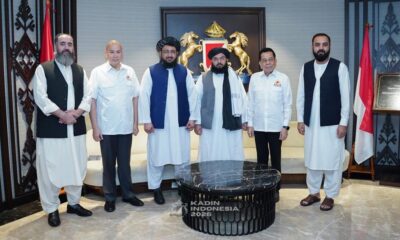


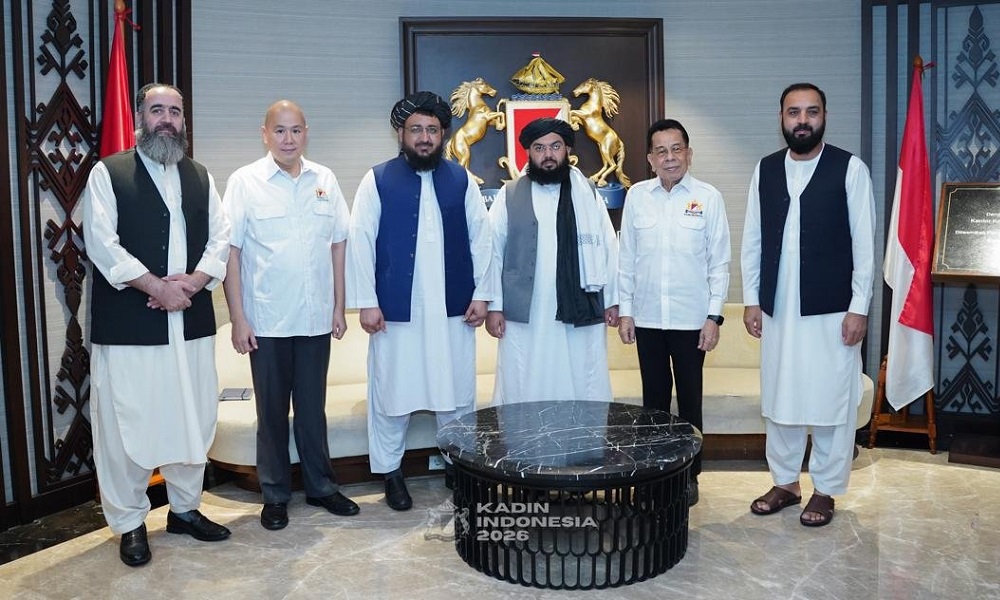
Afghan and Indonesian officials have discussed ways to expand economic and trade relations between the two countries, Afghan Embassy in Indonesia said in a statement on Wednesday.
Shoaib Baryalai, First Political Director of Afghanistan’s Ministry of Foreign Affairs, and Saadullah Baloch, Acting Ambassador of the Islamic Emirate of Afghanistan in Jakarta, met with Mufti Hamka Rajo Basa, Chairman of the Standing Committee on International Treaties at the Indonesian Chamber of Commerce and Industry.
The meeting focused on strengthening private-sector cooperation, holding joint trade exhibitions and exploring existing opportunities to boost economic ties.
The Afghan side also highlighted investment and trade opportunities in Afghanistan, saying improved security and stability have created a more favorable environment for traders and investors.
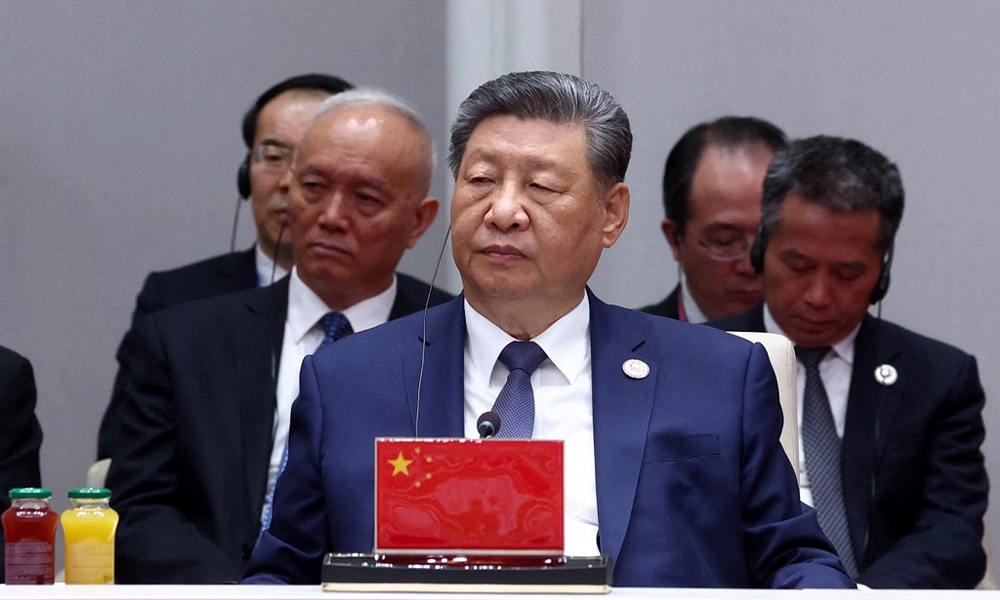
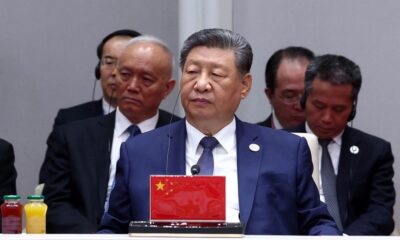
Chinese President Xi Jinping said Tuesday, September 1, that China is ready to strengthen diplomatic efforts to help resolve conflicts in Afghanistan, Ukraine and the Middle East, while calling for greater multilateral cooperation on global security and governance.
Speaking at the 26th Meeting of the Council of Heads of State of the Shanghai Cooperation Organization (SCO) in Bishkek, Kyrgyzstan, Xi said China was prepared to increase communication and coordination with all parties involved in regional conflicts.
“On Ukraine, the Middle East, Afghanistan, and other international and regional hotspot issues, China stands ready to strengthen communication and coordination with all parties, continue tackling both the symptoms and root causes of these issues, and promote political settlement,” Xi said.
He did not provide details on what role Beijing could take in resolving the conflicts or announce any new peace initiative.
Xi calls for stronger SCO role
Much of Xi’s address focused on strengthening the SCO, which marks its 25th anniversary this year.
He said the organization should take greater responsibility amid rising global tensions and what he described as an increasingly persistent “shadow of war.”
“The shadow of war continues to haunt the world. At such a crossroads with humanity’s future at stake, the SCO should step forward to shoulder its historical responsibility and steer the course for the future,” Xi said.
Xi called on SCO members to prioritize economic development, strengthen cooperation against traditional and emerging security threats, and promote dialogue over confrontation.
He also urged greater cooperation in artificial intelligence, digital technology, energy, green industries and transport infrastructure.
China, he said, will establish an international AI application cooperation centre with SCO countries and undertake 100 technological cooperation projects with member states over the next three years.
On security, Xi called for closer coordination against terrorism, separatism, extremism, organized crime, drug trafficking and telecommunications fraud. He also backed stronger multilateral cooperation on nuclear security.
Xi said countries should be treated equally regardless of their size and that regional issues should be addressed through dialogue and consultation.
“We should always advocate that all countries, regardless of their size, are equal, and that regional affairs should be discussed by all countries to bridge differences and build consensus,” he said.
The SCO includes China, Russia, India, Pakistan, Iran and several Central Asian countries, and has increasingly served as a platform for cooperation outside Western-led international institutions.
Latest News
Mujahid: Kabul seeks broader diplomatic and economic ties, including with US
Mujahid said Afghanistan needs diplomatic and economic relations with the United States, arguing that such ties should have been established long ago.
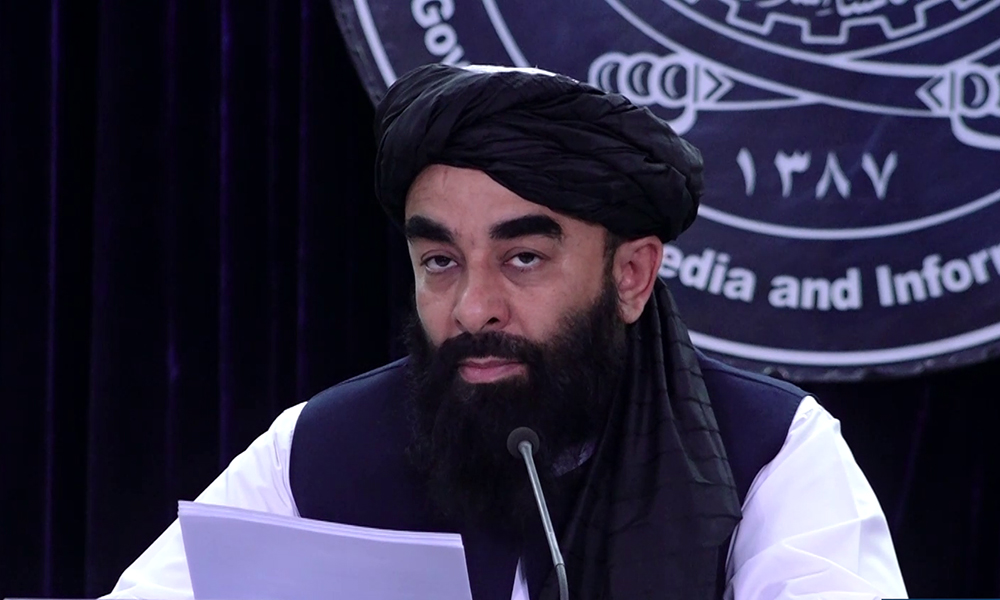
Islamic Emirate spokesperson Zabihullah Mujahid says Afghanistan’s relations with regional, neighboring and influential countries have improved over the past year.
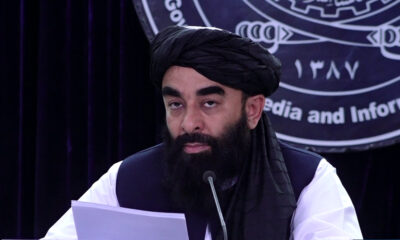
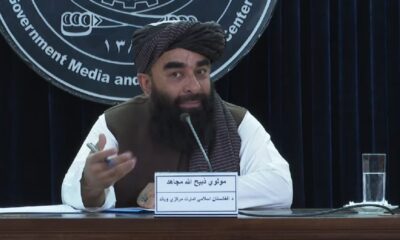
Speaking at the fifth session of the “Government in the Media Mirror” program in Kabul, Mujahid said the Islamic Emirate had made progress during the past Hijri year in expanding political, trade, economic, transit and consular relations with other countries.
Mujahid said Afghanistan needs diplomatic and economic relations with the United States, arguing that such ties should have been established long ago.
He stressed that Kabul’s foreign policy is not limited to Washington and said the Islamic Emirate seeks relations with all countries that do not currently have formal diplomatic ties with Afghanistan.
Mujahid also highlighted the Islamic Emirate’s counter-narcotics efforts, saying more than 46,000 operations were carried out during the past Hijri year, resulting in the seizure of more than 2,159 tons of narcotics.
He added that more than 21,500 hectares of drug crops were destroyed, along with 533 drug-production facilities, during the same period.


Afghanistan, Indonesia discuss expanding economic and trade ties

Xi says China ready to strengthen peace efforts in Afghanistan, Ukraine and Middle East

Tribunal says India cannot withdraw from Indus Waters Treaty with Pakistan

Mujahid: Kabul seeks broader diplomatic and economic ties, including with US

Afghanistan’s regional and European relations expanding

Four mediators struggle to secure lasting Pakistan-Afghanistan ceasefire

HesabPay unveils new visa card and digital payment app in Kabul

AFC Champions League Elite draw nears as Al-Nassr seeded above Al-Hilal

Afghanistan secure direct qualification for 2027 Men’s ODI World Cup

Uzbekistan’s Fergana region strengthens economic ties with Afghanistan

Tahawol: SCO meeting outcome on Afghanistan discussed

Saar: Calls for faster progress on Trans-Afghan Railway project discussed

Tahawol: Five years since the US withdrawal from Afghanistan

Saar: IEA criticizes US for continuing hostile policies

Tahawol: Latest on Stalled Kabul-Islamabad Talks
-
 World4 days ago
US hits Egyptian bank branches with Iran sanctions as war marks six months
-
 World3 days ago
Trump floats idea of renaming Atlantic or Pacific Ocean
-

 Business4 days ago
Afghanistan transports more than 704,000 tonnes of goods by rail in August
-
 Sport2 days ago
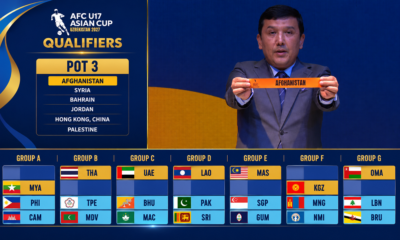
Afghanistan drawn in Group A of AFC U17 Asian Cup qualifiers
-
 Latest News4 days ago
US chose to stay in Afghanistan instead of eliminating terrorism, says Russian FM
-
 Latest News4 days ago
US Congress extends Afghanistan War Commission’s mandate by one year
-
 Climate Change3 days ago
Nepal flood rescue mission enters critical phase as thousands remain missing
-
 Latest News3 days ago
IEA spokesman says government will resolve issue of girls’ education