
IEA’s higher education minister in Russia for Tatarstan forum

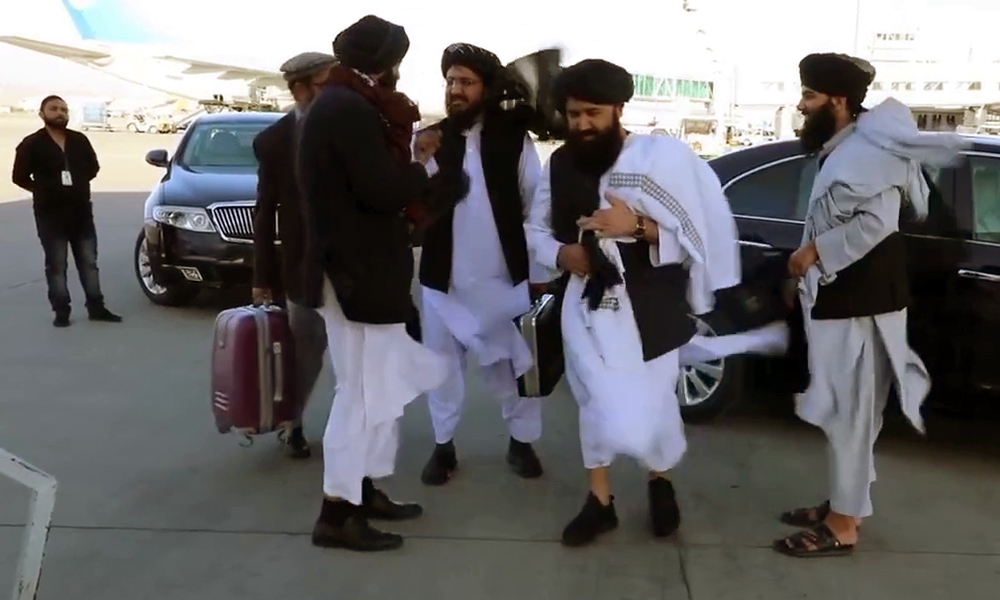
Islamic Emirate of Afghanistan’s (IEA) minister of higher education Nada Mohammad Nadim is heading a delegation to Russia where he will attend an education summit.
The invitation came from the Russian Republic of Tatarstan, the higher education ministry’s spokesman Ziaullah Hashimi said.
According to Hashimi, during his visit, Nadim is also expected to visit a number of universities around the country, along with several other cities in Russia.
“He will also meet with Afghan students currently residing in the country (Russia) to listen to their concerns regarding education,” Hashimi said.
A number of experts believe that such trips can have a positive effect on improving and reforming the curriculum, increasing the quota of scholarships for students, and also gaining better governance experience.
“Every trip that takes place adds to the world view and the heads of the Islamic Emirate can adopt new methods from these trips, and also in the current situation and what message the Minister of Higher Education can give to the world,” said Mohammad Asif Nang, former deputy minister of education.
“Travel by the minister of higher education can expand Afghanistan’s relations with the world and achievements by the minister of higher education in the education sector can be seen,” said Moen Chamkani, another education expert.
This trip comes amid an ongoing education ban on girls and women. While IEA officials have said that the government is working on reopening universities and high schools for girls, no timeline has been given.






Latest News
Bayat Foundation expands Ramadan aid to Maidan Wardak families
In addition to emergency food aid, the Bayat Foundation has implemented long-term development projects across Afghanistan, including the construction of schools, health centers, and mosques, as well as drilling deep-water wells to improve access to safe drinking water in underserved communities.
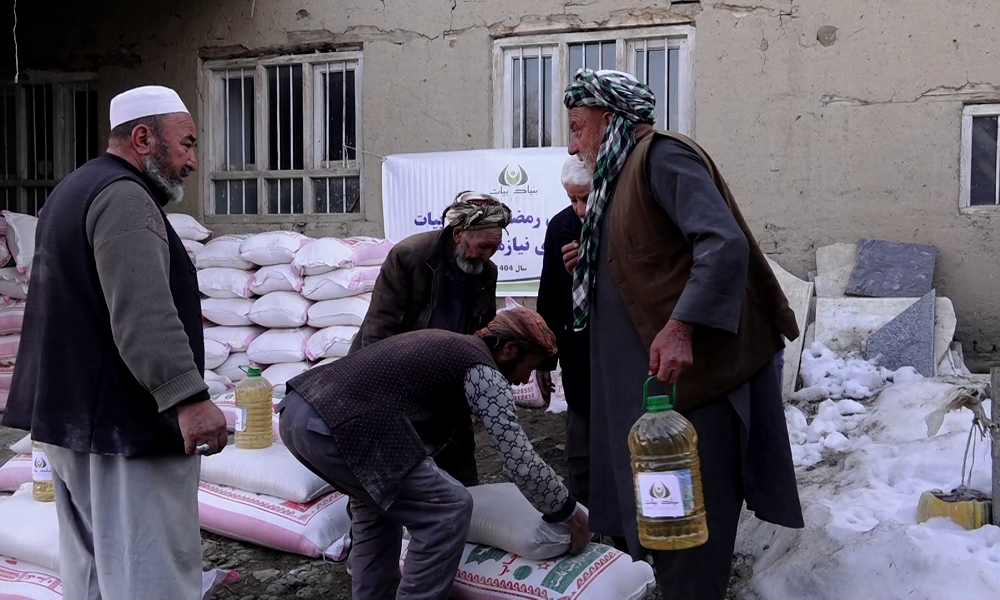
The Bayat Foundation has distributed food packages to dozens of needy families in Maidan Wardak province as part of its ongoing nationwide Ramadan assistance campaign.
Foundation officials said the packages — which included flour, rice, and cooking oil — were delivered following a needs assessment to ensure support reached the most deserving households, including displaced and low-income families struggling to meet basic needs.
Haji Mohammad Ismail, Deputy of the Bayat Foundation, said the initiative builds on similar Ramadan efforts already carried out in provinces. “We are pleased to extend assistance today to deserving and displaced families in Maidan Wardak,” he said, emphasizing the foundation’s commitment to continuing support throughout the holy month.
Afghanistan continues to face severe economic hardship, with high unemployment and reduced income opportunities pushing many families into poverty.
Years of conflict, natural disasters, and economic instability have left millions reliant on humanitarian assistance, particularly during Ramadan, when food insecurity becomes even more acute for vulnerable households.
Aid recipients expressed gratitude for the support and urged other charitable organizations and donors to expand assistance to communities in need. “We sincerely thank the Bayat Foundation for this support,” one beneficiary said.
In addition to emergency food aid, the Bayat Foundation has implemented long-term development projects across Afghanistan, including the construction of schools, health centers, and mosques, as well as drilling deep-water wells to improve access to safe drinking water in underserved communities.
International Sports
Ronaldo’s private jet flies out of Saudi Arabia following US Embassy drone strike in Riyadh

Football superstar Cristiano Ronaldo is thought to have left Saudi Arabia amid rising security concerns following a drone strike on the United States Embassy Riyadh on Tuesday.
Saudi authorities confirmed that two drones struck the embassy compound in the capital, causing minor structural damage and a small fire.
Officials said there were no casualties, but security measures were immediately heightened across the city. The embassy issued safety advisories to U.S. citizens, urging caution and limiting movement near diplomatic facilities.
Flight tracking data indicated that Ronaldo’s private jet departed Riyadh shortly after the incident. While it has not been officially confirmed whether the Portuguese star and his family were on board, the timing of the departure has fueled speculation that the move was prompted by escalating regional tensions.
Ronaldo, who currently plays for Al-Nassr FC, has been based in Saudi Arabia since joining the Saudi Pro League. Neither the player nor his representatives have publicly commented on the reported departure.
The embassy attack comes amid broader instability in the region, with increased drone and missile activity targeting diplomatic and strategic sites.
Saudi security forces remain on high alert as authorities investigate the source of the strike and assess the wider implications for regional stability.
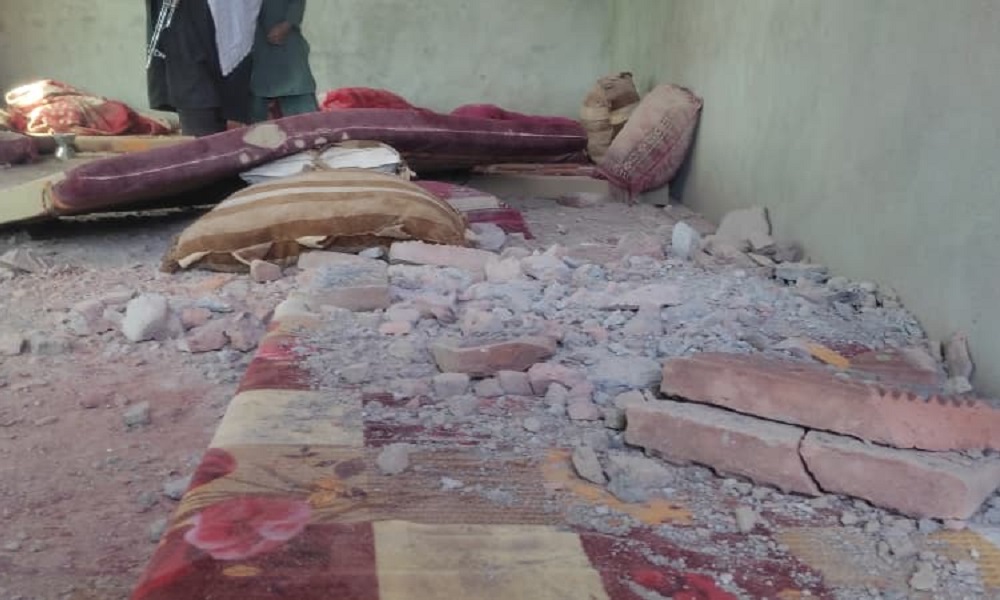
Sources confirm to Ariana News that in the districts of Zazi Maidan and Alisher in Khost province, forces of Pakistan’s military regime have attacked the homes of civilians.
According to the sources, in these attacks four civilians, including a woman and a child, were killed and 16 others were injured.
The attacks also destroyed dozens of houses and killed a large number of livestock, as a result of which local residents have faced significant financial and human losses.


Bayat Foundation expands Ramadan aid to Maidan Wardak families

Ronaldo’s private jet flies out of Saudi Arabia following US Embassy drone strike in Riyadh

Four civilians killed, 16 injured in fresh Pakistani attacks in Khost

UNAMA calls for immediate halt to Afghanistan–Pakistan cashes

IEA reports 25 clashes with Pakistani forces in 24 hours; Hundreds killed or wounded

Pakistani military jet downed in Afghanistan’s Jalalabad, pilot captured alive

IEA releases three Pakistani soldiers to mark Ramadan

Afghan Air Force conducts airstrikes in Islamabad, other cities

Afghanistan’s Chief of Armed Forces underscores readiness and equipment for national defense

Afghanistan welcomes investment and technology partnerships with India

Saar: Afghan forces’ operation against Pakistani military

Tahawol: Afghanistan and the Region Under the Shadow of Rising Tensions

Tahawol: Joint Israeli-US attacks on Iran discussed

Saar: Afghan retaliatory operations against Pakistan discussed

Tahawol: Carrying out retaliatory operations against Pakistan discussed
-
 Latest News3 days ago
Pakistani military jet downed in Afghanistan’s Jalalabad, pilot captured alive
-
 Latest News4 days ago
Afghan Air Force conducts airstrikes in Islamabad, other cities
-
 Latest News4 days ago
IEA: Special circle in Pakistan has launched mission to destabilize region
-
 Latest News1 day ago
Afghan air force strikes key Pakistani military installations in retaliatory operation
-
 Latest News4 days ago
Turkey launches initiative to diffuse Afghanistan-Pakistan tension
-

 Latest News4 days ago
Afghans say they are united against Pakistan aggression
-
 Latest News3 days ago
Afghan forces conduct fresh airstrikes on Pakistani military targets
-

 Latest News4 days ago
Pakistan carries out airstrikes after Afghanistan launches retaliatory attacks