
/var/www/vhosts/ariananews.af/httpdocs/wp-content/themes/ariana-news/parts/post-single.php on line 153
">
Warning: Undefined array key 0 in /var/www/vhosts/ariananews.af/httpdocs/wp-content/themes/ariana-news/parts/post-single.php on line 153
Warning: Attempt to read property "cat_name" on null in /var/www/vhosts/ariananews.af/httpdocs/wp-content/themes/ariana-news/parts/post-single.php on line 153
Iran deports almost 5,000 ‘illegal’ migrants from Afghanistan in 24 hours

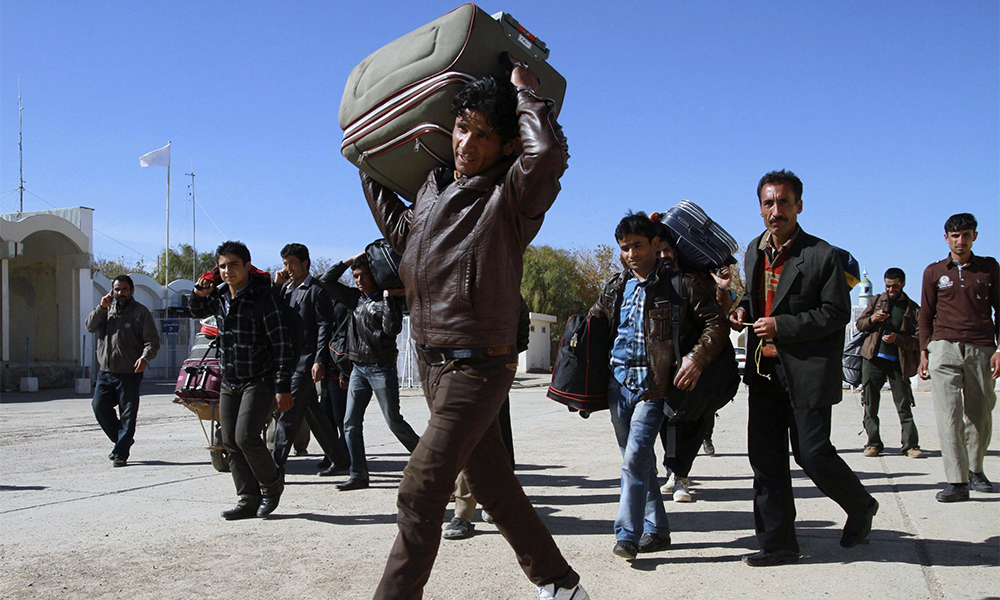
An Iranian border commander has said that in the last 24 hours, 4,767 “illegal” Afghan immigrants have been returned to Afghanistan through the Milak border crossing in Sistan and Baluchistan province.
The reasons for the deportation of the immigrants were said to be “illegal entry and stay and expiry of passports”.
Parviz Ghasemzadeh, Iran’s border commander for that area told Iran’s Tasnim news agency that foreign nationals must go through legal channels to enter, stay and leave Iran.
He warned that if foreigners enter Iran illegally, they will be handed over to the authorities and deported from the country.
Ghasemzadeh added that “combating the illegal residence of unauthorized foreigners in Sistan and Baluchistan is seriously on the agenda.”
He also said the negative consequences, such as social problems and crime caused by “illegal” migrants will be dealt with seriously in order to manage these issues.
Iran’s General Director of Foreign Nationals and Immigrant Affairs, Khorasan Razavi, said recently that more than 90,000 Afghans have returned home this year through the Dogharun Taybad border.
Based on the statistics of the International Organization for Migration, after the rule of the Islamic Emirate in Afghanistan, about 3.6 million Afghans have left the country, of which 70% have gone to Iran.










Warning: Undefined array key 0 in /var/www/vhosts/ariananews.af/httpdocs/wp-content/themes/ariana-news/parts/post-single.php on line 573
Warning: Attempt to read property "cat_ID" on null in /var/www/vhosts/ariananews.af/httpdocs/wp-content/themes/ariana-news/parts/post-single.php on line 573
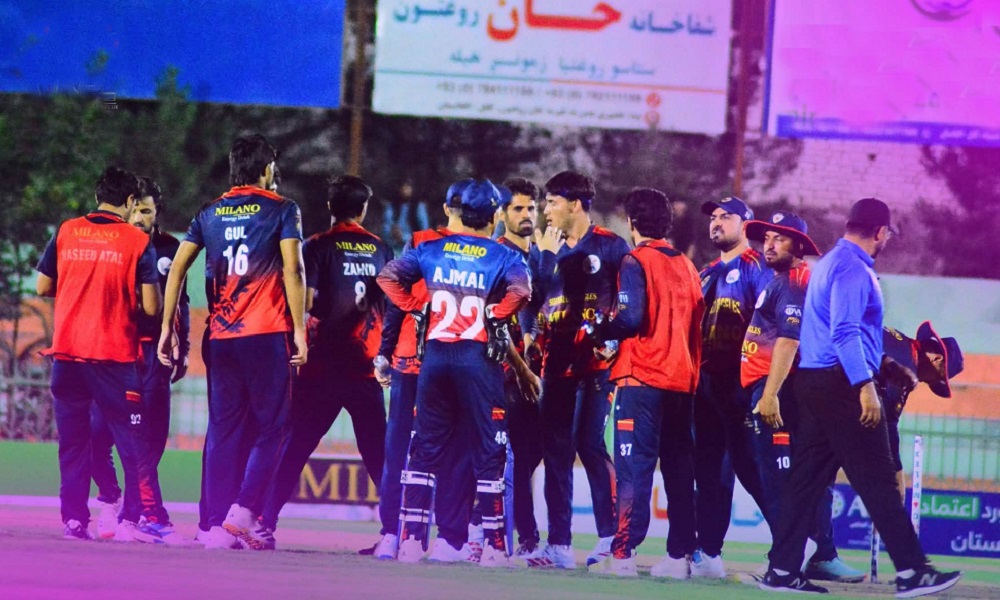
Shamshad Eagles defeated Speenghar Warriors by six wickets in the sixth match of the Kabul Premier League at the Ayoubi Cricket Ground in Kabul on Tuesday.
Speenghar Warriors, who won the toss and elected to bat first, posted their total, of 143, before Shamshad Eagles produced a confident chase.
The Eagles reached the target with four balls remaining, securing a six-wicket victory and moving strongly in the Kabul Premier League standings.
Mohammad Shahzad was the standout performer for Shamshad Eagles and was named Player of the Match for his contribution to the Eagles’ successful run chase.
The result gives Shamshad Eagles valuable points as the tournament continues in Kabul.
The Kabul Premier League features six teams, with the tournament providing a platform for Afghanistan’s domestic players to showcase their talent.
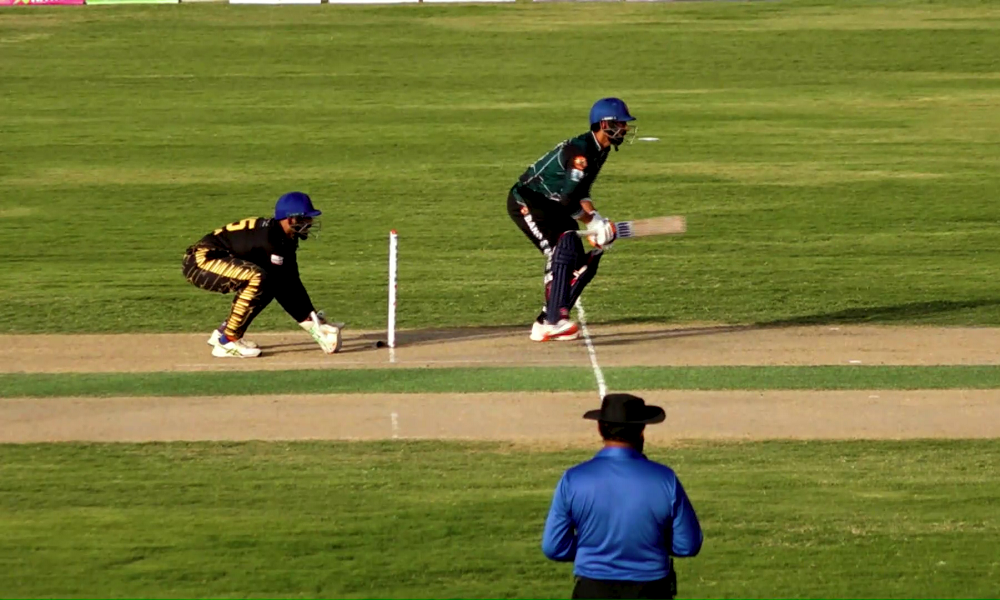
Abasin Defenders produced a dominant performance in the Kabul Premier League on Tuesday, beating Band-e Amir Stars by 163 runs in the fifth match of the tournament in Kabul.
Batting first after winning the toss, Defenders posted an imposing 281 for five from their 20 overs.
Mohammad Amin led the charge with an unbeaten 103 from 46 balls, while Mohammad Akram added a rapid 68 from just 25 deliveries. The pair helped Defenders build a formidable total and put Band-e Amir Stars under immediate pressure.
Band-e Amir struggled to cope with the target and were bowled out for just 118 in 13.3 overs.
Azizullah Miakhil was the top scorer for Band-e Amir with 55 from 19 balls, while Mohammad Asif contributed 25 from 14 deliveries.
Qamar Shams was the standout bowler for Defenders, taking three wickets for just seven runs in 1.3 overs. Faridoon Dawoodzai also claimed two wickets for 13 runs.
The 163-run victory was one of the biggest wins of the Kabul Premier League so far and gave Abasin Defenders two points.
Mohammad Amin was named Player of the Match for his outstanding century.


Saar: The Islamic Emirate’s five-year rule discussed

Shamshad Eagles beat Speenghar Warriors by six wickets

Kabul Premier League: Abasin Defenders thrash Band-e Amir Stars by 163 runs

Islamic Emirate leader urges Kabul University graduates to uphold Islamic values

US State Department: Afghanistan fails to meet minimum fiscal transparency standards

Pakistan’s governance system has ‘collapsed’: Mohsin Naqvi

Spain sweep FIFA World Cup player awards after historic triumph

Iran, Afghanistan and Tajikistan discuss expanding regional transit cooperation

Afghanistan temporarily eases fuel import standards to help curb rising prices

Afghan health minister, Gavi discuss expanding routine immunization
Saar: The Islamic Emirate’s five-year rule discussed

Tahawol: Hamid Karzai’s call for Afghan reconciliation discussed

Saar: Preparations for IEA’s fifth anniversary discussed

Tahawol: Iran’s acknowledgment of Afghanistan’s cooperation discussed

Saar: Five years of Islamic Emirate rule in Afghanistan reviewed
-

 Sport3 days ago
Afghanistan secure direct qualification for 2027 Men’s ODI World Cup
-
 Regional4 days ago
Goods transporters to go on strike from Saturday after talks with Pakistan govt fail
-
 Latest News3 days ago
Pakistan-backed armed groups in Balochistan using former Afghan government forces: report
-

 Sport4 days ago
Rashid Khan takes six as Afghanistan thrash Ireland by 92 runs
-

 World5 days ago
US Senate passes Russia sanctions championed by Graham; US House next
-
 Sport2 days ago
Abasin Defenders stun Kabul Zalmi in Kabul Premier League
-

 Latest News4 days ago
Moldova president criticizes visa approval for IEA delegation
-

 Regional3 days ago
Turkey, Pakistan, Saudi Arabia defence pact technically same as NATO’s Article 5, Turkish minister says