
Regional
Iran judiciary chief warns no leniency for protesters ‘helping enemy’
Iranian Supreme Leader Ayatollah Ali Khamenei has vowed not to “yield to the enemy”.


Iran’s top judge warned protesters on Wednesday there would be “no leniency for those who help the enemy against the Islamic Republic”, while accusing Israel and the U.S. of pursuing hybrid methods to disrupt the country, Reuters reported.
Tehranremains under international pressure with U.S. President Donald Trump threatening to come to the aid of protesters if security forces fire on them, seven months after Israeli and U.S. forces bombed Iranian nuclear sites in a 12-day war.
Iranian Supreme Leader Ayatollah Ali Khamenei has vowed not to “yield to the enemy”.
The current protests, the biggest wave of dissent in three years, began last month in Tehran’s Grand Bazaar by shopkeepers condemning the currency’s free fall. Unrest has since spread nationwide amid deepening distress over economic hardships, including rocketing inflation driven by mismanagement and Western sanctions, and curbs on political and social freedoms.
“Following announcements by Israel and the U.S. president, there is no excuse for those coming to the streets for riots and unrest, Chief Justice Gholamhossein Mohseni Ejei, the head of Iran’s judiciary, was quoted as saying by state media.
“From now on, there will be no leniency for whoever helps the enemy against the Islamic Republic and the calm of the people,” Ejei said.
At least 27 people have been killed and more than 1,500 arrested in Iran in the first 10 days of protests, with the west of the country seeing the highest number of casualties according to Kurdish-Iranian rights group Hengaw.
HRANA, a network of human rights activists, has reported a higher death toll of at least 36 people as well as the arrest of at least 2,076 people.
Reuters has not been able to independently verify the numbers of casualties or details of disturbances reported by Iranian media and rights groups.
Iranian authorities have not given a death toll for protesters, but have said at least two members of the security services have died and more than a dozen have been injured.
Iran’s western provinces – which are economically marginalised and are heavily policed due to past outbreaks of unrest and their strategic location for national defence – have witnessed the most violent protests and repression lately, read the report.
Demonstrators took to the streets again overnight in the western province of Ilam and disturbances erupted, Hengaw said.
It has counted at least 20 demonstrators killed since late December in the provinces of Ilam, Lorestan, Kermanshah, Fars, Chaharmahal and Bakhtiari, and Hamedan.
“During the funeral of two people in Malekshahi on Tuesday, a number of attendees began chanting harsh, anti-system slogans,” said Fars, a news agency affiliated with Iran’s Revolutionary Guards.
After the funeral, Fars said, “about 100 mourners went into the city and trashed three banks … Some started shooting at the police trying to disperse them”.
In Abdanan, a city in southwestern Ilam province, a large crowd gathered late on Tuesday and chanted slogans against Khamenei that could be heard in a video shared on a Telegram channel called Nistemanijoan with over 180,000 followers.
The semi-official Mehr news agency said protesters had stormed a food store and emptied bags of rice, which has been affected by galloping inflation that has made ordinary staples increasingly unaffordable for many Iranians.
Reza Pahlavi, exiled son of Iran’s late Shah toppled in the 1979 Islamic Revolution, has urged Iranian security forces to side with the people and called for more protests.
“In these decisive moments, I expect you to return to the embrace of the nation and to use your weapons not to fire at people, but to protect them,” the last heir to Iran’s defunct monarchy said in a video posted on X.
Pahlavi, 65, has lived abroad for over four decades since the U.S.-backed Shah Mohammad Reza Pahlavi was overthrown in an uprising.
Opposition to Iran’s clerical establishment is atomised, with no broadly recognised leader. It remains unclear how much support Pahlavi has on the ground, but there have been some pro-Pahlavi slogans in demonstrations, Reuters reported.


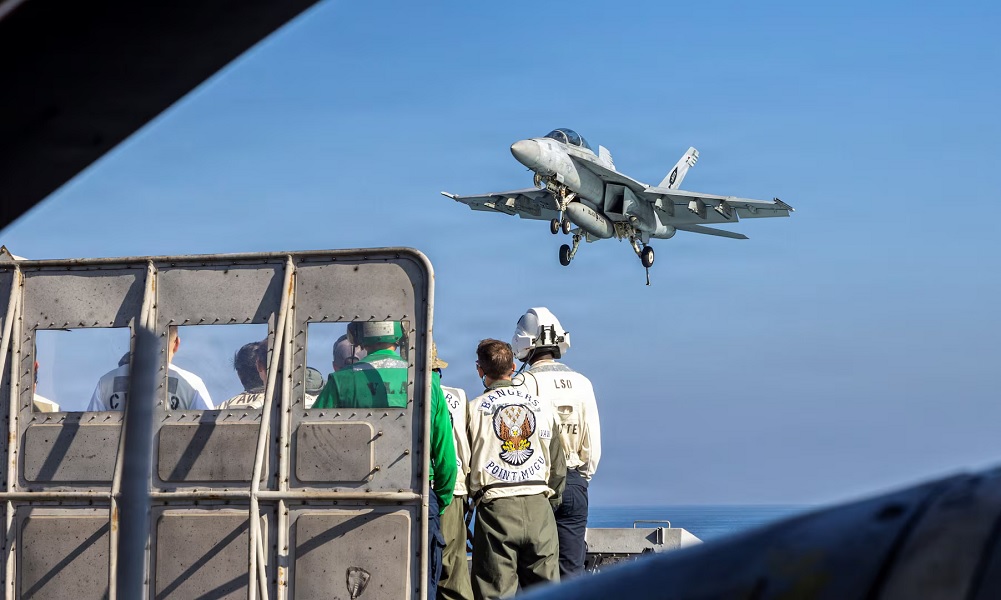
Iran and the U.S. will hold a third round of nuclear talks on Thursday in Geneva, Oman’s Foreign Minister Badr Albusaidi said on Sunday, amid growing concerns about the risk of military conflict between the longtime adversaries.
The U.S. has built up its military presence in the Middle East, with President Donald Trump warning on Thursday that “really bad things will happen” if no deal is reached to solve a longstanding dispute over Tehran’s nuclear programme, Reuters reported.
“Pleased to confirm U.S.-Iran negotiations are now set for Geneva this Thursday, with a positive push to go the extra mile towards finalizing the deal,” said Oman’s foreign minister, who acts as a mediator in indirect talks between Washington and Tehran.
Reuters reported on Sunday that Iran was offering fresh concessions on its nuclear programme in order to reach a deal, as long as it includes the lifting of economic sanctions and recognises Tehran’s right to “peaceful nuclear enrichment”.
Iran’s President Masoud Pezeshkian voiced cautious optimism on Sunday in a post on X saying recent negotiations had “yielded encouraging signals”, while pointing at Tehran’s readiness for “any potential scenario”.
TRUMP CURIOUS AS TO WHY TEHRAN HASN’T ‘CAPITULATED’
Trump’s special envoy Steve Witkoff, who leads nuclear negotiations on the U.S. side, said on Saturday that the U.S. President was curious as to why Iran has not yet “capitulated” and agreed to curb its nuclear programme.
“I don’t want to use the word ‘frustrated,’ because he understands he has plenty of alternatives, but he’s curious as to why they haven’t… I don’t want to use the word ‘capitulated,’ but why they haven’t capitulated,” Witkoff said during an interview with Fox News’ “My View with Lara Trump,” hosted by the president’s daughter-in-law.
“Why, under this pressure, with the amount of seapower and naval power over there, why haven’t they come to us and said, ‘We profess we don’t want a weapon, so here’s what we’re prepared to do’? And yet it’s sort of hard to get them to that place.”
Iran’s Foreign Minister Abbas Araqchi reacted in a post on X saying: “Curious to know why we do not capitulate? Because we are Iranian.”
He also said in an interview with CBS that a diplomatic solution with the U.S. was still within reach.
IRAN DENIES SEEKING NUCLEAR WEAPONS
Indirect talks last year did not bring any agreement, primarily due to friction over a U.S. demand that Iran forgo uranium enrichment on its soil, which Washington views as a pathway to a nuclear bomb. Iran has denied seeking such weapons.
The U.S. joined Israel in hitting Iranian nuclear sites in June, effectively curtailing Iran’s uranium enrichment, with Trump saying its key nuclear sites were “obliterated”. But Iran is still believed to possess stockpiles enriched previously, which Washington wants it to relinquish.
“They’ve been enriching well beyond the number that you need for civil nuclear. It’s up to 60% (fissile purity),” Witkoff said. “They’re probably a week away from having industrial, industrial-grade bomb-making material, and that’s really dangerous.”
Fresh concessions being considered by Iran include sending half of its highly enriched uranium abroad while diluting the rest.
Washington has also sought to expand the talks beyond the nuclear issue to cover Iran’s missile programme and its support for regional armed groups. Iran has publicly rejected this, although sources have told Reuters that unlike the missiles, support for armed groups may not be a red line for Tehran.
Another topic of friction is the scope and mechanism of lifting sanctions on Iran. A senior Iranian official told Reuters on Sunday that Iran and the United States still have differing views.
Witkoff also said he has met at Trump’s direction with Iranian opposition figure Reza Pahlavi, son of the shah ousted in Iran’s 1979 Islamic Revolution. He did not provide further details of the meeting.
Pahlavi, who lives in exile, served as a rallying figure for some of Iran’s opposition during anti-government demonstrations last month in which thousands of people are believed to have been killed, the worst domestic unrest since the revolution era.
Earlier in February, Pahlavi said U.S. military intervention in Iran could save lives, and urged Washington not to spend too long negotiating with Tehran’s clerical rulers on a nuclear deal.
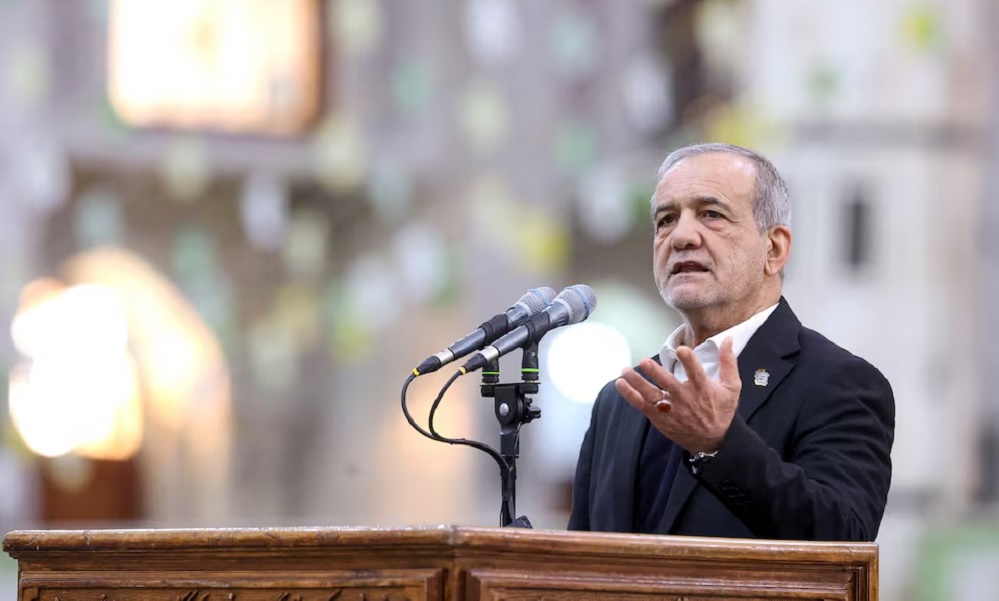
Iranian President Masoud Pezeshkian said on Saturday that his country would not bow its head to pressure from world powers amid nuclear talks with the United States.
“World powers are lining up to force us to bow our heads… but we will not bow our heads despite all the problems that they are creating for us,” Pezeshkian said in a speech carried live by state TV, Reuters reported.
Regional
Son of Iran’s last shah urges US military intervention in Iran
The exiled son of Iran’s toppled shah has said there were signs that the Iranian government was on the brink of collapse and that an attack could weaken it or accelerate its fall.
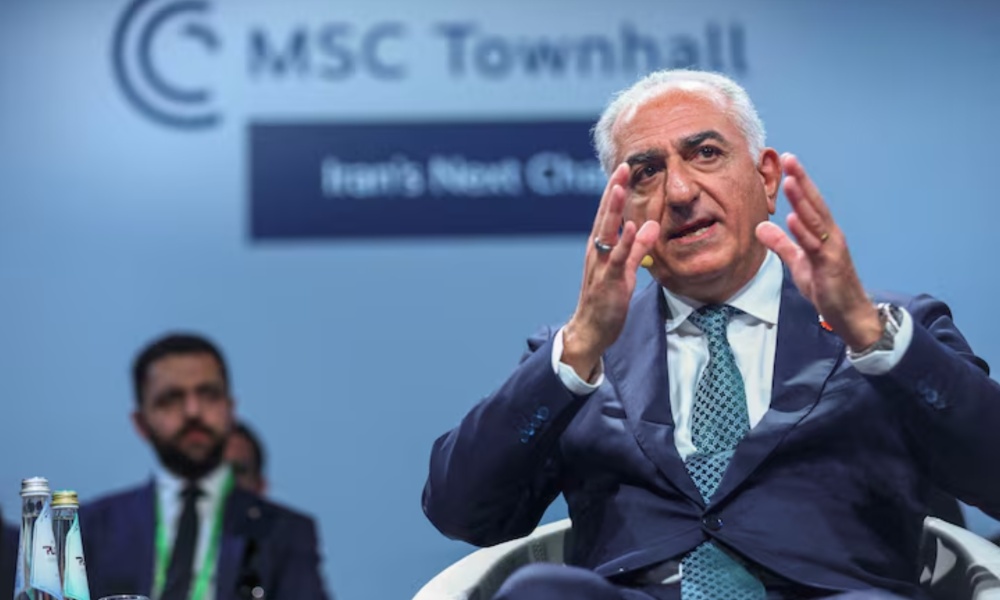
Iranian opposition figure Reza Pahlavi on Saturday said U.S. military intervention in Iran could save lives and urged President Donald Trump’s administration not to spend too long negotiating with Tehran’s clerical rulers on a nuclear deal.
The exiled son of Iran’s toppled shah told Reuters in an interview that there were signs that the Iranian government was on the brink of collapse and that an attack could weaken it or accelerate its fall.
Pahlavi was speaking on the sidelines of the Munich Security Conference, where officials from the Iranian government are banned.
“It’s a matter of time. We are hoping that this attack will expedite the process and the people can be finally back in the streets and take it all the way to the ultimate regime’s downfall,” said Pahlavi, who is based in the United States and has lived outside Iran since before his father was toppled in the 1979 Islamic Revolution.
A campaign of mass arrests and intimidation has led to the arrests of thousands as Iranian authorities seek to deter further protests after last month’s crackdown on the bloodiest unrest since 1979.
The protests began on December 28 as a modest demonstration in Tehran’s Grand Bazaar over economic hardship and quickly spread nationwide.
Iran’s opposition is fragmented among rival groups and ideological factions – including the monarchists who back Pahlavi – and appears to have little organized presence inside the Islamic Republic.
In an interview with Reuters last month, Trump sounded skeptical about the level of Pahlavi’s support inside Iran.
The Trump administration has engaged with Iran to see if a nuclear deal can be struck as Washington amassed military forces in the region. U.S. and Iranian diplomats held talks in Oman last week and further talks in the coming week are expected.
“People are hoping that at some point the decision will be made that there’s no use, there’s no point, we’re not going to get anywhere with negotiations. Therefore, that’s time for the United States to intervene and do what President Trump promised he will do, to have the people’s back,” Pahlavi said.
“Intervention is a way to save lives,” he added.
On Friday, in a speech to U.S. troops in North Carolina, Trump said Iran has been difficult in nuclear negotiations and suggested that instilling fear in Tehran may be necessary to resolve the standoff peacefully.
Two U.S. officials speaking on the condition of anonymity told Reuters on Friday that the U.S. military was preparing for the possibility of a sustained, weeks-long operation against Iran if Trump ordered an attack.


Afghanistan lodges complaint with UN over Pakistani airstrikes

US companies are welcome to join TAPI project: Turkmenistan’s ex-president

Mexican military kills cartel boss ‘El Mencho’ in US-backed raid

UK’s Reform party pledges visa ban affecting Afghanistan and five other states

Iran and U.S. to meet on Thursday for talks

AFC Futsal Asian Cup 2026: Day One Review

IEA releases three Pakistani soldiers to mark Ramadan

AFC Futsal Asian Cup: Afghanistan to face Iran in crucial Group D clash

Afghanistan’s Chief of Armed Forces underscores readiness and equipment for national defense

Afghanistan welcomes investment and technology partnerships with India

Tahawol: Repeat crimes by Pakistani military in Afghanistan discussed

Saar: Pakistani military regime’s airstrikes on Afghanistan

Tahawol: US military review for attack against Iran discussed

Saar: Afghanistan’s expanding ties with Central Asia discussed

Tawsia: Calls for implementing development and infrastructure projects
-
 Latest News5 days ago
Afghanistan’s Chief of Armed Forces underscores readiness and equipment for national defense
-
 Latest News4 days ago
Afghanistan welcomes investment and technology partnerships with India
-

 Sport4 days ago
Afghan Peaks founder climbs Aconcagua to promote Afghanistan’s mountain potential
-

 Latest News3 days ago
Indian customs seize Chinese walnuts falsely declared as Afghan
-

 Business4 days ago
Pakistan allows re-export of stranded Afghan transit cargo
-
 Latest News3 days ago
Pakistan’s Punjab to send home 20 more Afghans in repatriation drive
-

 Latest News4 days ago
Pakistan signals possible air strikes as Kabul releases Pakistani soldiers in goodwill move
-

 Latest News2 days ago
Moldova bans Afghan airlines over safety concerns