
Latest News
Mujahid: IEA seeks positive ties with US, denies receiving foreign aid
“The policy of the Islamic Emirate is based on self-reliance. Afghans must resolve their internal challenges themselves,” Mujahid said.

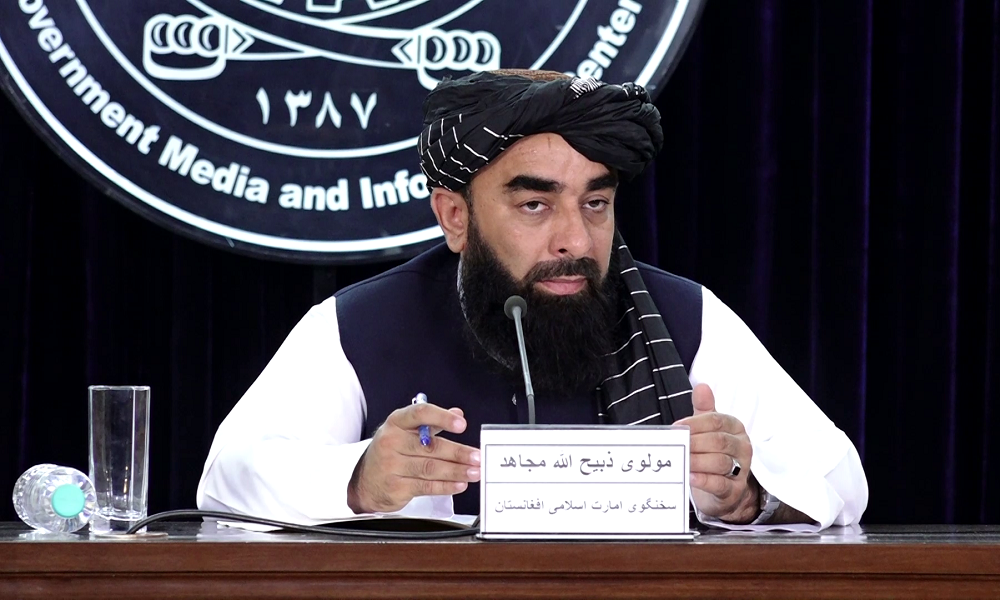
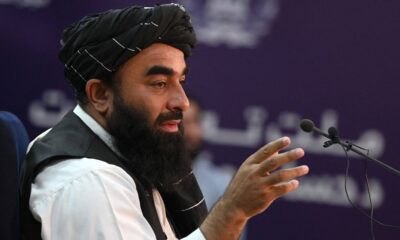
Zabihullah Mujahid, spokesperson for the Islamic Emirate of Afghanistan (IEA), said the group seeks positive and balanced relations with all countries, including the United States, while insisting that no foreign financial aid has been provided directly to the Emirate or the Afghan government.
In an exclusive interview with Payam Afghan TV, Mujahid responded to recent U.S. Senate legislation aimed at restricting aid to Afghanistan, stating that Washington has not sent any assistance directly to the Islamic Emirate. He said humanitarian aid to Afghanistan has been suspended or provided solely on humanitarian grounds.
Mujahid added that past international assistance was channeled through domestic institutions and human rights organizations and remained under the control of those entities, with no direct involvement from the Islamic Emirate.
“The policy of the Islamic Emirate is based on self-reliance. Afghans must resolve their internal challenges themselves,” Mujahid said.
He emphasized that the Emirate’s focus is on attracting investment and promoting economic development while safeguarding national sovereignty and preventing foreign political interference. Mujahid cited engagement with China, Russia, and neighboring countries as examples of this approach.
He concluded that the Islamic Emirate is open to cooperation with European and American investors, aiming to turn Afghanistan into a regional and global economic hub, provided its sovereignty and internal affairs are fully respected.




Latest News
US Senate advances bill to block funds reaching IEA
Committee Chairman Senator Jim Risch cited the human cost of the Afghanistan war, noting that more than 2,000 U.S. service members were killed and over 20,000 injured during the conflict.
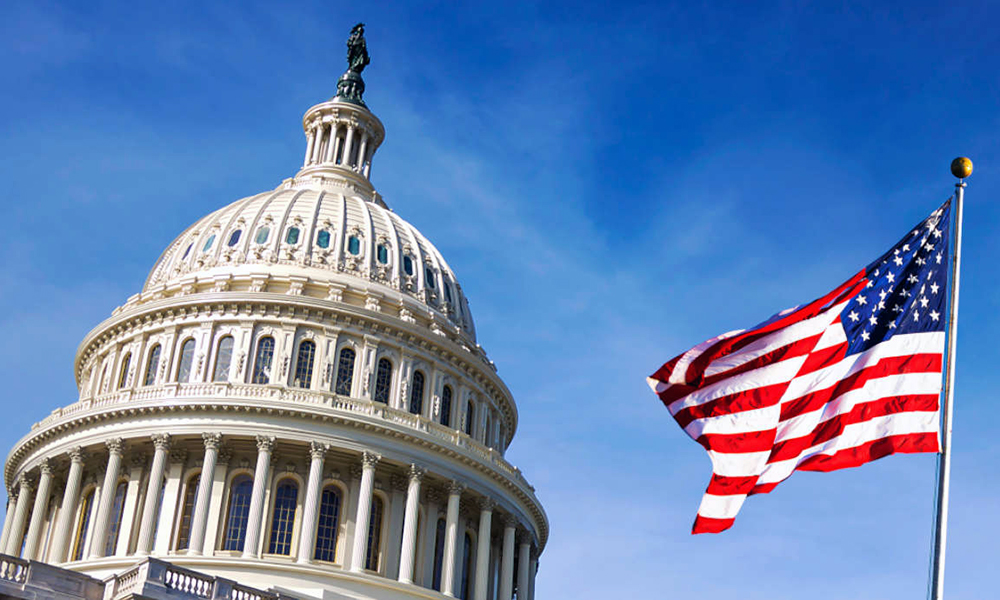
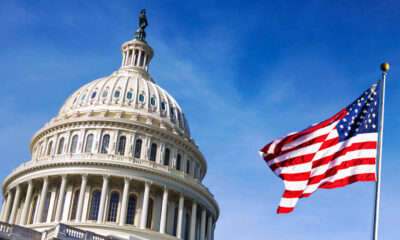
The U.S. Senate has advanced legislation aimed at preventing American taxpayer funds from reaching the Islamic Emirate of Afghanistan (IEA), marking a new step in Washington’s efforts to restrict financial support to groups it designates as terrorist organizations.
The No Tax Dollars for Terrorists Act, approved by the Senate Foreign Relations Committee, now moves to the full Senate for consideration. The bill seeks to bar U.S. funds from directly or indirectly benefiting the IEA and establishes official U.S. policy opposing financial or material support to the group by foreign governments or non-governmental organizations.
Committee Chairman Senator Jim Risch cited the human cost of the Afghanistan war, noting that more than 2,000 U.S. service members were killed and over 20,000 injured during the conflict. He described any transfer of U.S. funds to the IEA as “a betrayal of the victims of the war,” calling the legislation a common-sense measure to ensure taxpayer dollars are not diverted to militant groups.
The bill was introduced in January 2025 by Senator Tim Sheehy, with co-sponsorship from Senators Bill Hagerty, Tommy Tuberville, and Steve Daines. It also directs the State Department to develop strategies to counter foreign assistance that could benefit the IEA.
In response, Zabihullah Mujahid, spokesperson for the Islamic Emirate, said the United States has not provided funds directly to the Emirate. He added that international assistance entering Afghanistan is intended exclusively for humanitarian purposes.
Supporters of the legislation say it reinforces U.S. efforts to cut off financial resources to militant groups while allowing humanitarian aid to continue through international organizations operating in Afghanistan.
Latest News
US aid cuts worsen humanitarian crisis for Afghan women and girls: report
As a result, more than 420 health facilities have closed or suspended operations since early 2025, leaving around three million people without access to basic healthcare.
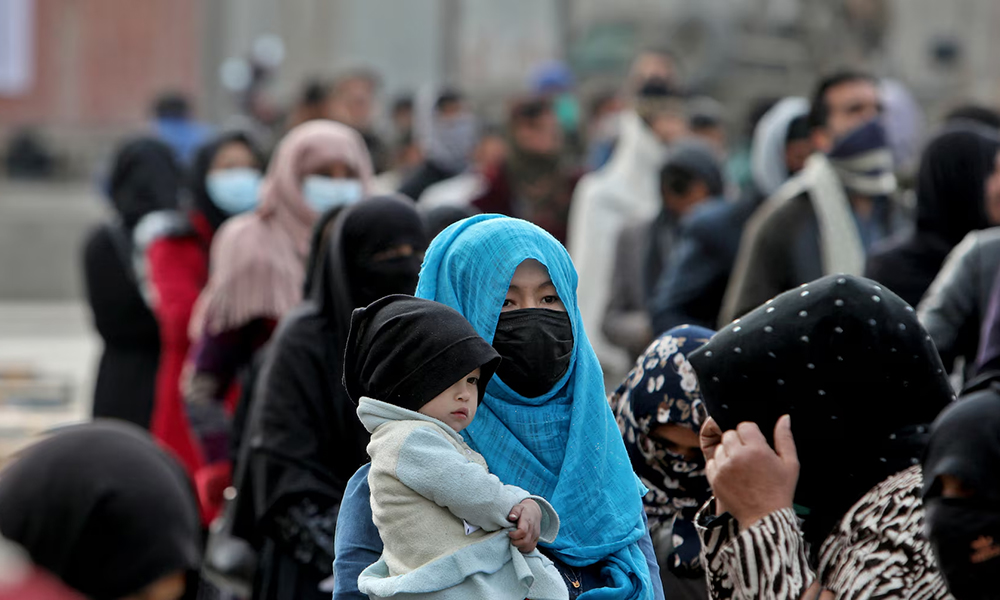
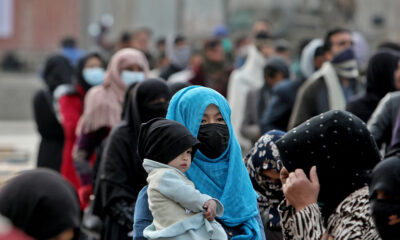
Sweeping U.S. foreign aid cuts have sharply worsened Afghanistan’s humanitarian crisis, with women and girls suffering the most severe consequences, according to a new report by Refugees International.
The organization says the 2025 decision to shut down USAID operations and halt most U.S. foreign assistance has dismantled critical services in Afghanistan, deepening what it describes as the Islamic Emirate’s system of “gender apartheid.”
Refugees International reports that the cuts eliminated 88 percent of maternal and child health funding, 94 percent of sexual and reproductive health programs, and nearly 80 percent of gender-based violence services.
As a result, more than 420 health facilities have closed or suspended operations since early 2025, leaving around three million people without access to basic healthcare.
The shutdown of clinics and protection services has increased maternal and infant health risks and left survivors of violence without safe spaces or support. The report says families are increasingly resorting to harmful coping strategies, including early and forced marriage and reduced food consumption for women and girls.
Food insecurity has also worsened following the halt of U.S. funding to the World Food Programme. Monthly food assistance has dropped from 5.6 million people in late 2024 to about one million, while an estimated 17 million Afghans now face hunger.
Education opportunities for girls have narrowed further after USAID-supported informal education programs were suspended, cutting off one of the last learning options for girls barred from formal schooling.
Refugees International warns that 21.9 million people in Afghanistan will require humanitarian assistance in 2026, more than half of them women and girls, yet the U.S. has so far committed no funding this year.
The organization is urging Washington to restore life-saving, gender-responsive aid before the crisis deepens further.
The Islamic Emirate of Afghanistan (IEA) has not yet commented on this report.
Latest News
Humanitarian crisis in Afghanistan deepens: 21.9 million people in need in 2026
In 2025, more than 2.61 million Afghans returned from Iran and Pakistan, stretching limited services, livelihoods, and housing.
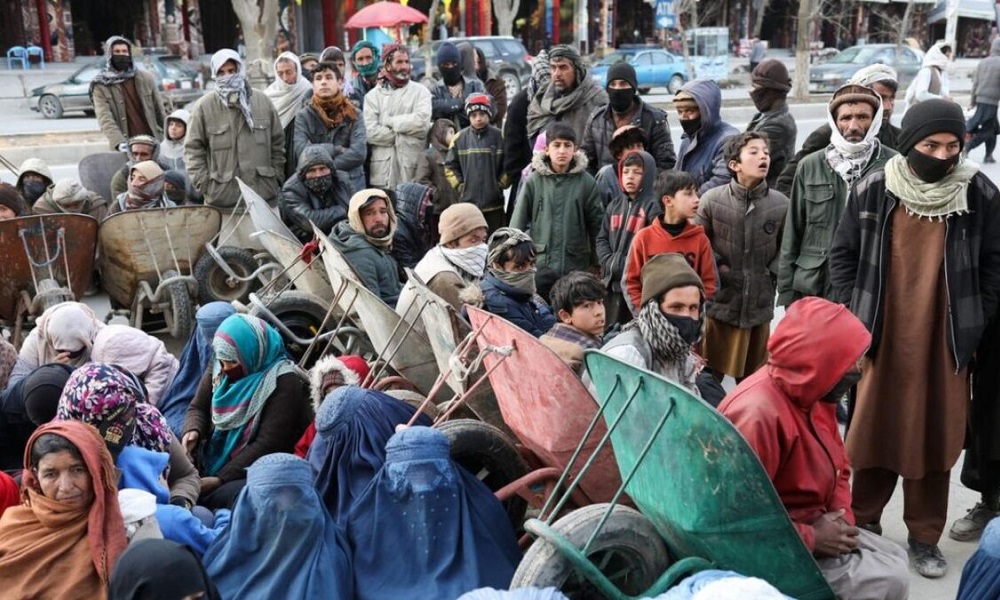
Afghanistan faces one of the world’s most severe humanitarian crises, with an estimated 21.9 million people—nearly 45 percent of the population—projected to require urgent assistance in 2026, according to the United Nations Office for the Coordination of Humanitarian Affairs (OCHA).
While this is a slight 4 percent decrease from last year, needs remain extremely high in a non-conflict setting. Persistent vulnerabilities, worsening food insecurity, climate-driven drought, natural disasters, mass cross-border returns, and serious protection risks—particularly for women and girls—continue to drive the crisis.
Food insecurity has reached alarming levels, with 17.4 million people expected to face acute hunger, including 4.7 million in emergency conditions, more than double last year’s figure. Drought affects 12 provinces, leaving 3.4 million people struggling for basic water and food.
La Niña forecasts of below-average rainfall and above-average temperatures could worsen conditions further.
Protection risks remain critical. Restrictions imposed by the de facto authorities on women and girls, combined with ongoing threats from explosive remnants of war, gender-based violence, child labor, and early marriage, leave millions vulnerable. Explosive ordnance injures or kills an average of 50 people each month, OCHA reports.
Mass returns from neighboring countries also strain fragile communities.
In 2025, more than 2.61 million Afghans returned from Iran and Pakistan, stretching limited services, livelihoods, and housing.
Humanitarian partners plan to reach 17.5 million people—around 80 percent of those in need—through a coordinated $1.71 billion response. Aid will focus on life-saving and protective interventions, including food, shelter, healthcare, nutrition, safe water, hygiene, and multipurpose cash assistance in the areas of greatest need.
OCHA emphasizes that while the overall number of people in need has slightly decreased, Afghanistan remains a global humanitarian priority, requiring urgent and sustained support to prevent further deterioration.


Afghanistan dominates Malaysia 7–0 in AFC Futsal Asian Cup

Uzbekistan–Afghanistan trade rises to $1.6 billion in 2025

Mujahid: IEA seeks positive ties with US, denies receiving foreign aid

US Senate advances bill to block funds reaching IEA

US aid cuts worsen humanitarian crisis for Afghan women and girls: report

Turkey withdraws from Afghanistan-Pakistan mediation amid rising tensions

ICG report says Pakistan most impacted by IEA’s return in Afghanistan

Pakistan approves re-export of stranded Afghan transit trade cargo

Afghanistan–China joint market opens in Kabul

Afghanistan set to face West Indies in crucial T20I series

Tahawol: Defense Ministry’s high-level visit to Russia discussed

Saar: Ongoing tensions between US and Iran reviewed

Tahawol: Tashkent’s interest in military cooperation with Kabul discussed

Saar: Kabul, Ashgabat call for regional cooperation discussed

Tahawol: Russia’s reaction to recent US moves discussed
-

 Sport4 days ago
Thrilling battles await as AFC Futsal Asian Cup Indonesia 2026 set to kickoff in hours
-

 Sport2 days ago
AFC Futsal Asian Cup 2026: Day One Review
-

 Sport3 days ago
Afghanistan’s Mahdi Norouzi ruled out of AFC Futsal Asian Cup due to injury
-
 Business5 days ago
Pakistan reports 56% drop in exports to Afghanistan in second half of 2025
-

 Sport2 days ago
Scotland name Afghanistan-born Zainullah Ihsan in T20 World Cup squad
-
 Business3 days ago
Afghanistan’s exports drop sharply in December 2025: World Bank
-

 Sport1 day ago
Afghanistan shine on Day Two of AFC Futsal Asian Cup Indonesia 2026
-

 Latest News4 days ago
TAPI project advances in Herat; 91 kilometers ready for pipeline installation