
Latest News
Rights watchdog calls on Pakistan to stop arresting Afghan refugees

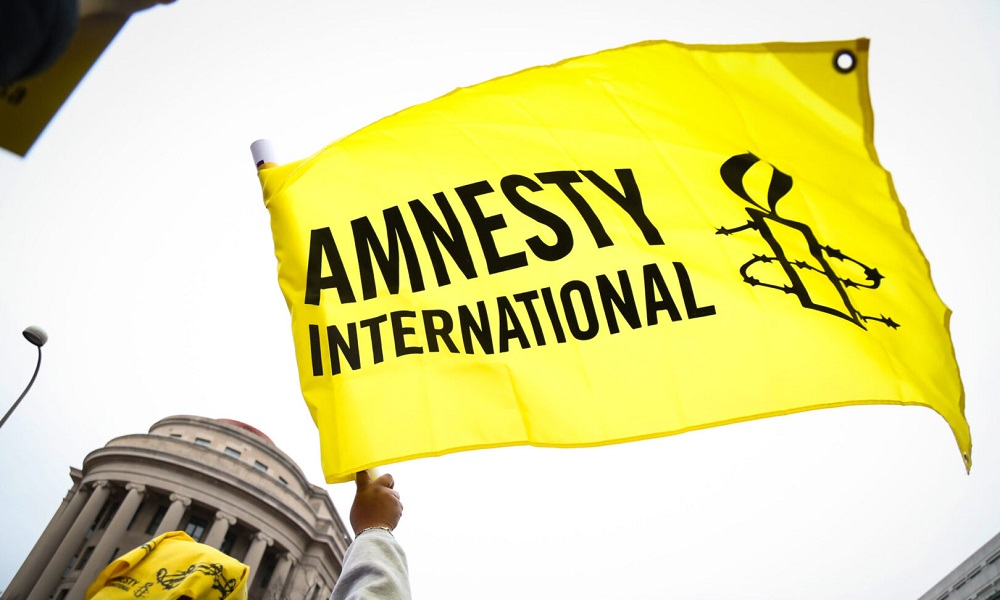
The Government of Pakistan must urgently stop arbitrarily arresting and harassing Afghan refugees and asylum seekers, Amnesty International said on Tuesday – on World Refugee Day.
The human rights group said in a report that in recent years, Afghans in Pakistan have been subjected to waves of arbitrary detentions, arrests, and the threat of deportation. Because of considerable delays in the registration process, most do not hold Proof of Registration (PoR) cards, the identity document entitling Afghan refugees to remain regularly in Pakistan. Many arrived in Pakistan with regular visas, which have since expired.
“It is deeply concerning that the situation of Afghan refugees in Pakistan is not receiving due international attention. Being unable to return home or stay permanently in Pakistan, they are caught in an impossible situation from which there is no escape. Their ambiguous legal status and arduous processes for asylum or third country relocation have made them even more vulnerable,” said Dinushika Dissanayake, Amnesty International’s Deputy Regional Director for South Asia.
Afghans seeking asylum must also endure a prolonged process when trying to obtain proof of registration from the United Nations High Commission for Refugees (UNHCR). Combined with lengthy visa renewals from the Pakistani government, these delays are making it easier for the police to harass them and for other authorities to extort money from them — practices that have been reported across Pakistan, including in Sindh, Karachi, Peshawar, Chaman, and Quetta, among others.
Afghans without documents to prove their legal status are unable to secure formal employment and often end up working in low-wage jobs where they are vulnerable to exploitation.
Without a PoR card or visa, it is also difficult to get SIM cards or set up bank accounts, which prevents Afghans from receiving money from their relatives. Landlords also take advantage of their lack of proof of regular status.
Many of the recent arrivals must travel to the border and officially leave Pakistan in order to renew their visas, which can prove both costly and dangerous. Two interviewees said border guards demanded bribes before allowing them to cross the border, even though they possessed valid visas.
“Amnesty International is calling on the United Nations High Commission for Refugees (UNHCR) to expedite registration and reviews of applications from Afghans seeking refugee status in Pakistan, on the Government of Pakistan to stop arbitrarily arresting and harassing Afghan refugees and on third countries offering relocation to Afghans abroad to expedite the issuance of visas,” Dinushika Dissanayake said.












Kazakhstan’s Foreign Minister Mukhtar Tileuberdi has called for pragmatic and coordinated international engagement with Afghanistan, saying the country’s long-term stability is closely linked to the security and sustainable development of Central Asia.
Speaking during the general debate of the 81st session of the United Nations General Assembly in New York on Friday, Tileuberdi said humanitarian assistance to Afghanistan remains essential but alone cannot break the cycle of poverty, displacement and dependency.
He said Kazakhstan supports a “pragmatic, coordinated and step-by-step” approach to international engagement with Afghanistan, with the United Nations playing a central role.
Tileuberdi also said Kazakhstan is working with the UN to operationalize the United Nations Regional Centre for the Sustainable Development Goals for Central Asia and Afghanistan in Almaty.
He said the success of the centre should be measured by the results and assistance it delivers to the region.


Trump rejects Iranian proposal to open Hormuz and end fighting

Abu Muslim Farah defeat Khurasan Faryab 2-0 in ACL season six

Saar: Concerns over Pakistan’s political crisis discussed

Afghanistan Champions League: Omar Zawak Herat beat Toofan Herat 1-0

Blast in Pakistan’s Dera Ismail Khan kills 11, injures 30

Saudi energy group signs major Afghanistan deals covering gas exploration and pipeline plans

Trump floats idea of renaming Atlantic or Pacific Ocean

US hits Egyptian bank branches with Iran sanctions as war marks six months

Nepal flood rescue mission enters critical phase as thousands remain missing

Iranian clubs to face Gulf opponents at neutral venues in Asian Champions League Elite
Saar: Concerns over Pakistan’s political crisis discussed

Exclusive interview with Abdul Latif Mansoor, Minister of MRRD

Tawsia: Overview of Afghanistan’s iron mines

Tahawol: Discussion on fresh Pakistani airstrikes on Afghanistan

Saar: Calls for international support for Afghanistan discussed
-

 Latest News4 days ago
Ariana Afghan Airlines ranks seventh among 45 Central Asian airlines
-

 Latest News5 days ago
UN reiterates call for respect for international law after Kunar airstrikes
-

 Regional4 days ago
US and Iran hold first talks since June after Trump’s ‘annihilation’ threat
-

 Latest News4 days ago
Silk Road highway in Wakhan corridor now reaches the China border
-

 Regional3 days ago
Iran airlines cancel flights as US sanctions hit
-

 Latest News5 days ago
Afghan Official: Pakistan’s airstrikes will not go unanswered
-

 Regional5 days ago
G7 foreign ministers call on Iran to stop arming Houthis
-

 Sport5 days ago
Afghan boxing referee heads to China for international festival