
World
Shackled and defiant, Maduro pleads not guilty to US narcotics charges

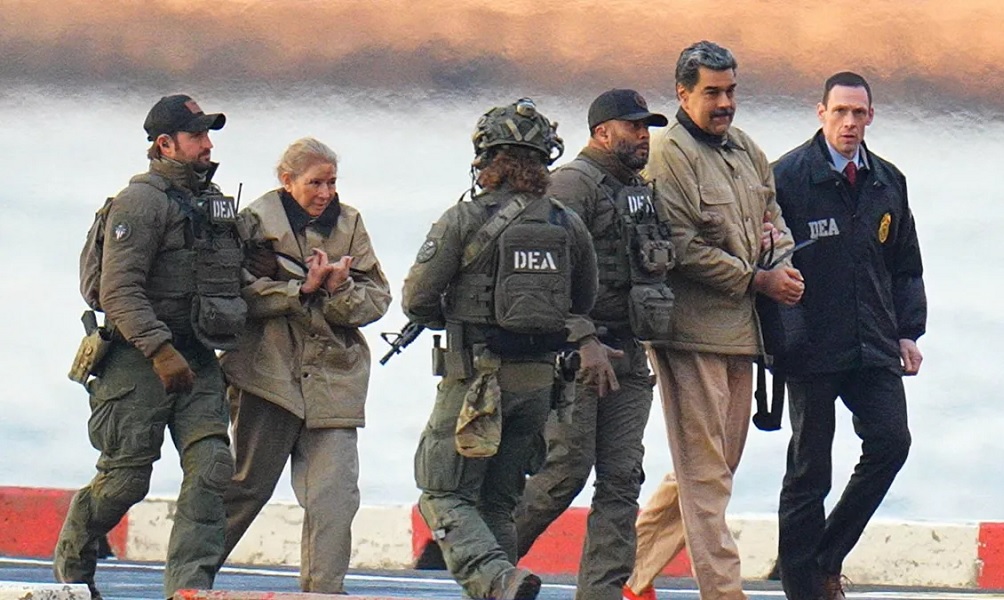
Shackled at the ankles and dressed in prison garb, toppled Venezuelan President Nicolas Maduro stood before a U.S. judge on Monday and declared he was still his country’s rightful leader as he faced charges that could put him behind bars for life.
“I am innocent. I am not guilty. I am a decent man. I am still president of my country,” Maduro said through an interpreter, his voice rising before Judge Alvin Hellerstein cut him off, Reuters reported.
The 63-year-old, captured days earlier in a dramatic U.S. military raid, wore orange slippers, beige pants and layered black and orange shirts. He scribbled notes on a legal pad while lawyers discussed what promises to be a bruising legal fight.
He faces four U.S. federal criminal counts that include narco-terrorism conspiracy, cocaine importation conspiracy and possession of machine guns and destructive devices. Each charge carries a maximum sentence of life in prison.
His lawyer Barry Pollack told Hellerstein that he expects extensive litigation over the legality of Maduro’s “military abduction.”
Maduro’s wife Cilia Flores also pleaded not guilty. She faces the same charges except for narco-terrorism. The next court date was set for March 17.
The U.S. has deemed Maduro an illegitimate dictator since he declared victory in a 2018 election marred by allegations of massive irregularities. His capture marks Washington’s most controversial intervention in Latin America since the invasion of Panama 37 years ago.
Two groups of protesters — supporters of Maduro and those backing his ouster — argued outside the courthouse on Monday.
“We are outraged at what the U.S. has done to the head, the duly-elected head of Venezuela,” said Sherry Finkelman, 80, a retired teacher.
Alejandro Rojas, a 51-year-old data scientist who moved to the U.S. from Venezuela in 2017, said he hoped to return soon with Maduro gone.
“It’s so emotional, just being able to reconnect with family, being able to have a country back again,” Rojas said.
Maduro was first indicted in 2020 as part of a long-running narcotics trafficking case against Venezuelan officials and Colombian guerrillas. He was being held at a Brooklyn jail with a troubled history.
In a new indictment unsealed on Saturday, prosecutors allege that Maduro is the kingpin of a cartel of Venezuelan officials that has partnered with some of the world’s most violent and prolific drug trafficking groups, including Mexico’s Sinaloa and Zetas cartels, the Colombian paramilitary group FARC and the Venezuelan gang Tren de Aragua.
“As Venezuela’s President and now de-facto ruler, Maduro allows cocaine-fueled corruption to flourish for his own benefit, for the benefit of members of his ruling regime, and for the benefit of his family members,” according to the indictment filed by prosecutors from the U.S. Attorney’s Office in the Southern District of New York.
Prosecutors allege that as president, Maduro directed cocaine trafficking routes, used the military to protect shipments, sheltered violent trafficking groups and used presidential facilities to move drugs.
Legal experts said prosecutors will need to show evidence of Maduro’s direct involvement in drug trafficking to secure a conviction, which could prove difficult if he insulated himself from decision-making.






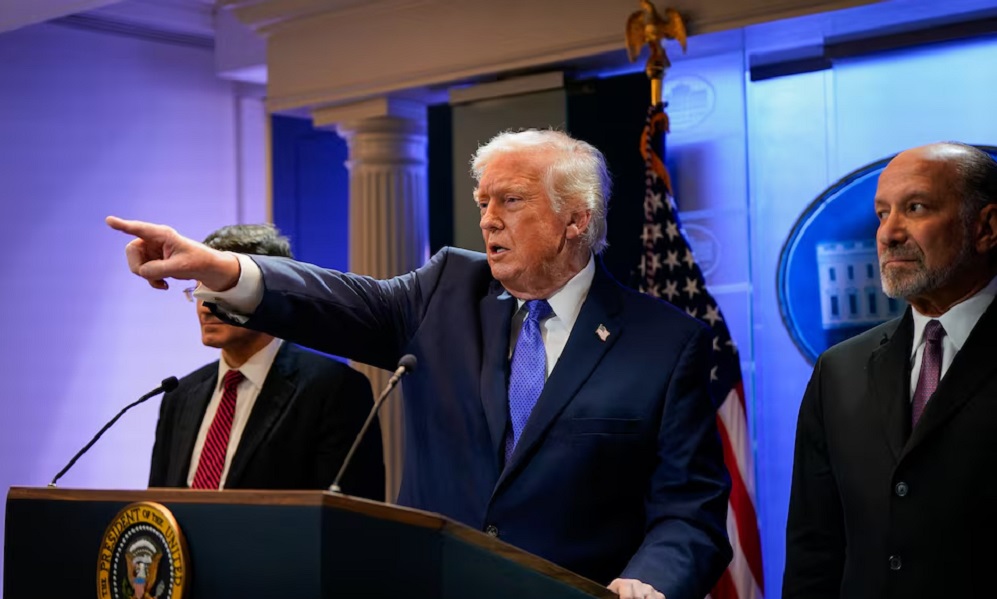
U.S. President Donald Trump responded with fury to Friday’s Supreme Court ruling that he lacked the power to unilaterally set tariffs on imports, denouncing individual justices as he vowed to continue a global trade war that has kept the world on edge for a year.
Saying he was undeterred by what he repeatedly called a ridiculous ruling, Trump announced an immediate new 10% tariff on imports from all countries, on top of any existing tariffs, and then issued a proclamation putting them into effect. The law allows him to impose a levy of up to 15% for 150 days, although it could face legal challenges, Reuters reported.
The court’s landmark 6-3 ruling upended the leverage Trump and his trade envoys have wielded over foreign governments at negotiating tables to reshape diplomatic relations and global markets.
The ruling briefly sent U.S. stock indexes surging, before ending modestly higher as analysts warned of renewed confusion in global markets while they await Trump’s next moves.
Hours after the ruling, Trump signed an executive order repealing the tariffs that the court struck down, and he also issued a proclamation imposing a 10% duty on most goods imported into the U.S. for 150 days, granting exemptions for certain items including critical minerals, metals and energy products, the White House said.
TRADE DEALS, REVENUE IN QUESTION
The ruling called into question the trade deals Trump’s envoys have negotiated in recent months under the threat of high tariffs. It left open the fate of the $175 billion Trump has collected from U.S. importers under what the court said was his incorrect reading of the law.
“I’m ashamed of certain members of the court, absolutely ashamed, for not having the courage to do what’s right for our country,” Trump told reporters at the White House, complaining that foreign countries were ecstatic and “dancing in the street.”
He insinuated, without evidence, that the majority of the court caved to foreign influence: “They’re very unpatriotic and disloyal to our Constitution. It’s my opinion that the court has been swayed by foreign interests and a political movement that is far smaller than people would ever think.”
Since returning to the White House 13 months ago, Trump has said he had what the court summarized as the “extraordinary power to unilaterally impose tariffs of unlimited amount, duration, and scope.” Citing a national emergency, he said the International Emergency Economic Powers Act (IEEPA) meant he could set tariffs at any rate he chose.
The court grounded its opinion, which was written by Chief Justice John Roberts, with a quote from the U.S. Constitution: “The Congress shall have Power To lay and collect Taxes, Duties, Imposts and Excises.”
The argument by the Trump administration that it had identified a war-like emergency to justify a loophole failed to persuade the court.
“The Government thus concedes, as it must, that the President enjoys no inherent authority to impose tariffs during peacetime,” Roberts wrote.
“And it does not defend the challenged tariffs as an exercise of the President’s warmaking powers. The United States, after all, is not at war with every nation in the world.”
Despite the court’s bluntness in ruling the president had exceeded his authority, Trump told reporters: “It’s ridiculous, but it’s OK, because we have other ways, numerous other ways.”
ECONOMIC UNCERTAINTY RISES
After a year of Trump’s often ad hoc tariff announcements whipsawing markets and the global economy, the ruling and Trump’s response reintroduced a hefty dose of uncertainty that economists, investors and policymakers had hoped was in the rearview mirror.
“I think it will just bring in a new period of high uncertainty in world trade, as everybody tries to figure out what the U.S. tariff policy will be going forward,” said Varg Folkman, analyst at the European Policy Centre think tank.
U.S. Treasury Secretary Scott Bessent said the court ruling could have mixed results.
“The Supreme Court has taken away the President’s leverage, but in a way, they have made the leverage that he has more draconian because they agreed he does have the right to a full embargo,” Bessent told “The Will Cain Show” on Fox News.
“We will get back to the same tariff level for the countries. It will just be in a less direct and slightly more convoluted manner,” he said.
In announcing his new temporary 10% tariff, Trump became the first president to invoke Section 122 of the Trade Act of 1974, which allows the president to levy tariffs of up to 15% for up to 150 days to fix “fundamental international payments problems.” That, too, could draw legal challenges. Such tariffs can only be extended with Congress’ authorization.
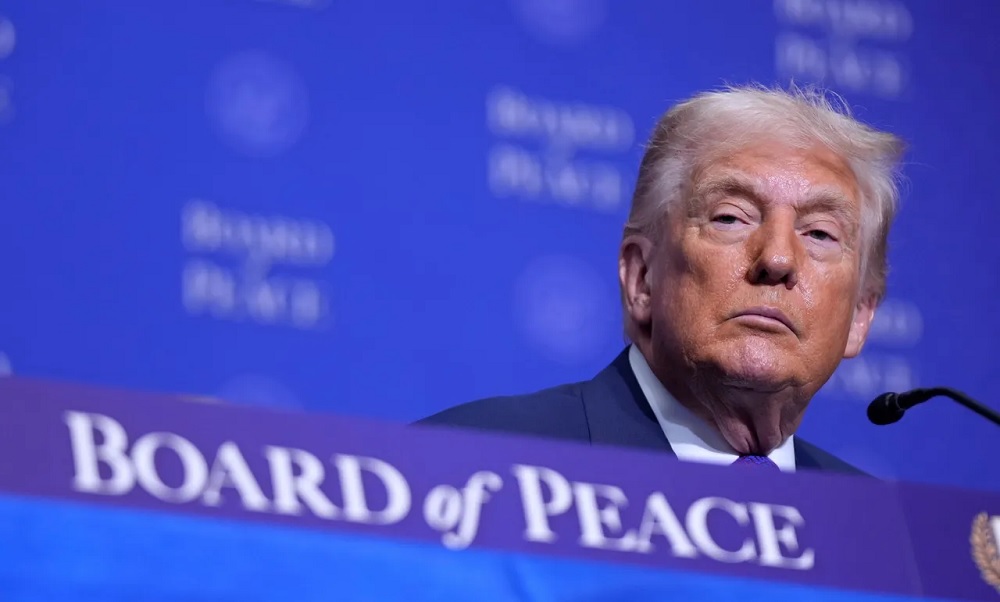
President Donald Trump warned Iran on Thursday it must make a deal over its nuclear program or “really bad things” will happen, and set a deadline of 10 to 15 days, drawing a threat from Tehran to retaliate against U.S. bases in the region if attacked.
Amid a massive U.S. military buildup in the Middle East that has fueled fears of a wider war, Trump said negotiations with Iran to end the tense standoff were going well but demanded that Tehran reach a “meaningful” agreement, Reuters reported.
“Otherwise bad things happen,” Trump, who has repeatedly threatened to attack Iran, told the first meeting of his Board of Peace in Washington.
Trump spoke of the U.S. airstrikes carried out in June, saying Iran’s nuclear potential had been “decimated,” adding “we may have to take it a step further or we may not.”
“You’ll be finding out over the next probably 10 days,” he said. Asked later to elaborate, he told reporters aboard Air Force One: “I would think that would be enough time, 10, 15 days, pretty much maximum.”
But he declined to be specific, except to warn again of “really bad things” and insist that Iran would have to make a deal one way or another.
In a letter to U.N. Secretary-General Antonio Guterres, Tehran said it would not start any war but that “in the event that it is subjected to military aggression, Iran will respond decisively and proportionately” in its exercise of the right of self-defense.
“All bases, facilities, and assets of the hostile force in the region would constitute legitimate targets,” the letter said. “The United States would bear full and direct responsibility for any unpredictable and uncontrolled consequences.”
‘GOOD TALKS’: TRUMP
Trump’s threats to bomb Iran, with the two sides far apart in talks on Tehran’s nuclear program, have pushed up oil prices, and a Russian corvette warship on Thursday joined planned Iranian naval drills in the Gulf of Oman, a vital sea route for global energy.
Iranian and U.S. negotiators met on Tuesday and Iranian Foreign Minister Abbas Araqchi said they had agreed on “guiding principles.” White House press secretary Karoline Leavitt said on Wednesday, however, that the two sides remained apart on some issues.
Trump said “good talks are being had,” and a senior U.S. official said Iran would make a written proposal on how to address U.S. concerns.
Trump called on Tehran to join the U.S. on the “path to peace.”
“They can’t have a nuclear weapon, it’s very simple,” he said. “You can’t have peace in the Middle East if they have a nuclear weapon.”
Iran has resisted making major concessions on its nuclear program, though insisting it is for peaceful purposes. The U.S. and Israel in the past have accused Tehran of trying to develop a nuclear bomb.
Trump’s latest saber-rattling came as he talked himself up as a man of peace in a long, meandering speech while hosting world leaders at the launch of his Board of Peace. He proposed the body in September when he announced his plan to end Israel’s war against Hamas in Gaza. He later expanded the board’s remit to tackle conflicts worldwide, prompting many key Western allies to stay away.
Earlier on Thursday, Russia warned against an “unprecedented escalation of tension” around Iran on Thursday and urged restraint amid the U.S. military buildup in the region, which a senior American official said should be complete by mid-March.
THREAT OF WAR
Trump has sent aircraft carriers, warships and jets to the region, raising the prospect of another attack on the Islamic Republic.
The United States and Israel bombed Iran’s nuclear facilities and some military sites last June. U.S. Secretary of State Marco Rubio will meet Israeli Prime Minister Benjamin Netanyahu to discuss Iran on February 28, the senior U.S. official said.
Washington wants Iran to entirely give up uranium enrichment, a process used to create fuel for atomic power plants but that can also provide material for a warhead.
The U.S. and ally Israel also want Iran to give up long-range ballistic missiles, stop supporting groups around the Middle East and stop using force to quell internal protests.
Iran says it refuses to discuss issues beyond the atomic file, calling efforts to limit its missile arsenal a red line.
Satellite pictures have tracked both Iranian work to repair and fortify sites since last summer, showing work at both nuclear and missile sites, as well as preparations at U.S. bases across the Middle East over the past month.
Iran’s joint exercise with Russia came days into an extended series of Iranian naval drills in the Gulf of Oman, with Iranian state television showing special forces units deployed on helicopters and ships.
In a sign of growing concern over the increased tensions, Poland on Thursday became the latest European country to urge its citizens to leave Iran, with Prime Minister Donald Tusk saying Poles may only have hours to evacuate.
Trump began threatening strikes on Iran again in January as Iranian authorities crushed widespread protests with deadly violence that left thousands dead across the country.
World
Allegations in Epstein files may amount to ‘crimes against humanity,’ UN experts say
A law, approved by Congress with broad bipartisan support in November, requires all Epstein-related files to be made public.
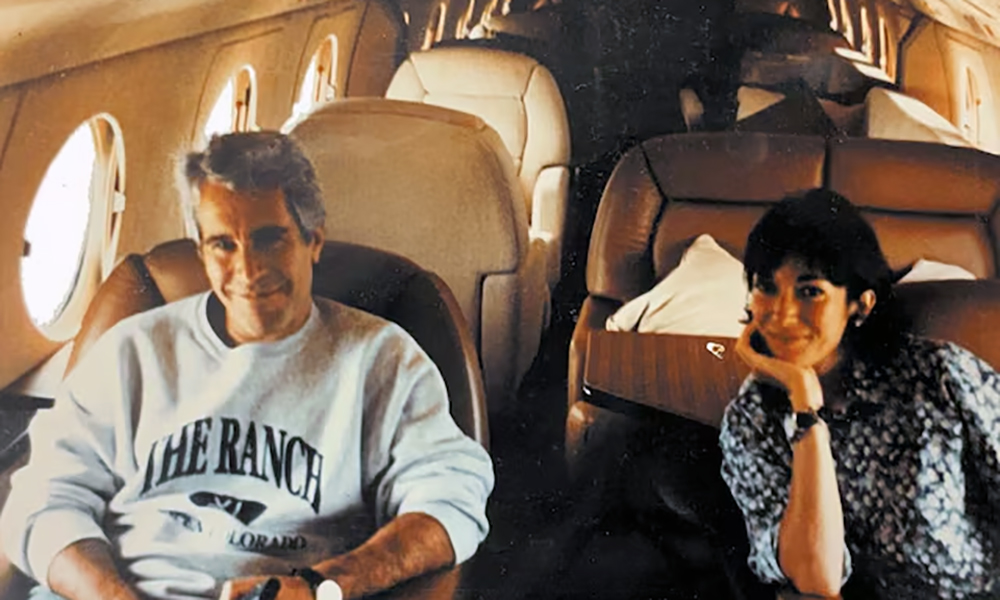
Millions of files related to the late sex offender Jeffrey Epstein suggest the existence of a “global criminal enterprise” that carried out acts meeting the legal threshold of crimes against humanity, according to a panel of independent experts appointed by the United Nations Human Rights Council.
The experts said crimes outlined in documents released by the U.S. Justice Department were committed against a backdrop of supremacist beliefs, racism, corruption and extreme misogyny.
The crimes, they said, showed a commodification and dehumanization of women and girls.
“So grave is the scale, nature, systematic character, and transnational reach of these atrocities against women and girls, that a number of them may reasonably meet the legal threshold of crimes against humanity,” the experts said in a statement.
The experts said the allegations contained in the files require an independent, thorough and impartial investigation, and said inquiries should also be launched into how it was possible for such crimes to be committed for so long.
The U.S. Justice Department did not immediately respond to a request for comment.
A law, approved by Congress with broad bipartisan support in November, requires all Epstein-related files to be made public.
The U.N. experts raised concerns about “serious compliance failures and botched redactions” that exposed sensitive victim information. More than 1,200 victims were identified in the documents that have been released so far.
“The reluctance to fully disclose information or broaden investigations, has left many survivors feeling retraumatized and subjected to what they describe as ‘institutional gaslighting,'” the experts said.
The Justice Department’s release of documents has revealed Epstein’s ties to many prominent people in politics, finance, academia and business – both before and after he pleaded guilty in 2008 to prostitution charges, including soliciting an underage girl.
He was found hanged in his jail cell in 2019 after being arrested again on federal charges of sex trafficking of minors. His death was ruled a suicide.


Ex-US envoy Khalilzad condemns Pakistan air attacks on Afghanistan

Tahawol: Repeat crimes by Pakistani military in Afghanistan discussed

Saar: Pakistani military regime’s airstrikes on Afghanistan

Japan contributes $2.08 million to World Bank Trust Fund for Afghanistan

Mujahid: Afghanistan will target perpetrators, not civilians

AFC Futsal Asian Cup 2026: Day One Review

IEA releases three Pakistani soldiers to mark Ramadan

AFC Futsal Asian Cup: Afghanistan to face Iran in crucial Group D clash

Afghanistan’s Chief of Armed Forces underscores readiness and equipment for national defense

Afghanistan welcomes investment and technology partnerships with India
Tahawol: Repeat crimes by Pakistani military in Afghanistan discussed
Saar: Pakistani military regime’s airstrikes on Afghanistan

Tahawol: US military review for attack against Iran discussed

Saar: Afghanistan’s expanding ties with Central Asia discussed

Tawsia: Calls for implementing development and infrastructure projects
-
 Latest News5 days ago
Afghanistan’s Chief of Armed Forces underscores readiness and equipment for national defense
-
 Latest News4 days ago
Afghanistan welcomes investment and technology partnerships with India
-

 Sport4 days ago
Afghan Peaks founder climbs Aconcagua to promote Afghanistan’s mountain potential
-

 Latest News3 days ago
Indian customs seize Chinese walnuts falsely declared as Afghan
-
 Business4 days ago
Pakistan allows re-export of stranded Afghan transit cargo
-
 Latest News3 days ago
Pakistan’s Punjab to send home 20 more Afghans in repatriation drive
-

 Latest News4 days ago
Pakistan signals possible air strikes as Kabul releases Pakistani soldiers in goodwill move
-
 Business5 days ago
Afghanistan’s 2026 Development Framework meeting highlights self-reliance and economic stability