
World
Shooting at South African bar leaves 11 dead, including a young child, police say


At least 11 people were killed on Saturday including a three year old boy, after gunshots were fired at an illegal bar in the South African city of Pretoria, police said, adding that a manhunt was launched for three suspects who were not identified.
Another 14 people were wounded during the incident in the Saulsville township, they said in a statement, Reuters reported.
Police didn’t say whether the shooting occurred inside or outside the illegal bar, known locally as a ‘shebeen.’
“Three minors are among those deceased, which include 3- and 12-year-old boys (and a) 16-year-old female,” the South African Police Service said.
South Africa has one of the highest murder rates in the world, averaging about 60 a day.


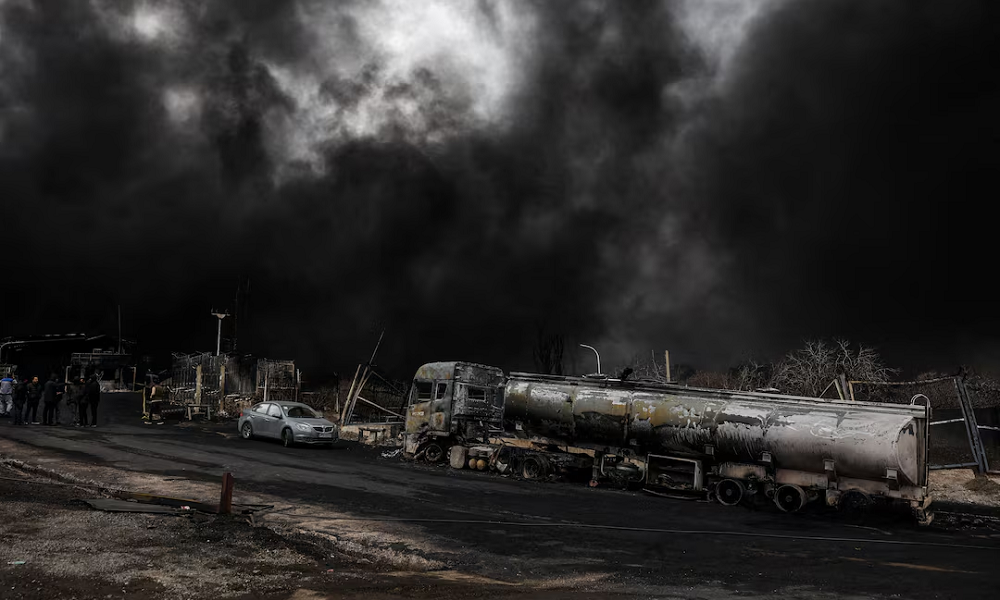
The U.S. has issued a 30-day waiver for countries to buy sanctioned Russian petroleum products currently at sea, hoping to ease oil and gas prices driven up by the war the U.S. and Israel are waging on Iran.
However, the waiver appeared to have little effect, with benchmark Brent crude back up to $101 by 1000 GMT on Friday, with Asian shares also under pressure.
The Israeli military said it had launched strikes across Tehran and continued to carry out strikes on the Iranian-allied Hezbollah militia across Lebanon, including on the capital Beirut, as Iranian media reported rallies for Quds (Jerusalem) Day beginning across Iran in support of the Palestinians.
The sounds of explosions and fighter jets were heard in the Iranian capital and in Karaj to the west of Tehran, Iranian media said.
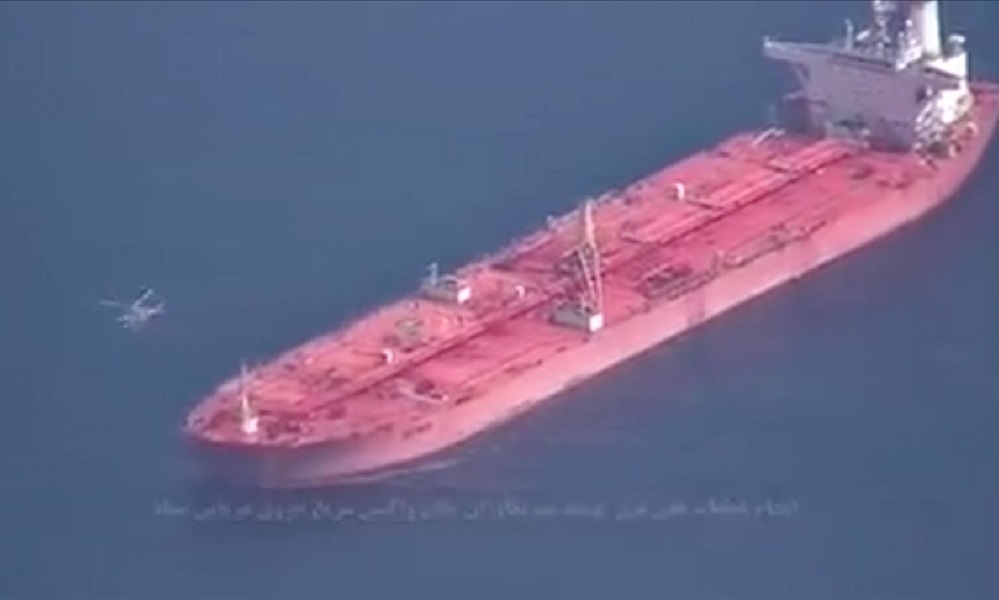
Iran’s Islamic Revolutionary Guard Corps (IRGC) said Thursday that it carried out an attack on an oil tanker linked to a U.S. company in the Strait of Hormuz after the vessel allegedly ignored repeated warnings from Iranian authorities.
In a statement, the IRGC said the tanker Safesea Vishnu, which it described as owned by a U.S. company and sailing under the flag of the Marshall Islands, was struck north of the strategic waterway early in the morning.
Iranian officials claimed the ship failed to comply with maritime instructions issued by Iranian forces operating in the area.
The IRGC warned that shipping traffic in the Persian Gulf and the Strait of Hormuz faces increasing risks, placing responsibility for the heightened tensions on the United States. The IRGC urged commercial vessels transiting the region to follow Iranian maritime regulations in order to avoid potential attacks.
The incident comes amid a broader escalation of hostilities between Iran, the United States, and Israel.
On March 2, Tehran announced it was closing the Strait of Hormuz in response to ongoing U.S. and Israeli military operations against Iran. The strait is one of the world’s most critical energy corridors, carrying a significant share of global oil shipments.
Since the announcement, shipping and insurance costs in the region have surged, while global oil prices have risen amid fears of supply disruptions. Analysts warn that prolonged instability in the waterway could have major economic consequences worldwide.
The reported attack also follows continued U.S. and Israeli airstrikes on Iranian targets that began on February 28. Iranian authorities say the strikes have killed around 1,300 people and wounded more than 10,000 others.
In response, Tehran has launched drone and missile attacks targeting Israeli territory as well as locations in Iraq and several Gulf states that host U.S. military facilities, raising concerns about a widening regional conflict and threats to international shipping routes.
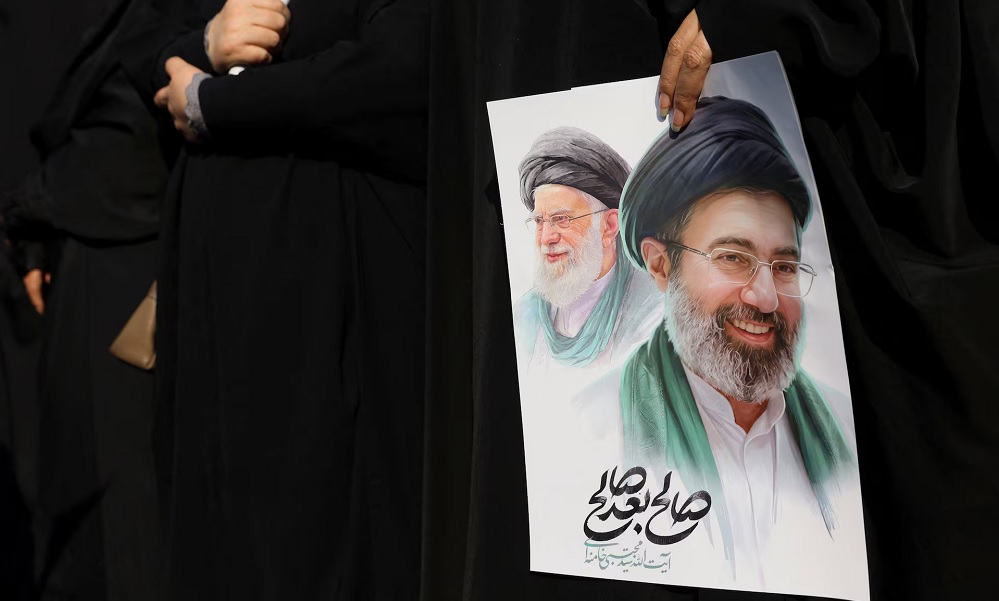
U.S. intelligence indicates that Iran’s leadership is still largely intact and is not at risk of collapse any time soon after nearly two weeks of relentless U.S. and Israeli bombardment, Reuters reported citing three sources familiar with the matter.
A “multitude” of intelligence reports provide “consistent analysis that the regime is not in danger” of collapse and “retains control of the Iranian public,” said one of the sources, all of whom were granted anonymity to discuss U.S. intelligence findings.
The latest report was completed within the last few days, the source said.
With political pressure building over soaring oil costs, President Donald Trump has suggested he will end the biggest U.S. military operation since 2003 “soon.” But finding an acceptable end to the war could be difficult if Iran’s hardline leaders remain firmly entrenched.
The intelligence reporting underscores the cohesion of Iran’s clerical leadership despite the killing of Supreme Leader Ayatollah Ali Khamenei on February 28, the first day of the U.S. and Israeli strikes.
Israeli officials in closed discussions also have acknowledged there is no certainty the war will lead to the clerical government’s collapse, a senior Israeli official told Reuters.
The sources stressed that the situation on the ground is fluid and that the dynamics inside Iran could change.
The Office of the Director of National Intelligence and the Central Intelligence Agency declined to comment.
The White House did not immediately respond to a request for comment.
SHIFTING OBJECTIVES
Since launching their war, the U.S. and Israel have struck a range of Iranian targets, including air defenses, nuclear sites, and members of the senior leadership.
The Trump administration has given varying reasons for the war. In announcing the beginning of the U.S. operation, Trump urged Iranians to “take over your government,” but top aides have since denied that the objective was to oust Iran’s leadership.
In addition to Khamenei, the strikes have killed dozens of senior officials and some of the highest-ranking commanders in the Islamic Revolutionary Guard Corps (IRGC), an elite paramilitary force that controls large parts of the economy.
Still, the U.S. intelligence reports indicate that the IRGC and the interim leaders who assumed power after Khamenei’s death retain control of the country.
The Assembly of Experts, a group of senior Shiite clerics, earlier this week declared Khamenei’s son, Mojtaba, the new supreme leader.
Israel has no intention of allowing any remnants of the former government to stay intact, said a fourth source familiar with the matter.
It is unclear how the current U.S.-Israeli military campaign would topple the government.
It would likely require a ground offensive that would allow people inside Iran to safely protest in the streets, said the source.
The Trump administration has not ruled out sending U.S. troops into Iran.
INTELLIGENCE SUGGESTS KURDS LACK FIREPOWER TO FIGHT IRAN
Reuters reported last week that Iranian Kurdish militias based in neighboring Iraq consulted with the U.S. about how and whether to attack Iran’s security forces in the western part of the country.
Such an incursion could put pressure on Iranian security services there, allowing Iranians to rise up against the government.
Abdullah Mohtadi, the head of the Komala Party of Iranian Kurdistan, part of a six-party coalition of Iranian Kurdish parties, said in an interview on Wednesday that the parties are highly organized inside Iran and that “tens of thousands of young people are ready to take up arms” against the government if they receive U.S. support.
Mohtadi said he has received reports from inside Iranian Kurdistan that IRGC units and other security forces have abandoned bases and barracks out of fear of U.S. and Israeli strikes.
“We have been witnessing tangible signs of weakness in Kurdish areas,” he said.
But recent U.S. intelligence reports have cast doubt on the ability of the Iranian Kurdish groups to sustain a fight against Iranian security services, according to two sources familiar with those assessments.
The intelligence indicates that the groups lack the firepower and numbers, they said.
The Kurdish Regional Government, which governs the autonomous region of Iraqi Kurdistan where the Iranian Kurdish groups are based, did not immediately respond to a request for comment.
The Iranian Kurdish groups have in recent days asked senior officials in Washington and U.S. lawmakers for the U.S. to provide them with weapons and armored vehicles, another person familiar with the matter said.
But Trump said on Saturday that he had ruled out having the Iranian Kurdish groups go into Iran.


IEA, Chinese FMs hold phone talks, discuss bilateral relations

Seven police personnel killed in IED blast in northwest Pakistan

US eases sanctions on Russian oil to ease energy prices inflated by Iran war

UNAMA: Four civilians killed, 14 injured in Pakistani airstrike in Kabul

Afghan airstrikes target Pakistani military sites in retaliation for air attacks

Pakistani military jet downed in Afghanistan’s Jalalabad, pilot captured alive

Afghan Air Force conducts airstrikes in Islamabad, other cities

IEA releases three Pakistani soldiers to mark Ramadan

Afghanistan’s Chief of Armed Forces underscores readiness and equipment for national defense

Afghanistan welcomes investment and technology partnerships with India

Tahawol: Discussion on intensification of attacks in Middle East

Saar: Ongoing US-Israeli strikes on Iran discussed

Tahawol: Regional impacts of Middle East crisis reviewed

Saar: Diplomatic efforts to ease Kabul-Islamabad tensions discussed

Tahawol: Demands to end Afghanistan–Pakistan conflict reviewed
-
 Latest News5 days ago
American billionaire Tom Pritzker describes Afghanistan trip in email to Epstein
-

 Sport3 days ago
Afghanistan’s white-ball series against Sri Lanka postponed
-

 Regional5 days ago
Iran names Khamenei’s hardline son Mojtaba as new supreme leader, oil surges
-
 Latest News4 days ago
Russia, China and UK urge Afghanistan and Pakistan to resolve issues through dialogue
-
 Latest News4 days ago
UN warns of possible surge in Afghan returnees from Iran
-
 Latest News5 days ago
UN Security Council to hold meeting on Afghanistan
-

 Latest News5 days ago
Hegseth reflects on Afghanistan lessons, says Iran war aims to bring enemy ‘to their knees’
-

 Latest News4 days ago
Trump envoy warns Afghanistan could face fate similar to Iran or Venezuela over detained Americans