
Latest News
Trump praises UK troops as brave warriors after widespread condemnation

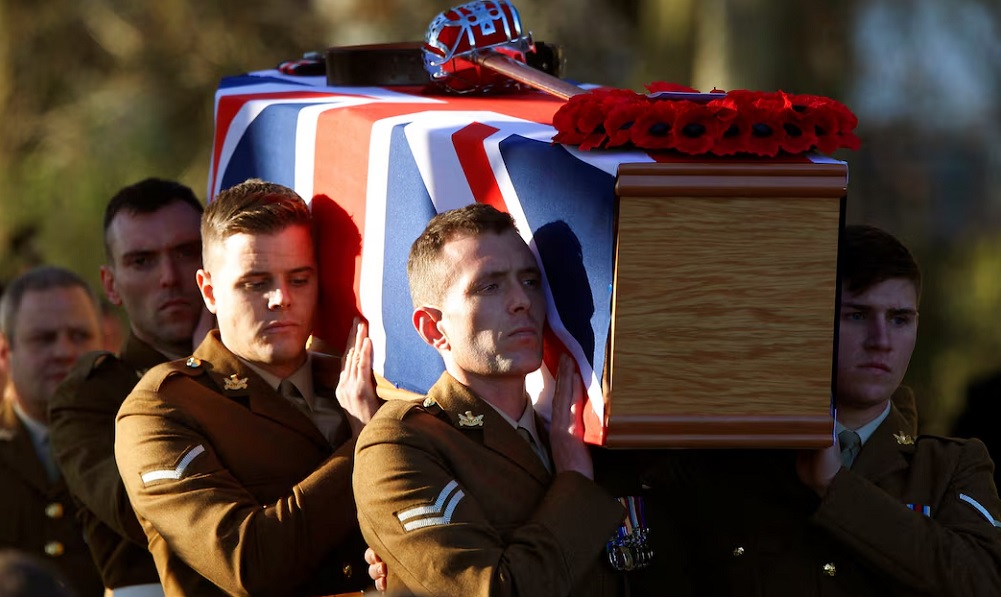
U.S. President Donald Trump on Saturday praised “brave” British soldiers, calling them warriors, a day after remarks he made about NATO troops in Afghanistan were described as “insulting and appalling” by Britain’s Prime Minister Keir Starmer.
Trump provoked widespread anger in Britain and across Europe after he said European troops had stayed off the front lines in Afghanistan.
Britain lost 457 service personnel killed in Afghanistan, its deadliest overseas war since the 1950s. For several of the war’s most intense years it led the allied campaign in Helmand, Afghanistan’s biggest and most violent province, while also fighting as the main U.S. battlefield ally in Iraq.
“The GREAT and very BRAVE soldiers of the United Kingdom will always be with the United States of America!” Trump wrote on Truth Social, Reuters reported. “In Afghanistan, 457 died, many were badly injured, and they were among the greatest of all warriors. It’s a bond too strong to ever be broken.”
Trump’s initial comments had provoked an unusually strong reaction from Starmer who has tended to avoid direct criticism of Trump in public.
The British leader’s office issued a statement to say the prime minister had spoken to the president on Saturday about the issue.
“The prime minister raised the brave and heroic British and American soldiers who fought side by side in Afghanistan, many of whom never returned home,” the statement said. “We must never forget their sacrifice, he said.”
Veterans in Britain and elsewhere have been lining up to condemn the U.S. president’s comments to Fox Business Network’s “Mornings with Maria” on Thursday in which he said that the United States had “never needed” the transatlantic alliance and accused allies of staying “a little off the front lines” in Afghanistan.
Among them was King Charles’ younger son Prince Harry, who served two tours in Afghanistan.
“Those sacrifices deserve to be spoken about truthfully and with respect,” he said in a statement.






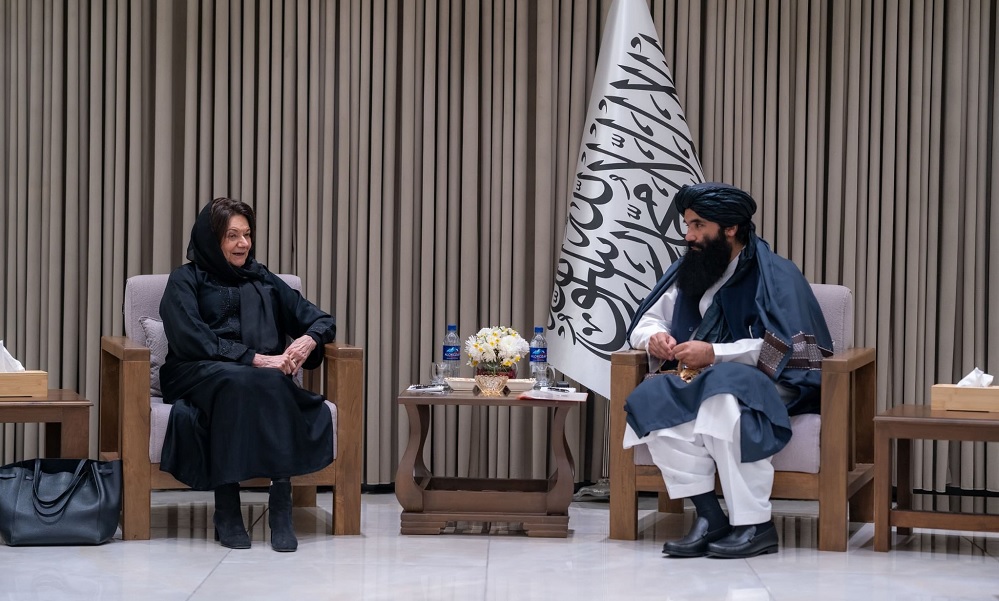
Afghanistan is set to host the next meeting of the working groups established under the United Nations-led Doha process.
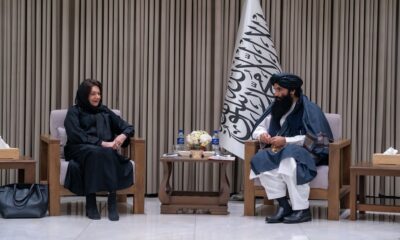
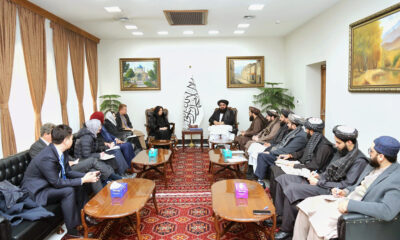
The development was announced following a meeting in Kabul between the Minister of Interior Affairs of the Islamic Emirate, Khalifa Sirajuddin Haqqani, and a United Nations delegation led by Rosemary DiCarlo, the UN Under-Secretary-General for Political and Peacebuilding Affairs.
During the talks, both sides discussed advancing engagement between Afghanistan and the international community, cooperation in combating narcotics, strengthening economic stability, and addressing restrictions affecting the private sector. Discussions also focused on improving the effectiveness of humanitarian assistance coordinated by the United Nations, according to a statement released by the Interior Ministry.
Minister Haqqani said the Islamic Emirate has taken serious and practical measures to prevent the cultivation, production, and trafficking of narcotics, noting that these efforts have yielded positive results.
The meeting also addressed constructive engagement between the Islamic Emirate and the international community and the expansion of cooperation in light of actual conditions. It was emphasized that mutual respect and realistic cooperation can further strengthen an atmosphere of trust.
The UN delegation praised the current security situation in the country and acknowledged progress made in counter-narcotics efforts. The delegation reaffirmed its commitment to the continuation of humanitarian assistance and emphasized the importance of sustained engagement.
DiCarlo noted that under the third phase of the UN-led Doha process on Afghanistan, the working groups established within this framework are expected to hold their next meeting in Kabul, hosted by Afghanistan.
Latest News
Most Afghans in Pakistan reject German cash offer, await uncertain futures
The issue has sparked criticism of Chancellor Friedrich Merz’s government, which took office in May 2025 and pledged in its coalition agreement to wind down voluntary federal admission programs, including those for Afghans.
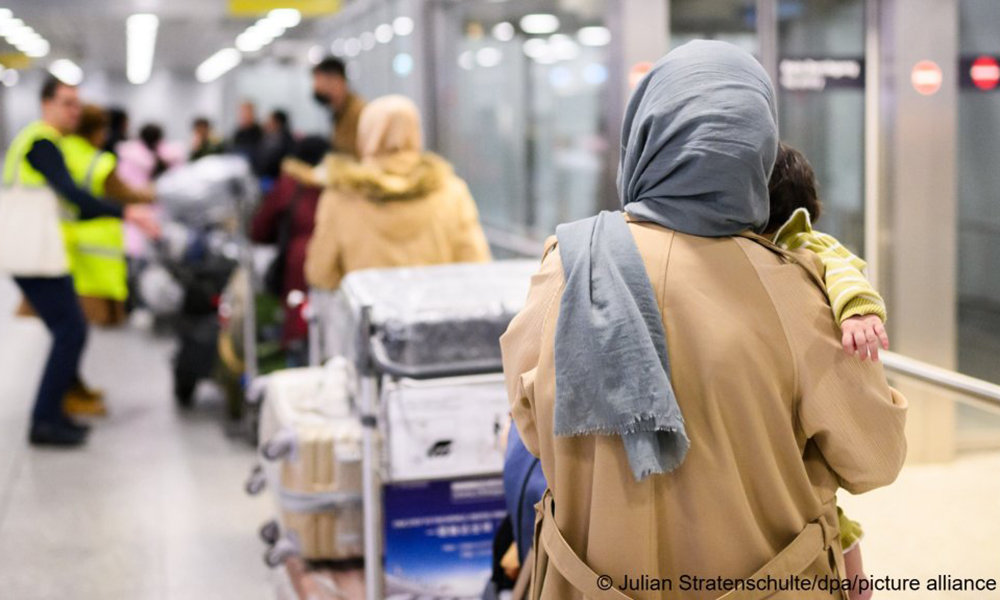
The majority of Afghan nationals stranded in Pakistan after being denied resettlement in Germany have rejected a German government offer of financial assistance in lieu of relocation, leaving hundreds facing an uncertain future, infomigrants.net reported.
According to the report German authorities informed more than 660 Afghans in December 2025 that despite earlier assurances of resettlement, Germany would no longer be able to admit them. As an alternative, Berlin offered cash support to help affected individuals return to Afghanistan or seek refuge in another country willing to accept them.
According to official figures, only 167 Afghans — including 25 principal applicants and 142 family members — accepted the offer. By contrast, 358 people have rejected the proposal, while at least 137 others were still considering their options as of late December.
Those who declined the offer remain in Pakistan, where their legal status is increasingly precarious. Pakistan has intensified efforts over the past two years to reduce the number of displaced Afghans, raising concerns that those still awaiting decisions could be forced to leave on short notice.
The German government said the decision was influenced by logistical constraints and mounting pressure from Pakistani authorities to complete transfers before the end of 2025 — a deadline Germany was unable to meet. A bilateral agreement protecting Afghans with German resettlement pledges expired at the end of last year, the German Foreign Office confirmed.
The issue has sparked criticism of Chancellor Friedrich Merz’s government, which took office in May 2025 and pledged in its coalition agreement to wind down voluntary federal admission programs, including those for Afghans.
While Germany continued to resettle hundreds of Afghans in 2025 — primarily former local staff of German institutions and their families — the latest group of rejected applicants largely consisted of journalists, judges, teachers, and human rights activists nominated under a humanitarian admissions program launched by the previous government.
Some applicants succeeded in reaching Germany late last year after winning individual court cases forcing authorities to honor resettlement pledges. However, German officials stressed that these rulings do not automatically apply to others, leaving several hundred Afghans still in limbo.
As of January 2025, more than 35,500 Afghans have been resettled in Germany since the Islamic Emirate takeover in 2021. Yet for hundreds still stranded in Pakistan, the prospect of reaching safety remains uncertain, as diplomatic efforts continue amid tightening regional pressures.
Latest News
Afghan FM, UN Political Chief discuss engagement, Doha process in Kabul
DiCarlo arrived in Kabul in the early hours of Saturday, January 24. Her visit comes amid ongoing UN efforts to coordinate dialogue on Afghanistan’s political future, humanitarian needs, and regional stability.
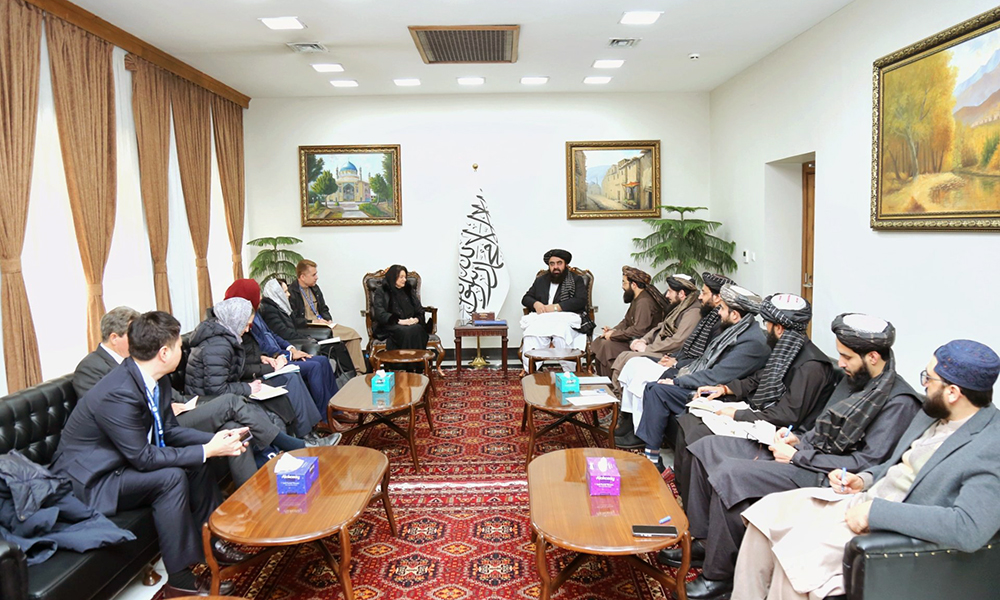
Afghanistan’s Foreign Minister Amir Khan Muttaqi held talks in Kabul with Rosemary DiCarlo, the UN Under-Secretary-General for Political and Peacebuilding Affairs, focusing on engagement between the Islamic Emirate and the United Nations and the UN-led Doha process.
In a statement, the Ministry of Foreign Affairs said the meeting covered ways to strengthen coordination and cooperation between the Islamic Emirate and the UN, as well as consultations related to the Doha talks.
Muttaqi briefed the UN delegation on Afghanistan’s political and security situation, efforts to stabilize the economy, and the management of returning migrants, describing recent measures by the Islamic Emirate as positive. He emphasized that lifting banking restrictions and unfreezing Afghanistan’s central bank assets are critical to supporting the private sector and facilitating humanitarian assistance, allowing the economy to function normally.
The foreign minister also highlighted steps taken to curb narcotics cultivation and trafficking, warning that failure to prevent drug production outside Afghanistan could once again pose risks to the country, the region, and the wider world.
DiCarlo welcomed what she described as positive developments in Afghanistan, particularly the handling of millions of returnees and transparency in the delivery of humanitarian aid. She praised efforts to combat narcotics, treat drug addiction, and implement reforms in other sectors.
The UN political chief reaffirmed continued cooperation under the Doha process, including through two working groups focused on counter-narcotics and private sector support, and called for expanding collaboration to other areas of dialogue. She stressed that humanitarian assistance remains vital for the Afghan people and underscored the need for joint efforts to ensure its delivery.
Both sides expressed hope for more frequent engagement and deeper cooperation in the future.
DiCarlo arrived in Kabul in the early hours of Saturday, January 24. Her visit comes amid ongoing UN efforts to coordinate dialogue on Afghanistan’s political future, humanitarian needs, and regional stability.


Afghanistan futsal team arrives in Indonesia ahead of Asian Cup

Trump praises UK troops as brave warriors after widespread condemnation

Japan defends AFC U-23 Asian Cup title with dominant win over China

AFC expresses condolences to Iranian football community after deaths in protests

Afghanistan to host next working groups meeting under UN-led Doha process

Turkey withdraws from Afghanistan-Pakistan mediation amid rising tensions

ICG report says Pakistan most impacted by IEA’s return in Afghanistan

Pakistan approves re-export of stranded Afghan transit trade cargo

Afghanistan–China joint market opens in Kabul

India delivers ambulances to Afghanistan amid growing health cooperation

Tahawol: Trump’s Peace Plan and the Prospects for World Order

Saar: Winter Chill and the Plight of Afghan Refugees

Tawsia: Reducing Afghanistan’s Reliance on Pakistan Trade

Tahawol: Pakistan’s membership in the Gaza peace board

Saar: Trump’s ‘move’ on Greenland discussed
-

 Sport2 days ago
China and Japan set for AFC U23 Asian Cup final showdown
-
 Business3 days ago
Afghan traders sign deal to import pharmaceuticals from Bangladesh
-
 Regional5 days ago
Death toll in Karachi’s Gul Plaza fire rises to 27, dozens still missing
-

 Sport5 days ago
Afghanistan defeats West Indies by 38 runs, take early lead in T20I series
-
 Sport4 days ago
Afghanistan set to face Tanzania in ICC Men’s U19 World Cup today
-

 World4 days ago
Canada models hypothetical response to US attack amid rising tensions
-

 Latest News3 days ago
Heavy snowfall across Afghanistan claims 11 lives, shuts key highways
-

 Sport5 days ago
Afghanistan defeats Vietnam 5–2 in another friendly ahead of AFC Futsal Asian Cup