
World
Trump says he will talk to Musk about restoring internet in Iran

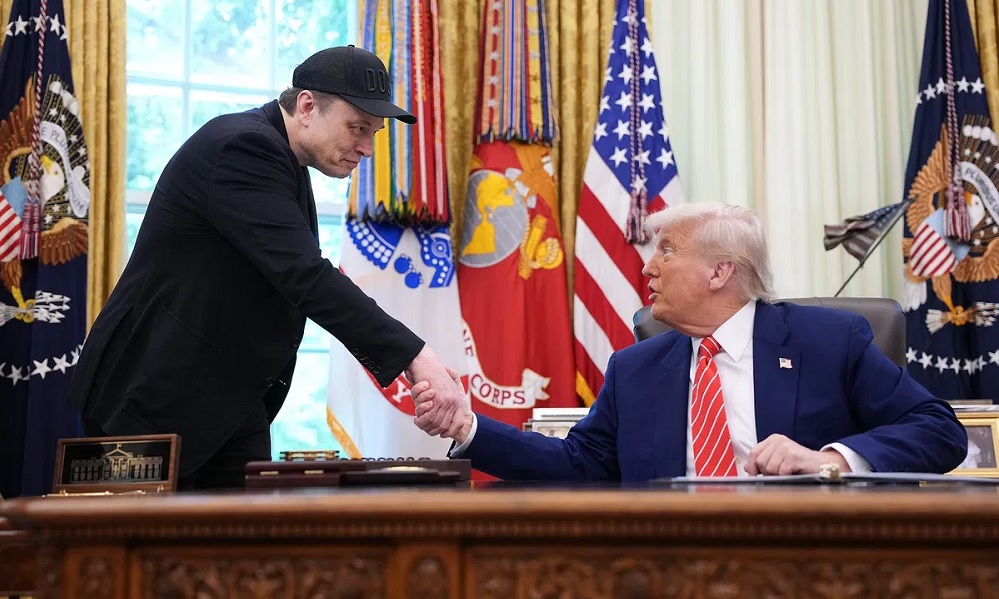
U.S. President Donald Trump said on Sunday he plans to speak with billionaire Elon Musk about restoring internet in Iran, where authorities have blacked out services for four days amid ongoing anti-government protests.
“He’s very good at that kind of thing, he’s got a very good company,” Trump told reporters in response to a question about whether he would engage with Musk’s SpaceX company, which offers a satellite internet service called Starlink that has been used in Iran, Reuters reported.
Musk and SpaceX did not immediately respond to a request for comment.
The flow of information from Iran has been hampered by an internet blackout since Thursday amid the most expansive protests against the country’s clerical establishment since 2022.
Musk and Trump have held an on-again, off-again relationship after the billionaire helped fund Trump’s winning presidential campaign and subsequently orchestrated massive cuts to the federal government.
The pair had a public falling-out last year as Musk opposed Trump’s signature tax bill, but the entrepreneur appears to have rekindled his relationship with the Trump administration. Musk and Trump were seen dining together at Trump’s Mar-a-Lago resort this month, and Secretary of Defense Pete Hegseth is scheduled to visit a SpaceX facility in Texas on Monday.
Musk has supported providing Starlink to Iranians to help them circumvent the government’s restrictions, including amid previous protests in 2022. That year, the Biden White House engaged with Musk to set up Starlink in Iran after the country was engulfed by protests following the death in police custody of 22-year-old Mahsa Amini.
The Starlink satellite service has been used in other regions marked by unrest or conflict such as Ukraine, where Musk in 2022 ordered a shutdown of Starlink during a pivotal Ukrainian offensive, Reuters reported.
Iran’s current protests began on December 28 in response to soaring prices, before turning against the clerical rulers who have governed since the 1979 Islamic Revolution.
Hundreds of people have been killed since then, rights groups estimate. U.S.-based organization HRANA said it has verified the deaths of 490 protesters and 48 security personnel, with more than 10,600 people arrested in two weeks of unrest. Iran has not given an official toll and Reuters was unable to independently verify the tolls.







World
US orders immediate evacuations across Middle East amid escalating conflict
Officials described “serious safety risks” following coordinated weekend strikes on Iranian targets and subsequent retaliatory operations.
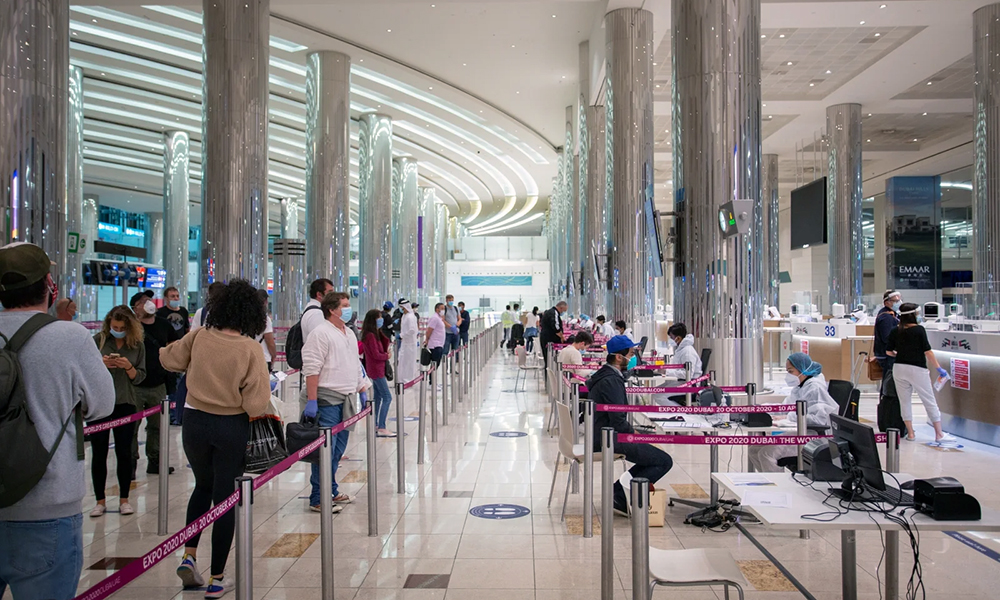
The U.S. Department of State has issued an extraordinary directive urging American citizens to immediately depart more than a dozen countries across the Middle East, citing rapidly deteriorating security conditions following joint U.S.-Israeli strikes that killed Iran’s Supreme Leader, Ayatollah Ali Khamenei.
The sweeping advisory comes as retaliatory attacks, embassy closures and major air travel disruptions fuel growing instability across the region.
U.S. officials say the move reflects Washington’s assessment that the crisis could become prolonged and highly volatile, with potential consequences for global security and energy markets.
Broad Regional Advisory
The evacuation notice covers 14 countries and territories, including close U.S. partners such as Israel, Saudi Arabia and the United Arab Emirates. It marks one of the most expansive regional security alerts in recent history.
Officials described “serious safety risks” following coordinated weekend strikes on Iranian targets and subsequent retaliatory operations.
Americans have been urged to leave using commercial flights while they remain available, rather than waiting for potential government-organized evacuations should conditions worsen.
From Targeted Strike to Regional Crisis
The evacuation order follows the killing of Khamenei in coordinated operations that reportedly also targeted other senior Iranian officials. Tehran’s response has included strikes on U.S. and Israeli-linked sites, as well as threats directed at Gulf states and key energy infrastructure.
Concerns have intensified over security in the Strait of Hormuz, a vital shipping route for global oil supplies. Rising tensions in the waterway have already driven up energy prices amid fears of further disruption.
The United States has activated an inter-agency emergency task force to manage the unfolding crisis. President Donald Trump indicated the confrontation could extend beyond a month, underscoring expectations of sustained instability.
International Appeals for Restraint
Global leaders have called for urgent de-escalation. European Commission President Ursula von der Leyen and United Nations Secretary-General António Guterres both urged restraint and renewed diplomatic engagement, warning of severe humanitarian and security consequences.
Russia and China condemned the strike that killed Khamenei as a breach of international law, while France pressed Iran to return to negotiations over its nuclear and ballistic missile programs. The European Union has placed its Red Sea naval mission on heightened alert to safeguard maritime routes amid fears of spillover attacks.
Guidance for U.S. Citizens
Americans in affected countries are advised to contact 24-hour State Department assistance lines and enroll in the Smart Traveler Enrollment Program (STEP) to receive updates. Officials stress the urgency of departing while commercial flights are still operating, as mounting airspace closures and cancellations have already left large numbers of travelers stranded.
Analysts warn that transport disruptions and security risks could persist for days or weeks, urging U.S. citizens to prepare contingency plans in case of extended regional instability.
World
Just one in four Americans supports US strikes on Iran, Reuters/Ipsos poll finds
The poll showed that 56% of Americans think Trump, who has also ordered strikes in Venezuela, Syria and Nigeria in recent months, is too willing to use military force to advance U.S. interests.
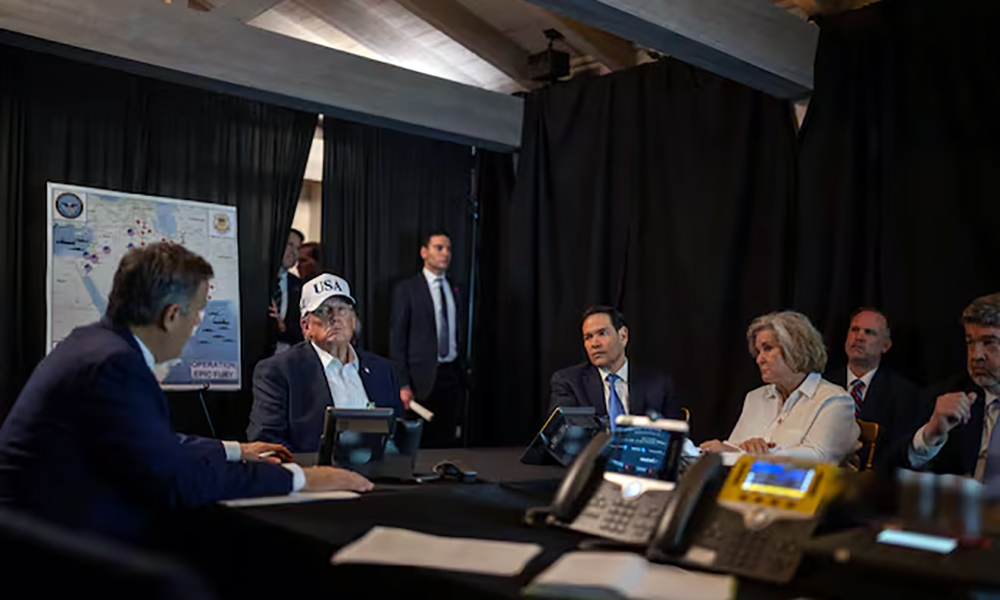
Only one in four Americans approves of the U.S. strikes that killed Iran’s leader, while about half — including one in four Republicans — believe President Donald Trump is too willing to use military force, according to a Reuters/Ipsos poll that concluded on Sunday.
Some 27% of respondents said they approved of the strikes, while 43% disapproved and 29% were not sure. About nine in 10 respondents said they had heard at least a little about the strikes, which began early on Saturday.
The poll showed that 56% of Americans think Trump, who has also ordered strikes in Venezuela, Syria and Nigeria in recent months, is too willing to use military force to advance U.S. interests. The vast majority of Democrats – 87% – held this view, as did 23% of Republicans and 60% of people who don’t identify with either political party.
The poll was conducted during the strikes on Iran by the U.S. and Israel, and closed before the U.S. military announced the first American casualties in the operation. Three U.S. service members have been killed and five more seriously wounded since the strikes, which plunged the Middle East into a new, unpredictable conflict.
While 55% of Republicans said they approved of the strikes and 13% disapproved, the Reuters/Ipsos poll found 42% in Trump’s party said they would be less likely to support the Iran campaign if it leads to “U.S. troops in the Middle East being killed or injured.”
Trump’s presidential approval rating ticked slightly lower to 39%, one percentage point below a Reuters/Ipsos poll conducted February 18-23.
The strikes on Iran began three days before the first primaries of the U.S. midterm elections, which will determine whether Trump’s Republicans maintain their majorities in Congress for the next two years. Reuters/Ipsos polls have consistently shown that voters’ top concern heading into the elections is the economy, far more than foreign affairs.
Some 45% of poll respondents, including 34% of Republicans and 44% of independents, said they would be less likely to support the campaign against Iran if gas or oil prices increased in the United States.
Prices for Brent crude surged 10% to about $80 a barrel in over-the-counter trade on Sunday, oil traders said. Analysts predicted prices could climb as high as $100 due to the latest conflict.
The most recent Reuters/Ipsos poll gathered responses online from 1,282 U.S. adults nationwide. It had a margin of error of three percentage points.
World
US lawmakers, world leaders react to death of Ayatollah Ali Khamenei after Iran strikes
The announcement drew praise from some lawmakers who have long opposed Tehran’s leadership, while others condemned the military action and questioned its legality.

Political leaders in the United States and around the world reacted sharply and along partisan lines after the reported death of Iran’s Supreme Leader, Ayatollah Ali Khamenei, following joint U.S.-Israeli strikes on Iran.
The announcement drew praise from some lawmakers who have long opposed Tehran’s leadership, while others condemned the military action and questioned its legality.
Representative Yassamin Ansari, the only Iranian American member of Congress, described Khamenei as the “epitome of evil,” saying no one should mourn his death. However, she cautioned that removing a single leader would not dismantle Iran’s political system.
“Military force alone will not secure a democratic future for the Iranian people,” she wrote on social media, warning that without a clear plan, the escalation could endanger U.S. troops and further destabilize the region.
Former Representative Marjorie Taylor Greene criticized President Donald Trump, arguing that the focus on Iran did not align with his “America First” agenda and diverted attention from domestic economic concerns.
Senator Bernie Sanders labeled the conflict a “Trump-Netanyahu war,” referring to Israeli Prime Minister Benjamin Netanyahu. Sanders said the action was unconstitutional and violated international law, urging Congress to pass a War Powers Resolution to limit further military involvement.
In contrast, Senator Lindsey Graham praised Trump’s leadership, saying he was proud of the administration’s actions and describing the president as setting a new standard for Republican foreign policy.
Reza Pahlavi, the exiled Iranian crown prince and son of the late Shah Mohammad Reza Pahlavi, declared that Khamenei had been “erased from the pages of history.” He said the Islamic Republic was nearing its end and called on Iranians to prepare for what he described as a decisive moment for change.
Ukraine’s official government social media account posted a brief message celebrating the death of a “dictator,” while Australian Prime Minister Anthony Albanese told reporters that Khamenei would not be mourned, citing his role in Iran’s missile and nuclear programs and the regime’s repression at home.
The sharply divided reactions underscore the high stakes of the escalating confrontation, as global leaders weigh the consequences of a direct strike that has dramatically reshaped the political landscape in Iran and across the Middle East.


FIFA unveils official tournament poster to mark 100 days until World Cup kicks off

Tahawol: Discussion on ongoing conflicts between Afghanistan and Pakistan

Asian Football Confederation postpones 2nd-leg knockout ties in West Region

Saar: Ongoing retaliatory operations against Pakistan discussed

Bayat Foundation expands Ramadan aid to Maidan Wardak families

Pakistani military jet downed in Afghanistan’s Jalalabad, pilot captured alive

Afghan Air Force conducts airstrikes in Islamabad, other cities

IEA releases three Pakistani soldiers to mark Ramadan

Afghanistan’s Chief of Armed Forces underscores readiness and equipment for national defense

Afghanistan welcomes investment and technology partnerships with India
Tahawol: Discussion on ongoing conflicts between Afghanistan and Pakistan
Saar: Ongoing retaliatory operations against Pakistan discussed

Saar: Afghan forces’ operation against Pakistani military

Tahawol: Afghanistan and the Region Under the Shadow of Rising Tensions

Tahawol: Joint Israeli-US attacks on Iran discussed
-
 Latest News4 days ago
Pakistani military jet downed in Afghanistan’s Jalalabad, pilot captured alive
-
 Latest News4 days ago
Afghan Air Force conducts airstrikes in Islamabad, other cities
-
 Latest News4 days ago
IEA: Special circle in Pakistan has launched mission to destabilize region
-
 Latest News2 days ago
Afghan air force strikes key Pakistani military installations in retaliatory operation
-
 Latest News4 days ago
Turkey launches initiative to diffuse Afghanistan-Pakistan tension
-

 Latest News4 days ago
Afghans say they are united against Pakistan aggression
-
 Latest News3 days ago
Afghan forces conduct fresh airstrikes on Pakistani military targets
-
 Latest News5 days ago
Pakistan carries out airstrikes after Afghanistan launches retaliatory attacks