
World
Trump signs order aimed at dismantling US Department of Education

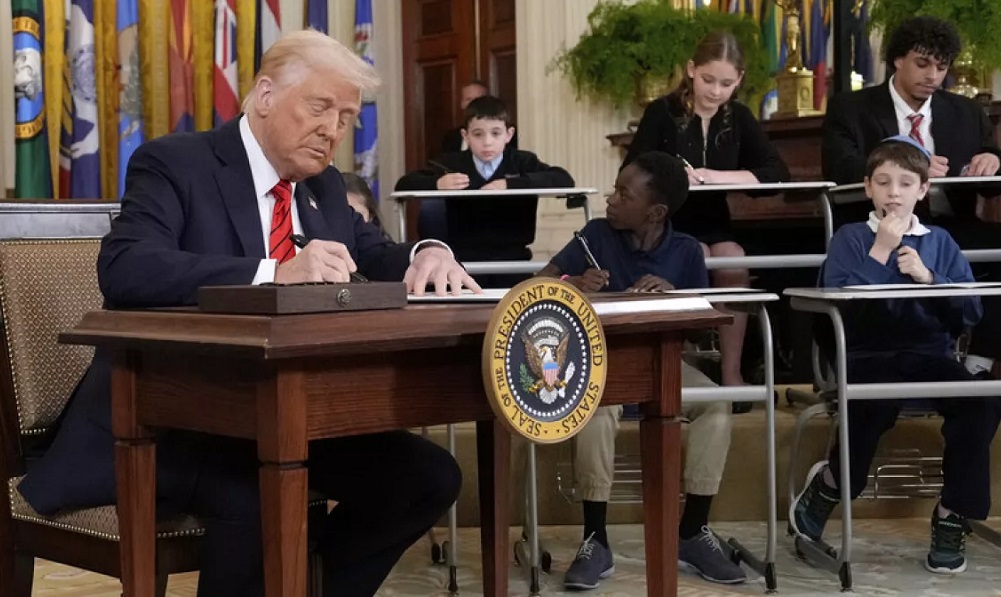
Flanked by students and educators, U.S. President Donald Trump on Thursday signed an executive order intended to essentially dismantle the federal Department of Education, making good on a longstanding campaign promise to conservatives.
The order is designed to leave school policy almost entirely in the hands of states and local boards, a prospect that alarms liberal education advocates, Reuters reported.
Thursday’s order was a first step “to eliminate” the department, Trump said at a signing ceremony in the East Room of the White House. Shuttering the agency completely requires an act of Congress, and Trump lacks the votes for that.
“We’re going to be returning education, very simply, back to the states where it belongs,” said Trump in front of a colorful backdrop of state flags.
Young students invited to the event sat at classroom desks encircling the president and signed their own mock executive orders alongside him.
The signing followed the department’s announcement last week that it would lay off nearly half of its staff, in step with Trump’s sweeping efforts to reduce the size of a federal government he considers to be bloated and inefficient.
Education has long been a political lightning rod in the United States. Conservatives favor local control over education policy and school-choice options that help private and religious schools, and left-leaning voters largely support robust funding for public schools and diversity programs.
But Trump has elevated the fight to a different level, making it part of a generalized push against what conservatives view as liberal indoctrination in America’s schools from the university level down to K-12 instruction.
He has sought to re-engineer higher education in the United States by reducing funding and pushing to eliminate diversity, equity and inclusion policies at colleges and universities, just as he has in the federal government.
Columbia University, for example, faced a Thursday deadline to respond to demands to tighten restrictions on campus protests as preconditions for opening talks on restoring $400 million in suspended federal funding.
The White House also argues the Education Department is a waste of money, citing mediocre test scores, disappointing literacy rates and lax math skills among students as proof that the return on the agency’s trillions of dollars in investment was poor.
Local battles over K-12 curricula accelerated during the coronavirus pandemic, which saw parents angrily confront officials at school board meetings nationwide. It was a discontent that Trump, other Republican candidates and conservative advocacy groups such as Moms for Liberty tapped into.
Trump was joined at the ceremony by Republican governors such as Greg Abbott of Texas and Ron DeSantis of Florida.
Democrats acknowledged on Thursday that Trump could effectively gut the department without congressional action.
“Donald Trump knows perfectly well he can’t abolish the Department of Education without Congress – but he understands that if you fire all the staff and smash it to pieces, you might get a similar, devastating result,” U.S. Senator Patty Murray said in a statement.
SEEKING CLOSURE
Trump suggested on Thursday that he will still seek to close down the department entirely, and that he wants Education Secretary Linda McMahon, who attended the White House event, to put herself out of a job.
The department oversees some 100,000 public and 34,000 private schools in the United States, although more than 85% of public school funding comes from state and local governments. It provides federal grants for needy schools and programs, including money to pay teachers of children with special needs, fund arts programs and replace outdated infrastructure.
It also oversees the $1.6 trillion in student loans held by tens of millions of Americans who cannot afford to pay for college outright.
For now, Trump’s executive order aims to whittle the department down to basic functions such as administering student loans, Pell Grants that help low-income students attend college and resources for children with special needs.
“We’re going to shut it down and shut it down as quickly as possible,” Trump said. “It’s doing us no good.”
Though Republicans control both chambers of Congress, Democratic support would be required to achieve the needed 60 votes in the Senate for such a bill to pass. At the event, Trump said the matter may ultimately land before Congress in a vote to do away with the department entirely.
Trump has acknowledged that he would need buy-in from Democratic lawmakers and teachers’ unions to fulfill his campaign pledge of fully closing the department. He likely will never get it.
“See you in court,” the head of the American Federation of Teachers union, Randi Weingarten, said in a statement.
A majority of the American public do not support closing the department.
A Reuters/Ipsos poll found last month that respondents opposed shuttering the Department of Education by roughly two to one – 65% to 30%. The Reuters/Ipsos poll, which was conducted online and nationwide, surveyed 4,145 U.S. adults and its results had a margin of error of about 2 percentage points.
Federal aid tends to flow more to Republican-leaning states than Democratic ones. It accounted for 15% of all K-12 revenue in states that voted for Trump in the 2024 election, compared with 11% of revenue in states that voted for his Democratic rival Kamala Harris, according to a Reuters analysis of Census Bureau data.
Two programs administered by the Department of Education — aid for low-income schools and students with special needs — are the largest of those federal aid programs.




World
Zelenskiy says letting Russia sell diesel to US is ‘investment in war’
“Gifts to Putin will not bring peace or any benefit to the civilised world,” Zelenskiy wrote on the X social media platform.
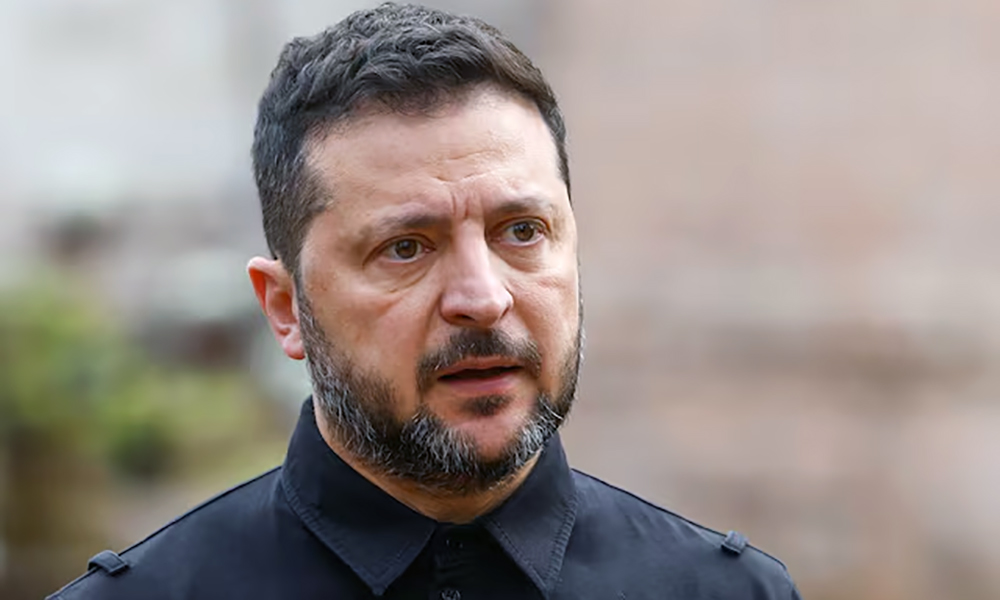
Ukrainian President Volodymyr Zelenskiy criticised an accord on Friday between the US and Russia allowing Moscow to provide the US with diesel, calling it “an investment in a war that must be ended.”
He dismissed the accord, which was announced while a Ukrainian delegation was in the US to discuss how to seek a resolution of the war with Russia, as “a weak decision on the part of strong partners”.
“Gifts to Putin will not bring peace or any benefit to the civilised world,” Zelenskiy wrote on the X social media platform.
“Russia will ‘repay’ the diesel with further terror and perfidy. Allowing Russia to sell petroleum products is an investment in a war that must be ended, not prolonged. What is needed is real de-escalation with Russia on a reciprocal basis,” Zelenskiy said.
Trump said in a post on social media that he had agreed in a call with Russian President Vladimir Putin that Russia would immediately supply diesel to the US and global marketplace. Trump said lower prices for Americans “is my Greatest Priority”.
Zelenskiy, speaking to reporters later on WhatsApp, said the accord would provide Moscow with additional funds to wage war and undermine any attempts to work towards a settlement.
“I believe our team is simply being used as a front. And that is certainly not fair, nor is it how partners should treat each other,” he said. “In my view, it is a weak decision on the part of strong partners.”
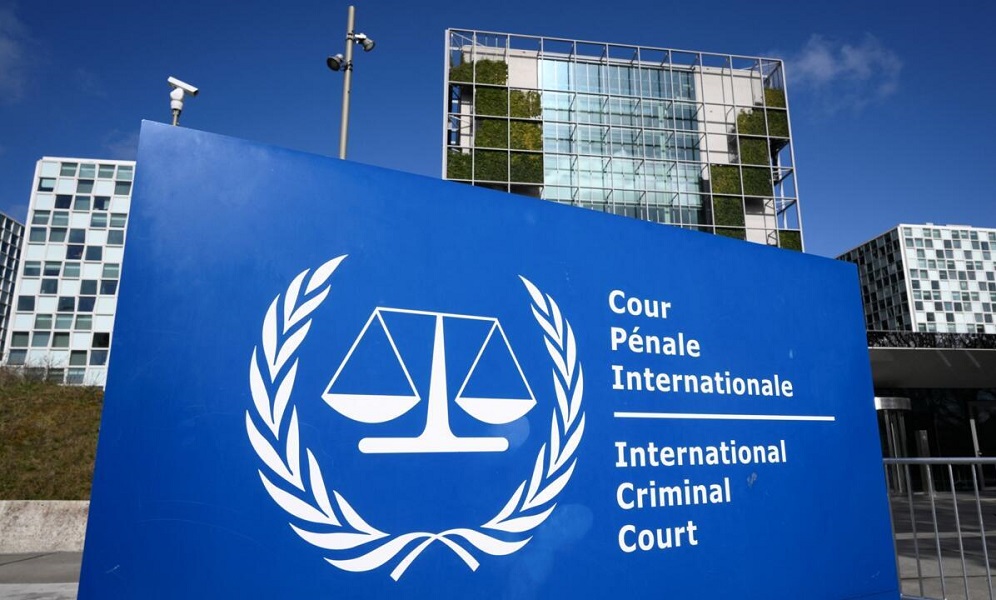
The administration of US President Donald Trump imposed sanctions on the International Criminal Court (ICC) on Friday, escalating tensions with the international judicial body and potentially straining relations with European allies.
US Secretary of State Marco Rubio said the measures aim to prevent the ICC from prosecuting American citizens and restrict the court’s resources and operations.
Washington has criticised the ICC over arrest warrants issued for Israeli Prime Minister Benjamin Netanyahu and other Israeli officials, as well as its past investigation into alleged crimes by US personnel in Afghanistan.
The ICC condemned the sanctions as an “assault on the rule of law” and vowed to continue its investigations and prosecutions. It also urged its 125 member states to defend the court’s independence.
The announcement came hours after former ICC judge Navi Pillay was awarded the Nobel Peace Prize, with the Nobel committee highlighting the importance of international justice amid political pressure on legal institutions.
The sanctions threaten to deepen the dispute between Washington and the ICC, raising concerns about international judicial cooperation and the court’s ability to carry out its work.
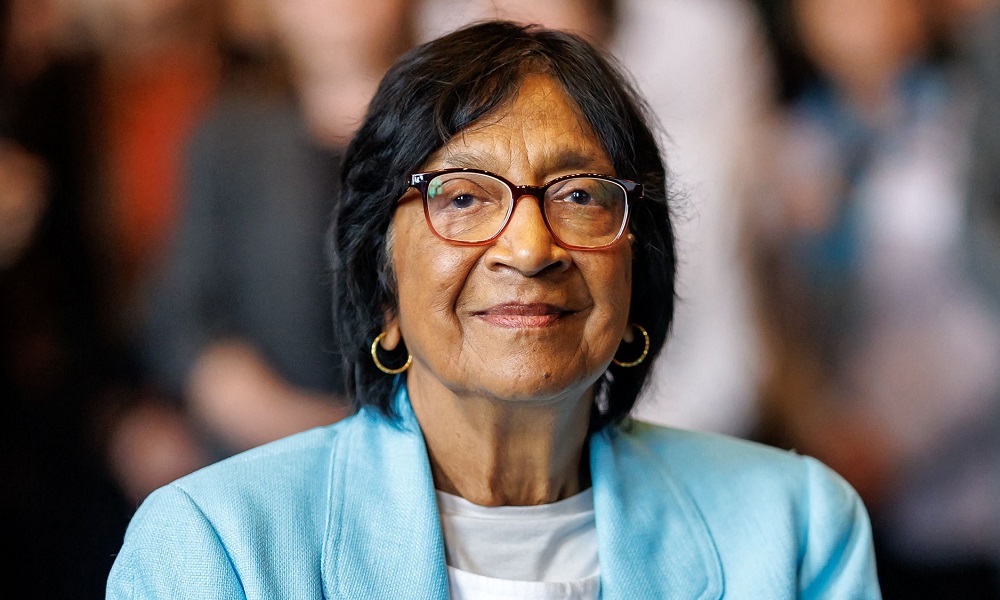
South African jurist Navi Pillay, a former judge at the International Criminal Court (ICC), won the 2026 Nobel Peace Prize on Friday for her efforts to promote peace and international law, as international justice institutions face growing political pressure.
The Nobel Committee announced the award hours before the United States imposed sanctions on the ICC, saying the recognition highlighted the importance of preserving an international order based on law and justice.
Pillay, 85, has served as a judge on several international courts, including the ICC and the International Criminal Tribunal for Rwanda. She also chaired a United Nations Commission of Inquiry on the Occupied Palestinian Territory, which concluded last year that Israel had committed genocide in Gaza. Israel rejected the report as “scandalous.”
The Nobel Committee warned that international law and its institutions were under significant pressure, cautioning that a shift towards power politics at the expense of legal frameworks threatened stability and peaceful coexistence.
The award comes amid escalating tensions between Washington and the ICC. US President Donald Trump has repeatedly criticised the court, particularly over its arrest warrants for Israeli Prime Minister Benjamin Netanyahu and his former defence minister.
Netanyahu’s office condemned the Nobel decision, accusing the committee of awarding its highest honour to someone it said had promoted allegations against Israel.
The award and the US sanctions have renewed international debate over the role of legal institutions in addressing alleged war crimes and protecting accountability under international law.


Energy and Water Minister heads to Saudi Arabia for World Energy Forum

Saar: Ongoing expulsion of Afghan refugees from Iran and Pakistan discussed

Afghanistan trail Bangladesh by 135 runs at stumps on Day Two

Afghanistan placed in Tier 3 in US human trafficking report

WHO calls for greater mental health support in Afghanistan

EU and FAO launch €5m programme to strengthen Afghanistan’s agrifood sector

Omar Zawak, Toofan Herat secure victories in Afghanistan Champions League

Houthi advance in Yemen puts U.S. in a new bind

Cricket Bonanza: Afghanistan set for packed international schedule

New warnings reignite debate over AI threat to humanity
Saar: Ongoing expulsion of Afghan refugees from Iran and Pakistan discussed

Tahawol: CSTO meeting on Afghanistan reviewed

Saar: Guterres’s talks with Pakistani officials on Afghanistan discussed

Tahawol: Consequences of US war in Afghanistan reviewed

Saar: Expulsion of Afghan refugees from Pakistan discussed
-

 Latest News5 days ago
Ariana Afghan Airlines ends 15-year control of ticketing and operational systems by Pakistani firm
-
 World5 days ago
▶️Saudi Arabia, Turkey, Pakistan activate Mecca defense pact
-

 Regional5 days ago
Yemeni government forces seize strategic strait from Houthis
-
 Latest News5 days ago
IEA rejects ICC arrest warrants, says Afghanistan does not recognize court
-

 Sport4 days ago
Aino Mina Kandahar defeat Istiqlal Kabul 3–2
-

 Health5 days ago
Russia investigates suspected pneumonic plague; Trump ready to ‘help’
-

 Latest News5 days ago
Thirty US states seek access to Afghan assets for 9/11 victims
-
 Regional2 days ago
Trump says US will not attack Iran before midterm elections in November